
How to Find Your Local Building Code Without Getting Lost
A practical, no-dead-ends method to find the exact building and zoning code for your property — from code hosts and department pages to permit PDFs and state code adoption.

Direct Answer: To find my local building code, search your municipality's name plus "code of ordinances" to reach its official code host (commonly Municode, eCode360, American Legal, or Sterling Codifiers), then open the building, construction, and zoning chapters. In most states the technical construction rules for houses come from a state-adopted residential code — for example, Wisconsin enforces the Uniform Dwelling Code (SPS 320–325) for new one- and two-family dwellings — while your city or county ordinance adds local amendments, zoning districts, setbacks, and permit procedures. The exact answer for your project depends on your jurisdiction, zoning district, parcel, and any overlays, so you usually need to read both the state code source and your local ordinance rather than relying on a single document.
Key Takeaways
- "Building code" is usually two layers stacked together: a state-adopted technical code (what's structurally required) and a local ordinance (zoning, setbacks, permit rules, and local amendments).
- Most cities and counties publish their ordinances through a third-party code host — Municode, eCode360 (General Code), American Legal Publishing, or Sterling Codifiers — and link to it from their official website.
- The building department / inspections page is where you find permit applications, fee schedules, and who actually issues permits (sometimes a contracted private inspection firm).
- The zoning code and zoning map answer different questions than the building code — where and how big you can build, versus how it must be built.
- For one- and two-family homes, the technical construction rules are frequently set at the state level, not by your city, so you may need a state agency source in addition to the local ordinance.
- Always separate the general rule (state code or model code language) from the local specifics (your district's setbacks, overlays, and amendments) before you assume what applies.
- When a specific local value isn't published online, that's a signal to verify it — not to guess. Mark it as needs research and confirm with the named document or office.
On This Page
Jump to any section of this guide:
- What "Find My Local Building Code" Actually Means
- Why It Matters
- When the Rule Usually Applies
- When Exceptions May Apply
- The Step-by-Step Method to Find Your Local Building Code
- Local Variables That Change the Answer
- Documents and Facts to Gather
- Common Mistakes
- Example Scenarios
- Practical Checklist
- People Also Ask
- Definitions
- Why Local Rules Change the Answer
- A Local Example: Sturgeon Bay, Door County, Wisconsin
- How GovCodex Helps
- Frequently Asked Questions
What "Find My Local Building Code" Actually Means
When people say they want to find my local building code, they usually mean one of several different things at once: the structural rules for framing and footings, the zoning rules for setbacks and height, the permit forms they have to fill out, or the fee they'll be charged. These live in different documents, often on different websites, and that's exactly why the search feels like getting lost.
Here's the plain-English version. Your "code" is layered:
- A state-adopted code sets the baseline technical requirements — structure, energy, electrical, plumbing, HVAC. For houses, many states adopt a version of the International Residential Code (IRC) or their own equivalent.
- A local ordinance (your municipal or county code) adopts that state code by reference, sometimes adds local amendments, and layers on zoning — districts, setbacks, lot coverage, height, and use rules — plus the permit process.
- Maps and overlays (zoning map, floodplain, shoreland, historic districts) change the answer for specific parcels.
So the real task isn't finding "the building code" as a single book. It's locating each layer that touches your project and reading the parts that apply to your property. Once you understand that the rules are distributed this way, the search stops feeling random and starts feeling like a checklist — which is exactly what the method below turns it into.
Why It Matters
Reading the right code before you start protects you from three expensive outcomes: a stop-work order mid-project, a failed inspection that forces you to rip out finished work, and a zoning violation that can require you to move or remove a structure entirely. It also helps you budget honestly. A project that needs a building permit, a zoning review, and a separate electrical permit usually costs more and takes longer than a "no-permit" project — and you can often only tell which one you have by reading the code. For a sense of how those costs add up, see How Much Does a Building Permit Cost?.
There's also a resale and insurance angle. Unpermitted or non-conforming work can surface during a sale, an appraisal, or a claim, and the cost of correcting it after the fact — re-opening finished walls, retroactive permits, or removing a non-conforming structure — is almost always higher than doing it right the first time. Finding and following the code up front is, in most cases, the cheaper path. It also gives you leverage in conversations with contractors: when you can point to the adopted edition and the specific chapter, you are far less likely to be talked into work that doesn't match what your jurisdiction actually requires.
When the Rule Usually Applies
In general, a building permit and code compliance are most often required when work affects structure, life safety, or systems: new construction, additions, decks above a certain height, structural alterations, electrical, plumbing, mechanical, and changes of use. Zoning review usually applies whenever you change a building's footprint, height, or use, or add an accessory structure.
The key word is usually. The thresholds — what size deck triggers a permit, whether a shed under a certain square footage is exempt — are set locally and vary widely from one jurisdiction to the next. That's why the method below sends you to read the actual exemption language rather than relying on a rule of thumb you found on a forum. For project-specific triggers, see When Does a DIY Project Become a Code Problem? and Do I Need a Permit to Build a Deck?.
When Exceptions May Apply
Common exceptions you'll see written into local codes include small accessory structures below a square-footage threshold, like-for-like repairs and maintenance, certain agricultural buildings, and minor cosmetic work. But exceptions are narrow and full of conditions. A shed may be permit-exempt for the building permit yet still subject to zoning setbacks, and a "repair" can become an "alteration" (which often needs a permit) the moment you change structure, wiring, or plumbing. Read the exemption and the definitions section, because the definitions frequently pull your project back into permit territory in ways the exemption alone doesn't reveal.
The Step-by-Step Method to Find Your Local Building Code
Step 1 — Identify the jurisdiction that regulates your parcel
First, confirm whether your property is inside city/village limits, in an unincorporated area governed by the county, or within a town. This determines whose ordinance applies. A quick parcel lookup on your county's GIS or property viewer usually shows the municipality. If you're near a boundary, check carefully — being one parcel outside city limits can change which code, which setbacks, and which permit office govern your project.
Step 2 — Go to the official government website first
Search "[your city or county] official website" and confirm you're on the real .gov or municipally branded domain, not an aggregator. From there, look for Government → Municipal Code / Code of Ordinances, and separately for Building / Inspections and Planning / Zoning. Bookmark each landing page; you'll come back to them.
Step 3 — Open the code host
Municipalities almost always publish their ordinances on a third-party code host. The big four:
| Code host | Typical URL pattern | How to search it |
|---|---|---|
| Municode (CivicPlus) | library.municode.com/[state]/[place] | Full-text search box; browse "Code of Ordinances" tree |
| eCode360 (General Code) | ecode360.com/[CODE] | Left-hand chapter outline; keyword search |
| American Legal Publishing | codelibrary.amlegal.com | "Search" tab; municipality landing page |
| Sterling Codifiers | sterlingcodifiers.com | Table of contents + search |
Look for chapters titled Building, Construction, Buildings and Building Regulations, and Zoning (sometimes called the Land Development Code or Unified Development Ordinance). The building chapter usually adopts the state code by reference and lists any local amendments; the zoning chapter contains your district rules.
Step 4 — Find the state-adopted code source
Because the technical construction rules for houses are frequently set by the state, your local code may simply say "the [state] residential code is adopted." To read the actual requirements, go to the state agency that publishes it. To understand the distinction between the layers, The Difference Between Building, Zoning, Electrical, and Plumbing Permits is a useful companion.
Step 5 — Pull the building department page, permit portal, and application PDFs
The building/inspections page tells you who issues permits (sometimes a contracted private inspection company), the permit portal (if online), the building permit application PDF, and the fee schedule. Download these — they encode the real-world process the code only describes in the abstract. For what you'll need to assemble, see the Permit Application Checklist for Home Renovations.
Step 6 — Cross-check the zoning map and overlays
Open the zoning map to confirm your district, then check for overlays — floodplain, shoreland, historic, or design-review districts — that add rules on top of base zoning. How to Read a Zoning Map Before You Build walks through this in detail, and What Is a Setback and Why Does It Matter? explains the dimension rules you'll find there.
Local Variables That Change the Answer
The same project can be legal on one lot and prohibited on the next. Variables that move the answer include: the municipality (city vs. town vs. county), the state code adoption (which model code and edition your state uses), your zoning district, any overlay districts, your exact parcel boundaries and easements, and environmental layers like shoreland, wetland, floodplain, or historic designations. Project attributes matter too — size, height, use, and construction method, and whether the work is attached, structural, habitable, wired, plumbed, or heated. Any one of these can flip whether a permit is required or which setback applies, which is why a generic answer from a search engine rarely matches your specific parcel.
Documents and Facts to Gather
Before you read the code, collect:
- Your property address and parcel ID (from the county GIS/assessor).
- A plat of survey or recorded survey showing lot lines and easements.
- Your zoning district and any overlays.
- The municipal code building and zoning chapter links.
- The state residential code source.
- The building permit application and fee schedule PDFs.
- A clear description of your project: dimensions, height, use, and whether it's attached/structural/wired/plumbed/heated.
Having these in one place turns a frustrating, open-ended search into a quick cross-reference, because almost every code question maps back to one of these facts.
Common Mistakes
- Treating "the code" as one book. Builders search the building code and miss the zoning setback that actually blocks the project.
- Reading the wrong jurisdiction's rules. Using city code for a property that's actually under county jurisdiction (or vice versa).
- Ignoring the adopted edition. Codes are updated; an old PDF can list superseded requirements.
- Skipping definitions. "Structure," "alteration," and "repair" are defined terms that change whether a permit applies.
- Assuming online = complete. Some local values (specific fees, a recent amendment) aren't posted; treat those as needs research, not as "no rule."
- Confusing model-code language with your local amendments. Your city may have changed the baseline.
Example Scenarios
Scenario A — Backyard shed. A homeowner finds a building-code exemption for sheds under a size threshold and assumes they're done. But the zoning chapter may still impose a rear-yard setback and a lot-coverage cap. The shed can be permit-exempt for construction yet still need to meet zoning. (See Can I Build a Garage or Shed in My Backyard?.)
Scenario B — Deck. A 30-inch-high deck might be exempt in one town and require a permit in the next. The framing and footing rules typically come from the state residential code; the setback comes from zoning; the permit form comes from the building department. (See Deck Footings, Frost Depth, and Code Requirements Explained.)
Scenario C — Garage-to-ADU conversion. This usually triggers the state code (habitable space, egress, energy), zoning (is an ADU even allowed in the district?), and possibly a variance. (See Can I Turn My Garage Into an Apartment? and The Homeowner's Guide to Zoning Variances.)
Practical Checklist
- Confirm your jurisdiction via county GIS/parcel viewer.
- Open the official government website (
.govor municipal domain). - Find the code host (Municode / eCode360 / American Legal / Sterling).
- Read the Building/Construction chapter — note the adopted state code and local amendments.
- Read the Zoning chapter — district, setbacks, height, coverage, use.
- Pull the state residential code source for technical requirements.
- Download the building permit application and fee schedule PDFs.
- Check the zoning map and overlay maps for your parcel.
- Verify your parcel boundaries, easements, and survey.
- List anything unpublished as needs research and verify before relying on it.
People Also Ask
- Is the building code the same as zoning? No — building code is how you build; zoning is where and how big.
- Who sets the residential building code? Often the state, adopted (sometimes amended) locally.
- Where do I find permit applications? The building/inspections page or permit portal.
- What is Municode? A common third-party host for municipal codes.
Definitions
- Building code: The technical rules governing how structures must be built (structure, fire safety, energy, electrical, plumbing, mechanical).
- Zoning ordinance: Local rules governing land use, lot dimensions, setbacks, height, and density.
- Code host: A third-party platform (Municode, eCode360, American Legal, Sterling) that publishes a jurisdiction's ordinances online.
- State-adopted code: A construction code enacted at the state level that local jurisdictions enforce, sometimes with amendments.
- Local amendment: A change a municipality makes to the baseline adopted code.
- Setback: The minimum distance a structure must sit from a property line or feature.
- Overlay district: An extra layer of regulation (floodplain, shoreland, historic) applied on top of base zoning.
- Adopted edition: The specific version/year of a model code in force in your jurisdiction.
- Certified inspector: A person authorized to administer and enforce the building code for a jurisdiction.
- Plat of survey: A drawing showing a parcel's boundaries, dimensions, and easements.
Why Local Rules Change the Answer
No single national answer exists, because authority is distributed across overlapping layers. At the municipality level, a city, village, or town may enforce its own ordinance or defer to the county. At the state level, code adoption decides which model code and edition applies to houses, and whether the state — not your city — writes the technical rules. Your zoning district sets the dimensional limits, and overlay districts can override them.
Then the parcel itself matters: boundaries and easements constrain where you can build, and environmental designations — shoreland, wetland, floodplain, or historic — can add permits and limits. Finally, the project changes things: its size, height, use, and method, and whether it's attached, structural, habitable, wired, plumbed, or heated, all determine which codes engage.
Rather than "contact your local government," check these specific sources: the building/construction chapter of your municipal code (for the adopted code and amendments), the zoning chapter and zoning map (for district and setbacks), the state agency that publishes the residential code (for technical requirements), the floodplain/shoreland/historic overlay maps, your plat of survey (for boundaries and easements), and the building permit application and fee schedule PDFs. Only call the office when a value genuinely isn't published or you need an interpretation of an ambiguous provision.
A Local Example: Sturgeon Bay, Door County, Wisconsin
This worked example separates the general rule from the local specifics, with sources.
The general rule. In Wisconsin, the technical construction rules for new one- and two-family dwellings come from the state's Uniform Dwelling Code (UDC), published by the Department of Safety and Professional Services (DSPS) as Wisconsin Administrative Code chapters SPS 320 (Administration and Enforcement), 321 (Construction Standards), 322 (Energy Conservation), 323 (Heating, Ventilating and Air Conditioning), 324 (Electrical Standards), and 325 (Plumbing). Under this framework, municipalities exercising UDC jurisdiction generally must enforce the state code and use certified inspectors, and they are limited in the additional requirements they may impose without department approval. So in Wisconsin, the structural rules for a house are largely a state matter, not a purely local one — a pattern you should expect to find (in some form) in many states, not just Wisconsin.
The local specifics — Sturgeon Bay. The City of Sturgeon Bay publishes its ordinances on Municode (the code host), reachable from the city's "Municipal Code" link at library.municode.com/wi/sturgeon_bay. Building code administration and inspections are provided for the city by a private firm, Inspection Specialists, LLC, with the building inspection office located at City Hall, 421 Michigan Street. The city's Applications & Forms page publishes the relevant PDFs, including a Building Permit Application, an Inspection Fee Schedule, a Fence Permit Application, a Variance Application, a Conditional Use Permit Application, a Zoning Map Amendment (rezoning) Application, a Certified Survey Map (CSM) Application, and separate HVAC/Fire Alarm/Fire Sprinkler and Plumbing Plan Review applications. The city also operates an Aesthetic Design and Site Plan Review Board and a Historic Preservation Commission (Certificate of Appropriateness), meaning some projects face design or historic review on top of base zoning.
General vs. local, side by side:
| Layer | Source | Sturgeon Bay specifics |
|---|---|---|
| Technical house code | State (DSPS UDC, SPS 320–325) | Enforced locally via certified inspector |
| Local ordinance / zoning | City code on Municode | Code of ordinances at library.municode.com/wi/sturgeon_bay |
| Permits & inspections | City building dept | Administered by Inspection Specialists, LLC |
| Application forms & fees | City Applications & Forms page | Building permit, fence, variance, CUP, rezoning, CSM PDFs |
| Overlays / extra review | City boards | Aesthetic Design and Site Plan Review Board; Historic Preservation Commission |
Values to verify (mark as needs_research): the exact zoning chapter number and district-by-district setbacks within the Sturgeon Bay code; current fee amounts (fee schedules are versioned and updated — the linked schedule was dated April 2025 at the time of writing); whether a specific parcel falls within shoreland, floodplain, or a historic district; and any recent code amendments not reflected in cached pages. Confirm shoreland/floodplain status against Door County mapping, since Door County's extensive shoreline makes shoreland-zoning relevant for many waterfront parcels — treat that determination as needs_research for any given address.
How GovCodex Helps
Finding your local building code is the start; turning it into a plan is the hard part. GovCodex is a local-code-aware planning and permitting assistant — not a generic chatbot — built to take you from "I want to build this" to "I understand the rules, risks, documents, and next steps for my property."
GovCodex can help identify likely permit triggers for your project, interpret the relevant local code and zoning language, and gather the facts that change the answer — district, setbacks, overlays, and parcel context. You can upload a survey, photo, or PDF and have it analyzed against your project, then build a permit-readiness checklist tailored to your jurisdiction. It can help draft project descriptions and site-plan notes, compare options (for example, a shed size that stays under a permit threshold versus one that doesn't), and flag missing information so you know exactly what's still needs research. Crucially, it works to separate verified facts from assumptions, point you to the right application form, and lay out localized next steps — with human-in-the-loop review where judgment or an official interpretation is required.
Describe your project, upload any site documents or photos you already have, and GovCodex can help organize the rules, documents, and next steps for your property.
Frequently Asked Questions
How do I find my local building code online?
Start at your municipality's official website and look for "Municipal Code" or "Code of Ordinances," which usually links to a third-party code host like Municode, eCode360, American Legal, or Sterling Codifiers. Open the building/construction and zoning chapters there. For the technical house-construction rules, you may also need your state agency's residential code source, since those are often adopted at the state level.
Is the building code the same as the zoning code?
No. The building code governs how a structure must be built — framing, footings, fire safety, energy, electrical, and plumbing. Zoning governs where and how big you can build — districts, setbacks, height, lot coverage, and permitted uses. Most projects must satisfy both, and they're usually published as separate chapters.
What is Municode (or eCode360)?
They are third-party platforms that host municipal codes online so cities and counties don't have to run their own publishing system. Municode, eCode360 (General Code), American Legal Publishing, and Sterling Codifiers are the most common. Your city's website typically links to whichever one it uses.
Does the state or the city set the residential building code?
It varies, but in many states the technical construction code for one- and two-family homes is adopted at the state level and enforced locally. For example, Wisconsin's Uniform Dwelling Code (SPS 320–325) sets the statewide baseline, while the city handles zoning, permits, and any approved local amendments. Check your own state's arrangement rather than assuming it's purely local.
What's the difference between the state-adopted code and a local amendment?
The state-adopted code is the baseline technical standard. A local amendment is a change a municipality makes to that baseline — and depending on the state, it may need to be approved and is often limited in scope. Read your local building chapter to see whether your jurisdiction adopted the state code "as is" or modified it.
Where do I find the permit application and fees?
On the building or inspections page, or the online permit portal if one exists. Look for a "Building Permit Application" PDF and a "Fee Schedule." Note that some cities contract inspections to a private firm, so the contact and submission process may point there instead of to City Hall staff.
How do I know which jurisdiction my property is in?
Check your county's GIS or parcel viewer with your address or parcel ID; it usually shows whether you're inside a city/village, a town, or unincorporated county land. This matters because the wrong jurisdiction's code can give you the wrong answer entirely.
What if I can't find a specific rule or fee online?
Treat it as needs research rather than assuming there's no rule. Confirm the missing value against the named document (fee schedule, ordinance section, overlay map) or, when it's genuinely unpublished or ambiguous, contact the building or zoning office for that specific item.
Do overlay districts like floodplain or historic change the code I follow?
Yes. Overlays add requirements on top of base zoning and can trigger extra reviews or permits. Floodplain, shoreland, and historic districts are common examples; you confirm them on the relevant overlay map for your parcel, not from the base zoning rule alone.
How current is the code I'm reading online?
Code hosts are usually updated regularly, but amendments can lag and old PDFs circulate. Check the adopted edition/year and the "last updated" note on the code host, and verify any recent amendment if your project depends on it.
Can I rely on the building code I find for a definitive answer?
Not entirely. The published code tells you the general rule, but the answer for your specific parcel depends on your zoning district, overlays, easements, and project details — and some local values may not be posted online. Use the code as your starting point, mark anything you can't confirm as needs research, and verify the unresolved items with the named document or office before you build.
Related Articles
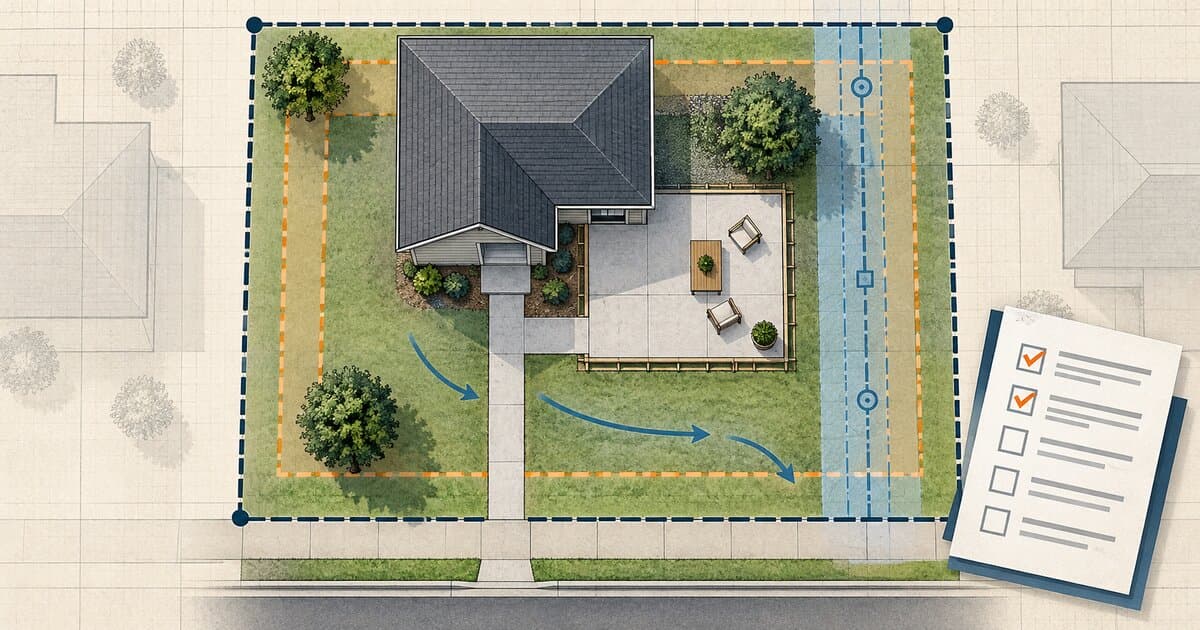
Do You Need a Permit to Pour Concrete? Patios, Slabs & Walkways
Pouring concrete may be permit-exempt or regulated depending on whether it is a patio, slab, walkway, driveway, structural base, or right-of-way work.
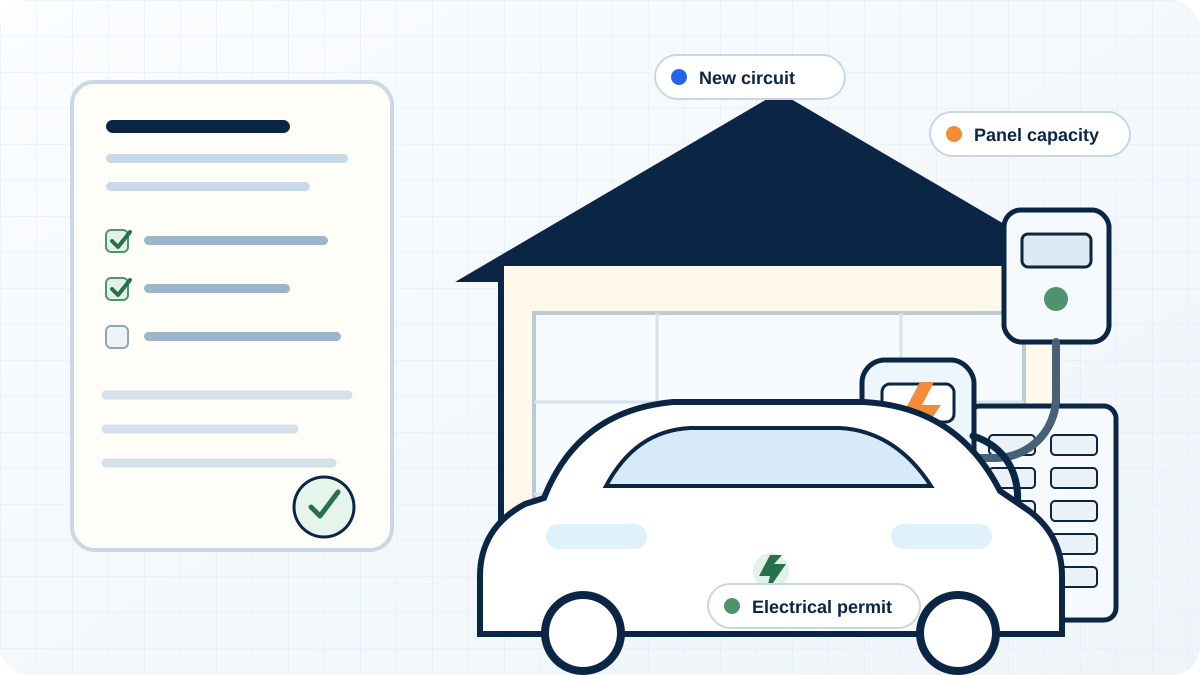
Do You Need a Permit for an EV Charger?
Learn when a home EV charger needs an electrical permit, when panel or service upgrades enter the project, and how inspection and utility coordination work.
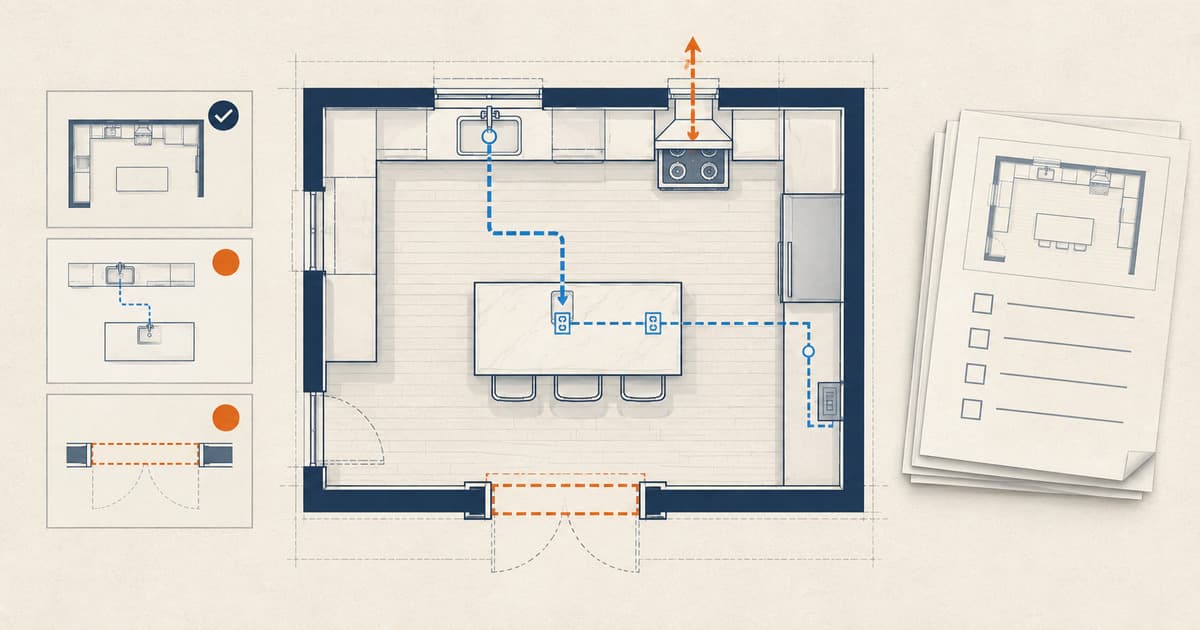
Do You Need a Permit for a Kitchen Remodel?
Learn when cabinets, sinks, islands, appliances, walls, wiring, plumbing, gas, or ventilation can change kitchen-remodel permit and inspection needs.