
Zoning Permit vs. Building Permit
Learn what zoning review checks, what building permits check, when both are required, and how the approval sequence works.
Direct answer: zoning and building permits answer different questions. Zoning or land-use review checks whether the proposed use, size, height, placement, parking, lot coverage, and other site rules are allowed on the parcel. Building review checks whether the proposed construction meets applicable building-code requirements. Electrical, plumbing, mechanical, fire, grading, stormwater, and right-of-way work can add separate permits.
Some jurisdictions issue separate zoning and building approvals. Others embed zoning review inside a building-permit workflow. A project can therefore need one application, several applications, or a discretionary land-use approval before any construction permit can issue.
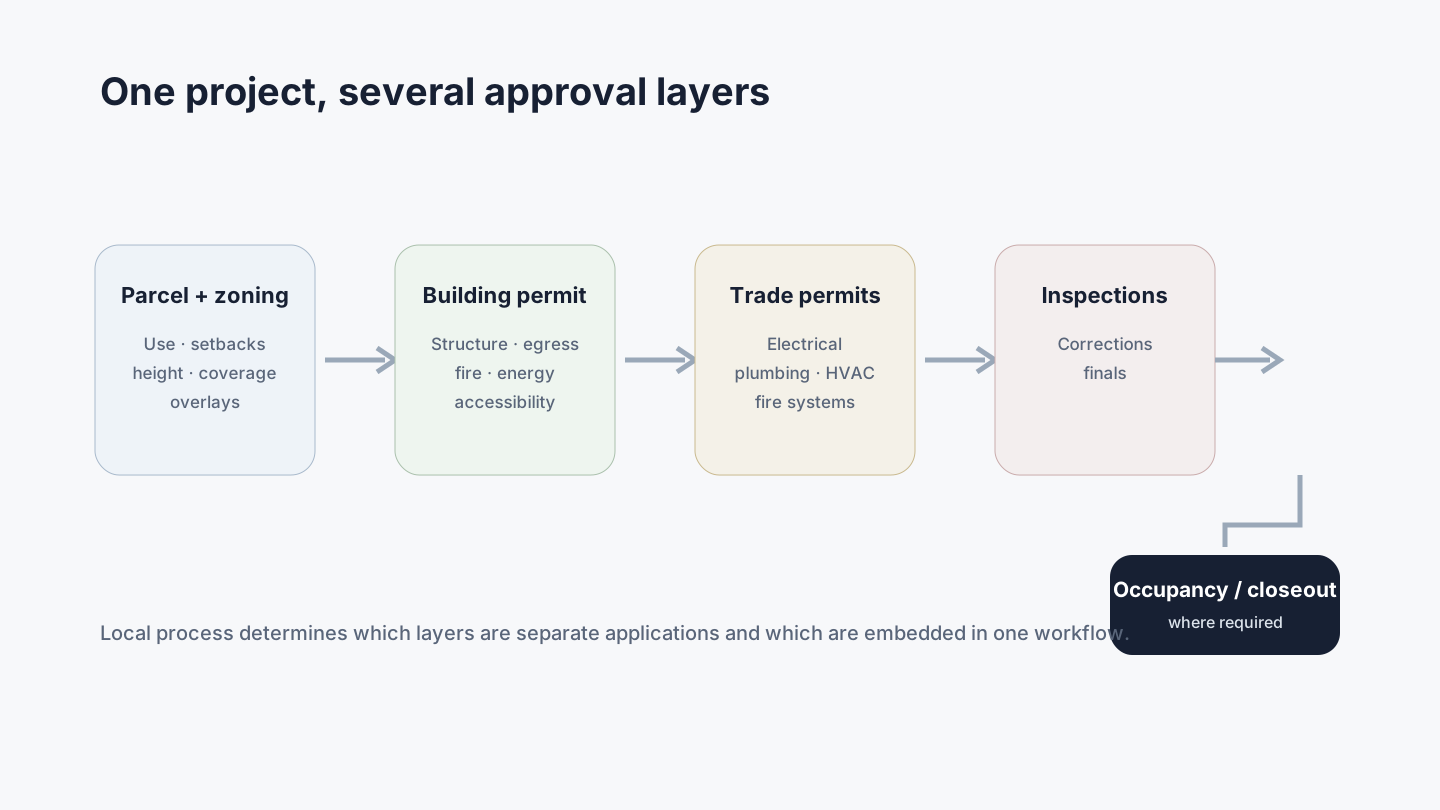
Think in approval layers. The local process determines whether those layers are packaged together or separately.
The four approval families
| Approval family | Core question | Common subjects |
|---|---|---|
| Zoning / land use | May this use and development exist on this parcel? | Use, setbacks, height, lot coverage, parking, overlays, design standards |
| Building / construction | Is the proposed construction code-compliant? | Structure, egress, fire safety, energy, accessibility, weather protection |
| Trade permits | Is the regulated system work code-compliant? | Electrical, plumbing, mechanical, gas, fire protection |
| Site development | Is the land and public-interface work acceptable? | Grading, erosion control, stormwater, driveway, right-of-way, utilities |
A building permit does not automatically prove that a structure is inside its setbacks unless the local workflow includes that zoning clearance. A zoning approval does not certify structural safety. An issued permit does not prove final inspection or legal occupancy.
The four approval architectures you will see
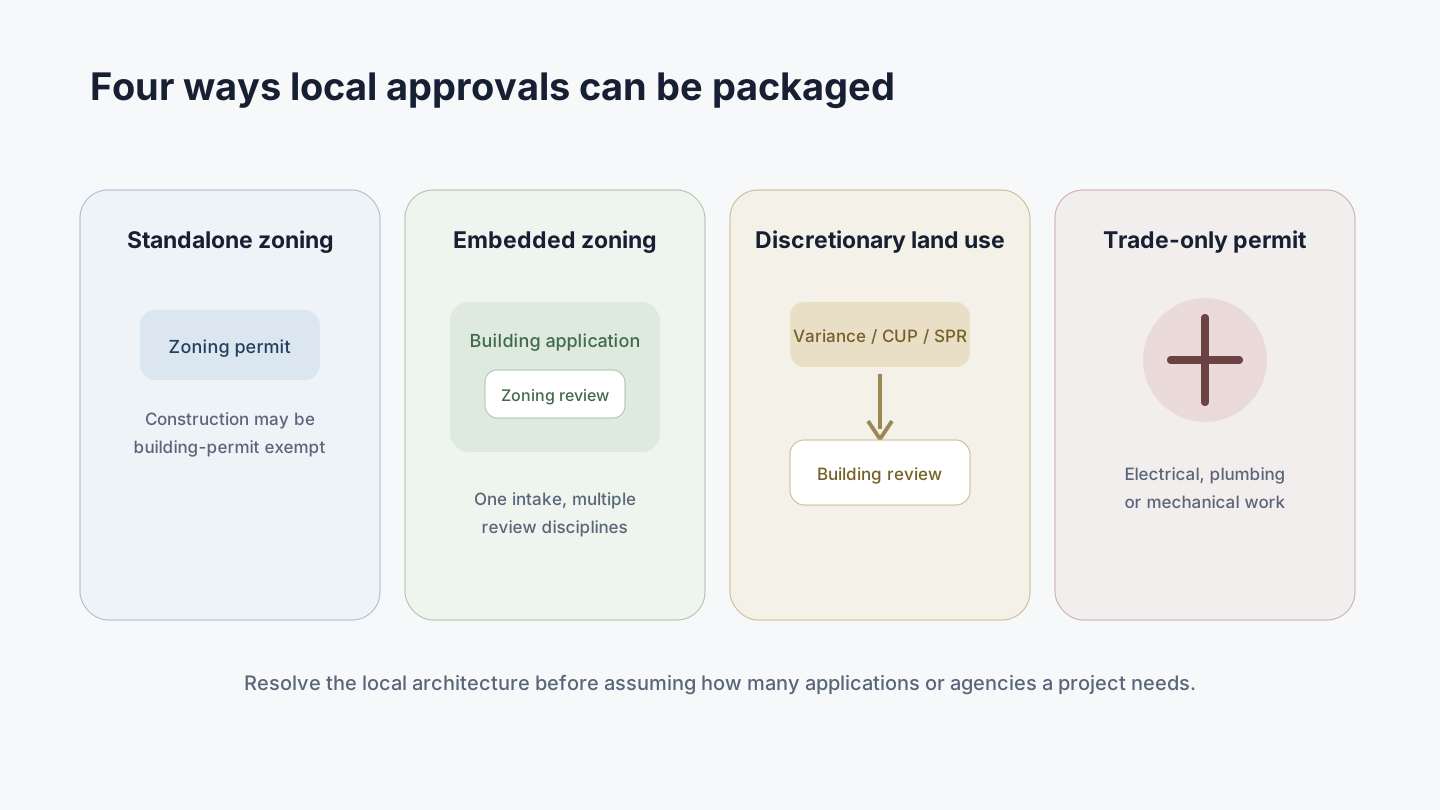
1. Standalone zoning approval when no building permit is required
Portland, Oregon explicitly offers zoning permits for development that does not require a building permit. Its guidance also states that development must comply with the zoning code regardless of other permit requirements.
This pattern matters for smaller site changes such as certain patios, paving, parking areas, fences, or accessory improvements. A building-code exemption can remove one process while zoning rules still control location and dimensions.
2. Building permit with zoning review embedded in the workflow
Some jurisdictions route an applicant through one intake even though planning and building staff are reviewing different legal questions. The permit may not issue until zoning signs off.
For a homeowner, the practical result is that one application can still contain several approvals. Track the review disciplines separately so a zoning correction is not mistaken for a building-code correction.
3. Discretionary land-use approval before or alongside building review
A project that does not comply with zoning as-of-right may need a variance, conditional use, rezoning, design review, or site plan review. Those are not interchangeable.
The expensive sequencing error is completing detailed construction engineering before learning that the proposed use or building envelope cannot be approved on the parcel.
4. Trade-only permit
Electrical, plumbing, or mechanical work can require a permit even when there is no building permit for the project. Austin, Texas publishes standalone trade-permit pathways. Minneapolis directs electrical-permit applicants to the Minnesota Department of Labor and Industry where the state is the authority having jurisdiction.
Zoning applies even when a building permit does not
This is the most important distinction for small homeowner projects.
Portland states that all building development must comply with its zoning code regardless of other code and permit requirements. Seattle similarly states that work exempt from a permit must still meet code requirements and development standards.
A shed, fence, patio, driveway, or other small project can therefore be exempt from a construction permit and still violate a setback, height limit, lot-coverage rule, or mapped overlay.
For placement questions, use what is a setback in zoning and how to read a zoning map. For fences, use the fence permit guide.
A practical project sequence
- Identify the parcel and authority. Confirm city, village, town, county, and any special district or state role.
- Resolve zoning first. District, permitted use, setbacks, height, lot coverage, overlays, parking, shoreline/floodplain, and discretionary approvals.
- Classify the construction scope. Determine whether a building permit is required under the local code and exemption list.
- Identify every trade permit. Electrical, plumbing, mechanical, gas, fire protection, elevator, and specialty systems.
- Add site-development approvals. Grading, erosion control, stormwater, driveway, excavation, and right-of-way work.
- Map dependencies. Determine what must be approved before another permit can issue.
- File a complete package. Use the permit application checklist.
- Track each permit through final inspection. Then determine whether the project needs an occupancy document using the certificate of occupancy guide.
Current official examples
| Jurisdiction | Published structure | What it demonstrates |
|---|---|---|
| Portland, OR | Separate zoning-permit pathway exists for development that does not require a building permit | Building-permit exemption does not equal zoning exemption |
| Seattle, WA | SDCI issues land-use, construction, and trade permits and publishes separate common-project rules | Multiple approval families can live inside one department |
| Austin, TX | Development Services publishes building, site-plan, fence, and standalone trade permit types | One project can trigger several distinct permit instruments |
| Madison, WI | Project intake routes zoning, building inspection, engineering, and other departments by scope | Department sequence is part of the permit path |
| Minneapolis, MN | City permit types are separate, and electrical authority can be the State of Minnesota | The issuing authority can change by trade |
These examples describe those jurisdictions only. Never copy a local permit threshold or sequence into a national answer.
Project examples
Detached garage
Zoning may regulate whether an accessory structure is allowed, its setbacks, height, coverage, and location. Building review may address structure and code. Electrical work can add a trade permit. A new driveway can add a right-of-way or engineering review.
Interior kitchen remodel
Zoning may have little or no role if use and footprint do not change. Structural alterations can trigger building review. New circuits, plumbing relocation, gas work, or ventilation can add trade permits.
Fence
The fence may need no building permit while still being limited by zoning. Height, yard location, corner visibility, floodplain status, pool-barrier requirements, and public right-of-way can each change the approval path. See the fence permit guide.
Change of use
A warehouse becoming an assembly use or an office becoming residential can make zoning and occupancy the central issues even when the construction scope looks modest. The new use must be allowed, and building/life-safety requirements may change with occupancy classification.
What one approval does not prove
- A zoning approval does not prove construction safety.
- A building permit does not automatically prove every land-use condition was satisfied unless local procedure says it does.
- A trade permit does not authorize unrelated structural work.
- A GIS parcel line is not a boundary survey.
- An issued permit is not a final inspection.
- A final construction inspection is not always the same as a certificate of occupancy.
Fees and timing
There is no reliable national fee or review-time range for "a permit" because a project can involve several permit families with different clocks. A discretionary land-use case can have public-notice and hearing stages. A simple trade permit may be much faster. Building plan review can be affected by scope, completeness, corrections, workload, and outside-agency review.
For budgeting, use how much does a building permit cost. For post-issuance timing, use how long a building permit stays valid.
Use GovCodex to resolve the stack for one parcel
Permit Check is designed to connect the proposed project to the parcel, responsible authorities, zoning constraints, permit families, and official sources. That property-specific resolution is more useful than memorizing another city's threshold.
Frequently asked questions
What is the difference between a zoning permit and a building permit?
Zoning review determines whether a use, size, and placement are allowed on the parcel. Building review determines whether the proposed construction meets building-code requirements.
Do I need both?
Possibly. Some jurisdictions issue both separately, some embed zoning clearance in the building-permit process, and some projects need zoning review even when no building permit is required.
Which comes first?
The local process controls, but resolving zoning before detailed construction design prevents spending money on a project that cannot be approved as proposed.
Can a project be exempt from a building permit but still need zoning approval?
Yes. Portland has a zoning-permit pathway for development that does not require a building permit, and Seattle states that permit-exempt work must still meet applicable standards.
Are electrical and plumbing permits included in a building permit?
Sometimes they are coordinated in one department, but they remain separate permit disciplines in many jurisdictions. Confirm who issues each trade permit.
Does a building permit prove my setback is correct?
Do not assume so. Confirm whether the local workflow includes zoning clearance and what boundary evidence it accepts.
What if zoning does not allow my project as designed?
The options can include redesign, a variance, conditional use, rezoning, or another discretionary approval. Which path is available depends on the local code and the type of conflict.
Sources
Reviewed September 5, 2026.
- Portland: Zoning Permits
- Portland: Do You Need a Permit for Your Home Project?
- Seattle SDCI: Do You Need a Permit?
- Austin Development Services: Types of Permits
- Madison Development Services Center: Permits
- Minneapolis: Types of Construction Permits
- Minnesota Department of Labor and Industry: Electrical Permits
Related GovCodex guides
Last reviewed: September 2, 2026. Requirements vary by jurisdiction and property.
Related Articles
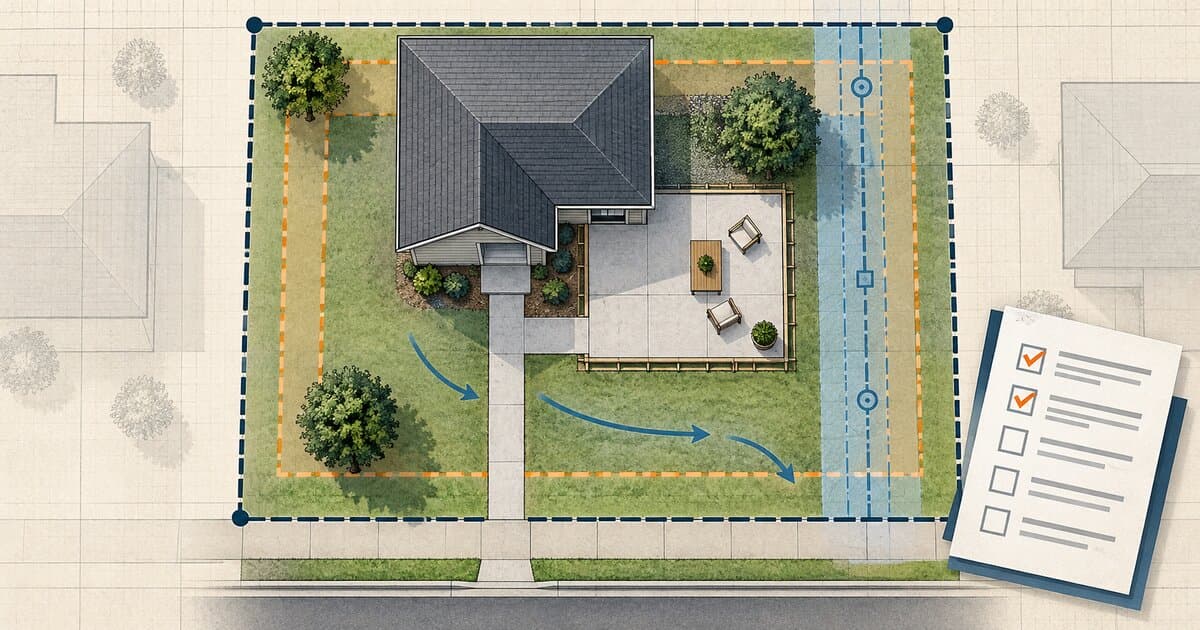
Do You Need a Permit to Pour Concrete? Patios, Slabs & Walkways
Pouring concrete may be permit-exempt or regulated depending on whether it is a patio, slab, walkway, driveway, structural base, or right-of-way work.

Do You Need a Permit for an EV Charger?
Learn when a home EV charger needs an electrical permit, when panel or service upgrades enter the project, and how inspection and utility coordination work.
Do You Need a Permit for a Kitchen Remodel?
Learn when cabinets, sinks, islands, appliances, walls, wiring, plumbing, gas, or ventilation can change kitchen-remodel permit and inspection needs.