
Can I Convert My Garage Into an Apartment or ADU?
Check the existing garage, parcel rules, building and utility scope, permits, inspections, and occupancy path before designing a garage apartment.
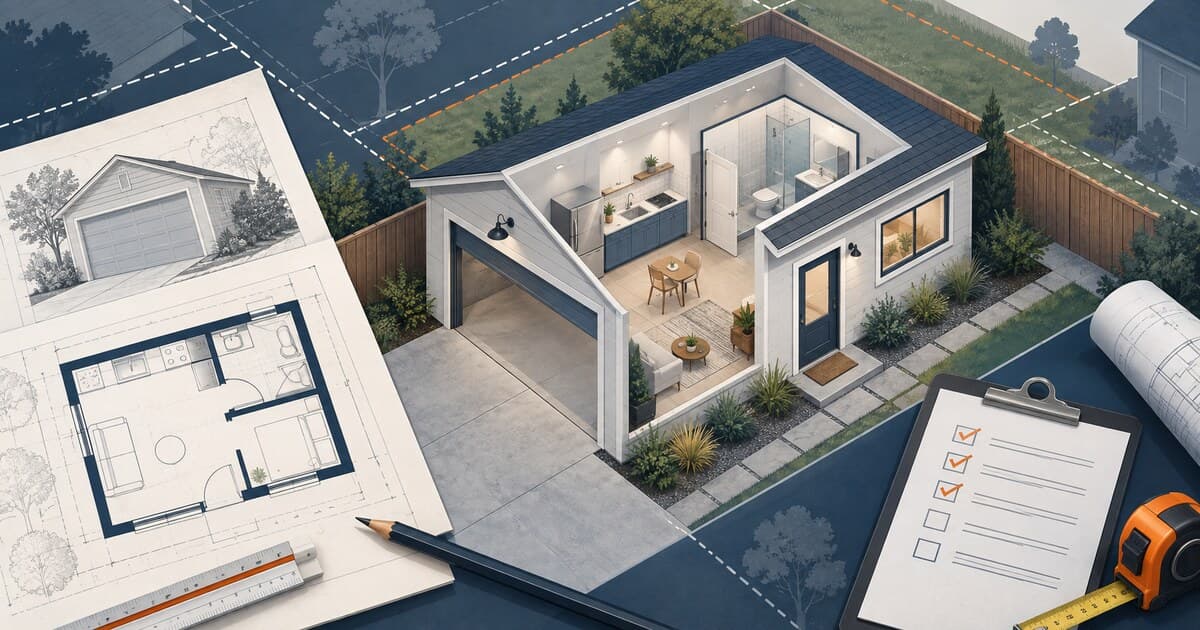
Maybe—but the garage itself is only the starting point. A lawful garage apartment usually has to pass four separate checks: the existing garage must be a legal structure that can be converted, local zoning must allow the proposed dwelling use, the design must satisfy the building and trade-code path for habitable space, and the project must complete the required permits, inspections, and occupancy closeout.
There is no dependable national rule for ADU size, setbacks, parking, owner occupancy, fees, or approval time. Those details depend on the property, the type of garage, and the controlling state and local rules. Treat online examples as a research map, not as permission to build.
Start with the project you actually mean
“Garage conversion” can describe materially different projects:
- converting an attached garage into rooms that remain part of the main home;
- creating a self-contained dwelling inside an attached garage;
- converting a detached garage into an accessory dwelling unit;
- keeping part of the garage for vehicles while converting the rest;
- adding a new story or expanding the footprint; or
- finishing space for an office, gym, or guest room without creating a separate dwelling.
Write down whether the space will have its own kitchen, bathroom, sleeping area, entrance, address, utilities, or tenant. Also note whether the garage is attached or detached, whether vehicle parking remains, and whether the exterior walls, roof, slab, doors, windows, or footprint will change. Those facts determine which questions the reviewing authority must answer.
Check a garage-conversion ADU at your address. GovCodex can help organize the property and project questions, but a guidance result is not a permit decision, zoning approval, code analysis, or confirmation that the garage can become a dwelling.
The four feasibility gates
| Gate | What to establish | Evidence to gather |
|---|---|---|
| Existing condition | The garage location, footprint, prior approvals, and current use | Permit history, survey or site plan, assessor information, and measured existing plans |
| Zoning and land use | Whether this kind of dwelling is allowed on this parcel and in this garage | Zoning district, ADU provisions, overlays, parking treatment, and a written authority response when needed |
| Building and utilities | Whether the structure and proposed systems can follow the applicable code path | Existing-condition assessment, proposed plans, structural information, utility capacity, and trade scope |
| Permit and closeout | Which reviews, permits, inspections, and final approvals complete the project | Current applications, submittal checklist, correction responses, inspection records, and occupancy documentation |
Passing one gate does not pass the others. An ADU can be allowed by zoning while the existing slab or structure is unsuitable for the proposed design. A technically buildable plan can still conflict with a local use rule. A permit application can also remain incomplete until separate utility, planning, or trade information is supplied.
1. Verify the garage before designing the apartment
Begin with the legal and physical baseline. Find the permit history for the garage and compare it with the current footprint. Record the inside dimensions, ceiling and opening locations, framing, foundation or slab, drainage conditions, utility service, and its relationship to the main house and property lines. A tax or real-estate record can be useful context, but it does not replace the controlling permit file or a property-specific survey.
Do not infer a setback or buildable envelope from a map pin, aerial image, geocoder outline, or generic accessory-building default. If the proposal changes the footprint, height, roof, or exterior openings, those changes need their own property-specific review.
Older garages were designed for vehicles and storage, not automatically for sleeping, cooking, bathing, heating, or year-round energy performance. A qualified designer or contractor may need to investigate the slab, moisture, structure, clear height, and utility routing before the layout is reliable. The goal at this stage is to identify unknowns—not to assume that a room arrangement proves feasibility.
2. Ask the zoning questions separately
First identify the authority with jurisdiction over the parcel. A postal city name does not prove that the parcel is inside that municipality, and county or special-district rules may also matter.
Then ask whether the proposed unit is treated as an attached ADU, detached ADU, internal conversion, duplex, or another use. Request the current rules that govern:
- whether the use is allowed and which approval path applies;
- whether the existing garage location can be used for the conversion;
- lot, building, or dwelling-count limits;
- size, height, placement, and coverage controls;
- parking or vehicle-space treatment;
- access, addressing, and utility requirements;
- rental, owner-occupancy, or short-term-rental rules; and
- historic, floodplain, wildfire, coastal, or other overlay review.
These are questions to verify, not universal requirements. Do not copy a setback, maximum area, parking count, or occupancy rule from another city or a generic article.
The national ADU feasibility guide explains the broader parcel-first decision. If the answer depends on a zoning approval rather than a building permit, zoning permits and building permits are separate reviews with different purposes.
3. Turn the concept into a reviewable scope
Once the use path is plausible, document the proposed conversion clearly. A review set may need existing and proposed floor plans, exterior elevations, a site plan, structural details, energy information, and mechanical, electrical, and plumbing scope. The actual checklist comes from the reviewing authority.
Common design investigations include:
- how occupants enter and leave the unit;
- whether sleeping-room emergency escape provisions apply;
- separation between the dwelling and any space that remains a garage;
- floor, wall, roof, and opening alterations;
- heating, ventilation, insulation, and moisture control;
- electrical service and circuit scope;
- water, sewer, or onsite-system capacity;
- kitchen and bathroom fixture locations; and
- smoke, carbon-monoxide, and other life-safety provisions.
This list is not a claim that every item has the same rule everywhere. It is a scoping checklist for the designer and reviewing office. Use the locally adopted code, current amendments, and the authority’s project-specific direction for the final design.
If the proposal retains vehicle storage beside or below living space, make that mixed use explicit. If it adds floor area above the garage or extends the footprint, describe it as an addition rather than a simple interior conversion. Hidden scope is a common reason that early assumptions become unusable.
4. Map the permit, correction, inspection, and occupancy path
Before pricing construction, ask the authority for the complete sequence. Depending on the location and scope, the path can include planning or zoning confirmation, site-plan review, building review, separate trade permits, utility coordination, corrections, staged inspections, and a final occupancy step.
The permit record should match the approved plans. When the plan changes, ask whether a revision is required before building the new version. Keep approved drawings, correction responses, inspection results, and final closeout records together. An issued building permit is not the same as authorization to occupy a new dwelling.
For a general view of plan review, see the site plan review guide. The certificate of occupancy guide explains why final use approval is a separate decision from permit issuance.
What current official examples show
These examples illustrate how real authorities organize the work; they do not establish rules for a different property.
Portland, Oregon
Portland’s current ADU permit guidance expressly includes converting an existing garage. It directs applicants to obtain permits before conversion, research zoning and site conditions, evaluate the existing structure, prepare plans, respond to corrections, and complete inspections. It also identifies building and trade permits as parts of the project path.
Madison, Wisconsin
Madison’s attached ADU workflow separates zoning, preliminary or site-plan review, utility coordination, permits, inspections, and certificate-of-occupancy closeout. Madison also publishes a different path for a new detached accessory dwelling, reinforcing why attached and detached projects should not be treated as interchangeable.
California
California HCD’s ADU resources collect the state framework and a handbook updated in March 2026. California’s state rules are important for California properties; they are not national defaults and do not replace a parcel-specific local review.
A practical pre-application packet
Prepare a compact packet before asking for a reliable answer:
- Property address and parcel identifier.
- Confirmed reviewing authority and zoning district.
- Survey or reliable site plan showing the garage and lot.
- Permit history for the existing garage.
- Existing photos, dimensions, openings, and utility locations.
- A written scope identifying attached or detached status and whether vehicle space remains.
- A concept plan showing rooms, entrances, windows, kitchen, bathroom, and major systems.
- The authority’s current ADU, garage-conversion, and submittal guidance.
- A list of unresolved zoning, structural, utility, and occupancy questions.
This packet makes an early conversation more specific. It does not substitute for the plans, professional work, or approvals the authority requires.
Cost and schedule without false precision
Do not rely on a national “garage conversion cost” or approval-time promise. Project cost can change materially after structural, moisture, energy, utility, and zoning investigations. Government charges can include different application, plan-review, trade, utility, impact, or inspection components depending on the authority and project.
Ask for the current fee schedule and which project inputs control the calculation. Separate agency review time from applicant design time, correction time, contractor scheduling, and construction. The building permit cost guide explains the fee-mechanics questions to ask, while the permit approval timeline guide separates the stages that are often blurred together.
Frequently Asked Questions
Is every garage apartment an ADU?
Not necessarily. The authority may classify the project based on whether it creates an independent dwelling and whether the garage is attached, detached, internal, expanded, or partly retained for vehicles. Confirm the local definition and approval path.
Do I need a permit to convert a garage into living space?
Do not assume the work is exempt. A dwelling conversion changes use and can involve building, planning, electrical, plumbing, mechanical, utility, inspection, and occupancy decisions. Ask the authority for the complete scope-specific path.
Can I convert only half of a two-car garage?
Possibly, but the mixed dwelling-and-vehicle arrangement requires project-specific zoning and building review. Show the retained garage, proposed separation, openings, access, and utility scope on the plans.
Can I use the existing garage slab and walls?
Only after their condition and suitability for the proposed habitable use are evaluated. Existing construction should not be assumed to meet the structural, moisture, energy, or other requirements that apply to the conversion.
Will I have to replace lost parking?
That depends on the controlling local and state rules and the project classification. Verify the current parking treatment for this property; do not use another jurisdiction’s count as a default.
Can I rent the completed unit?
Construction approval and rental authorization are separate questions. Confirm any occupancy, rental-registration, short-term-rental, owner-occupancy, or business-license rules that apply locally.
Does the garage need its own utilities?
The answer depends on the system, provider, property, and local rules. Identify the proposed connections and ask the building authority and utility providers about capacity, metering, service, and inspection requirements.
What if the garage is close to a property line?
Do not infer that the existing location is acceptable for a dwelling conversion. Verify the actual boundary, existing approvals, zoning treatment, and any building-code implications with property-specific evidence.
Is an attached conversion easier than a detached conversion?
Not universally. The two can follow different zoning, structural, separation, access, and utility paths. Define the project first, then compare the requirements that actually apply.
Does a permit let me occupy the apartment?
Not by itself. Complete the required inspections and obtain the final approval or occupancy documentation required by the authority before treating the space as a lawful dwelling.
Can GovCodex tell me the exact setback or maximum ADU size?
Only when the controlling, reviewed evidence and property context support that claim. A guidance result does not invent dimensional rules or buildable envelopes from defaults, map geometry, or another jurisdiction’s example.
Sources and evidence boundary
Facts in this guide were checked on September 17, 2026, against the California Department of Housing and Community Development ADU hub, the City of Portland ADU permit guide, and the City of Madison workflows for attached ADUs and new detached accessory dwellings.
This page provides national preparation guidance. The official examples are labeled and are not presented as requirements for another jurisdiction. No local setback, fee, parking count, permit threshold, approval time, buildable envelope, or authority is inferred from fallback data or synthetic geometry.
Related Articles
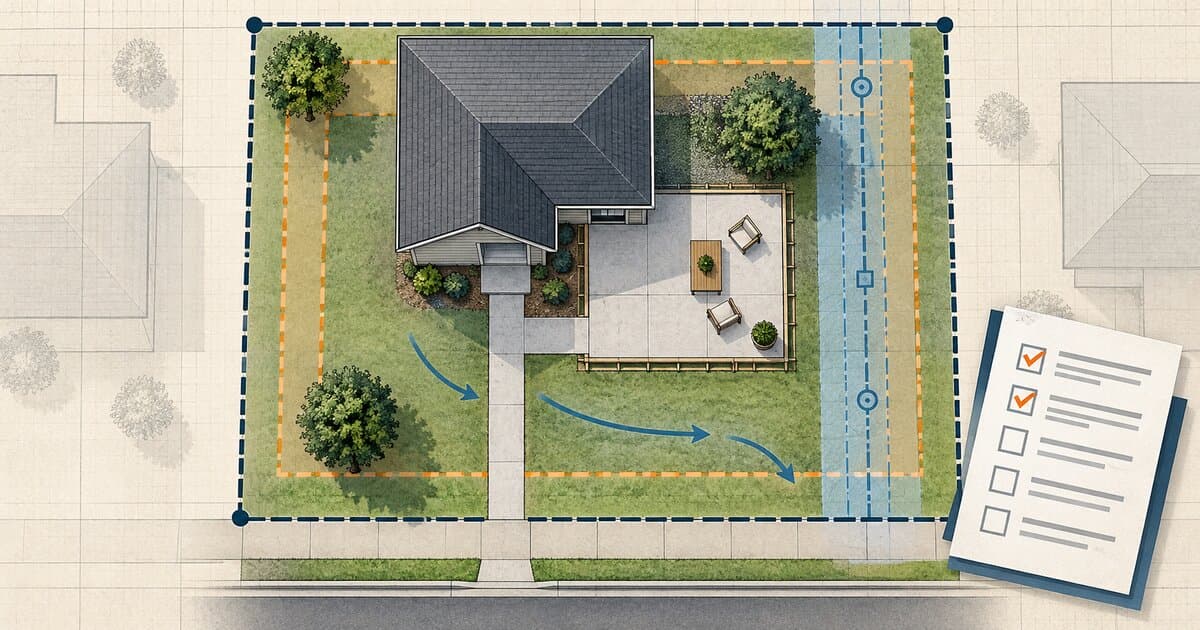
Do You Need a Permit to Pour Concrete? Patios, Slabs & Walkways
Pouring concrete may be permit-exempt or regulated depending on whether it is a patio, slab, walkway, driveway, structural base, or right-of-way work.
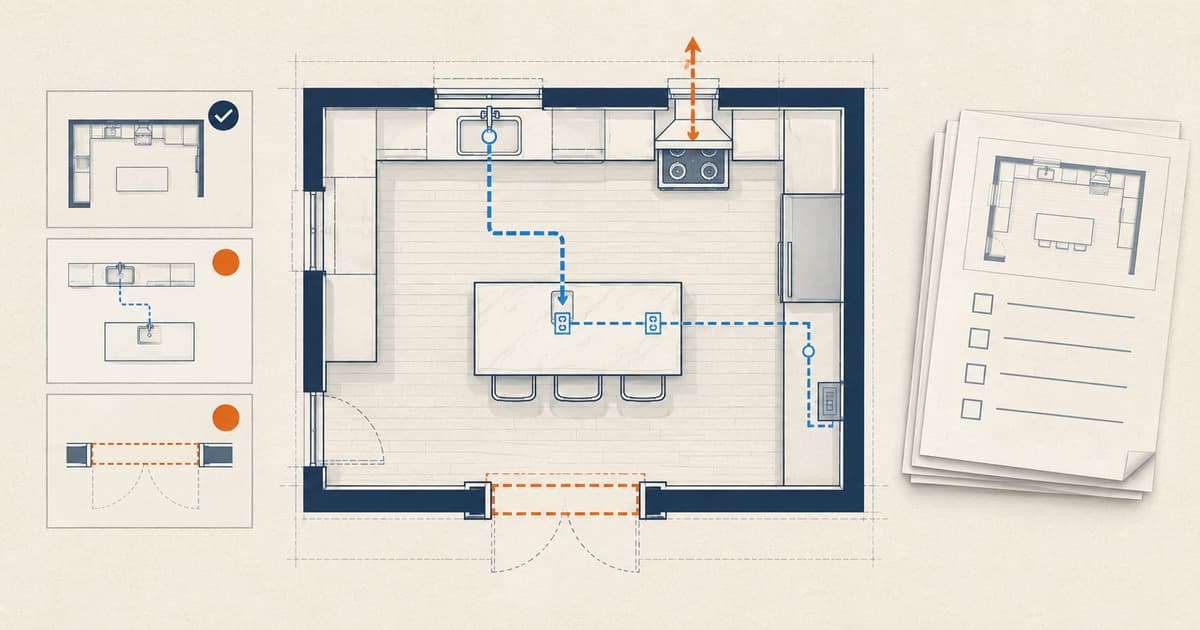
Do You Need a Permit for a Kitchen Remodel?
Learn when cabinets, sinks, islands, appliances, walls, wiring, plumbing, gas, or ventilation can change kitchen-remodel permit and inspection needs.

Do You Need a Permit to Finish a Basement?
Learn when a basement finish needs a permit, what changes for bedrooms and bathrooms, and which inspections come before drywall.