
Can I Build a Detached Garage or Shed in My Backyard?
A garage or shed decision depends on the parcel, proposed use, zoning constraints, and local permit path—not a national size threshold.

Usually, the answer depends on the parcel before it depends on the building. A detached garage or shed may be an allowed accessory use, but its location, height, lot coverage, utility conflicts, floodplain or environmental constraints, and proposed use can still require review. A local building-permit exemption only answers one question; it does not automatically waive zoning, electrical, plumbing, mechanical, driveway, drainage, or other approvals.
There is no national square-foot threshold that reliably tells you whether a garage or shed needs a permit. Current municipal examples range from 120 to 256 square feet, and every example carries additional conditions. Start with the authority for the property, then test the structure and its location against that authority's current rules.
The decision has three separate layers
Treat “Can I build it?” as three decisions, not one:
- Is the structure and use allowed here? Zoning may regulate whether an accessory structure is allowed, where it may sit, how tall it may be, how much of the lot it may cover, and whether a garage or shed must remain subordinate to the main building.
- Does the structure need a building permit? The answer may turn on floor or roof area, height, construction type, foundation, use, site hazards, or other local criteria.
- What other approvals are triggered? Electrical service, plumbing, heat, grading, a new curb cut, work in an easement, a floodplain, a critical area, or conversion to living space can each create a separate review path.
A “permit-exempt” shed can therefore be legal in one location and prohibited in another location on the same lot. A garage that clears zoning can still need structural plans and inspections. And a structure that needs no building permit may still need a zoning permit.
Why 120 or 200 square feet is not a national rule
Small-project exemptions are local rules, not portable defaults. These current examples were checked on September 4, 2026:
| Jurisdiction | What the official source says | Why the number cannot be reused elsewhere |
|---|---|---|
| Seattle, Washington | A one-story detached shed with a roof footprint of 120 square feet or less can avoid a construction permit only when all listed conditions are met, including the foundation, use, and critical-area conditions. | The rule uses roof footprint and adds site, foundation, and use tests. |
| Madison, Wisconsin | An unheated shed of 150 square feet or less can avoid a building permit when it is at least 10 feet from dwelling units on the same property, but zoning placement and size rules still apply. | The exemption combines area, heat, separation, and zoning requirements. |
| Austin, Texas | A one-story detached accessory structure of 200 square feet or less and 15 feet or less in height can be exempt from a building permit only if it is not a dwelling, has no plumbing, and is outside a flood hazard area. | Area alone is not enough; height, use, utilities, and flood risk matter. |
| Portland, Oregon | A nonhabitable accessory structure generally needs a building permit when it is over 200 square feet or over 15 feet high. A smaller structure may still require a zoning permit. | Portland separates building and zoning review and has additional parcel-specific rules. |
| Fairfax County, Virginia | The county's residential new-building path includes detached garages and identifies sheds over 256 square feet in the same permit category. | The threshold and application pathway belong to Fairfax County, not a national code rule. |
These are named examples, not estimates for your property. Do not use a neighboring city’s exemption, an old contractor checklist, or a model-code number until the local authority confirms it applies to the parcel and proposed work.
Start with the authority, not the structure size
The office that controls the answer may be a city, county, township, consolidated government, special district, or a combination. Mailing address and ZIP code do not establish permitting authority. An unincorporated parcel can use a county process while a nearby incorporated parcel uses a city process.
Before drawing the garage or buying a shed, confirm:
- the parcel's actual permitting and zoning authorities;
- whether a homeowners' association, recorded covenant, easement, or private restriction also applies;
- whether the lot is in a floodplain, shoreline, historic district, critical area, wildfire zone, or other overlay;
- whether the project crosses a utility, drainage, access, or conservation easement; and
- whether a separate agency controls a driveway, septic system, well, or right-of-way.
Permit Check helps identify the property-specific starting point. It is preparation guidance, not a permit determination or boundary survey.
Classify what you are actually proposing
Names used in a store listing do not control code classification. Describe the physical work and intended use.
| Question | Why it changes the review |
|---|---|
| Is it a storage shed, detached garage, workshop, greenhouse, carport, studio, or dwelling unit? | Local codes can assign different standards and permit paths to each use. |
| Will people sleep, cook, bathe, work, or gather inside? | Habitable or commercial use can trigger occupancy, egress, energy, accessibility, plumbing, fire, or zoning requirements. |
| Is it prefabricated, site-built, or moved from another property? | Prefabricated does not mean permit-exempt; anchorage, foundation, product documents, and installation still matter. |
| Will it have electricity, plumbing, gas, heat, cooling, or solar equipment? | Trade work can require separate permits even when the shell is exempt. |
| Will it be attached to the house by a roof, wall, breezeway, or structural connection? | A local code may treat it as an addition rather than a detached accessory structure. |
| Will grading, retaining walls, tree removal, a new driveway, or drainage changes be required? | Site work can add permits and constraints independent of the building. |
If the future plan is an office, guest room, rental, gym, salon, or apartment, disclose that use at the start. Permitting a storage building and later converting it is not a shortcut; it can create a separate change-of-use or dwelling review and may require corrective work.
Draw the usable part of the lot
The correct location is normally found by building a parcel constraint map. At minimum, plot:
- surveyed lot lines and dimensions;
- front, side, rear, street-side, alley, and corner-lot conditions;
- required setbacks or yards for the applicable accessory structure;
- the principal house and every existing structure;
- easements and recorded access areas;
- overhead and underground utilities;
- septic tanks, drain fields, wells, and required separation areas;
- floodplain, drainage, steep-slope, shoreline, tree, or critical-area constraints;
- driveway access, maneuvering space, and any required parking; and
- existing and proposed lot coverage or impervious area.
A web parcel map can be useful for orientation, but it is not a boundary survey. Do not infer a buildable envelope, setback distance, parcel area, or legal boundary from geocoder or synthetic geometry. If the location is close to a line or easement, obtain the survey or professional field information the authority requires.
Read what a zoning setback means and how impervious-surface coverage works before assuming an open patch of yard is buildable.
Check zoning before relying on a building-permit exemption
Zoning rules often control the part of the decision that is hardest to correct after construction. Depending on the local code, they may regulate:
- whether a detached accessory structure is allowed on the lot;
- minimum separation from lot lines, streets, alleys, the house, or other structures;
- maximum height and how height is measured;
- lot coverage, building coverage, floor area, or impervious surface;
- placement in a front, side, or rear yard;
- garage door orientation, driveway access, parking, and visibility;
- the number or combined area of accessory structures;
- whether the principal building must exist first; and
- limits on business, dwelling, vehicle-storage, or animal uses.
Portland's current guidance is a clean example of why the reviews must be separated: a small nonhabitable accessory structure can fall below the building-permit threshold and still need a zoning permit, while the structure still counts toward building coverage and floor area.
If the proposed location does not comply, moving or resizing the structure is usually the first option. A zoning variance is a separate discretionary process with local findings; it is not an automatic waiver for an inconvenient design.
Determine the building-permit path
Once zoning and site constraints are understood, ask the building department how the proposed work is classified. The answer may be one of these paths.
1. Permit-exempt storage structure
The project satisfies every element of a local exemption. Keep the authority's written criteria and the plan used to make the decision. Confirm that zoning, anchorage, utility, floodplain, and easement rules are still satisfied.
2. Detached accessory-structure permit
The project needs a structural permit and may use a simplified residential submission. Plans commonly describe dimensions, construction, foundation or anchorage, framing, openings, roof, location, and code information. Use the accessory-structure permit guide as a preparation checklist, then follow the issuing authority's current submittal instructions.
3. Garage plus trade or site permits
A powered, heated, plumbed, or served garage can require electrical, plumbing, mechanical, gas, grading, driveway, right-of-way, or other permits in addition to the building permit. Confirm whether the authority uses one coordinated application or separate permits.
4. Habitable space, ADU, or later conversion
Sleeping, cooking, bathing, or dwelling use can change zoning and building-code treatment. A storage shed or garage permit does not establish legal residential occupancy. If the goal is a dwelling unit, start with the ADU feasibility guide and apply under the correct use from the beginning.
Seattle illustrates the classification issue: its small-shed exemption is limited to storage, plants, or similar unoccupied use. Portland separately says habitable accessory structures always need a building permit.
What plans and documents should you expect?
Requirements vary, but a useful preparation set often includes:
- a site plan showing lot lines, dimensions, structures, setbacks, easements, utilities, access, and the proposed location;
- floor plans with dimensions, openings, room or storage uses, and fixtures;
- exterior elevations with grade, wall height, roof height, doors, windows, and materials;
- foundation or anchorage details appropriate to the structure and site;
- framing and structural details, including engineered documents when required;
- electrical, plumbing, mechanical, or gas scope where applicable;
- grading, drainage, erosion-control, tree, septic, driveway, or floodplain information when triggered; and
- manufacturer installation documents for prefabricated structures.
The reviewing authority decides the required level of design. A simple shed sketch may be enough in one path, while a large garage, unusual span, retaining condition, steep site, habitable use, or engineered system can require sealed plans.
Garage and shed decisions are different
Both can be accessory structures, but a garage often carries additional consequences because it stores vehicles and connects to a driveway.
| Issue | Small storage shed | Detached garage |
|---|---|---|
| Building-permit exemption | May exist under a local multi-part test | Do not assume an exemption; Madison, for example, requires a permit for any garage |
| Access | Footpath or yard access may be sufficient | Driveway, curb cut, alley, turning, parking, and right-of-way rules may apply |
| Structural scope | Light framing or prefabricated system | Larger spans, vehicle openings, foundations, fire separation, and engineered elements may be reviewed |
| Utilities | Often none | Electrical service, heating, plumbing, or vehicle charging can add trade permits |
| Future use risk | Conversion to studio or sleeping space changes the analysis | Apartment, office, workshop, or business use can trigger zoning and occupancy review |
Do not use that comparison as a permit determination. It shows which questions to take to the authority.
Utilities, easements, and access can defeat an otherwise compliant location
An accessory structure should not be placed over a utility or drainage easement simply because a zoning setback appears to allow it. Recorded easements can give another party access or restrict permanent improvements. Utility providers may require clearance from overhead or underground facilities. Septic and well separation areas can reserve land that looks vacant.
For a garage, trace the full access path. A legal building location does not guarantee approval for a new driveway or curb cut. Street classification, sight distance, alley rules, stormwater, tree protection, and right-of-way permits can control the access design.
Call the applicable utility-location service before excavation, but do not confuse field utility marking with title or easement research. They answer different questions.
Cost and schedule: price the permit stack, not a national average
There is no defensible national garage or shed permit price or approval time. Fees may depend on project value, area, construction type, trade permits, plan-review time, grading, utilities, revisions, or inspections. Schedules change.
Build a budget from the current local fee schedule and the full permit stack. See how building permit fees are calculated. Build the schedule from the local completeness standard, review path, correction cycles, and outside-agency dependencies; see how long building permit approval can take.
Once issued, the permit may have separate deadlines to start work, request inspections, or complete the project. Review building permit validity and extensions before treating approval as permanent.
Inspections and closeout
The local permit and approved plans control the inspection sequence. Depending on the work, inspections may include:
- excavation, footing, pier, slab, or foundation work before concealment;
- underground plumbing, electrical, grounding, or utility work;
- framing, sheathing, anchorage, structural connectors, and fire-resistance details;
- rough electrical, plumbing, gas, or mechanical work;
- insulation or energy-code items for conditioned space;
- drainage, grading, driveway, or site restoration; and
- final building and trade inspections.
Do not cover work before the required inspection. Permit issuance is not closeout. Confirm that corrections are cleared and that the authority records the permit as final or complete.
Owner-builder does not mean rule-free
Some jurisdictions allow an owner to act as the applicant or perform some work; others limit who may perform licensed trades or require disclosures. Owner-builder status does not waive zoning, structural, energy, electrical, plumbing, mechanical, safety, or inspection requirements. Confirm the local licensing and homeowner-exemption rules before hiring labor or starting trade work.
Buying a property with an existing garage or shed
An old structure is not necessarily approved, and an online search that finds no permit is not proof that it is illegal. Records may be incomplete, archived under an older address or parcel, or governed by a historical exemption.
For due diligence:
- Compare the structure with surveys, assessor records, approved plans, permits, inspection history, and final records.
- Confirm the current zoning classification and whether the use and location comply now or may be legally nonconforming.
- Ask the authority what records exist and what would be needed to verify, legalize, alter, or remove the structure.
- Inspect the condition independently; permit records do not replace a property inspection.
- Preserve contingencies until the authority, title documents, and physical condition are understood.
Use the permit-history guide and the unpermitted-work decision guide without assuming that a missing online record settles the question.
A practical pre-application checklist
Before ordering materials or signing a construction contract:
- Confirm the city, county, and any special-district authority for the parcel.
- Write down the proposed use, dimensions, height, foundation, utilities, and site work.
- Locate surveyed boundaries, easements, utilities, septic or well areas, and overlays.
- Draw the structure, access, setbacks, separation, lot coverage, and impervious area.
- Check zoning approval separately from building-permit requirements.
- Confirm whether electrical, plumbing, mechanical, grading, driveway, or right-of-way permits are needed.
- Use the current application forms, plan checklist, fee schedule, and inspection instructions.
- Keep the written exemption or issued permits with the property records.
- Do not conceal inspected work or occupy the structure for an unapproved use.
- Obtain final inspection and closeout records.
Check your property before choosing a garage or shed plan. The useful result is a documented path to the right authority and questions—not a generic size threshold.
Frequently asked questions
Do I need a permit for a shed under 200 square feet?
Maybe, but 200 square feet is not a national rule. Austin and Portland use 200-square-foot criteria in current local guidance, while Seattle uses 120 square feet, Madison uses 150, and Fairfax County identifies sheds over 256 square feet in its residential new-building path. Each rule has additional conditions, and zoning or trade permits may still apply.
Does a prefabricated shed need a permit?
It can. The authority may consider area, height, foundation or anchorage, location, utilities, use, and site hazards. “Prefabricated” describes how the structure is supplied, not whether local approvals are waived.
Does a detached garage always need a building permit?
Do not assume either answer nationally. Madison's current guidance requires a permit for any garage, while other jurisdictions classify work under their own size, height, use, and construction rules. Confirm the local path before construction.
Can I put a shed directly on my property line?
Only if the applicable zoning, building, fire, easement, and other location rules allow it. Setbacks can vary by structure type, height, yard, alley, lot configuration, and fire-separation condition. Use surveyed boundary information when placement is close.
If no building permit is required, can I put the shed anywhere?
No. A building-permit exemption does not automatically waive zoning placement, lot coverage, easements, utilities, floodplain, drainage, or private restrictions. Portland explicitly provides a zoning-permit path for some structures below its building-permit threshold.
Do electricity or plumbing change the permit decision?
Often. Electrical, plumbing, gas, heating, cooling, or solar work can require separate trade permits and may remove a project from a local exemption. Austin's current accessory-structure exemption, for example, excludes plumbing.
Can I turn a permitted garage or shed into living space later?
Not on the strength of the original storage or garage permit alone. Habitable or dwelling use can trigger zoning, building, egress, energy, fire, plumbing, mechanical, parking, and occupancy requirements. Apply for the actual intended use.
Do I need a survey for a garage or shed permit?
The authority decides what survey or site-plan information is required. A survey is especially important when the structure is close to a boundary, easement, or setback. Online parcel graphics are not a substitute for a boundary survey.
How much does a garage or shed permit cost?
There is no reliable national amount. Use the current fee schedule for the issuing authority and include the building, zoning, trade, grading, driveway, revision, and inspection fees that apply to the actual scope.
What happens if an existing garage or shed has no permit record?
A missing online record does not prove that the structure is legal or illegal. Search archived records and historical addresses, determine what rules applied when it was built, verify zoning and physical conditions, and ask the authority what evidence or corrective path it requires.
Sources
- Sheds — Seattle Department of Construction and Inspections
- Work Exempt from Building Permits — City of Austin Development Services
- Garage, Shed, and Accessory Structures — City of Portland Permitting & Development
- Zoning Permits — City of Portland Permitting & Development
- New Building, Residential — Fairfax County Land Development Services
- New Shed — City of Madison Development Services Center
- New Garage — City of Madison Development Services Center
Related GovCodex guides
Last reviewed: September 4, 2026. Requirements vary by jurisdiction and property.
Related Articles
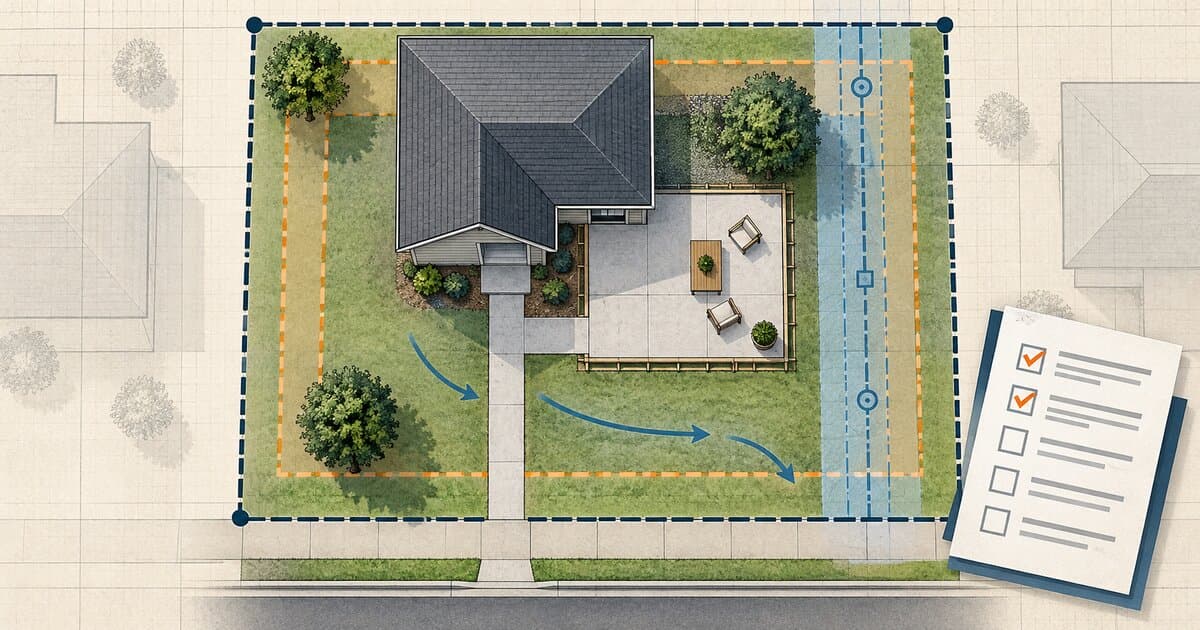
Do You Need a Permit to Pour Concrete? Patios, Slabs & Walkways
Pouring concrete may be permit-exempt or regulated depending on whether it is a patio, slab, walkway, driveway, structural base, or right-of-way work.
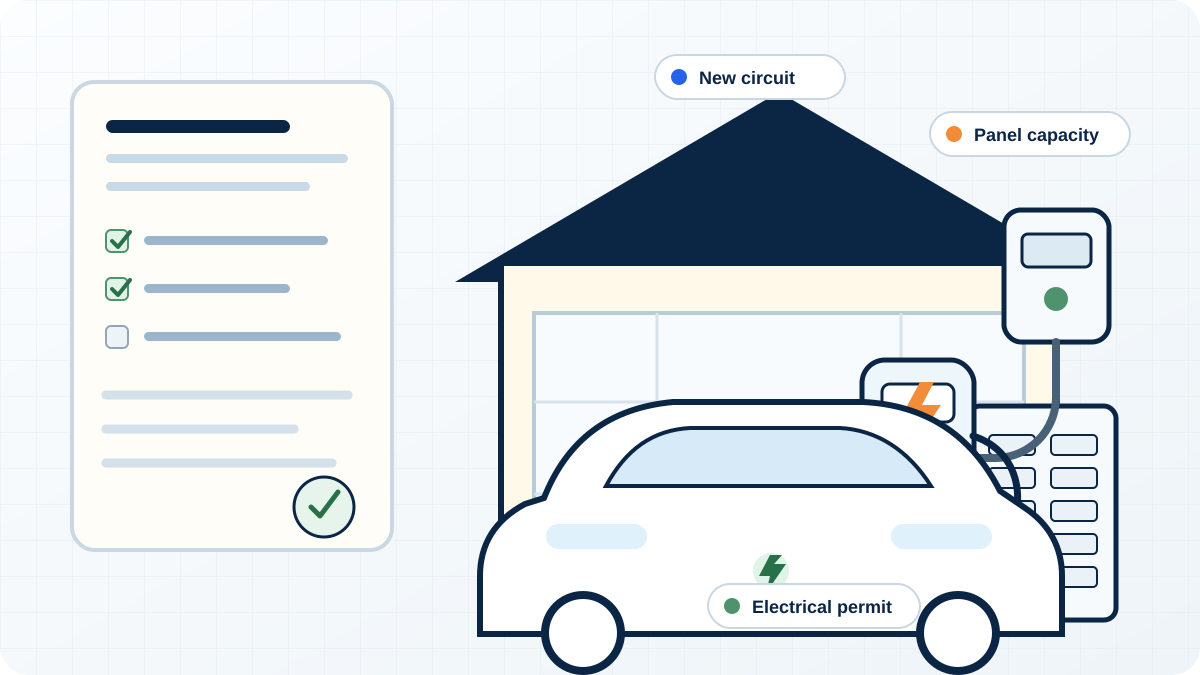
Do You Need a Permit for an EV Charger?
Learn when a home EV charger needs an electrical permit, when panel or service upgrades enter the project, and how inspection and utility coordination work.
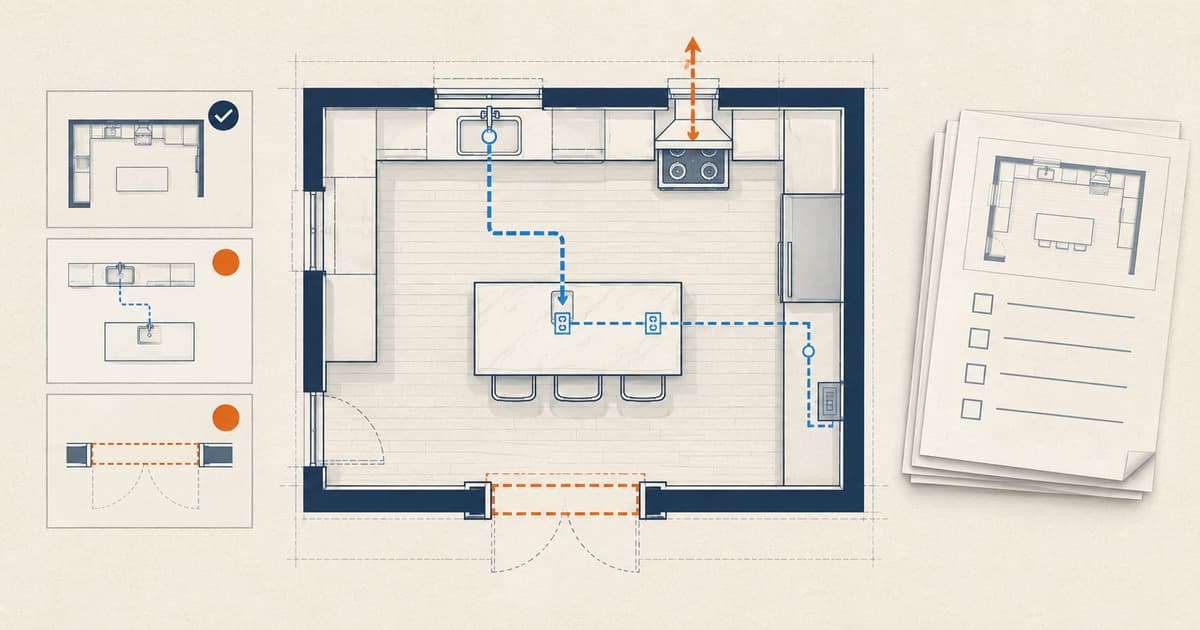
Do You Need a Permit for a Kitchen Remodel?
Learn when cabinets, sinks, islands, appliances, walls, wiring, plumbing, gas, or ventilation can change kitchen-remodel permit and inspection needs.