The Homeowner's Guide to Zoning Variances
Direct Answer: Here is how to get a zoning variance in plain terms. You apply to your local zoning board of appeals (sometimes called a board of adjustment), pay a filing fee, and prove that strict enforcement of a specific zoning rule would create an "unnecessary hardship" tied to conditions unique to your property — not to your personal preferences. The board holds a public hearing, notifies nearby owners, and votes. The exact findings, deadlines, fees, and notice rules depend on your municipality and state code, so always confirm them against your local zoning ordinance and application form before you build.
Key Takeaways
- A zoning variance is permission to deviate from a specific dimensional or use rule (like a setback or height limit) — it is not a permit and does not change your underlying zoning district.
- Most homeowner requests are area (dimensional) variances (setbacks, height, lot coverage), which are generally easier to win than use variances, which let you do something the district otherwise prohibits.
- The core legal test in many states, including Wisconsin, is "unnecessary hardship" based on conditions unique to the property that the owner did not create.
- Variances are decided by a zoning board of appeals at a public hearing, usually with public notice and direct notice to nearby owners within a set radius defined by local rule.
- You typically need a survey or site plan, the specific code section you want relief from, photos, a written hardship statement, and a fee — confirm the exact list against your local application.
- A variance often runs with the land, meaning it can stay attached to the property even after you sell, though boards may attach an expiration tied to when work must start or finish.
- If your application is unusual enough that staff can't answer it from a checklist, contacting your local zoning office is reasonable — but first gather the documents and code sections below so the conversation is productive.
On This Page
Jump to any section of this guide:
- What a Zoning Variance Actually Is
- Why Variances Matter to Homeowners
- Area Variance vs. Use Variance: The Most Important Distinction
- The Required Findings: Unnecessary Hardship
- The Process: From Application to Decision
- When the Rules Usually Apply — and When Exceptions May Appear
- Local Variables That Change the Answer
- Variance vs. Rezoning vs. Conditional Use: Which Tool Do You Actually Need?
- Documents and Facts to Gather Before You Apply
- Common Mistakes
- Example Scenarios
- Practical Variance Checklist
- People Also Ask
- Definitions
- Why Local Rules Change the Answer
- A Local Example: Sturgeon Bay, Door County, Wisconsin
- How GovCodex Helps
- Frequently Asked Questions
What a Zoning Variance Actually Is
If you are researching how to get a zoning variance, you have probably already run into a wall: your deck, addition, garage, or fence won't fit inside the rules your zoning district imposes. A variance is the formal, legal way to ask your local government for permission to depart from one specific rule — and usually only that rule.
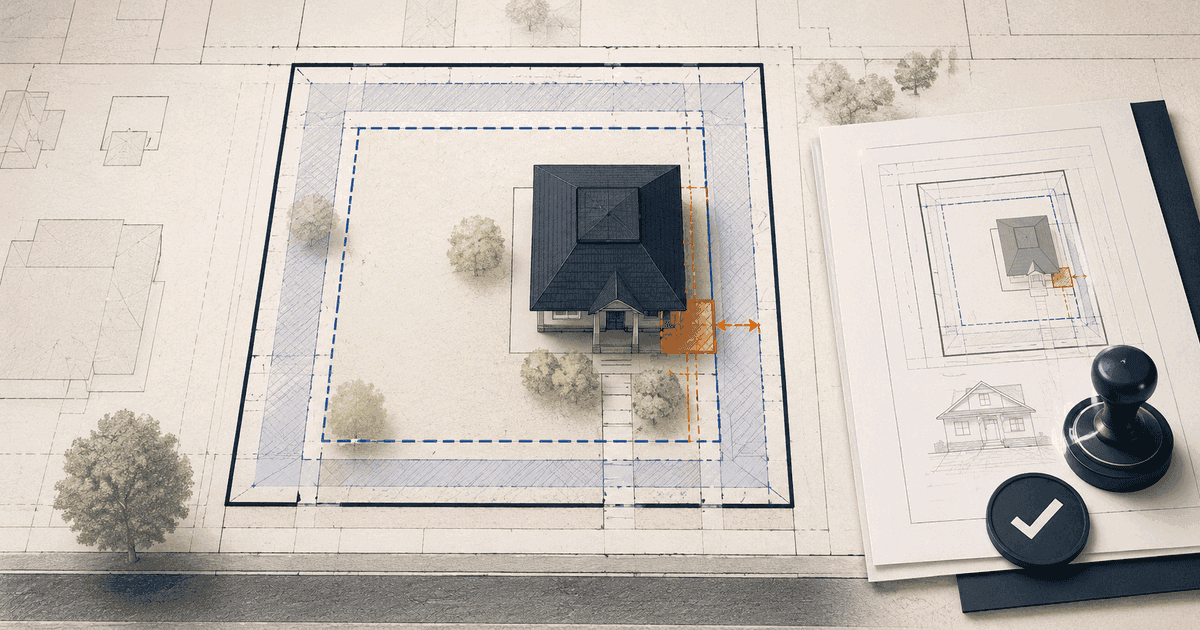
In plain English, a variance is a targeted exception. It does not rezone your property, it does not give you a blanket pass on the building code, and it does not approve your whole project. It says something narrow like: "For this particular lot, because of these particular conditions, the board allows the side setback to be 4 feet instead of the required 6 feet" (or whatever the specific deviation is).
That distinction matters because people often confuse variances with three other tools:
- A rezoning (zoning map amendment) changes the district classification of your land.
- A conditional use permit allows a use the ordinance already lists as conditionally allowed in your district, subject to conditions.
- A building permit authorizes construction that already complies with the rules.
A variance sits apart from all of these. It is relief from a written standard you cannot meet, granted by a quasi-judicial body — the zoning board of appeals — typically after a public hearing. Understanding that you are asking for an exception to one rule, not a redo of your zoning, is the mental model that keeps the rest of the process clear.
Why Variances Matter to Homeowners
Variances matter because zoning rules are written for the "average" lot, and very few real lots are average. Corner lots have two front yards. Lakefront lots have a shoreland setback that can eat half the buildable area. Steep, narrow, oddly shaped, or pre-existing nonconforming lots routinely can't host a normal-sized house, addition, or garage without bumping into a setback or a coverage limit.
When that happens, your realistic options are: redesign the project to comply, abandon it, or ask for a variance. Knowing how the variance process works — and how hard or easy your particular request is likely to be — lets you make that decision with eyes open instead of paying an architect to draw something the board will probably never approve.
It also matters for timing and money. Variance review can add weeks to months to a project, plus a fee and possibly a survey. If you assume you can just build and "ask forgiveness," you risk a stop-work order, fines, and an order to tear out non-compliant work — usually a far worse outcome than planning the variance up front. The earlier you identify a likely variance, the cheaper and calmer the whole project tends to be.
Area Variance vs. Use Variance: The Most Important Distinction
The single most useful concept for a homeowner is the difference between an area variance and a use variance, because the legal bar is often dramatically different.
| Feature | Area (Dimensional) Variance | Use Variance |
|---|---|---|
| What it relieves | Setbacks, height, lot coverage, frontage, building size | Permission for a use the district otherwise prohibits |
| Typical homeowner example | Deck 3 ft into a side setback; garage taller than allowed | Running a retail shop in a residential zone |
| Legal bar (Wisconsin example) | Compliance would be "unnecessarily burdensome" | Owner would have "no reasonable use" of the property without it |
| Relative difficulty | Lower; generally granted more often | Much higher; many boards rarely grant them |
| Most common for | Decks, additions, fences, sheds, garages | Rare for ordinary single-family projects |
In Wisconsin, this distinction is written into the statute that governs municipal boards of appeals. Under Wis. Stat. § 62.23(7)(e)(e)), for an area variance the property owner must show that strict compliance "would unreasonably prevent the property owner from using the property owner's property for a permitted purpose or would render conformity with the zoning ordinance unnecessarily burdensome." For a use variance, the owner must show that strict compliance "would leave the property owner with no reasonable use of the property in the absence of a variance."
Almost every homeowner deck, addition, garage, or fence request is an area variance. That's good news — area variances tend to be the ones boards grant most often. But the bar is still real, and "I'd like more space" or "the rule is inconvenient" does not meet it.
The Required Findings: Unnecessary Hardship
Boards generally don't grant variances just because a request is reasonable or sympathetic. They grant them when the applicant satisfies specific required findings. In Wisconsin and many other states, the central finding is unnecessary hardship, and the statute frames it around durable elements drawn from Wis. Stat. § 62.23(7)(e)(e)):
- Conditions unique to the property. The hardship must be "based on conditions unique to the property, rather than considerations personal to the property owner" — its shape, size, topography, or location — not something true of the whole neighborhood.
- Not self-created. The statute requires that "the unnecessary hardship was not created by the property owner." If you subdivided the lot too small, or built a pool where the addition needs to go, the board can deny on that basis alone.
- Not contrary to the public interest. The variance generally must not undermine the spirit of the ordinance, harm neighbors, or set a damaging precedent; the statute frames variances around relief that "will not be contrary to the public interest."
Notice what is not on this list: financial gain, personal convenience, or the fact that neighbors have similar setups. "I'd make more money," "it would be easier," and "everyone else did it" are the three classic losing arguments. The board is generally looking for a property-based reason you can't comply, not a personal one.
The Process: From Application to Decision
While details vary by jurisdiction, the typical variance path looks like this:
1. Pre-application research
Identify the exact rule you can't meet and the code section that contains it. Pull your zoning district, your setbacks, and any overlays. This is also where you decide whether a redesign avoids the variance entirely. If you are not sure where to find these numbers, our guide on how to find your local building code walks through locating the ordinance and the zoning chapter.
2. File the application
Submit the variance application form, the fee, and supporting documents to the zoning office. Many jurisdictions have an application deadline a few weeks before the hearing so staff can prepare a report and mail notices.
3. Public notice and neighbor notification
The board sets a hearing date and gives public notice (often a newspaper publication and/or posted sign) plus, in many places, direct mailed notice to nearby property owners within a defined radius. Wisconsin's statute requires the board to "give public notice" of the hearing "as well as due notice to the parties in interest."
4. The public hearing
The board hears your case, staff's analysis, and public comment — supportive or opposed. You present your hardship argument and answer questions. This is typically a quasi-judicial proceeding, not a casual chat, so come prepared with your survey and a tight statement.
5. The vote and decision
The board votes. Under Wisconsin law the board may act "by a majority vote of the members present" once a quorum exists. The board may attach conditions, set an expiration tied to when work must start or finish, and the variance generally runs with the land.
6. Appeal window
If you (or an opposing neighbor) disagree, there is usually a short window to seek judicial review. In Wisconsin, an aggrieved party may "commence an action seeking the remedy available by certiorari" within 30 days after the decision is filed in the board's office.
When the Rules Usually Apply — and When Exceptions May Appear
You usually need a variance when a compliant version of your project is physically impossible or unreasonable on your specific lot. Common triggers: a lot platted before today's setbacks existed, a shoreland or wetland buffer that shrinks the buildable area, a corner lot with two front-yard setbacks, or an existing legal-nonconforming structure you want to expand.
Exceptions — situations where you may not need a variance — often include:
- The ordinance contains an administrative adjustment or minor deviation provision that lets staff approve small encroachments without a board hearing.
- Your structure is exempt (some jurisdictions exempt small sheds, certain fences, or ground-level decks from particular dimensional rules).
- A nonconforming-structure clause already allows limited expansion of what exists.
- A redesign brings the project into compliance, eliminating the need entirely.
Check these first — when they apply, they are usually faster and cheaper than a full variance. For backyard structures specifically, see our guide on whether you can build a detached garage or shed, which often turns on the same setback and coverage limits.
Local Variables That Change the Answer
The variance process is governed by layers of rules, and each layer can change your answer:
- State enabling statute (e.g., Wisconsin's § 62.23 for cities, § 59.694 for counties) sets the baseline hardship standard and procedure.
- Municipality vs. county jurisdiction — incorporated cities/villages typically run their own board of appeals; unincorporated town land often falls under the county board of adjustment.
- Zoning district determines which dimensional standards apply.
- Overlay districts (shoreland, floodplain, historic) can add stricter standards and sometimes a different decision-maker.
- Shoreland / wetland / floodplain — in Wisconsin, shoreland zoning under NR 115 is generally administered at the county level, and shoreland setback variances often face heightened scrutiny.
- Parcel boundaries, easements, and frontage affect whether the hardship is genuinely property-unique.
- Project size, height, use, and method (attached vs. detached, habitable vs. storage) can shift you between an area and a use variance.
Because of these layers, two nearly identical projects across a municipal boundary can need different approvals.
Variance vs. Rezoning vs. Conditional Use: Which Tool Do You Actually Need?
Homeowners frequently file a variance when a different tool is the real fix. Use this comparison to sanity-check your path before you pay a fee:
| Question | Variance | Conditional Use Permit | Rezoning (Map Amendment) |
|---|---|---|---|
| What changes | One dimensional/use rule for one lot | Permission for a use already listed as conditional | The entire district classification of the parcel |
| Legal test | Unnecessary hardship from unique conditions | Meets the conditions the ordinance attaches to the use | Consistent with the comprehensive plan / public interest |
| Decided by | Board of appeals (quasi-judicial) | Plan commission / governing body (often) | Governing body, after plan commission review |
| Best when | A compliant design is physically unworkable | Your use is conditionally allowed, not prohibited | You need a fundamentally different set of allowed uses |
| Relative difficulty for a home project | Low–moderate (area) to hard (use) | Moderate | High; slowest and most political |
If your real goal is a new use the district prohibits, a conditional use or rezoning is often the more realistic path than a hard-to-win use variance.
Documents and Facts to Gather Before You Apply
Pull these together before you file — it both speeds review and strengthens your hardship case:
- A plat of survey or accurate site plan showing lot lines, existing structures, easements, and the proposed project with dimensions.
- The exact code section and value you need relief from (e.g., "6 ft side setback under § X; requesting 4 ft").
- A written unnecessary hardship statement tying the request to unique physical conditions.
- Photos of the lot, existing conditions, and the affected area.
- Dimensioned drawings of the proposed structure.
- The completed variance application and fee.
- Optional but persuasive: evidence the variance won't harm neighbors (drainage notes, screening, distance to neighboring structures).
For renovations, our permit application checklist covers the broader document set you'll need once the variance is granted.
Common Mistakes
- Arguing personal hardship. "I need the space for my growing family" is sympathetic but usually legally irrelevant. Argue property conditions.
- Self-created hardship. Building or planning yourself into a corner, then asking the board to bail you out.
- Skipping the survey. Boards tend to distrust hand-drawn, un-dimensioned plans. A survey signals you've done the work.
- Asking for more than you need. Request the minimum deviation; over-asking invites denial.
- Ignoring neighbors. Opposition at the hearing can sink marginal cases. Talking to adjacent owners early often defuses it.
- Missing the deadline. Variance calendars are often rigid; a late filing can mean a month's delay.
- Confusing a variance with a permit. A granted variance still requires a building permit afterward.
Example Scenarios
Scenario 1 — The corner-lot deck (area variance, often grantable). A homeowner on a corner lot has two front-yard setbacks, leaving a backyard too small for a code-compliant deck. The narrow buildable area is a unique physical condition the owner didn't create. A modest area variance for the deck is a textbook grantable request — provided the survey shows the constraint clearly. (Whether the deck also needs a permit is a separate question — see our guide on whether you need a permit to build a deck.)
Scenario 2 — The lakefront addition (area variance, heightened scrutiny). A waterfront owner wants to expand toward the lake, inside the shoreland setback. Even a small encroachment can trigger stricter shoreland review and possibly a county board of adjustment. Grantable in some cases, but the hardship and mitigation arguments must be strong, and approval is far from automatic.
Scenario 3 — The home business (use variance, hard). An owner in a single-family district wants to run a retail storefront. This is typically a use variance, requiring proof of "no reasonable use" without it — nearly impossible when the lot already works fine as a home. Most boards deny this; a rezoning or conditional use is usually the more realistic path.
Practical Variance Checklist
- Confirm your zoning district, setbacks, and overlays
- Identify the exact rule and value you can't meet
- Determine whether it's an area or use variance
- Check for administrative-adjustment or exemption shortcuts
- Order or locate a plat of survey
- Draft a property-based unnecessary hardship statement
- Prepare dimensioned drawings and photos
- Confirm the application deadline and hearing date
- Pay the fee and file the complete application
- Talk to affected neighbors before the hearing
- Prepare a short, factual presentation for the board
- Note the appeal window after the decision
People Also Ask
- Is a variance the same as a permit? No — a variance is relief from a rule; you typically still need a building permit afterward.
- How long does a variance take? Often roughly 4–10 weeks from filing to decision, depending on the hearing calendar.
- Can neighbors block my variance? They generally can't veto it, but their objections at the hearing can carry weight.
- Does a variance expire? It can; many include a deadline to start or finish the work.
- Does a variance transfer when I sell? In many states it runs with the land and stays with the property.
Definitions
- Zoning Variance — Permission to deviate from a specific dimensional or use requirement of the zoning ordinance, granted by the board of appeals.
- Zoning Board of Appeals (ZBA) / Board of Adjustment — The quasi-judicial body that hears variance and appeal requests, usually at a public hearing.
- Area (Dimensional) Variance — Relief from a measurable standard like a setback, height, or coverage limit.
- Use Variance — Permission for a land use the district otherwise prohibits; typically held to a much higher standard.
- Unnecessary Hardship — The legal standard requiring property-unique conditions, not self-created, that make compliance unreasonable.
- Setback — The minimum distance a structure must sit from a lot line or feature.
- Conditional Use Permit — Approval for a use the ordinance already lists as conditionally allowed, subject to conditions.
- Public Notice — Required publication and/or posting informing the public of a hearing.
- Runs with the Land — A right (like a granted variance) that stays attached to the property after a sale.
- Certiorari Review — Court review of a board's decision, available within a short statutory window (30 days in Wisconsin).
Why Local Rules Change the Answer
There is no national zoning code, so the same project can need completely different approvals depending on where it sits. The variance standard itself comes from your state enabling statute — Wisconsin cities follow § 62.23, counties follow § 59.694 — which sets the hardship test and procedure. Your municipality or county then adopts its own ordinance within that frame, and that document holds the specific setbacks, fees, deadlines, and findings.
Your zoning district determines which numbers apply, and overlay districts stack stricter rules on top. A shoreland overlay (governed in Wisconsin by NR 115, generally at the county level), a floodplain overlay, or a historic district can each change the decision-maker and the standard. Parcel boundaries, easements, and frontage decide whether your hardship is genuinely property-unique. And project attributes — size, height, use, and whether the structure is attached, habitable, or heated — can move you between an area and a use variance.
Instead of "call your local government," check these specific items first: your zoning map and district; the zoning ordinance article on the board of appeals and variances; the variance application form and fee schedule; the public notice / hearing schedule for the board; and any overlay maps (shoreland, floodplain, historic). When your situation is genuinely novel — an unusual overlay interaction or an ambiguous nonconforming-structure question — that is when a quick call to the zoning office is worth it, and you'll have the documents in hand to make it productive.
A Local Example: Sturgeon Bay, Door County, Wisconsin
Sturgeon Bay is an incorporated city in Door County, Wisconsin, so it runs its own Zoning Board of Appeals (ZBA) under the city's zoning ordinance, with the framework set by Wis. Stat. § 62.23(7)(e)(e)). (By contrast, unincorporated town land elsewhere in Door County typically falls under the county board of adjustment — a key jurisdictional difference if your property is outside city limits.)
The general rule (statewide): A Wisconsin city board of appeals may grant a variance only on a showing of unnecessary hardship — property-unique conditions, not self-created, and not contrary to the public interest — and must hold a public hearing with notice, deciding by a majority vote of the members present. The board consists of five members, and an aggrieved party may seek certiorari review within 30 days. Source: Wis. Stat. § 62.23(7)(e)(e)).
The local specifics (Sturgeon Bay): The City's Community Development Department publishes a dedicated Variance Application (the current version is dated April 2025) alongside a separate Appeal Application for appealing an administrative decision, a Conditional Use Permit application, and a Zoning Map Amendment (rezoning) application — confirming that Sturgeon Bay treats variances, appeals, conditional uses, and rezonings as four distinct tracks. These forms are listed on the City's Applications & Fees page. The City also publishes a City Fee Schedule and hosts its Municipal Code online.
Values to confirm directly against the current Sturgeon Bay application and ordinance before relying on them:
- Variance application fee: needs_research (a Fee Schedule is published, but the specific variance fee amount was not retrieved from current sources).
- Application/submission deadline before a hearing: needs_research.
- ZBA meeting/hearing schedule: needs_research.
- Neighbor-notification radius and notice method: needs_research (state law requires public notice and notice to parties in interest; the specific radius is set locally).
- Specific zoning ordinance section governing variances: needs_research (the Sturgeon Bay code is published online; confirm the exact chapter/section there).
If your Sturgeon Bay project is shoreland-related (along the bay or a navigable waterway), expect an additional shoreland-zoning layer; confirm whether the city or Door County administers the relevant shoreland standard for your parcel before assuming the city ZBA is the only decision-maker.
Sources: Sturgeon Bay Applications & Fees; Wis. Stat. § 62.23(7)(e)(e)).
How GovCodex Helps
GovCodex is built to take you from "I want to build this" to "I understand the rules, risks, documents, and next steps for my property" — without guessing.
- Identifies the trigger. Describe your deck, addition, garage, or fence and GovCodex flags whether you're likely bumping a setback, height, or coverage rule that could require a variance — and whether a permit is in play too.
- Interprets local code. It searches the applicable municipal or county ordinance and surfaces the specific section and value at issue, instead of a generic national rule.
- Gathers the facts. It pulls parcel and GIS context — zoning district, overlays, approximate lot geometry — so you can see whether your hardship is genuinely property-unique.
- Reviews your documents. Upload a survey, photo, or PDF and GovCodex helps you read it, locate the constraint, and note what the board will look for.
- Builds a readiness checklist. It assembles the application, survey, hardship statement, drawings, and fee into a tailored to-do list for your jurisdiction.
- Drafts the hard parts. It can help draft a property-based unnecessary-hardship description and site-plan notes — keeping the argument on legally relevant grounds.
- Compares your options. Redesign to comply, seek an area variance, pursue a conditional use, or rezone — GovCodex lays out the trade-offs.
- Flags missing info and separates fact from assumption. It marks values that need local confirmation (fees, deadlines, notice radius) so you don't rely on a guess, with human-in-the-loop review where it matters.
- Finds the right form and next steps. It helps locate the correct variance application and outlines the localized sequence to filing.
Describe your project, upload any site documents or photos you already have, and GovCodex can help organize the rules, documents, and next steps for your property.
Frequently Asked Questions
What is the difference between an area variance and a use variance?
An area (dimensional) variance is relief from a measurable standard like a setback, height limit, or lot-coverage cap, and it's the type most homeowners need for decks, additions, and garages. A use variance allows a land use the district otherwise prohibits — for example, a shop in a residential zone — and is generally held to a much higher standard. In Wisconsin, area variances turn on whether compliance is "unnecessarily burdensome," while use variances require showing "no reasonable use" without the variance.
What does "unnecessary hardship" mean for a variance?
Unnecessary hardship means strict enforcement of a zoning rule would be unreasonable because of conditions unique to your property — its shape, size, topography, or location — that you did not create yourself. It must generally be a property-based reason, not a personal one like cost, convenience, or family needs. The hardship standard is the central required finding most boards must satisfy before granting a variance.
Who decides whether I get a variance?
A local zoning board of appeals (sometimes called a board of adjustment) usually decides variance requests at a public hearing. In Wisconsin cities the board is created under Wis. Stat. § 62.23, consists of five members, and acts by majority vote of the members present. Incorporated cities like Sturgeon Bay typically run their own board, while unincorporated town land often falls under the county board of adjustment.
How long does the variance process take?
Most variance processes run roughly four to ten weeks from a complete filing to a decision, driven mainly by the board's hearing calendar and the application deadline. You file, the board sets a hearing and sends public and neighbor notice, holds the hearing, and votes. Confirm your specific board's schedule and submission deadline, because they are often rigid and a late filing usually means waiting for the next cycle.
Will my neighbors be notified, and can they stop my variance?
In most jurisdictions, boards provide public notice plus direct mailed notice to nearby property owners within a defined radius set by local rule. Neighbors generally cannot veto a variance, but their objections at the hearing can carry real weight, especially in close cases. Talking with adjacent owners before the hearing often resolves concerns and improves your odds.
How much does a zoning variance cost?
Variance filing fees vary widely by jurisdiction and are set by a local fee schedule, so there's no universal number. You may also pay for a survey and drawings, which often cost more than the fee itself. For Sturgeon Bay specifically, the City publishes a fee schedule, but the exact variance fee should be confirmed on the current application — it was marked needs_research here. See our guide on how much a building permit costs for the broader budgeting picture.
What documents do I need to apply for a variance?
You typically need the completed variance application, the fee, a plat of survey or accurate dimensioned site plan, the specific code section you want relief from, drawings of the proposed structure, photos, and a written unnecessary-hardship statement. A real survey is often the single most persuasive document because it shows the board your constraint precisely. Confirm the exact required-documents list against your local application before filing.
Is a variance the same as a building permit?
No. A variance is legal relief from a specific zoning rule; a building permit authorizes construction. Even after a board grants your variance, you generally still have to apply for and receive the relevant building, zoning, electrical, or plumbing permits before you build. Think of the variance as removing the obstacle and the permit as the green light.
Does a variance expire or transfer when I sell?
In many states, including Wisconsin, a granted variance "runs with the land," meaning it stays attached to the property and transfers to a new owner. However, boards can attach an expiration tied to when the authorized work must begin or be completed. Read your decision carefully and confirm any deadlines so you don't lose the variance by waiting too long to build.
What if my project sits in a shoreland or floodplain area?
Shoreland, floodplain, and other overlay districts can add stricter standards and sometimes change who decides your variance. In Wisconsin, shoreland zoning is governed by NR 115 and generally administered at the county level, so a lakefront setback variance can face heightened scrutiny and a different board than a typical inland request. Identify any overlay on your parcel first, because it can change both the standard and the decision-maker.
Can I just build first and ask for forgiveness later?
That's usually a bad idea. Building without required zoning relief can lead to a stop-work order, fines, and an order to remove the non-compliant work — often far costlier than applying up front. It can also make your hardship look self-created, which is grounds for denial. Sort out the variance before construction starts.
What's the difference between a variance and a rezoning or conditional use?
A variance grants a narrow exception from one rule for one property based on hardship. A rezoning (zoning map amendment) changes your property's entire district classification. A conditional use permit allows a use the ordinance already lists as conditionally permitted, subject to conditions. If your real goal is a new use, a conditional use or rezoning is often the right path rather than a hard-to-win use variance.
How do I find the exact setback or rule I need a variance from?
Start with your zoning map to confirm your district, then open the zoning ordinance chapter for that district to read the dimensional standards (setbacks, height, coverage). Our guides on how to read a zoning map and what a setback is walk through the lookups, and the exact code section you cite becomes the rule your variance asks to relax — name it precisely on the application.
Related Articles
How to Read a Zoning Map Before You Build
A plain-English guide to reading an official zoning map: locate your parcel, identify your zoning district and any overlays, and confirm the real rules before you build.
Can I Turn My Garage Into an Apartment?
Whether you can convert a garage to an apartment ADU depends on your zoning district, parking, utilities, and building-code rules like egress and fire separation. Here's how to find your real answer.
Fence Permit Rules: Height, Setbacks, and Property Lines Explained
Fence permit rules vary widely by city, but the same handful of factors—height, yard location, setbacks, corner-lot sightlines, and your true property line—decide nearly every case. Here's how to read them for your lot.