
What Is a Setback and Why Does It Matter?
A setback is the required distance from a legal boundary or protected feature. Learn how to verify the reference line, zoning rule, and buildable area.
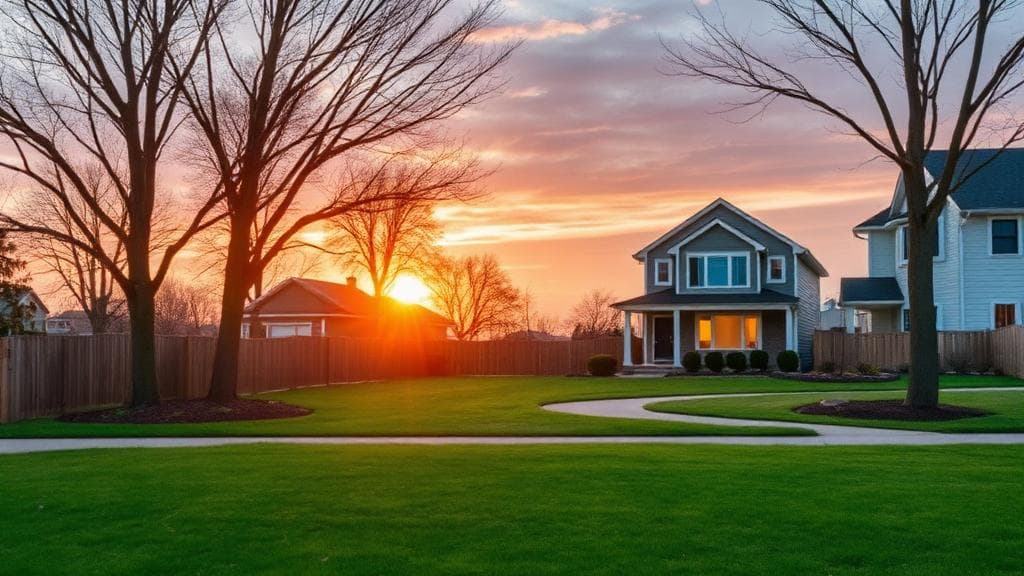
Direct answer: A setback is the minimum horizontal distance required between a structure or use and a legally defined boundary such as a property line, street right-of-way, ordinary high-water mark, or another protected feature. Front, side, rear, corner-lot, accessory-structure, and shoreland setbacks can all differ on one parcel. The enforceable number comes from the parcel's current zoning district and overlays—not from a typical residential range.
This page is the canonical GovCodex explanation of setback requirements. It incorporates the former short answer at /answers/what-is-setback so one page owns the intent and the source-backed guidance.
Verify the line before the number
A setback calculation needs two verified facts:
- The reference line. Use a recorded survey or plat for property and right-of-way lines. For waterfront work, Wisconsin DNR explains that local governments implement shoreland ordinances and may need an ordinary high-water mark determination.
- The applicable rule. Use the official zoning map, dimensional table, and overlays for the parcel. A mailing address, tax-map sketch, fence, curb, or mowed edge is not reliable proof of the legal line.
For a verified state-level example, Wisconsin's DNR Shoreland Management Program describes a 75-foot minimum building setback from the ordinary high-water mark, with listed exceptions and setback averaging in qualifying development patterns. Local yard setbacks and adopted shoreland provisions still determine the complete parcel answer.
What to put on the site plan
- Property lines and street right-of-way lines from the current survey or plat.
- Existing and proposed structures, including eaves, stairs, decks, and other projections the ordinance counts.
- The zoning district, overlay boundaries, easements, and applicable setback dimensions.
- The ordinary high-water mark or other protected feature when relevant.
- The narrowest dimension from each regulated structure edge to the correct reference line.
If the proposal does not fit, compare redesign, an administrative adjustment if the ordinance offers one, legal-nonconforming provisions, and a variance. A variance is a separate approval with findings and a public process; it is not created by submitting a building permit.
Check the buildable area for the address
Start a GovCodex Permit Check to identify the likely zoning authority and approvals, then confirm the exact lines and dimensions against the official map, ordinance, and survey.
Key Takeaways
- A setback is a required minimum distance between a structure and a boundary line (front, side, rear, or a shoreline), defined in your local zoning code rather than by any national standard.
- The four common types are front, side, rear, and shoreline (shoreland) setbacks; each can have a different number even on the same lot.
- Setbacks are usually measured horizontally from the property line or right-of-way line to the nearest part of the structure, but how the line and the "nearest part" are defined varies locally.
- The right-of-way (ROW) line is often inside what you think of as your front "property line," which means your buildable area can be smaller than your deed suggests.
- Accessory structures (sheds, detached garages, fences) frequently have smaller or different setbacks than the principal house.
- In Wisconsin, shoreland lots are commonly subject to a 75-foot building setback from the ordinary high-water mark and a 35-foot minimum vegetative buffer under state rule NR 115, layered on top of local yard setbacks.
- If your project can't meet a setback, your options are usually a redesign, a zoning variance, or relying on legal nonconforming status — none of which is automatic.
On This Page
Jump to any section of this guide:
- What a Setback Actually Is (Plain English)
- Why Setbacks Matter
- When the Setback Rule Usually Applies
- When Exceptions May Apply
- Local Variables That Change the Answer
- How Setbacks Are Measured
- Documents and Facts to Gather
- Common Mistakes
- Example Scenarios
- Practical Setback Checklist
- People Also Ask
- Definitions
- Why Local Rules Change the Answer
- A Local Example: Sturgeon Bay, Door County, Wisconsin
- How GovCodex Helps
- Frequently Asked Questions
What a Setback Actually Is (Plain English)
When people ask what is a setback, the simplest honest answer is this: it's an invisible line your local government draws inside your lot, and you generally cannot put a building (or sometimes a deck, fence, or even pavement) past that line toward the boundary. The strip of land between the boundary and the setback line is the "required yard." It has to stay mostly open.
Setbacks exist in the zoning layer of regulation, which is separate from the building code layer. Zoning controls where and how big a structure can be on the land; building code controls how it's built so it's structurally sound and safe. A project can satisfy the building code and still be illegal because it sits in a required setback — and vice versa. If that distinction is fuzzy, our guide to the difference between building, zoning, electrical, and plumbing permits breaks it down.
Every lot typically has four edges, and each edge can have its own setback number:
- Front setback — distance from the street-facing boundary (usually the right-of-way line).
- Side setbacks — distance from each side boundary; the two sides may be different, and some codes specify a combined minimum.
- Rear setback — distance from the back boundary.
- Shoreline / shoreland setback — for waterfront lots, a distance from the water's edge (often the ordinary high-water mark), layered on top of the others.
Why Setbacks Matter
Setbacks are not bureaucratic decoration. They do real work, which is why local governments enforce them and why ignoring them is expensive:
- Light, air, and fire separation. Space between buildings reduces fire spread and preserves daylight and ventilation.
- Drainage and stormwater. Open yard area lets water soak in rather than sheet onto a neighbor's foundation. This is closely tied to impervious surface coverage limits.
- Utility and road access. The front setback and the right-of-way keep room for sidewalks, utilities, snow storage, and future road widening.
- Neighbor relations and property value. Setbacks create a predictable streetscape and keep structures off the line between you and the people next door.
The practical reason setbacks matter to you is enforcement. If you build inside a setback without approval, you may be denied a permit, fail inspection, be ordered to move or tear down the structure, or hit a wall at resale when a survey or title review flags the encroachment. Fixing it after the fact almost always costs more than checking first — and the cost of checking first is usually just an hour of reading and a phone call. If you are weighing a larger project, that same early diligence feeds straight into a realistic budget; see how to estimate the cost of a home addition.
When the Setback Rule Usually Applies
In most jurisdictions, setbacks apply whenever you build a new structure, enlarge an existing one toward a boundary, or place a structure on the lot — including many things people assume are "too small to count." Depending on local definitions, setbacks can govern:
- Houses and additions (the principal structure)
- Detached garages, sheds, and other backyard accessory buildings
- Decks, porches, and stairs — often measured to the deck edge, not the house wall
- Fences and retaining walls (sometimes via separate rules — see fence permit rules)
- Pools, HVAC condensers, and sometimes driveways or parking pads
A common trap: a structure under a certain size may not need a building permit, yet still must respect the zoning setback. "No permit required" is not the same as "place it anywhere." Our guide to when a DIY project becomes a code problem covers that gap.
When Exceptions May Apply
Setbacks have built-in flexibility in many codes. Whether these apply to you depends entirely on local language, but the common exceptions include:
- Allowed projections. Eaves, chimneys, bay windows, and uncovered stairs may be permitted to extend a stated distance (often a foot or two) into a required setback.
- Accessory-structure relief. Detached sheds and garages frequently get smaller rear and side setbacks than the principal house.
- Average / contextual front setbacks. Some codes set the front setback to match the average of neighboring homes rather than a fixed number, common in older platted blocks.
- Legal nonconforming status. A structure built lawfully before the current rule may be "grandfathered" — but expanding or rebuilding it usually triggers today's setbacks.
- Variances. When a unique hardship makes compliance impractical, a zoning board may grant a variance. Variances are discretionary, not guaranteed.
Local Variables That Change the Answer
This is where a generic answer fails and a property-specific answer wins. The setback that applies to your lot depends on:
- Municipality and jurisdiction type. A city, village, town, or unincorporated county area each may have its own ordinance.
- Zoning district. A residential R-1 lot and an R-2 or commercial lot can have very different numbers.
- Overlay districts. Shoreland, floodplain, historic, or design overlays add rules on top of the base district.
- Structure type and use. Principal vs. accessory; habitable vs. storage; attached vs. detached.
- Lot shape. Corner lots, flag lots, and irregular parcels follow special rules (more below).
- The boundary itself. Where the right-of-way line actually sits relative to your deed line can change your buildable depth.
- Environmental features. Easements, wetlands, shoreline, and floodplains can impose setbacks larger than the zoning yard.
Corner Lots
Corner lots are a frequent source of surprise. Because two sides face streets, many codes require the lot to keep a front setback on both street frontages, which can eliminate a usable backyard. Some codes soften this with a "reverse corner" or "exterior side" rule. Always confirm which edges are treated as "front."
Right-of-Way Line vs. Property Line
People often measure the front setback from the curb or the edge of pavement. That's usually wrong. The setback is typically measured from the right-of-way (ROW) line, which is the legal edge of the public road corridor — and that line often sits several feet inside your lawn, behind the curb and sidewalk. Your effective front yard can be deeper than it looks, shrinking your buildable area.
| Setback type | Measured from | Typical structures governed | Notes |
|---|---|---|---|
| Front | Right-of-way / front lot line | House, porch, garage face | Often the largest yard; may be averaged on older blocks |
| Side | Side lot line | House wall, garage, AC unit | May differ left vs. right; sometimes a combined minimum |
| Rear | Rear lot line | House, deck, detached garage | Accessory buildings often get reduced rear setbacks |
| Shoreline | Ordinary high-water mark | Any building/structure | Layered on top of yard setbacks on waterfront lots |
| Accessory | Side/rear lot line | Sheds, detached garages, pools | Frequently smaller than principal-structure setbacks |
How Setbacks Are Measured
The general rule is a horizontal measurement from the governing line (property line, ROW line, or ordinary high-water mark) to the nearest part of the structure. But the details that move the number are local:
- Which line? Deed line, ROW line, or platted line — confirm from a survey or the assessor's parcel map.
- Nearest part of what? Foundation, exterior wall, eave, deck edge, or stairs. Codes differ on whether overhangs count.
- At grade or projected? Some features below grade or above a certain height are treated differently.
Because of this, two builders measuring "the same" setback can land on different distances. Pull your jurisdiction's exact definitions before you trust a tape measure.
Documents and Facts to Gather
Before you can answer the setback question for your property, collect:
- Your property survey or plat — shows true boundaries, ROW lines, and easements.
- Your parcel ID and assessor map — confirms lot dimensions and zoning lookup.
- Your zoning district designation — from the official zoning map; see how to read a zoning map.
- The dimensional/bulk standards table in the zoning ordinance for that district. If you don't know where the ordinance lives, start with how to find your local building code.
- Any overlay maps — shoreland, floodplain, historic.
- A scaled site plan showing the proposed structure and dimensions to each boundary.
That same package feeds your permit application checklist, so gathering it early pays off twice.
Common Mistakes
- Measuring from the curb instead of the ROW line. Overstates your buildable depth.
- Forgetting the deck or stairs. Setbacks are often measured to the deck edge, not the house wall.
- Assuming "small = exempt." A shed under the permit threshold still must meet zoning setbacks.
- Ignoring the second front yard on a corner lot. A buried surprise that can kill a backyard plan.
- Overlooking shoreline or easement setbacks. These can be larger than every yard setback combined.
- Treating a neighbor's structure as proof of legality. It may be nonconforming or unpermitted.
Example Scenarios
Scenario 1 — Backyard shed. You want a 12x16 shed two feet off the rear line. Your district may allow a reduced 3-foot or 5-foot accessory rear setback — or it may not. The number, not your intuition, decides whether it fits.
Scenario 2 — Corner-lot addition. You plan a side addition, but your "side" faces a second street, so the code treats it as a front yard with a much larger setback. The addition shrinks or moves.
Scenario 3 — Waterfront deck. Your lot meets all yard setbacks, but a shoreland setback from the ordinary high-water mark and a vegetative buffer (see the Sturgeon Bay example below) push the deck back from the water far more than the rear yard alone would.
Practical Setback Checklist
- Confirm your zoning district from the official map.
- Pull the dimensional standards table for that district.
- Identify all four boundaries and which is "front" (watch corner lots).
- Locate the ROW line from your survey, not the curb.
- Check for shoreland, floodplain, or historic overlays.
- Confirm whether your structure is principal or accessory.
- Read how setbacks are measured (to wall, eave, or deck edge).
- Note any allowed projections.
- Draw a scaled site plan with distances to each line.
- If you can't comply, evaluate redesign vs. variance vs. nonconforming status.
People Also Ask
- Is a setback measured from the property line or the curb?
- Do sheds and fences have to meet setbacks?
- What is a shoreline or shoreland setback?
- Can I get a variance to build in a setback?
- Are corner lots treated differently?
Definitions
- Setback — The minimum required horizontal distance between a structure and a property line, right-of-way, or shoreline.
- Required yard — The open strip of land between a boundary and the setback line that must stay largely unbuilt.
- Right-of-way (ROW) line — The legal edge of a public road or utility corridor, often set back from the curb and inside your lawn.
- Principal structure — The main building on a lot (usually the house); subject to the primary setbacks.
- Accessory structure — A secondary building like a shed or detached garage, often allowed reduced setbacks.
- Ordinary high-water mark (OHWM) — The point on a shore where the water's presence is so continuous it leaves a distinct mark; the reference for shoreland setbacks in Wisconsin.
- Nonconforming structure — A structure that was legal when built but no longer meets current rules; may be grandfathered with limits.
- Variance — Discretionary relief from a dimensional rule (like a setback) granted by a zoning board upon proof of hardship.
- Overlay district — A second layer of zoning (shoreland, floodplain, historic) that adds rules to the base district.
- Buildable area — The portion of a lot left after subtracting all setbacks and easements; where a structure may actually go.
Why Local Rules Change the Answer
There is no national setback number, and even a careful AI summary can't give you your figure without your property's facts. The answer shifts based on layered local variables, and you can check each one against a specific document rather than a phone call:
- Municipality and jurisdiction type — Identify whether your parcel is in a city, village, town, or unincorporated county area; each may adopt its own zoning ordinance. Check the assessor's parcel record.
- State code adoption — In Wisconsin, shoreland standards flow from state rule NR 115 down to county ordinances. Check the Wisconsin Administrative Code (Chapter NR 115) and your county shoreland ordinance.
- Zoning district — Pull the dimensional/bulk standards table for your exact district from the zoning ordinance.
- Overlay districts — Compare your parcel against the shoreland, floodplain, and historic overlay maps.
- Parcel boundaries and easements — Read your recorded survey/plat for ROW lines and easements.
- Shoreline, wetland, floodplain, historic — Check the DNR shoreland maps, FEMA flood maps, and the wetland inventory.
- Project size, height, use, and method — Confirm whether your structure is principal vs. accessory, attached vs. detached, habitable vs. storage; these route you to different setback rows.
The exact documents to pull are: your recorded survey/plat, the official zoning map, the dimensional standards section of the zoning ordinance, any overlay maps, the shoreland ordinance, and the building/zoning permit application with its site-plan requirements. Only when a value genuinely isn't published online is a call to the zoning office warranted.
A Local Example: Sturgeon Bay, Door County, Wisconsin
Sturgeon Bay is a city in Door County on a peninsula between Green Bay and Lake Michigan, so a large share of its parcels touch or sit near navigable water — which makes shoreland setbacks especially relevant there. Here is the general rule versus the local specifics, separated honestly.
General rule (statewide, Wisconsin). Under Wisconsin Administrative Code NR 115, shoreland zoning applies to lands within 1,000 feet of the ordinary high-water mark of a lake, pond, or flowage, and 300 feet of a river or stream (or to the landward edge of the floodplain, whichever is greater) — a distance confirmed directly in the chapter's definitions. Within that area, the state minimum standards in NR 115.05 include a 75-foot building setback from the ordinary high-water mark to the nearest part of a building or structure (reducible to the average setback of adjacent principal structures where development already exists, but not below 35 feet), a vegetative buffer zone of at least 35 feet measured inland from the OHWM, and impervious surface standards (generally up to 15% within 300 feet of the water, with higher allowances — up to 30% or more — in designated highly developed shorelines). Counties adopt ordinances at least as strict as these standards.
Local specifics (Sturgeon Bay / Door County). The City of Sturgeon Bay administers zoning and building inspections through its Community Development Department (which includes Building Inspections), and the City of Sturgeon Bay Code of Ordinances (hosted on Municode) contains the zoning ordinance with the district-by-district yard setbacks. The exact front, side, and rear setback numbers for a specific Sturgeon Bay zoning district are needs_research here — they must be read from the city's current dimensional standards table for the parcel's district, because we did not retrieve those specific values from a live city source. Whether a given Sturgeon Bay parcel falls under city shoreland provisions or the Door County shoreland ordinance, and the corner-lot and accessory-structure setbacks, are likewise needs_research for the individual lot. What is well-supported is the state NR 115 framework above, which sets the floor that local shoreland rules build on.
The takeaway: on a Sturgeon Bay waterfront lot, the binding constraint is frequently the shoreline setback and buffer, not the rear yard — so a project that "fits" on paper by yard setbacks alone can still be too close to the water.
How GovCodex Helps
GovCodex is a local-code-aware planning and permitting assistant, not a generic chatbot. For setback questions specifically, it helps you go from "I want to build this" to "I understand exactly what governs this spot on my lot":
- Identifies permit and zoning triggers for your specific project type so you don't confuse "no building permit" with "no setback rules."
- Interprets local code by pulling the relevant dimensional standards and overlay language for your jurisdiction and district.
- Gathers the facts — parcel ID, zoning district, lot dimensions, and overlay status — and tells you which are confirmed versus still unknown.
- Lets you upload your survey, plat, photos, or PDF permit forms and analyzes them for boundaries, ROW lines, and easements.
- Builds a permit-readiness checklist tailored to your project and location.
- Drafts project descriptions and site-plan notes showing distances to each boundary.
- Compares options — redesign to fit, pursue a variance, or rely on nonconforming status — and flags the tradeoffs.
- Flags missing information and clearly separates verified facts from assumptions, with human review where a judgment call is required.
- Finds the right application and outlines localized next steps for your municipality.
Describe your project, upload any site documents or photos you already have, and GovCodex can help organize the rules, documents, and next steps for your property.
Frequently Asked Questions
What is a setback in simple terms?
A setback is the minimum distance a structure must stay away from a boundary line, street right-of-way, or shoreline. The land between the boundary and the setback line is a required yard that must stay mostly open. The exact distance comes from your local zoning ordinance and varies by district and structure type.
Is a setback measured from the property line or the curb?
Front setbacks are usually measured from the right-of-way line, not the curb or pavement edge, and that ROW line often sits inside your lawn. Side and rear setbacks are typically measured from the respective lot lines. Because the ROW line can be several feet behind the curb, your buildable area may be smaller than the visible yard suggests.
What are front, side, and rear setbacks?
They are the minimum distances from the front, side, and rear property lines respectively. Each can be a different number even on the same lot, and some codes set a combined minimum for the two sides. You read all three from the dimensional standards table for your zoning district.
Do sheds and fences have to meet setbacks?
Often yes, though accessory structures like sheds and detached garages frequently get smaller setbacks than the main house, and fences may be governed by separate rules. A structure can be too small to need a building permit yet still be required to meet a zoning setback. Always check the accessory-structure and fence provisions in your local code.
What is a shoreline or shoreland setback?
It is a required distance from the water's edge — in Wisconsin, from the ordinary high-water mark — applied to waterfront and near-water lots in addition to ordinary yard setbacks. Under Wisconsin's NR 115, the state minimum is a 75-foot building setback plus a 35-foot minimum vegetative buffer. On waterfront lots this is frequently the most restrictive rule.
How are setbacks usually measured?
The general rule is a horizontal measurement from the governing line to the nearest part of the structure. What counts as the "nearest part" — foundation, wall, eave, or deck edge — and which line governs are defined locally. Because of these definitions, you should read your ordinance rather than assume.
Are corner lots treated differently?
Yes. Because a corner lot faces two streets, many codes require a front setback on both frontages, which can shrink or eliminate a usable backyard. Some ordinances provide reduced "exterior side" or "reverse corner" relief. Confirm which edges your code treats as front yards before designing.
What is a nonconforming setback?
A nonconforming setback exists when a structure was legally built before the current rule and no longer meets today's distance. Such structures are often allowed to remain but may face limits on expansion or rebuilding. Enlarging the structure typically triggers compliance with the current setback.
Can I get a variance to build inside a setback?
Sometimes. A zoning board of appeals may grant a variance when a unique hardship makes compliance impractical, but variances are discretionary and not guaranteed. You generally must show the hardship is tied to the property, not self-created. Our homeowner's guide to zoning variances explains the process.
Why is there no single national setback number?
Because setbacks are set locally by municipalities and counties through zoning ordinances, layered with state rules and overlay districts. The number depends on your zoning district, lot shape, structure type, and any shoreland, floodplain, or historic overlays. That's why you have to look up your specific parcel rather than rely on a universal figure.
Where do I find my lot's setback numbers?
Start with the official zoning map to find your district, then read that district's dimensional standards table in the zoning ordinance, and check any overlay maps. Confirm boundaries and right-of-way lines from your recorded survey or plat. Only call the zoning office if a needed value genuinely isn't published.
Related Articles
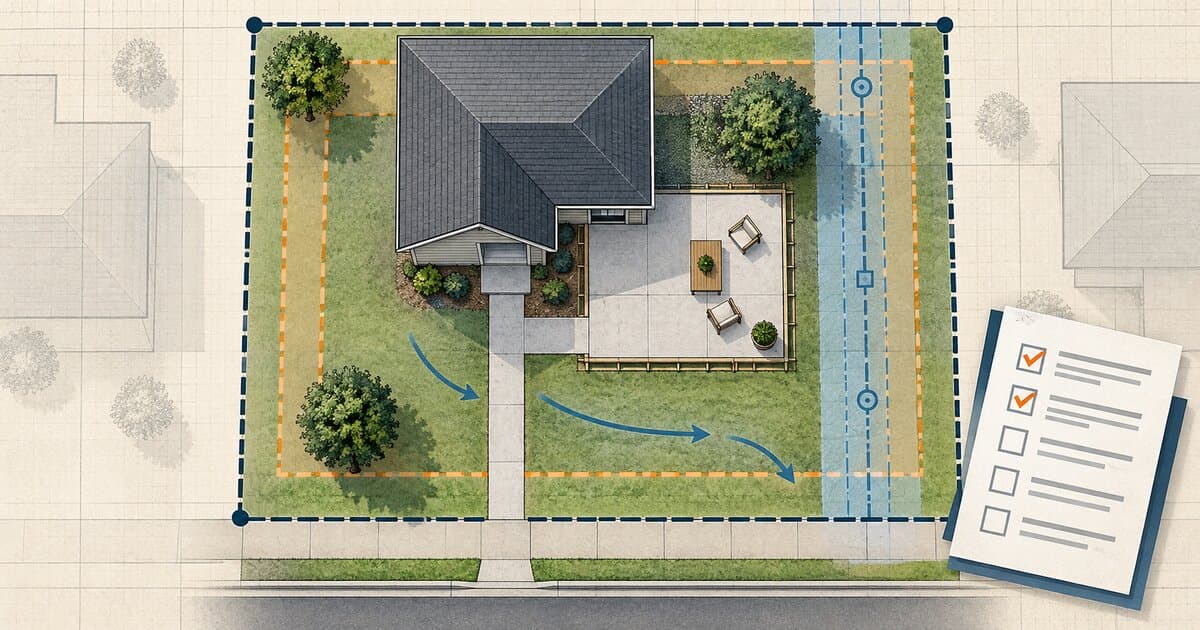
Do You Need a Permit to Pour Concrete? Patios, Slabs & Walkways
Pouring concrete may be permit-exempt or regulated depending on whether it is a patio, slab, walkway, driveway, structural base, or right-of-way work.

Best Permit Software for Homeowners Who Need Clear Answers
Compare homeowner permit software for decks, fences, garages, remodels, additions, ADUs, zoning checks, document prep, and official city portals.
Bloomington, MN Building Permit Guide (2025-2026)
How to get a building permit in Bloomington, Minnesota: which department issues permits, what's exempt, zoning setbacks, ADU rules, fees, contractor rules, and inspections.