
Do You Need a Permit for a Fence?
Learn when a fence needs a building permit, zoning approval, or dedicated fence permit, plus what to check before installation.
Fence Permit Guide
Direct answer: whether a fence needs a permit depends on the local authority, fence height and material, yard location, floodplain or overlay status, pool-barrier use, and proximity to the public right-of-way. Some cities require a dedicated fence permit. Some require a building permit only above local thresholds. Others require no building permit while still enforcing zoning rules.
A permit exemption does not erase zoning, property-line, visibility, easement, or pool-barrier requirements.
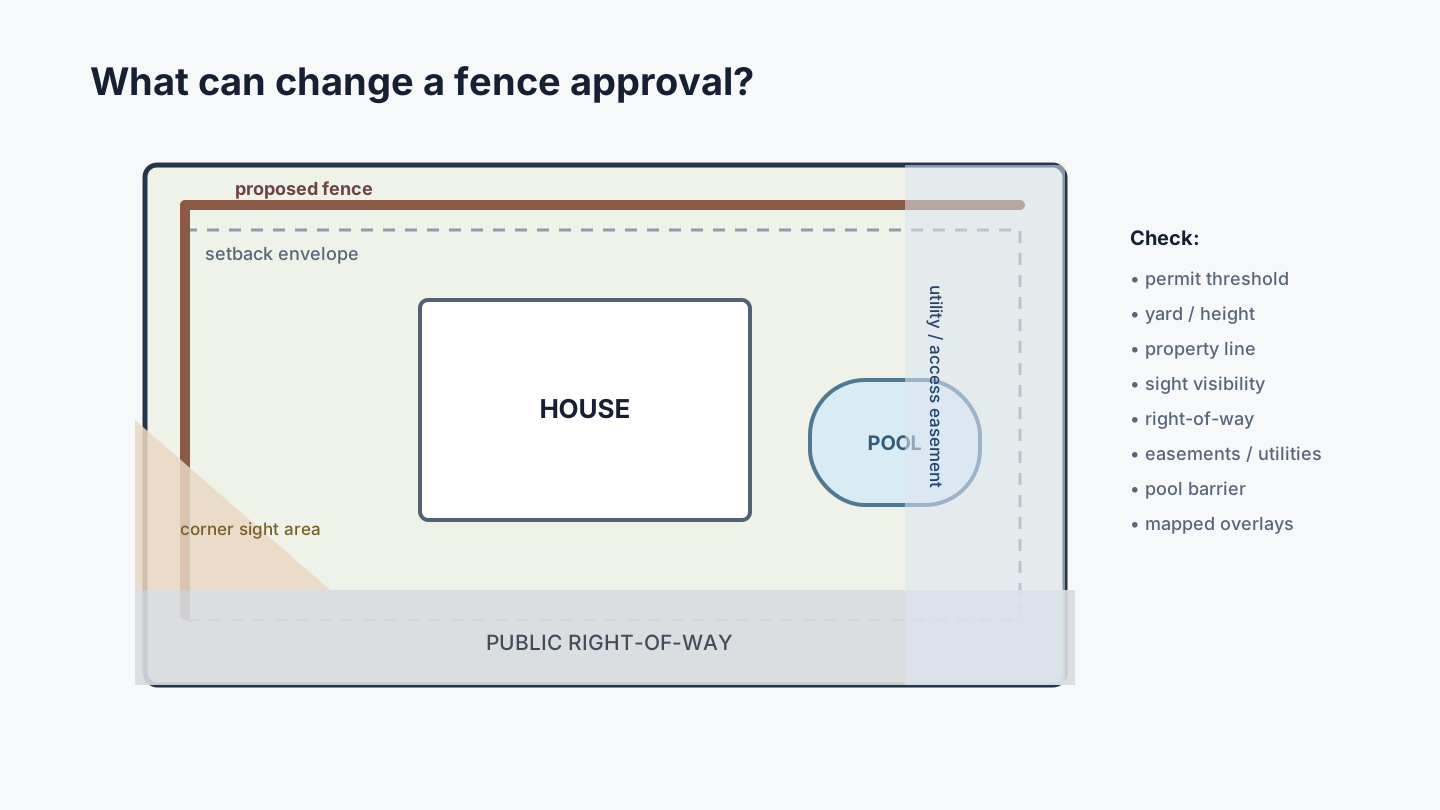
The fence line sits where private property, zoning, utilities, street controls, and sometimes life-safety rules meet.
The five questions to answer before buying materials
- Who regulates this parcel? City, village, township, county, and sometimes a separate street or shoreland authority.
- Does that authority require a fence permit or building permit? Read the current fence or construction rule, not a national rule of thumb.
- What zoning standards apply even without a permit? Height, yard, setbacks, transparency, corner visibility, and location can still be regulated.
- Does the site create a special trigger? Floodplain, pool, shoreline, historic district, critical area, easement, or public right-of-way.
- What boundary evidence is required? A parcel viewer is not a boundary survey.
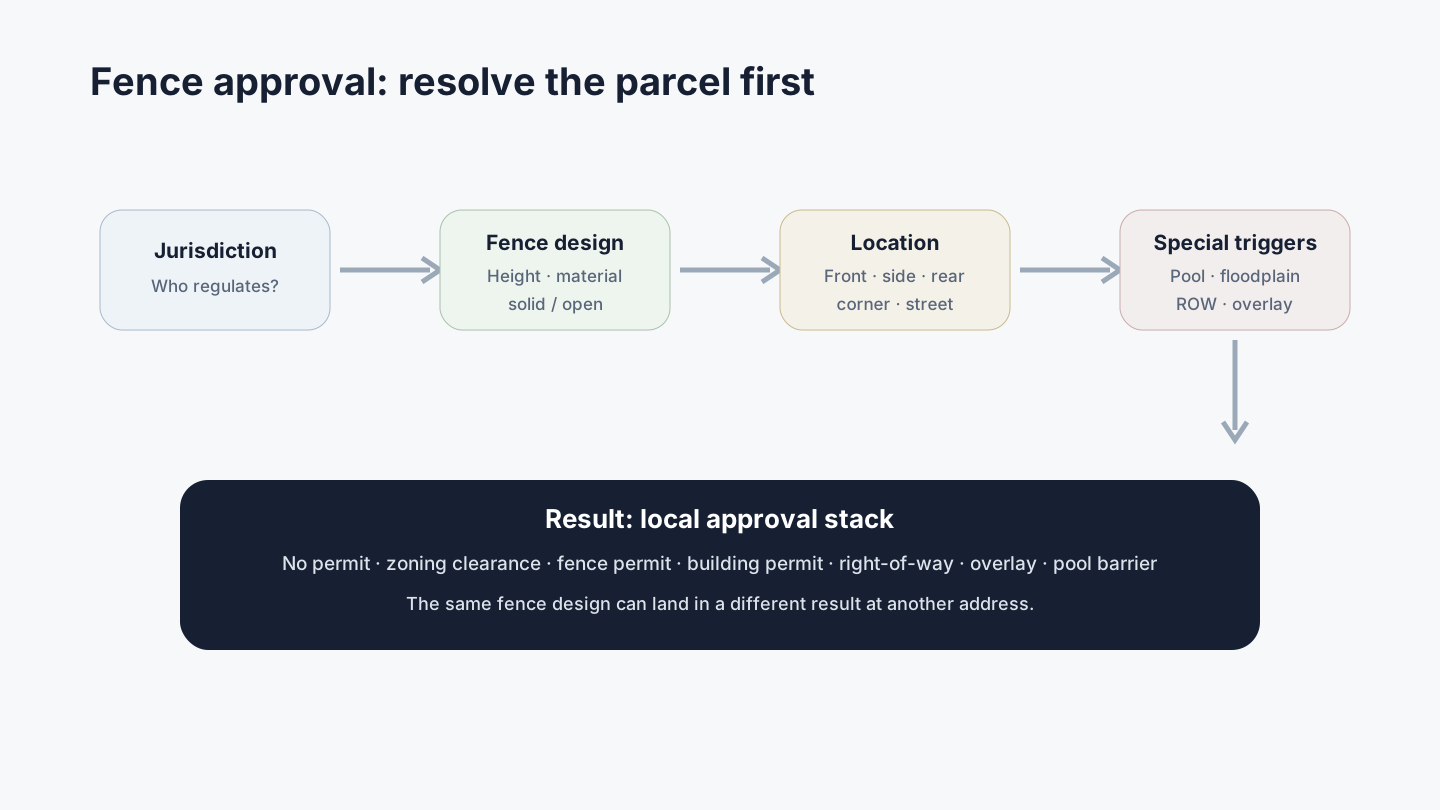
The approvals a fence can trigger
| Approval | What it addresses | Example trigger |
|---|---|---|
| No permit | Permit process is exempt, but rules still apply | A locally exempt fence below the construction threshold |
| Zoning or planning review | Height, location, sight lines, yard rules | A city that regulates fences through zoning rather than building permits |
| Dedicated fence permit | Site plan and fence-specific standards | A city such as Naperville that uses a fence-permit process |
| Building / construction permit | Structural or material threshold | Taller or heavier fence under local code |
| Right-of-way authorization | Private construction near or within public land | Fence near the street or road corridor |
| Overlay review | Floodplain, shoreland, historic, critical-area rules | Fence inside a mapped regulated area |
| Pool barrier review | Life-safety enclosure requirements | Fence enclosing a pool or spa |
Several can apply to one fence.
Current official examples
| Jurisdiction | Published approach | Important detail |
|---|---|---|
| Portland, OR | Building permit required above material-specific thresholds and for pool barriers | Wood, masonry/concrete, and woven-wire thresholds differ |
| Austin, TX | Permit required for fences in a floodplain, over 7 feet, and certain taller fences along public ROW | Corner visibility and pool-barrier rules can add constraints |
| Seattle, WA | Many fences are permit-exempt below published height/material thresholds | Flood-prone areas can still require a construction permit |
| Madison, WI | No building permit for an ordinary fence | Zoning height and placement rules still apply |
| Minneapolis, MN | No building permit for a fence under its zoning framework | Zoning location, height, and design still control |
| Naperville, IL | Dedicated fence permit | Application requires a plat of survey with fence placement |
These are local examples only. They demonstrate why a national fence-permit threshold is unreliable.
Height and material can change the permit question
Portland's current residential fence page requires a permit for a wood fence taller than 7 feet, masonry or concrete taller than 4 feet, woven wire or chain link taller than 8 feet, and fences enclosing a swimming pool. That is one city's material-specific system.
Seattle publishes a different rule: a fence generally does not need a permit when total height is 8 feet or less and masonry or concrete elements are not over 6 feet, unless another condition such as a flood-prone area applies.
Austin publishes another architecture: a permit is required in a floodplain, when the fence exceeds 7 feet at any point, or for certain residential fences over 6 feet along the public right-of-way.
The practical rule is simple: identify your material, location, and height, then read the local measurement method.
The placement, right-of-way, sight-triangle, and property-line sections below explain how to verify those constraints without treating national examples as parcel-specific rules.
No building permit can still mean real zoning limits
Madison states that a building permit is not required to put up a fence, but its zoning rules govern placement and height. Minneapolis likewise states that a building permit is not required, while zoning requirements still apply.
This distinction matters because homeowners often search for "permit required" and stop when they see "no." The next question should be: what standards still bind the project?
The same pattern appears across other homeowner projects. See zoning permit vs. building permit.
Corner lots and sight triangles
A fence that is acceptable in an interior side yard can create a traffic-visibility problem at a corner. Austin directs corner-lot owners to confirm that fencing does not obstruct traffic visibility. Madison publishes separate corner-intersection height constraints.
Because the relevant geometry can depend on street classifications, driveways, and code-defined sight areas, use the local rule and a scaled site plan rather than guessing from the curb.
Public right-of-way
The apparent edge of pavement or sidewalk is not necessarily the property line. Public right-of-way can extend farther into the yard.
Portland states that fences cannot be located within the public right-of-way. Austin adds a permit and authorization path for certain taller residential fences along the right-of-way. Before building near the street, determine the actual boundary and the authority controlling the road corridor.
Easements, utilities, and the property line
A fence can be on private land and still conflict with an easement or utility access requirement. Naperville's fence guidance includes clearance rules around electrical equipment and requires a plat of survey with fence placement.
Use recorded title documents and the boundary evidence accepted by the local authority. Public GIS is useful for orientation, but it is not a legal boundary survey.
Call the applicable utility-locate service before digging. Utility location and fence permitting are separate safety and approval tasks.
Pool fences are life-safety barriers
When a fence encloses a pool or spa, treat the pool-barrier standard as its own regulatory question. Portland states that all barriers around swimming pools require a permit. Austin directs pool fencing to its swimming-pool and spa code requirements.
Pool-barrier rules can address height, gate operation, latching, openings, climbability, and separation from structures. Do not assume an ordinary privacy-fence design satisfies the barrier rule.
Floodplain and other overlays
Austin requires a fence permit in a floodplain regardless of height. Seattle requires a construction permit for a fence in a flood-prone area even where the ordinary height/material exemption would otherwise apply.
Other parcels can have shoreland, historic, environmental, or design overlays. Those are property-specific. Permit Check is the right place to resolve overlays against the parcel rather than treating a national article as a final answer.
Fence versus retaining wall
A fence and retaining wall solve different structural problems. A retaining wall holds back soil and can involve footing depth, surcharge, drainage, and engineering. If the project includes both, review retaining-wall permit requirements separately.
What to put on the site plan
A useful fence plan usually includes:
- property lines and dimensions;
- proposed fence line and gates;
- fence height by segment;
- material and openness where relevant;
- house and accessory structures;
- streets, alleys, driveways, and sidewalks;
- easements and utility equipment;
- pools or spas;
- corner-visibility or sight areas;
- floodplain, shoreland, or other mapped overlays when applicable.
Naperville's requirement to draw fence placement on the plat of survey is a good example of why a real base document matters.
A practical sequence
- Resolve the parcel and permitting authority.
- Read the current fence and zoning rules.
- Confirm whether a permit, zoning clearance, or other approval is required.
- Resolve boundary, easement, utility, right-of-way, and overlay questions.
- Draw the fence on a scaled site plan.
- Check pool-barrier requirements if applicable.
- Check private covenants separately from municipal approval.
- File, build to the approved plan, and complete any required inspection or closeout.
Frequently asked questions
Do I need a permit to build a fence?
It depends on the local authority and site. Naperville uses a dedicated fence permit, Madison and Minneapolis do not require a building permit for ordinary fences, and Portland, Austin, and Seattle use their own thresholds and exceptions.
If no permit is required, can I build any height or location?
No. Zoning, sight-line, right-of-way, pool-barrier, easement, and overlay rules can still apply.
How tall can a privacy fence be?
There is no national answer. Limits and measurement methods vary by jurisdiction, yard, material, and site conditions.
Can I put a fence on the property line?
Only after you know where the boundary is and confirm the local placement rule. Use the boundary evidence the authority accepts.
Does a corner lot change fence rules?
It can. Visibility requirements near intersections and driveways can be more restrictive than ordinary side-yard rules.
Do pool fences need permits?
They can. Portland specifically requires permits for pool barriers, and other jurisdictions regulate them under pool and spa codes even when ordinary fences are exempt.
Does a floodplain change the answer?
Yes in some jurisdictions. Austin requires a fence permit in a floodplain regardless of height, and Seattle requires a construction permit in flood-prone areas.
Does HOA approval replace a city permit?
No. Private covenants and municipal regulation are separate approval systems.
Sources
Reviewed September 5, 2026.
- Portland: Fence Residential Building Permits
- Austin Development Services: Fencing Regulations
- Seattle SDCI: Fences
- Madison Development Services Center: Fence or Hedge
- Minneapolis: Fences
- Naperville: Fence Permit
Related GovCodex guides
Last reviewed: September 6, 2026. Requirements vary by jurisdiction and property.
What this permit is
Required for fences, walls, and other property boundary structures
Category: Building
Workflow: Ministerial land-use approval
Jurisdiction level: Municipal (City / Village / Town)
Staff review against objective zoning, siting, and dimensional standards.
Local path check: Height, materials, location, and local code determine whether zoning review, a building permit, or both apply.
Also known as: Fence Permit, Fencing Permit, Wall Permit, Fence Installation Permit, Property Line Fence Permit
What you need
- Zoning or land-use application when the jurisdiction requires one (Required where the local code lists it)
- Site plan or survey showing the dimensions relevant to the objective standards (Commonly required)
- Use, height, area, materials, or placement details relevant to the review (Commonly required)
This is a general workflow, not a finding about a particular property. Verify each locally marked item against the current official application, ordinance, and issuing department.
How to apply
- Confirm zoning district, overlays, and the objective standards that apply
- Prepare the application and dimensional exhibit requested by staff (Commonly required)
- Staff reviews the proposal for compliance and identifies corrections
- Receive the administrative approval or a written explanation of noncompliance
Timing
Processing time is set by the responsible jurisdiction: follow its published application deadline, review calendar, and completeness rules.
Fees
Consult the responsible jurisdiction’s current application and fee schedule. No supported national fee range is available.