
Certificate of Occupancy Guide
Learn which occupancy document a project actually receives, what must be finished before issuance, how temporary and completion documents differ, and when a change of use triggers a new one.
Direct answer: a certificate of occupancy, often abbreviated CO or C of O, is a local occupancy approval issued after the authority's required inspections and closeout conditions are satisfied. The exact document depends on the jurisdiction and project. A new building, addition, change of use, interior build-out, repair, or older existing structure can each follow a different path.
A building permit authorizes construction. An occupancy document addresses whether the completed building or space may be occupied for its approved use. Some projects receive a certificate of completion or local use permit instead. Some projects close with a final approved inspection and no CO at all.
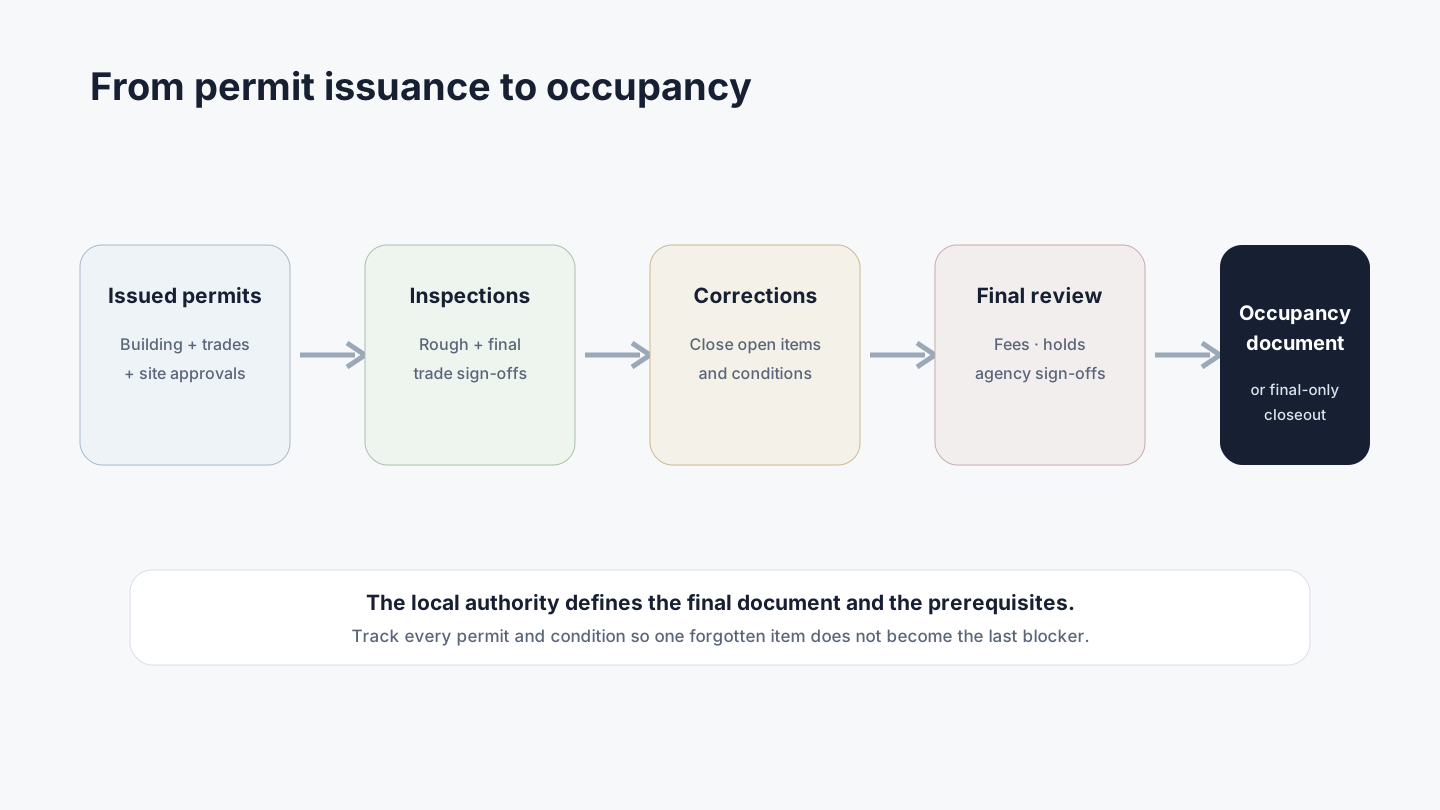
Occupancy approval sits at the end of the permit stack, after the project-specific closeout requirements are satisfied.
Which occupancy document does your project need?
Start with four questions:
- What is the project? New building, addition, alteration, tenant improvement, or change of use.
- Which authority controls occupancy approval? City, county, or another local building authority.
- What document does that authority issue for this project type? Final CO, temporary or partial CO, certificate of completion, residential/nonresidential use permit, or only a final approved inspection.
- What conditions must be cleared before issuance? Building and trade inspections, fire or health approvals, land-use conditions, fees, violations, utilities, and other project-specific sign-offs.
Documents homeowners and project teams often confuse
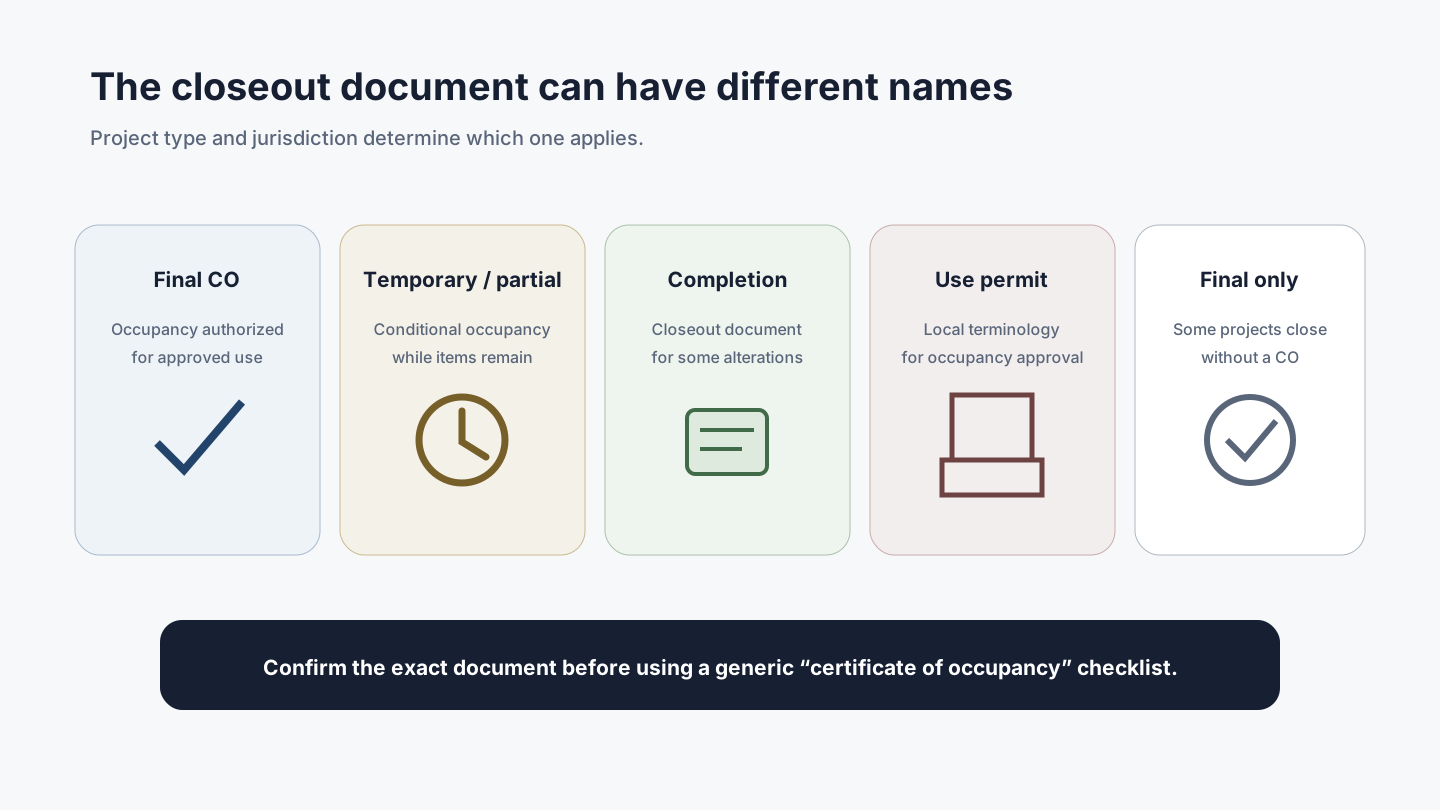
| Document | What it generally represents | Current local example |
|---|---|---|
| Final certificate of occupancy | Occupancy authorized for the approved use after required closeout | Raleigh, NC; Minneapolis, MN |
| Temporary or partial certificate of occupancy | Conditional occupancy while limited items remain open | Raleigh, NC |
| Certificate of completion | Project closeout for certain alterations or repairs where the authority uses this document | Raleigh, NC |
| Residential or nonresidential use permit | Local name for an occupancy approval | Fairfax County, VA |
| Final approved inspection only | Closeout without a CO for specified project types | Seattle, WA for single-family and duplex projects under its published guidance |
These labels are not nationally standardized. Read the authority's own rule and the document you actually receive.
Current official examples
Raleigh, North Carolina
Raleigh's Certificate of Occupancy page, updated July 13, 2026 and republished September 3, states that a CO is issued when a building has passed all inspections and is ready for use. It says a new building cannot be legally occupied until a CO is issued. Raleigh issues a CO for a new building, addition, change of use, and interior completion, while a Certificate of Completion is issued for alterations and repairs. Raleigh also provides a partial or temporary CO path when a building is safe to occupy temporarily while remaining issues are resolved, and states that a temporary CO expires 30 days after issuance.
Austin, Texas
Austin's published certificate-of-occupancy guidance describes a CO as the record for a building's current use. It states that a certificate is provided after a successful final inspection for new construction or significant renovations, and that a temporary certificate may allow limited occupancy, stocking, or furnishing before the final certificate is issued. Confirm the current project-specific process with Austin before relying on that path.
Minneapolis, Minnesota
Minneapolis publishes a certificate-of-occupancy process for buildings and changes in use or occupancy classification. Its requirements include completion of construction inspections and the final occupancy review required by the city.
Fairfax County, Virginia
Fairfax County uses Residential Use Permit and Non-Residential Use Permit terminology for occupancy approvals. That is useful evidence that "certificate of occupancy" is an intent category, not necessarily the name printed on the local document.
Seattle, Washington
Seattle's construction guidance states that single-family and duplex projects do not receive a certificate of occupancy and instead close with a final approved inspection. That makes a national statement such as "every house needs a CO" inaccurate.
The closeout sequence
1. Identify the expected document early
Do this before construction is nearly complete. It affects scheduling, lender or lease milestones, move-in planning, and which final inspections need to happen together.
2. Track every permit tied to the project
Building, electrical, plumbing, mechanical, fire, elevator, grading, and site permits can close separately. A forgotten trade permit can become the last unresolved item.
3. Track land-use conditions
Conditions from a variance, site plan review, conditional use, or other discretionary approval may have to be satisfied before occupancy.
4. Complete inspections in the required sequence
Some work must be inspected before it is concealed. Final occupancy can depend on each trade final as well as the building final.
5. Complete outside-agency sign-offs
Fire, health, utilities, elevator, accessibility, environmental, or other agencies may control separate closeout gates depending on the building and use.
6. Clear administrative holds
Unpaid fees, open violations, incomplete reviews, missing documents, or unresolved permit conditions can block issuance even when construction appears complete.
7. Request the occupancy review or final document
Do not assume the system issues it automatically. Follow the authority's published request process.
8. Read the issued document
Check the property address, suite or unit, approved use, occupancy classification, conditions, temporary status, and expiration date.
9. Save it with the property record
The occupancy document should stay with the permit and plan history. For due diligence, see how to check building permits before buying a house.
Temporary and partial certificates
A temporary or partial certificate can authorize occupancy before every project item is complete, but only within the conditions the authority approves.
Raleigh's current guidance says a partial or temporary CO may be issued when a building is safe to occupy temporarily while remaining issues are resolved and approved. Raleigh's temporary CO expires 30 days after issuance.
Do not transfer that 30-day period to another jurisdiction. Confirm:
- which area can be occupied;
- which uses are allowed;
- remaining required work;
- fire/life-safety conditions;
- expiration date;
- extension process;
- which inspections remain open.
A temporary certificate is a controlled bridge to final closeout, not proof the project is finished.
Change of use can trigger occupancy review even with modest construction
A building can be physically complete and still need a new occupancy approval because the legal use changed. Examples include office-to-residential, retail-to-restaurant, warehouse-to-assembly, a garage conversion, or a change in dwelling-unit count.
Resolve zoning first using zoning permit vs. building permit. If the proposed use is not allowed at the parcel, a construction permit cannot cure that land-use problem.
Older buildings and missing CO records
An older house without a CO is not automatically illegal. Local requirements were adopted at different times, historical records can be incomplete, and some building types may close through other documents.
Research two questions:
- Was an occupancy document required when the building was constructed or materially altered?
- Does the approved use in the authority's records match the use today?
Use the permit-history guide to check the archive and source coverage before treating a missing online document as a final answer.
What can block occupancy approval?
| Blocker | What to check |
|---|---|
| Open building inspection | Required final and correction history |
| Open trade permit | Electrical, plumbing, mechanical, fire, or other finals |
| Unresolved land-use condition | Variance, site plan, conditional use, landscaping, parking, or other approval condition |
| Fire or health sign-off | Project-specific outside-agency requirements |
| Open violation or stop-work hold | Current enforcement status |
| Unpaid fee | Building, trade, review, or other local charge |
| Missing required document | As-built, test report, certification, survey, or other closeout submission |
| Temporary certificate expiring | Remaining items, extension rule, final-CO path |
This is a diagnostic framework, not a universal checklist. The authority's project-specific closeout list controls.
Fees and timing
There is no reliable national certificate-of-occupancy fee or processing-time range. The timing can depend on project type, final inspection availability, trade closeout, outside-agency sign-offs, correction cycles, and whether a temporary certificate is requested.
Budget the permit process using building permit cost and track post-issuance deadlines using permit validity.
Use GovCodex for property-specific closeout
Permit Check can organize the parcel, authority, permit stack, zoning context, and source evidence that feed into the closeout question. Confirm the current local occupancy process before moving in, opening a business, closing a transaction, or relying on the approved use.
Frequently asked questions
What is a certificate of occupancy?
It is a local authority's occupancy approval for a building or space after required permit and inspection conditions are satisfied.
Does every house need a certificate of occupancy?
No. Requirements vary by jurisdiction, project type, and building history. Seattle states that single-family and duplex projects close on a final approved inspection rather than a CO.
What is the difference between a CO and a certificate of completion?
Where a jurisdiction uses both, they can apply to different project types. Raleigh currently issues COs for new buildings, additions, changes of use, and interior completion, and Certificates of Completion for alterations and repairs.
What is a temporary certificate of occupancy?
A conditional occupancy approval allowing use of a building or portion while limited items remain open. The conditions and expiration are local.
How long does a temporary CO last?
It depends on the authority. Raleigh currently states that its temporary CO expires 30 days after issuance.
Does a passed final inspection automatically create a CO?
Do not assume so. The occupancy document can be a separate step with its own request or review process.
Can a remodel require a new CO?
Yes in some cases, particularly when the work changes use, occupancy classification, unit configuration, or another condition the local authority ties to occupancy approval.
What can block a certificate of occupancy?
Open building or trade inspections, unresolved land-use conditions, required fire or health sign-offs, violations, unpaid fees, missing closeout documents, and an expiring temporary certificate can each block issuance. The authority's project-specific closeout list controls.
Who issues the certificate of occupancy?
The local building or development authority under its own terminology and process.
What if an old house has no CO online?
Check historical requirements, archives, prior addresses, and other occupancy records before concluding anything about legality.
Sources
Reviewed September 5, 2026.
- Raleigh: Certificate of Occupancy
- Austin: Certificate of Occupancy
- Minneapolis: Certificate of Occupancy
- Fairfax County: Certificate of Occupancy / Residential Use Permit
- Fairfax County: Non-Residential Use Permit
- Seattle SDCI: Construction Permit - Addition or Alteration
Related GovCodex guides
Last reviewed: September 2, 2026. Requirements vary by jurisdiction and property.
What this permit is
Official authorization for an identified use or occupancy after applicable approvals, inspections, and closeout requirements
Category: Building
Workflow: Certificate and closeout
Jurisdiction level: Municipal (City / Village / Town)
Official closeout or use authorization after the applicable approvals and inspections.
Also known as: Certificate of Occupancy, COO, CO, Occupancy Permit, Certificate of Use, Use and Occupancy Certificate, Temporary Certificate of Occupancy, TCO
What you need
- Related permit number, property, proposed use, and responsible contact (Commonly required)
- Required final, trade, fire, accessibility, or other closeout approvals (Required where the local code lists it)
- As-built, testing, or closeout documents requested by the issuing department (Required where the local code lists it)
This is a general workflow, not a finding about a particular property. Verify each locally marked item against the current official application, ordinance, and issuing department.
How to apply
- Confirm whether a new use, change of use, completed project, or temporary occupancy requires a certificate
- Identify the issuing department and every prerequisite inspection or approval
- Complete required inspections and resolve open corrections (Commonly required)
- Submit the certificate request or application with the related permit and use information (Commonly required)
- The authority issues the certificate or identifies remaining deficiencies
- Confirm whether the authority issued a final certificate or a temporary certificate with limits, conditions, and an expiration date (Required where the local code lists it)
- When a certificate is required, do not occupy beyond the scope and date the issuing authority has authorized
Timing
Processing time is set by the responsible jurisdiction: follow its published application deadline, review calendar, and completeness rules.
Fees
Consult the responsible jurisdiction’s current application and fee schedule. No supported national fee range is available.
Official sources
These dated official sources support the workflow distinctions in this general guide. They do not establish the rules for your property; verify the current source published by your responsible authority.
- Certificate of Occupancy — City of Minneapolis (Minneapolis, MN; checked 2026-09-02). Local example requiring a certificate before a new building is occupied and on a change in use or occupancy classification, with an applicant-requested final inspection.
- Certificate of Occupancy — City of Raleigh (Raleigh, NC; checked 2026-09-02). Local example separating a certificate of occupancy from a certificate of completion and setting a 30-day expiration on its temporary certificate.
- Certificate of Occupancy — Austin Development Services (Austin, TX; checked 2026-09-02). Local example issuing the certificate on a successful final inspection and describing what a temporary certificate allows.
- Certificate of Occupancy (Residential Use Permit) — Fairfax County Land Development Services (Fairfax County, VA; checked 2026-09-02). Local example naming the residential occupancy approval a use permit and publishing its fee, review, violation, and inspection prerequisites.
- Certificate of Occupancy (Non-Residential Use Permit) — Fairfax County Land Development Services (Fairfax County, VA; checked 2026-09-02). Local example applying the non-residential use permit to initial occupancy, continued occupancy, and a change in use.
- Construction Permit — Addition or Alteration — Seattle Department of Construction and Inspections (Seattle, WA; checked 2026-09-02). Local example where single-family and duplex projects close on a final approved inspection and never receive a certificate of occupancy.
Related permits
Building Permit
Required for new construction, major renovations, additions, and structural alterations
Electrical Permit
Required for electrical work including wiring, circuits, panels, and electrical installations
Plumbing Permit
Required for plumbing work including water supply, drainage, fixtures, and gas lines
Mechanical Permit
Required for HVAC systems, furnaces, air conditioning, and ventilation work