
How to Check Building Permits Before Buying a House
Learn how to find permits, inspections, open records, violations, and occupancy documents before buying a house.

Direct answer: identify the permitting authority, search the property by both address and parcel identifier, review every building and trade permit, inspect the status and inspection history, search older archives when the current portal has limited coverage, and compare the official record with what is physically present at the property.
An issued permit does not prove the work passed final inspection. A closed permit does not prove every visible feature was part of the approved scope. A search that returns no records is an unresolved result until you know the portal's coverage and the correct issuing authority.
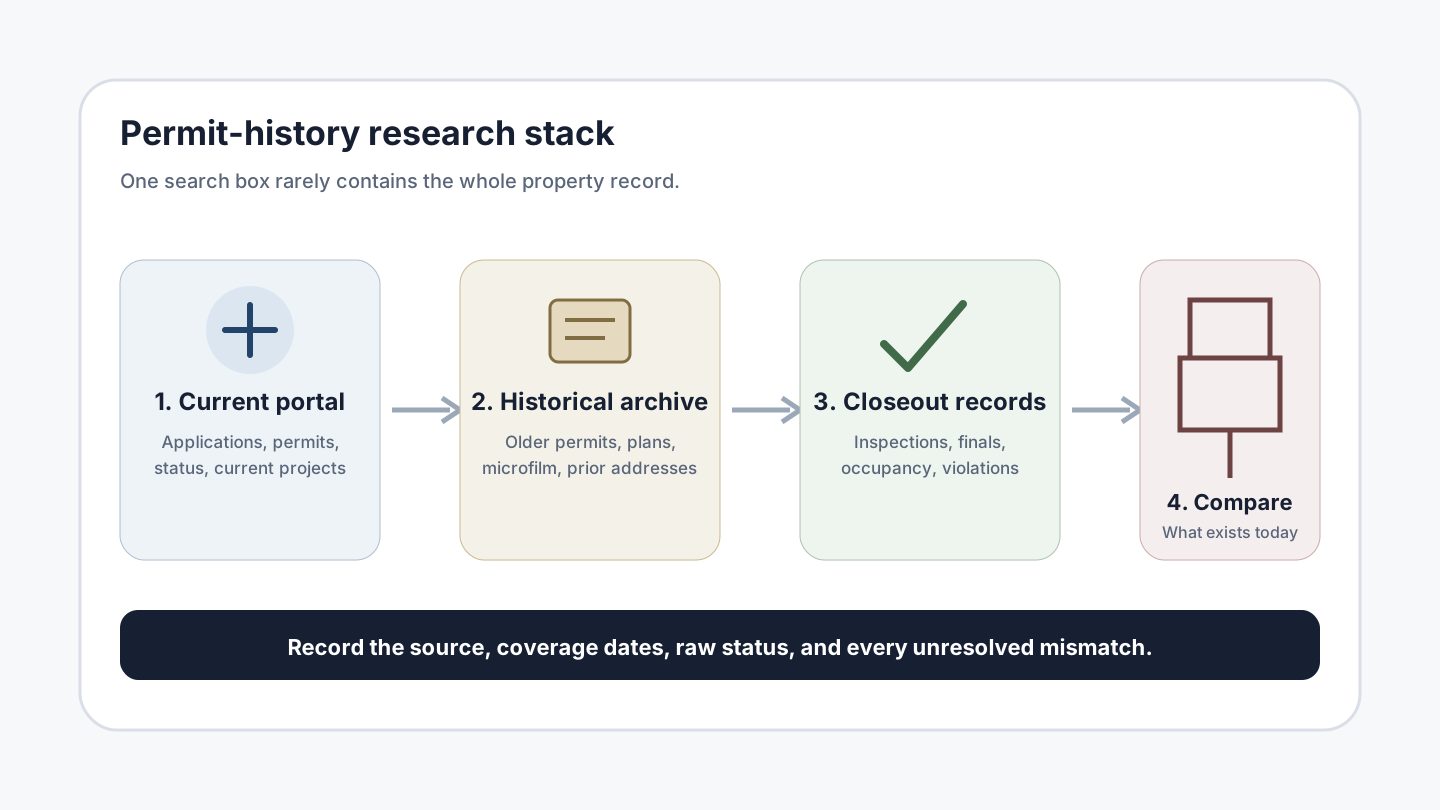
Permit research is a reconciliation task. The current portal is only one layer of the record.
The eight-step permit-history check
- Confirm the exact jurisdiction. A mailing address can sit in a city, village, township, county, or special district with different permit systems.
- Search by address and parcel ID. Address formatting changes. Parcel identifiers often survive renumbering and subdivision history better.
- Collect building and trade permits. Electrical, plumbing, mechanical, fire, sewer, grading, driveway, and other permits may live in separate systems.
- Read the scope, not only the permit title. "Alteration" can mean anything from a small interior change to a major reconfiguration.
- Read every status and inspection. Look for corrections, partial approvals, failed inspections, missed finals, expirations, withdrawals, and administrative closures.
- Search historical archives. Modern online portals often cover only a defined date range. Older permits may live in scanned records, microfilm, or a separate document library.
- Search occupancy and enforcement records. Certificates of occupancy, completion records, complaints, violations, and unsafe-building records answer different questions from the permit log.
- Compare the record with the house. Finished basements, additions, decks, converted garages, extra bathrooms, upgraded services, and added dwelling units should be reconciled with the approved scope.
What each record can actually prove
| Record | What it can tell you | What it cannot prove by itself |
|---|---|---|
| Application | Proposed scope, applicant, address, valuation | That work was authorized or built |
| Issued permit | Work was authorized under the stated scope | That work passed inspection or was completed |
| Approved plans | Configuration and details that were approved | That construction matches the plans today |
| Trade permit | Electrical, plumbing, mechanical, fire, or other regulated work was authorized | That the building permit itself closed |
| Inspection history | What was inspected, results, corrections, and sequence | That every concealed condition was reviewed |
| Final approval | The issuing authority closed that permit under its process | That every current feature at the property was included in the permit |
| Occupancy record | Approved use, occupancy, or unit configuration where the jurisdiction issues one | That later alterations were separately permitted |
| Violation or complaint | An enforcement issue was alleged or confirmed | That the issue is still active without checking current status |
The safest way to use permit records is to preserve the authority's raw language and then add your own interpretation beside it. Do not silently translate "closed," "complete," "final," "expired," or "void" into a universal status. Those words are not standardized nationally.
Portal coverage is part of the evidence
The biggest mistake in a permit lookup is treating a portal's empty result as a complete historical answer.
Seattle's Department of Construction and Inspections tells researchers to use multiple resources. Its current Services Portal contains permit activity from 2005 to the present, while historic permits and plans can appear in the separate Permit and Property Records library. Seattle also says most construction plans from 2007 forward are available by request rather than simply displayed in the portal.
New York City is another example of split systems. The Department of Buildings' building-history guidance directs users across its records systems, including DOB NOW and older Building Information System records. A lookup in only one system can miss filings made in the other.
Portland likewise separates current permitting information from public-records requests and historical documents. Chicago publishes building-permit data as an open dataset, but a dataset row is still only one part of a property's regulatory history.
Citation-ready portal comparison
| Jurisdiction | Official source | Useful coverage or function | Important blind spot to check |
|---|---|---|---|
| Seattle, WA | SDCI Permit & Site History tools | Current projects, inspections, related permits, documents, and historical research links | Current portal and historical records are separate; some plans require a written request |
| New York City, NY | NYC Department of Buildings building history | Permits, jobs, complaints, violations, certificates, and multiple DOB systems | DOB NOW and older BIS records are not one unified historical search |
| Portland, OR | Portland Permitting & Development public records | Permit records, plans, applications, and public-record requests | Online availability depends on record type and age |
| Chicago, IL | City of Chicago Building Permits dataset | Searchable permit records and project metadata | Open-data records do not replace inspection, plan, occupancy, or enforcement research |
This is the kind of compact, attributed table that both human readers and retrieval systems can cite without turning one city's system into a national rule.
How to interpret common permit statuses
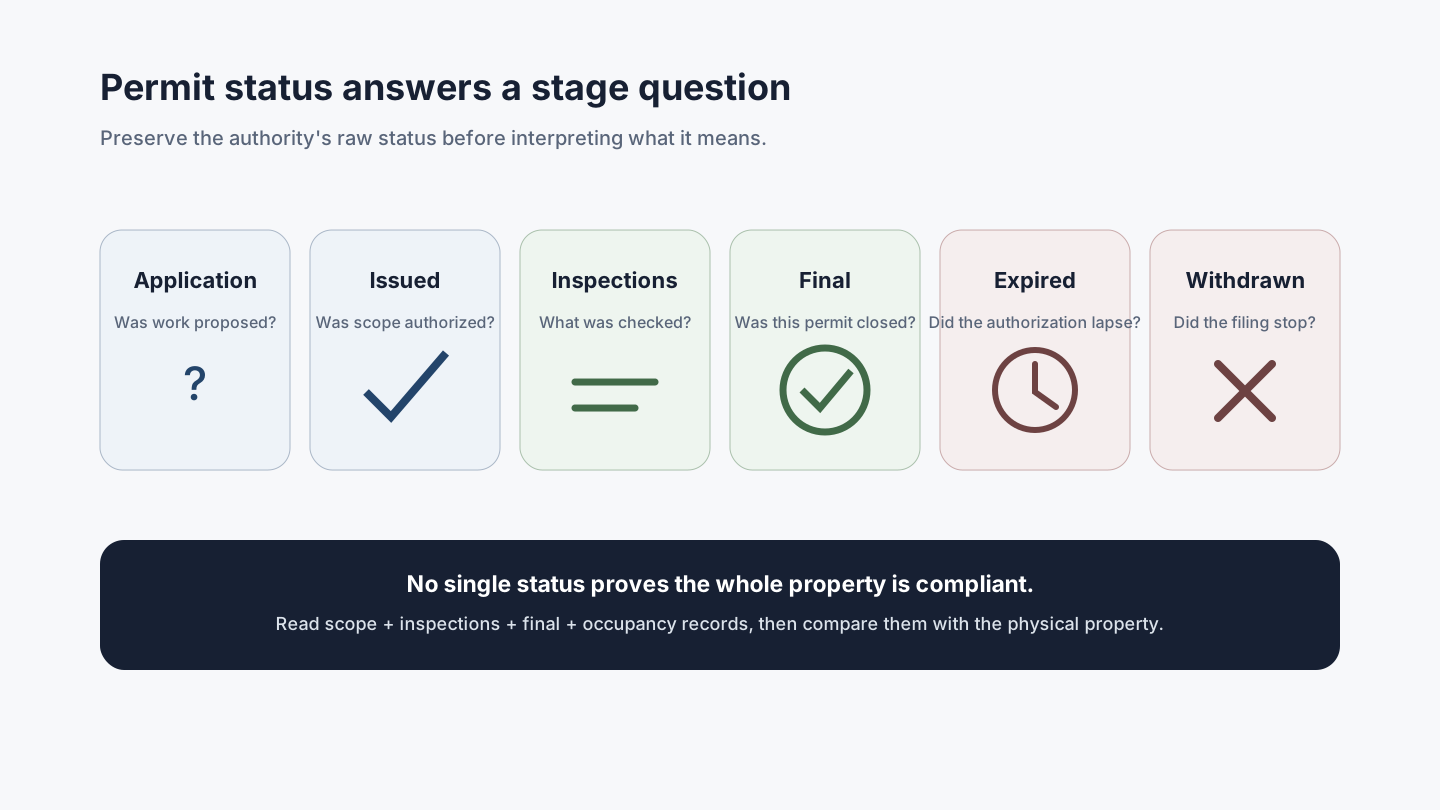
Status is evidence about a stage in the process. It is not a universal legal conclusion.
Issued
The authority authorized the stated scope. Check the issue date, permit description, related trade permits, required inspections, and whether later revisions changed the scope.
Open or active
The project may still be underway, may be waiting on inspection, or may simply never have been administratively closed. Find the last meaningful activity and the local expiration rule before deciding what "open" means.
Final or complete
This is stronger evidence than issuance, but read the permit scope. A finalized kitchen permit does not explain an unrecorded second bathroom or a later garage conversion.
Expired
An expired permit may require reactivation, renewal, a new permit, inspections, or another local correction process. Use the separate guide on how long a building permit stays valid for lifecycle questions.
Withdrawn, canceled, or void
These generally indicate that the record did not proceed as originally filed. Do not assume the proposed work was never built. Compare it with the property.
Red flags worth reconciling before closing
- An addition, deck, finished basement, converted attic, or converted garage that does not appear in the permit history.
- A permit that was issued but never shows a final inspection or other local closeout.
- New electrical, plumbing, mechanical, or gas work with no corresponding trade record where the jurisdiction requires one.
- A visible unit count that differs from the occupancy record or approved plans.
- Active violations, stop-work records, or unresolved correction notices.
- A permit scope that is materially smaller than the work visible today.
- A current online portal whose published coverage begins after the apparent renovation date.
- Multiple addresses, parcel splits, consolidations, or historical street numbers that could hide older records.
- A seller disclosure that describes work more broadly than the permit file does.
A red flag is a research result, not an accusation. Older lawful work can predate a permit requirement, a municipality can have incomplete archives, and records can be indexed under a prior address. The next step is to reconcile the discrepancy with evidence.
Permit history versus a home inspection
A home inspection and permit research solve different problems.
| Home inspection | Permit-history research |
|---|---|
| Evaluates visible physical condition | Evaluates official authorization and regulatory history |
| Can identify unsafe or defective work | Can identify whether regulated work was permitted and inspected |
| Usually cannot see concealed construction | May provide approved plans and inspection milestones |
| Does not establish legal occupancy or unit count | Occupancy records can help establish approved use |
| Does not prove permit compliance | Does not prove current physical condition |
For a purchase, the useful approach is to use both. A clean permit file does not replace a physical inspection, and a clean inspection does not resolve a missing regulatory record.
What to do when the records do not match the house
Records align with the physical property
Save the permit list, final approvals, relevant plans, and occupancy documents with the transaction file. They can be valuable later for renovation planning, resale, and insurance questions.
The portal has an archive gap
Document the portal's stated coverage, search historical systems, and request older records where available. Treat the gap as uncertainty until the older record is checked.
A permit is still open
Determine the last inspection, the remaining work, who is responsible, whether the permit is still valid, and what the issuing authority requires to close it. A seller, buyer, contractor, or title party may need to address this contractually, but the municipal requirement comes from the authority itself.
The physical property does not match the permit scope
Obtain the approved plans if available and have the physical condition evaluated. The correction path is jurisdiction-specific. It may involve an after-the-fact permit, destructive inspection, engineering, removal, or another local process.
The approved use does not match the current use
Treat that as a separate occupancy and zoning issue. A finished space can be physically safe while still lacking approval for its current use. Review the certificate of occupancy guide and zoning permit versus building permit before assuming a construction permit resolves the use question.
A buyer's record packet
For a property with meaningful renovation history, save a simple packet:
- property address and parcel identifier;
- jurisdiction and every issuing agency searched;
- portal URLs and the date searched;
- published portal coverage dates;
- permit numbers, scopes, issue dates, and raw statuses;
- trade permits and inspection histories;
- approved plans or document-request results;
- final approvals and occupancy records;
- violations and their current disposition;
- unresolved mismatches between records and the physical property.
That packet converts a one-time search into reusable property intelligence.
How GovCodex helps
GovCodex is designed to connect the parcel, jurisdiction, permit systems, project scope, inspections, occupancy records, and source evidence in one workflow. That matters because the answer is rarely sitting in one search box.
Check permit history and requirements for a property.
From there, use building permit cost to budget unresolved work, permit validity for open or expired records, and certificate of occupancy when the approved use is part of the question.
Frequently asked questions
Does an issued permit mean the work passed inspection?
No. Issuance authorizes the stated work. Review the inspection history and the authority's final-closeout record separately.
What does an open permit mean on a house?
It can represent active work, a missed final inspection, unresolved corrections, expiration, or an administrative closeout issue. Check the last activity and the local permit-validity rule.
What if no permits appear for the property?
Confirm the jurisdiction, parcel identifier, historical address, portal coverage dates, older archives, and other issuing agencies. An empty current portal is not proof that no permit ever existed.
Can I search building permits by address?
Many authorities support address searches, but parcel identifiers and permit numbers can be more reliable when an address changed. Use every identifier the official system supports.
Is a home inspection enough to find unpermitted work?
No. A home inspection evaluates physical condition. Permit research evaluates official records, approved scope, inspections, and closeout. Use both for due diligence.
Does a closed permit prove all work at the house is legal?
No. It proves that the specific permit was closed under that authority's process. Compare its scope and approved plans with the property as it exists now.
Where can I find approved building plans?
It depends on the authority. Some publish plans in a permit portal, while others require a public-record or plan request. Seattle, for example, states that many approved construction plans are available through a written request rather than directly in the current portal.
Should I check certificate-of-occupancy records too?
Yes when the question involves legal use, unit count, a change of use, or major construction. Occupancy records answer a different question from the permit log.
Related GovCodex guides
Sources
Visual guides
Review permit, inspection, enforcement, and occupancy records before closing.
A property record search connects permits with inspections, violations, and occupancy documents.
Last reviewed: August 4, 2026. Requirements vary by jurisdiction and property.
Related Articles
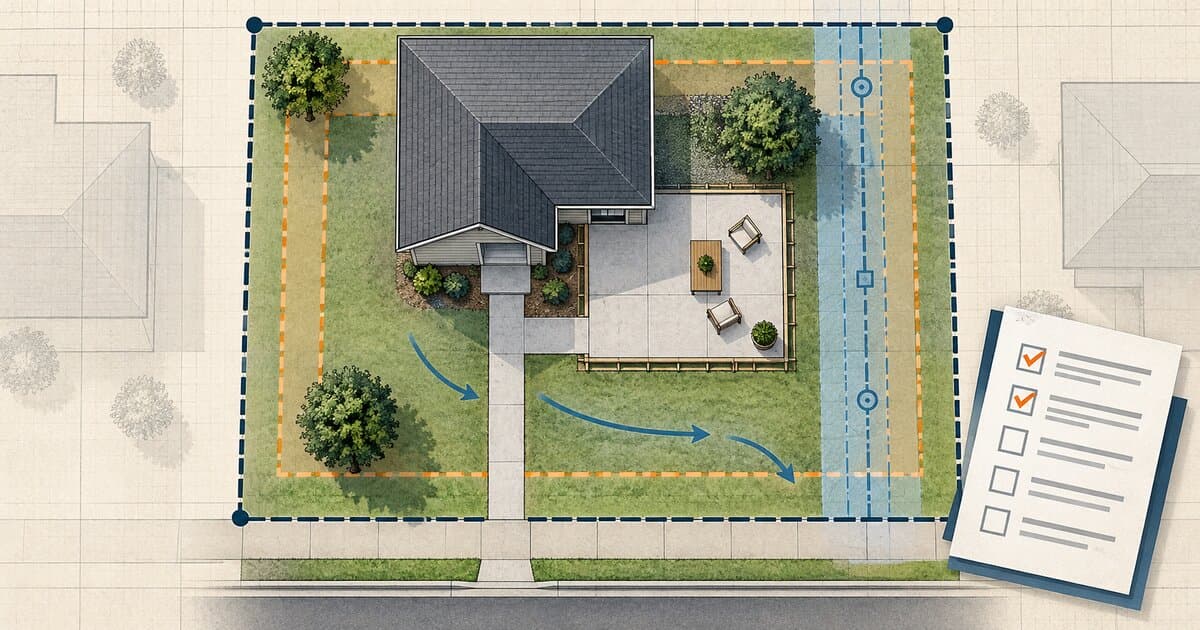
Do You Need a Permit to Pour Concrete? Patios, Slabs & Walkways
Pouring concrete may be permit-exempt or regulated depending on whether it is a patio, slab, walkway, driveway, structural base, or right-of-way work.

Do You Need a Permit for an EV Charger?
Learn when a home EV charger needs an electrical permit, when panel or service upgrades enter the project, and how inspection and utility coordination work.
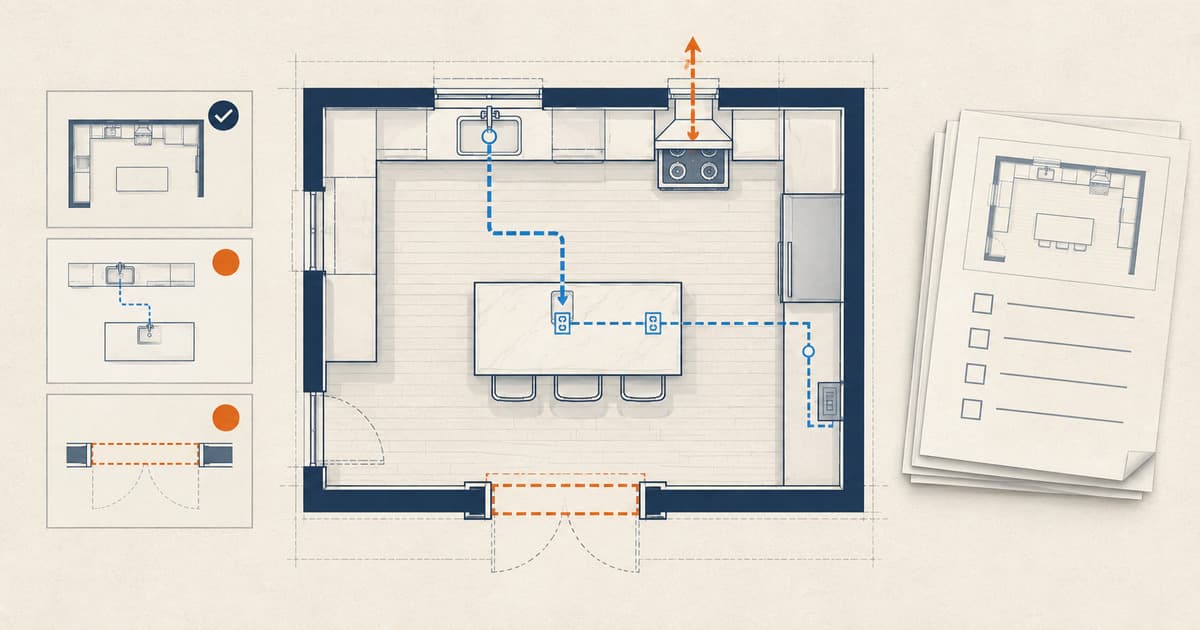
Do You Need a Permit for a Kitchen Remodel?
Learn when cabinets, sinks, islands, appliances, walls, wiring, plumbing, gas, or ventilation can change kitchen-remodel permit and inspection needs.