
Do You Need a Permit for Solar Panels?
Learn which permits rooftop solar needs, what structural and electrical reviewers check, how inspections and utility interconnection work, and when storage changes the process.
Direct answer
Residential rooftop solar commonly requires local permit review and inspection before a grid-connected system can legally operate. The authority having jurisdiction may review roof structure, attachments, electrical design, equipment listings, fire access, disconnects, labeling, service equipment, batteries, and other code requirements. The electric utility then handles a separate interconnection process and may issue permission to operate, or PTO.
The U.S. Department of Energy states that local governments generally require rooftop-solar permits before installation, inspect the completed array for code compliance, and then allow utility grid connection. Requirements and fees vary by jurisdiction.
Key takeaways
- Solar permitting and utility interconnection are separate.
- A combined solar permit, building permit, electrical permit, or automated permit may apply.
- Structural review can depend on roof framing, attachment, wind, and snow.
- Electrical review can include inverter, service, conductors, disconnects, grounding, overcurrent protection, and labels.
- Battery storage can add additional electrical and fire-safety review.
- Main-panel upgrades can expand the project scope.
- SolarAPP+ can automate eligible permitting only where the jurisdiction has adopted it.
- Passing local inspection does not necessarily mean utility PTO has been issued.
- Ground-mounted solar can trigger zoning, setbacks, grading, trenching, and site review.
- Requirements vary by jurisdiction, property, system, and utility.
Solar permit vs. utility interconnection
| Process | Main question |
|---|---|
| Local permit review | Is the proposed system code-compliant? |
| Structural review | Can the roof and attachment support the array? |
| Electrical review | Is the electrical design compliant and equipment properly sized and listed? |
| Inspection | Was the approved system installed correctly? |
| Utility interconnection | Can the system connect safely to the grid? |
| Permission to operate | Has the utility authorized grid operation or export? |
What reviewers commonly check
Structural capacity
Review can include roof framing type, span, spacing, roof condition, mounting hardware, attachment spacing, dead load, wind uplift, snow load, and unusual roof geometry. Portland publishes dedicated guidance for residential solar projects that require engineered structural analysis.
Electrical design
Review can include modules, inverter or microinverters, rapid shutdown, conductors, disconnects, grounding and bonding, overcurrent devices, backfeed, service size, main panel, labels, and equipment listings. Seattle allows some small solar PV electrical permits under 7.7 kW to apply online without plan review. That is a Seattle-specific pathway, not a national threshold.
Fire and access
Panel layout can be affected by emergency access, pathways, equipment clearances, shutdown requirements, and adopted fire-code provisions.
SolarAPP+ and automated permitting
SolarAPP+ is an automated residential solar permitting platform developed through NREL and DOE work. A participating jurisdiction can use standardized project inputs, automated code checks, instant eligible permit issuance, and generated inspection checklists. Complex or ineligible projects can still require manual review.
California's SB 379 requires most non-exempt cities and counties to implement an online automated residential solar permitting platform for defined systems. Minnesota law also defines SolarAPP+ and supports local adoption. Those state frameworks do not prove that any specific municipality has fully implemented the same workflow.
PV-only vs. PV plus battery storage
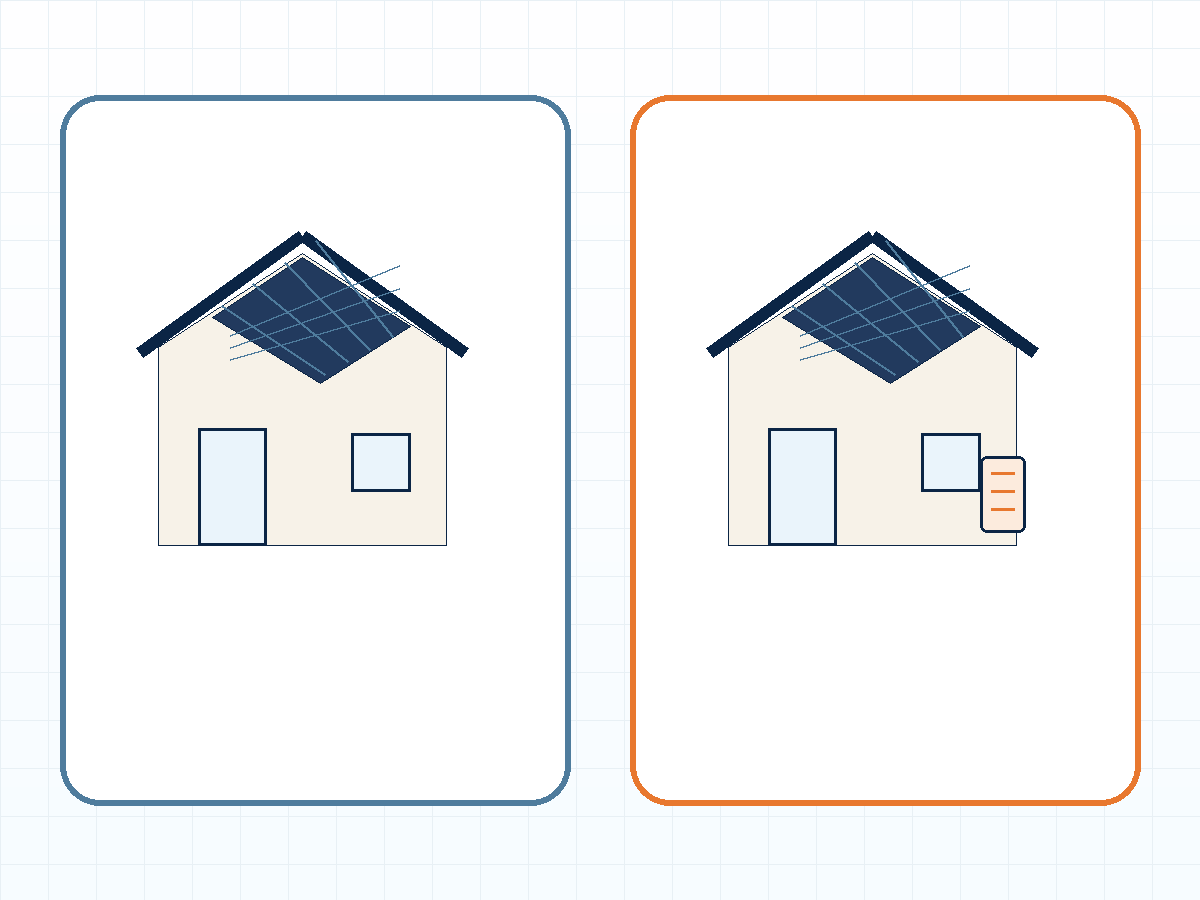
Adding storage can change equipment location, disconnecting means, electrical protection, fire-safety provisions, clearances, environmental protection, and inspection requirements. A PV-only permit should not be assumed to cover a later battery installation.
Main-panel upgrades
Solar can trigger or coincide with a service or main-panel upgrade. That can create additional electrical permit scope, utility coordination, meter work, inspection, and service-disconnect changes.
Roof condition and reroof coordination
DOE consumer guidance recommends considering roof age and suitability before installing solar. If roof replacement is likely soon, coordinate the roof and solar plan before installation. A later reroof can require solar removal, roof permitting, solar reinstallation, electrical inspection, and utility coordination.
Typical solar permit process
- Confirm the property, permitting authority, electrical authority, and utility.
- Confirm roof condition and array location.
- Design the PV system.
- Determine structural, electrical, storage, and panel-upgrade scope.
- Identify the permit path, including SolarAPP+ where actually available.
- Submit plans or automated permit data.
- Obtain the permit before installation.
- Install the system to the approved design.
- Complete local inspections.
- Resolve corrections.
- Complete utility interconnection requirements.
- Receive PTO before grid operation where required.
- Retain the permit, inspection, interconnection, and PTO records.
What documents may be required?
A solar application can request a site or roof plan, array layout, one-line electrical diagram, equipment specification sheets, structural attachment details, roof framing information, engineering calculations, inverter and battery information, service and panel information, equipment listings, contractor information, and utility interconnection documents.
Ground-mounted solar
Ground-mounted arrays can add setbacks, accessory-structure rules, height, lot coverage, grading, drainage, easements, trenching, and environmental review. Exact feasibility is parcel-specific.
New construction vs. existing homes
California's 2025 Energy Code requires solar PV for many newly constructed single-family buildings, subject to exceptions, while distinguishing those requirements from additions and alterations to existing buildings. A code mandate for new construction is different from voluntarily adding solar to an existing home.
Inspections and PTO
A completed installation may require electrical, structural, building, fire, or battery inspections depending on the jurisdiction. Seattle City Light states that PTO follows successful inspection and completion of required utility steps. Final local inspection and utility PTO should therefore remain separate statuses.
Permit cost and timing
There is no defensible national solar-permit price or review time. Local fees can include permit, plan review, electrical, structural, storage, panel-upgrade, inspection, or interconnection charges. SolarAPP+ can issue eligible permits immediately where adopted; manual review varies with system complexity and corrections.
How GovCodex helps
GovCodex can identify the permitting authority, electrical authority, utility, local solar pathway, SolarAPP+ availability, structural and electrical submittal requirements, storage and panel-upgrade scope, inspection steps, and interconnection or PTO requirements.
Check solar permit requirements for your property.
Frequently asked questions
Do rooftop solar panels need a permit?
Commonly, yes. Local authorities generally require permit review and inspection before a grid-connected rooftop system can operate.
Is the electrical permit enough?
Not always. The jurisdiction may use a combined solar permit, separate building and electrical permits, or an automated solar pathway.
Is utility approval the same as a building permit?
No. Utility interconnection is separate from local code permitting.
What is SolarAPP+?
It is an automated residential solar permitting platform that participating jurisdictions can adopt for eligible systems.
Does adding a battery change the permit?
It can. Storage adds equipment, electrical, fire-safety, location, and inspection requirements.
Do I need structural engineering?
Sometimes. Roof framing, attachment, wind, snow, system load, and local criteria control.
Can I install solar on an old roof?
Possibly, but roof condition and remaining service life should be evaluated before installation.
Can I turn the system on after inspection?
Not necessarily. Grid-connected systems may still need utility PTO.
Does ground-mounted solar use the same rules?
Not always. Ground-mounted systems can trigger zoning, setbacks, grading, trenching, and environmental requirements.
Do solar permit rules vary by state?
Yes, but city, county, utility, and property-specific requirements still matter.
Related GovCodex guides
Sources
Visual guides
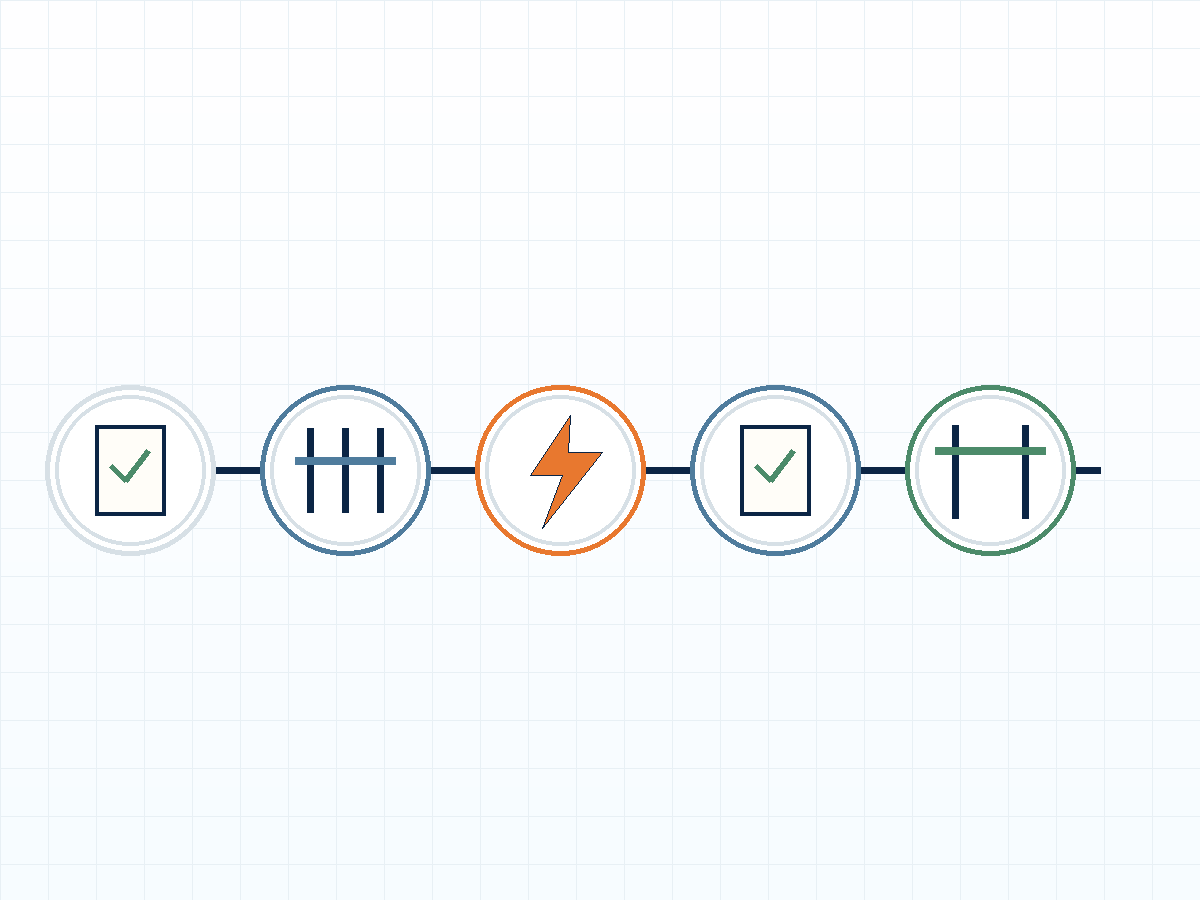
Local permitting and utility interconnection are separate stages.
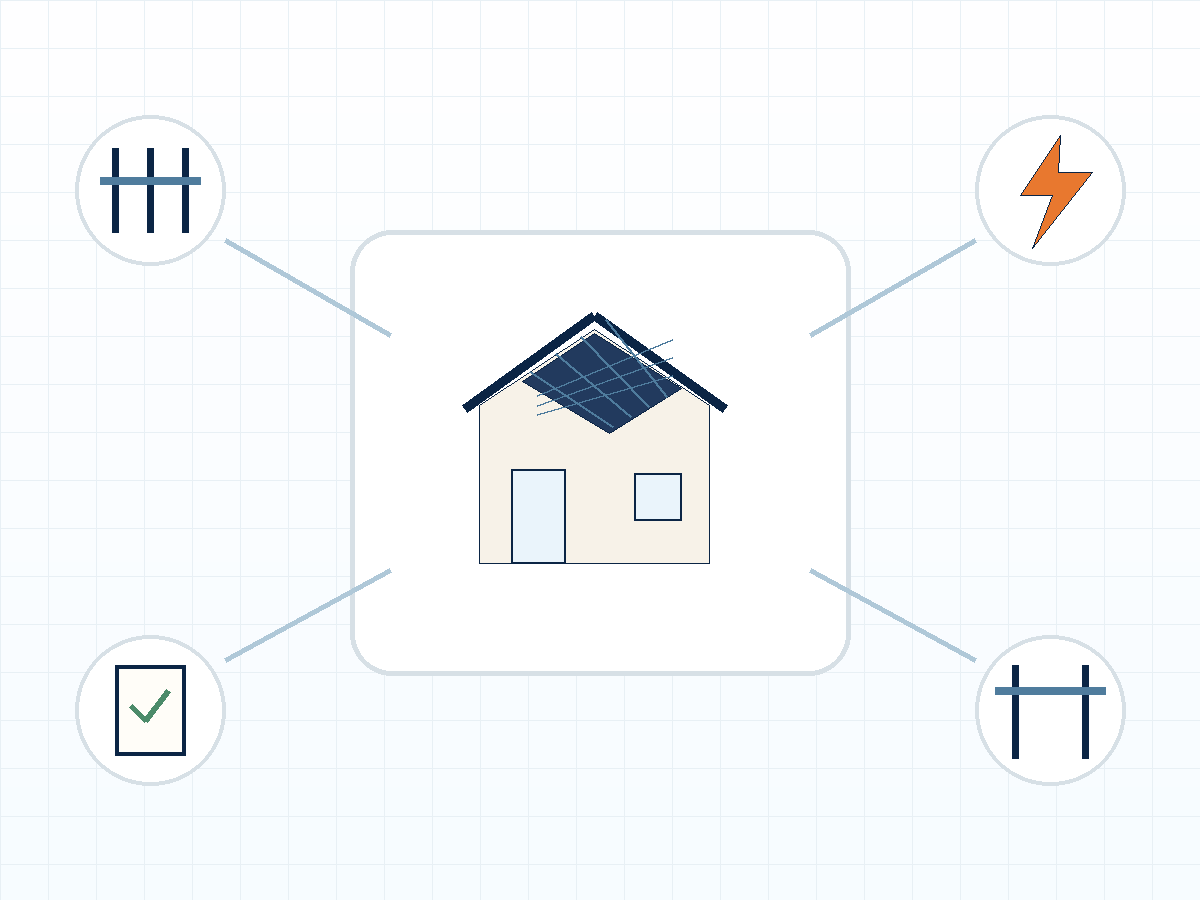
A solar project can require coordinated structural, electrical, inspection, and utility review.
Last reviewed: August 6, 2026. Requirements vary by jurisdiction and property.
Related Articles
Do You Need a Permit to Pour Concrete? Patios, Slabs & Walkways
Pouring concrete may be permit-exempt or regulated depending on whether it is a patio, slab, walkway, driveway, structural base, or right-of-way work.
Do You Need a Permit for an EV Charger?
Learn when a home EV charger needs an electrical permit, when panel or service upgrades enter the project, and how inspection and utility coordination work.
Do You Need a Permit for a Kitchen Remodel?
Learn when cabinets, sinks, islands, appliances, walls, wiring, plumbing, gas, or ventilation can change kitchen-remodel permit and inspection needs.