
Can I Build an ADU in Green Bay?
Yes — as of a December 2025 zoning amendment, Green Bay allows one accessory dwelling unit per lot in every residential district with a conditional use permit, subject to size, parking, and owner-occupancy rules.
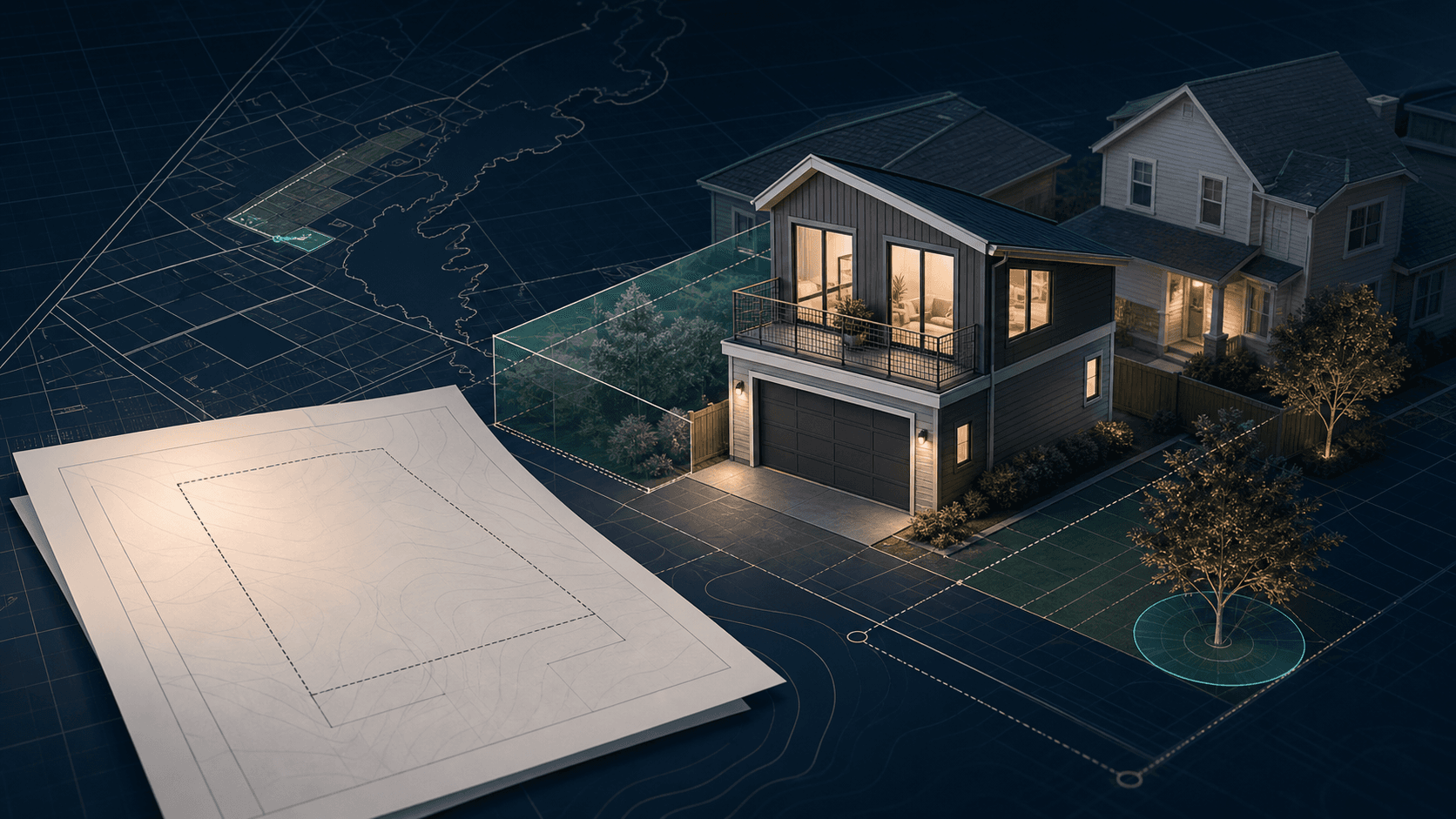
Direct Answer: Yes. As of a citywide zoning amendment approved in December 2025, Green Bay's Department of Community and Economic Development allows one accessory dwelling unit (ADU) on a residential lot in every residential zoning district, plus the mixed-use Office-Residential (OR) and Neighborhood Center (NC) districts, as a conditional use under Chapter 44 (Zoning) of the Green Bay Code of Ordinances. That means an ADU is not automatically allowed like a shed or deck — it requires Plan Commission review and approval of a conditional use permit (CUP), along with a site plan and building plan, before you can build or convert one. This was Green Bay's first major zoning rewrite since roughly 2006, driven by the city's own housing-affordability data (see the city's 2025 Housing Overview), and it applies citywide — not to neighboring towns like Ashwaubenon, Bellevue, or Suamico, which set their own rules.
Verified against official municipal and state sources: July 13, 2026. Requirements change — confirm with the city before applying.
Key Takeaways
- Green Bay now permits ADUs as a conditional use in all residential districts and the OR/NC mixed-use districts, per the city's December 2025 zoning ordinance amendment described in its own 2025 Housing Overview.
- An ADU requires a conditional use permit (CUP) reviewed by the Plan Commission, not a simple over-the-counter building permit — see Plan Commission Zoning Actions.
- Only one ADU is allowed per parcel, and either the primary dwelling or the ADU must be the owner's primary residence — ADUs are an owner-occupancy tool, not a standalone rental property.
- An ADU may take three forms: a detached structure, a unit built into an existing accessory structure such as a garage, or space carved out of an expanded or remodeled primary house.
- ADUs are capped in size (no larger than roughly 1,000 square feet of gross floor area, and never larger than the primary dwelling) and cannot be used as short-term rentals.
- The full ordinance text lives in Chapter 44 — Zoning of the Municode-hosted Code of Ordinances; confirm exact section numbers and any subsequent amendments there before you design a project.
The Practical Rule
Green Bay's ADU rule is a two-step test: first, zoning eligibility, then a discretionary approval. Zoning eligibility means your lot carries a primary use of single-family detached, two-family (duplex or semi-detached), or single-family attached (townhouse) housing — ADUs are not permitted alongside multifamily or mixed-use buildings, and the underlying district has to be residential or one of the two mixed-use districts (OR, NC) the amendment added. Discretionary approval means that even if your lot qualifies, you don't get to build an ADU by right the way you would a fence or a shed. You apply for a conditional use permit, submit a site plan and building plan to city staff, and the Plan Commission votes on whether to approve it, typically with standard conditions attached (parking, owner-occupancy, size, and use restrictions). Because this is a discretionary process, timelines and any conditions can vary project to project — budget for a public meeting cycle, not a same-week permit.
What to Check Before You Build
- Confirm your zoning district and underlying use. Your parcel needs to be zoned residential, OR, or NC, and support a single-family, two-family, or attached single-family (townhouse) use — check your district on the city's zoning map or by calling the Department of Community and Economic Development at (920) 448-3300.
- Decide which ADU form you're building. A detached backyard unit, space above or beside a garage, or an addition/remodel of the existing house are all treated differently for site planning and, in the garage/addition case, for Wisconsin Uniform Dwelling Code construction review layered on top of the zoning approval.
- Check the size ceiling against your primary house. The ADU cannot exceed roughly 1,000 square feet of gross floor area or the footprint of the primary dwelling, whichever is smaller — measure your existing house before committing to a design.
- Plan for one dedicated on-site parking space. The ordinance requires at least one parking space for the ADU, on the same lot, meeting standard dimensional requirements, whether it's an open pad or inside a garage.
- Confirm the owner-occupancy condition works for your situation. Either the principal dwelling or the ADU must be the owner's primary residence, and the unit cannot be operated as a short-term rental — this rules out the classic "build an ADU and Airbnb both units" model.
How Do I Apply for an ADU Conditional Use Permit in Green Bay?
ADU approvals run through the Plan Commission, administered by the Department of Community and Economic Development at City Hall (100 N. Jefferson Street, Room 608). Based on the city's published conditional-use and site-plan process:
- Confirm zoning eligibility and sketch your ADU concept against the size, parking, and form rules above.
- Prepare a site plan (lot lines, existing structures, the proposed ADU location and dimensions, parking, and setbacks) and a building plan/floor plan for the unit — see the city's general Site Plan Information Guide for the baseline drawing standards the city expects.
- Submit a conditional use permit application to the Department of Community and Economic Development, along with the site and building plans, for staff review.
- The application goes to the Plan Commission for a public hearing and vote; commission members can attach standard conditions (owner-occupancy, parking, exterior materials matching the principal structure, etc.).
- Once the CUP is approved, apply for the underlying building permit for construction — a detached ADU or a garage conversion still has to meet the Wisconsin Uniform Dwelling Code, explained, which governs the structural and life-safety requirements for any one- or two-family dwelling in the state.
- Complete required inspections through the Building Inspection Division (inspmail@greenbaywi.gov, (920) 448-3300) before occupying the unit.
Exact fees for the CUP application, site plan review, and building permit are not fixed here because Green Bay revises its fee schedule periodically — confirm the current amounts on the city's Permit Guides, Forms & Fees page or by calling the department before budgeting your project.
Accessory Structure Setbacks, Parking, and Detached ADUs
If your ADU will sit in a detached accessory structure such as a converted or expanded garage, it still has to meet Chapter 44's general accessory-structure placement rules: detached accessory buildings must sit to the side or rear of the principal building, not in front of it or on the street-facing side of a corner lot. The city's own one- and two-family detached garage guide illustrates the baseline dimensional standard — a minimum setback of roughly 4 feet from side and rear property lines for typical lots, reduced to about 2½ feet on lots narrower than 60 feet (side yard) or shallower than 90 feet (rear yard). Because an ADU triggers Plan Commission review rather than a simple accessory-structure permit, expect the site plan reviewer to apply these baseline setbacks alongside the ADU-specific parking and size standards, and to flag anything that also touches impervious surface coverage limits on the lot.
Frequently Asked Questions
Do I need a conditional use permit for every type of ADU in Green Bay?
Yes. Whether the unit is a new detached structure, built into a garage, or carved out of an addition to the main house, Green Bay's December 2025 amendment routes all accessory dwelling units through the same conditional use permit and Plan Commission review process — there's no by-right or over-the-counter path.
Can I rent my Green Bay ADU on Airbnb or VRBO?
No. The ordinance bars using an accessory dwelling unit as a short-term rental. It's designed to add long-term housing capacity on owner-occupied lots, not short-term lodging inventory.
Does the property owner have to live on site?
Yes — either the principal residence or the accessory dwelling unit must be the owner's primary residence. You can't build an ADU purely as a rental investment while living elsewhere.
How big can a Green Bay ADU be?
The unit is capped at roughly 1,000 square feet of gross floor area, and it can never be larger than the primary dwelling on the lot — confirm the exact figure and any exceptions in Chapter 44 — Zoning before finalizing plans.
Is there a statewide Wisconsin law that overrides Green Bay's ADU rule?
Not yet. As of mid-2026, Wisconsin's Legislature has considered bills such as 2025 Assembly Bill 365 and 2025 Senate Bill 473, which would require municipalities statewide to allow at least one ADU per residential parcel by right. Neither had been enacted as of this article's verification date, so Green Bay's local conditional-use process controls for now — check the bill status pages before assuming a statewide by-right rule applies.
Does an ADU still need to meet the state building code?
Yes. Zoning approval (the CUP) and construction code compliance are separate steps. Any new or expanded dwelling space in Green Bay, including an ADU, has to meet the Wisconsin Uniform Dwelling Code, explained (SPS 320–325) for one- and two-family construction, enforced through the standard building permit and inspection process after the CUP is approved.
Verify Your Address
ADU eligibility in Green Bay depends on your exact zoning district, lot dimensions, and existing structures — details that don't show up in a generic ordinance summary. Before you invest in architectural plans, run a permit check or review GovCodex's Green Bay permit catalog to confirm what your specific address allows, and see the Green Bay building permit guide for how the city's broader permitting process works. If you're weighing a garage conversion specifically, converting a garage into an apartment or ADU and the state-by-state ADU legal breakdown cover the general rules that Green Bay's local ordinance builds on.
Related Articles
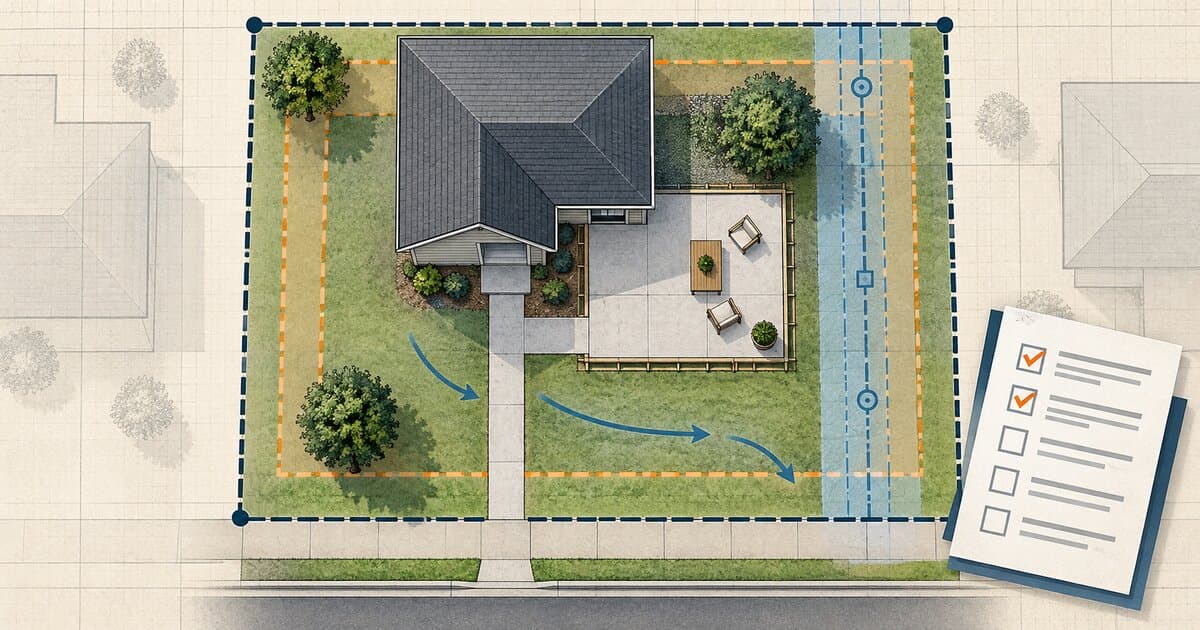
Do You Need a Permit to Pour Concrete? Patios, Slabs & Walkways
Pouring concrete may be permit-exempt or regulated depending on whether it is a patio, slab, walkway, driveway, structural base, or right-of-way work.
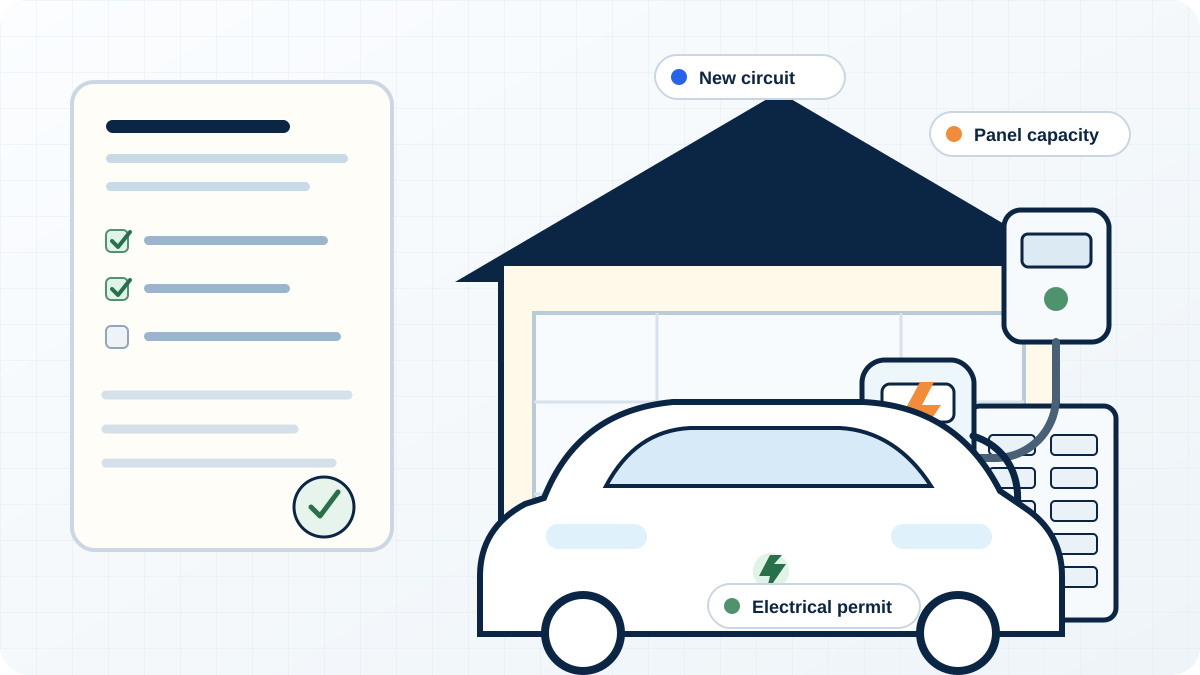
Do You Need a Permit for an EV Charger?
Learn when a home EV charger needs an electrical permit, when panel or service upgrades enter the project, and how inspection and utility coordination work.
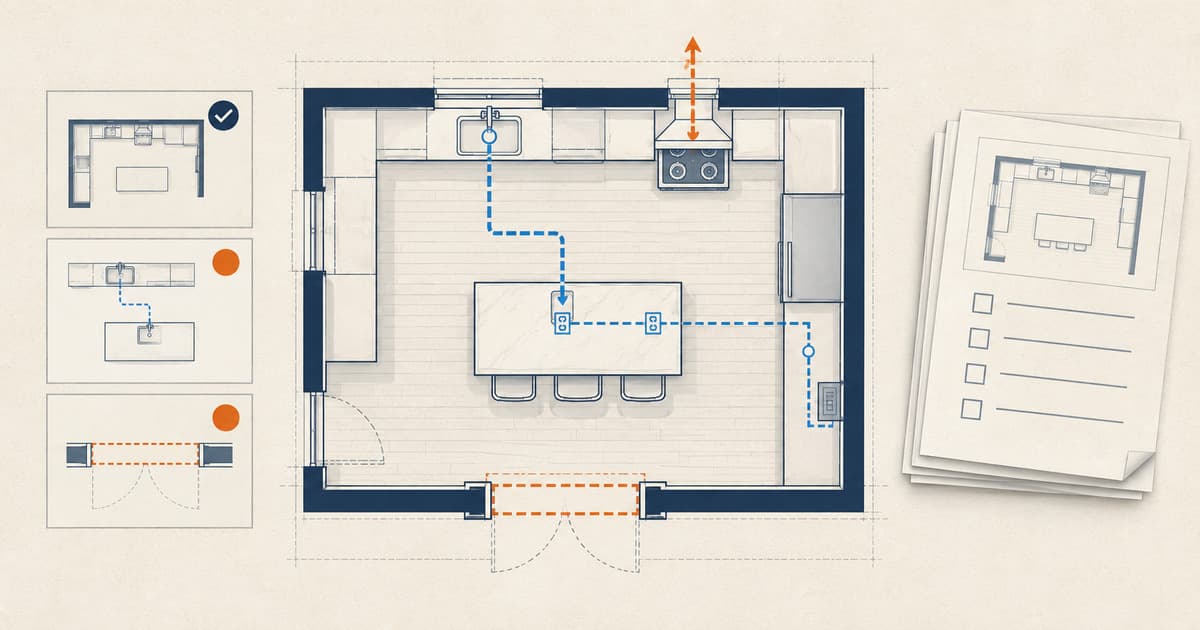
Do You Need a Permit for a Kitchen Remodel?
Learn when cabinets, sinks, islands, appliances, walls, wiring, plumbing, gas, or ventilation can change kitchen-remodel permit and inspection needs.