
The Wisconsin Uniform Dwelling Code, Explained: Who Enforces It and What It Covers
Wisconsin's Uniform Dwelling Code sets statewide construction standards for covered one- and two-family dwellings. Verify who enforces it, which exemptions apply, and how permit filing works for the property.
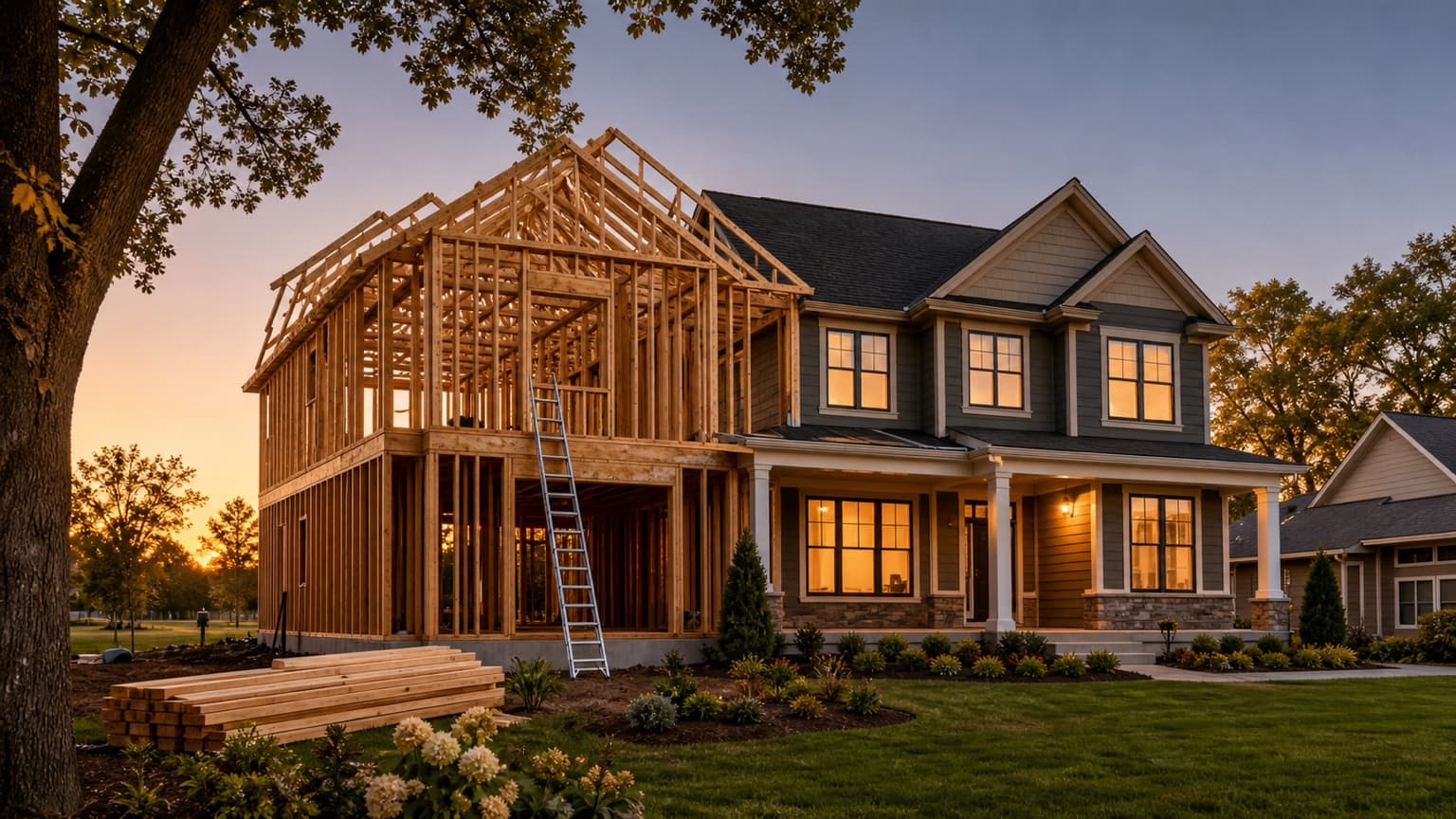
Wisconsin's Uniform Dwelling Code (UDC), Wis. Admin. Code SPS 320–325, is the statewide construction code for one- and two-family dwellings built since June 1, 1980. DSPS says the UDC is enforced in all Wisconsin municipalities, but the enforcing office can differ by address. Cities, villages, and towns generally exercise jurisdiction over new dwellings, while special statutory options apply to municipalities with populations of 2,500 or less. Enforcement can also be carried out through certified inspectors, another municipality, a county in qualifying circumstances, or DSPS where state jurisdiction applies.
The UDC is a construction code. Zoning, shoreland, floodplain, subdivision, and other land-use rules remain separate approval layers. A project can satisfy the UDC and still need a zoning or site approval before construction begins.
Official Wisconsin sources rechecked September 12, 2026. DSPS currently lists an update to SPS 320–325 as a pending “Drafting Rule,” so confirm the effective code and local administration before relying on an older handout.
Key takeaways
- SPS 320–325 is Wisconsin's statewide Uniform Dwelling Code for covered one- and two-family dwellings.
- DSPS states that the UDC is enforced in all Wisconsin municipalities.
- Under SPS 320.06, cities, villages, and towns generally exercise jurisdiction over construction and inspection of new dwellings, subject to statutory exceptions.
- Wisconsin law gives municipalities with populations of 2,500 or less specific enforcement options that can involve county or DSPS enforcement.
- A municipality can use certified UDC inspectors or an independent inspection agency without changing the statewide construction standard.
- New one- and two-family dwelling permit data uses Wisconsin's standardized SBD-5823 permit system, but applicants should follow the filing instructions of the municipality or enforcing authority.
- The UDC does not replace zoning, shoreland, floodplain, subdivision, or other local land-use rules.
- Current SPS 320 contains important exemptions, including rules for older dwellings and detached accessory buildings, so “one- and two-family” does not mean every residential project is governed identically.
What is the Wisconsin Uniform Dwelling Code?
The UDC is Wisconsin's statewide building code for covered one- and two-family dwellings. DSPS describes it as the statewide code for one- and two-family dwellings built since June 1, 1980 and administers the code program, inspector credentials, contractor credentials, interpretations, education, and related services.
The core chapters are SPS 320 through 325. They address administration and enforcement as well as construction, energy, HVAC, electrical, plumbing, and related dwelling requirements.
The word uniform matters. Municipalities do not get to replace the statewide UDC with a looser or stricter residential construction code inside the UDC's scope unless a state-approved provision allows it. Local governments still retain separate authority over zoning, site placement, land use, shoreland, floodplain, and other matters outside the UDC's construction-code scope.
Which homes and projects does the UDC cover?
The safest starting point is the current SPS 320 scope and exemption language rather than a generic “residential project” label.
For covered dwellings, the UDC applies to one- and two-family construction within the code's scope. DSPS identifies June 1, 1980 as the key statewide date for the UDC program.
Current SPS 320 also contains exemptions that matter in real permit research:
| Project or condition | What the current rule says | Practical next step |
|---|---|---|
| Covered new one- or two-family dwelling | UDC applies statewide | Identify the enforcing authority and current permit path |
| Dwelling whose construction began before the UDC effective date | SPS 320.05 exempts the dwelling from the UDC provisions, with local adoption authority for certain additions or alterations | Check the municipality's adopted rules before assuming an addition follows the statewide UDC path |
| Detached garage or detached accessory building | SPS 320.05 generally exempts detached garages and accessory buildings, with the stated SPS 321.08(1) exception | Check the state exception plus local building, zoning, electrical, and other permit rules |
| Three-or-more-unit residential or commercial/public building | Outside the one- and two-family UDC framework | Check Wisconsin's commercial-building-code path and local enforcement authority |
This distinction is especially important for search results about garages. The current code does not support a blanket statement that every detached garage is governed by the full UDC. Local ordinances, zoning, electrical rules, and the specific SPS 321.08(1) provision can still matter.
Who enforces the UDC in a Wisconsin municipality?
DSPS says the UDC is enforced in all Wisconsin municipalities. SPS 320.06 explains how jurisdiction works.
For new dwellings, cities, villages, and towns generally exercise jurisdiction, subject to the exceptions in Wisconsin statutes. A municipality exercising UDC jurisdiction adopts the code in its entirety and uses an acceptable enforcement method. The code lists methods including individual municipal enforcement, joint municipal enforcement, contracting with certified UDC inspectors or an independent inspection agency, and contracting with another municipality.
That means “the town uses a private inspector” does not necessarily mean the town has no jurisdiction. The inspector can be the municipality's enforcement method.
DSPS publishes delegated-municipality and UDC permit/inspection resources that can help identify the current enforcement arrangement. Because contracts and delegations can change, confirm the current authority for the specific property before filing.
What changes for municipalities with 2,500 people or fewer?
Wisconsin Stat. § 101.651 and SPS 320.06 provide specific rules for smaller municipalities, defined for this purpose as a city, village, or town with a population of 2,500 or less.
A smaller municipality can exercise UDC jurisdiction itself or jointly. The statute also provides paths under which the municipality can request county enforcement or have DSPS enforce the code and provide inspection services.
The UDC is enforced statewide, while the administrative path can differ. The small-municipality options should not be generalized into a rule that every Wisconsin city, village, or town can simply choose state or county enforcement at will.
For an address in a smaller municipality, verify three things:
- whether the municipality currently exercises UDC jurisdiction;
- whether it uses its own staff, a contracted certified inspector, another municipality, county enforcement, or DSPS; and
- where the permit application, plans, fees, and inspection requests must actually be submitted.
What is the Wisconsin Uniform Building Permit, SBD-5823?
DSPS's current UDC program materials identify SBD-5823 as the standard residential building permit application and describe the electronic building-permit system created under Act 211.
For new one- and two-family dwellings, applicants should contact the municipality directly to determine how applications are filed. DSPS explains that municipalities can use the state electronic system, upload permit data, or connect their own approved system. The permit information is then provided to DSPS through the required reporting process.
A useful project sequence is:
- Confirm the municipality and UDC enforcing authority for the property.
- Ask that authority how the current application must be filed.
- Complete the required permit information and provide the plans and data requested by the authority.
- Pay the locally approved permit fees and obtain issuance before starting work that requires the permit.
- Schedule required inspections through the enforcing authority.
- Keep the issued permit, approved plans, inspection records, and accepted revisions with the property file.
Do not assume that an applicant should send SBD-5823 directly to DSPS simply because it is a state form. DSPS's current instructions tell permit requestors to contact the municipality to determine the filing method.
Is zoning part of the UDC?
No. The UDC answers construction-code questions. Zoning answers land-use and site-placement questions.
A building project can therefore involve both layers:
- UDC or other building-code compliance for construction;
- zoning district and permitted-use review;
- setbacks and yards;
- lot or impervious coverage;
- shoreland or floodplain rules where applicable;
- subdivision, easement, access, or other site constraints; and
- separate electrical, plumbing, HVAC, erosion-control, or other permits when required.
A UDC building permit should not be treated as proof that every zoning or site constraint has been approved. Likewise, zoning approval does not replace required construction-code review.
For a project-specific answer, GovCodex separates the authority question from the project rules so the address can be checked against the controlling layers.
What code applies to multifamily and commercial buildings?
The UDC is the one- and two-family dwelling code. Buildings outside that scope can fall under Wisconsin's commercial-building-code framework and other state rules.
If a project involves three or more dwelling units, a mixed-use building, a public building, or a place of employment, do not use a UDC article as the code determination. Confirm the building classification and the enforcing authority for the commercial code path.
Is Wisconsin updating the UDC?
Yes, an update is in process. As of September 12, 2026, the DSPS Pending Rules page lists “SPS 320 to 325: Update to the Uniform Dwelling Code” with the status “Drafting Rule.”
A pending rule is not the same as an effective rule. Until a new rule takes effect, project decisions should use the currently effective code and any applicable adopted provisions. For projects designed or permitted around a code transition, confirm the effective date and any transition instructions with DSPS and the local authority.
This status is also a reason to prefer current primary sources over old contractor handouts or archived municipal PDFs when researching a Wisconsin project.
Quick reference: which authority should you check?
| Question | Primary source to verify |
|---|---|
| What statewide construction code applies to a covered one- or two-family dwelling? | Current SPS 320–325 and DSPS UDC program |
| Who issues the permit and performs inspections? | Municipality or current UDC enforcing authority for the address |
| Does a smaller municipality use county or state enforcement? | Current municipal resolution/arrangement plus DSPS resources |
| How is a new-dwelling permit filed? | Current instructions from the municipality or enforcing authority; SBD-5823 / DSPS electronic permit system where applicable |
| Can a detached garage be exempt from the UDC? | Current SPS 320.05 plus SPS 321.08(1), then local permit and zoning rules |
| Where can the building sit on the lot? | Local zoning, shoreland, floodplain, subdivision, and other site regulations |
| Is the UDC update already effective? | DSPS Pending Rules and the current Wisconsin Administrative Code |
How do I find the UDC authority for my property?
Start with the property address, not a nearby city name.
- Identify the city, village, or town in which the parcel is actually located.
- Check the municipality's building-permit or inspection information.
- Check DSPS UDC resources for delegated or state-administered enforcement information.
- Confirm the current inspector or inspection agency before filing, because contracts can change.
- Ask separately which office handles zoning and site approvals.
- Save the official source and the date you verified it.
Run Permit Check to organize the authority, permit, zoning, and property-specific questions for a Wisconsin project.
Related GovCodex guides
- Can I build a detached garage or shed in my backyard?
- Zoning permit vs. building permit
- How much does a building permit cost?
- How long is a building permit valid?
- Check your property and project with Permit Check
Sources
- Wisconsin DSPS Uniform Dwelling Code program
- Wisconsin Administrative Code SPS 320, Administration and Enforcement
- Wisconsin Stat. § 101.651, one- and two-family dwelling code enforcement
- Wisconsin DSPS Pending Administrative Rules
Frequently asked questions
Does every Wisconsin municipality enforce the UDC?
DSPS says the UDC is enforced in all Wisconsin municipalities. The enforcement arrangement can differ by municipality and can involve municipal staff, certified contracted inspectors, another municipality, county enforcement in qualifying circumstances, or DSPS where state jurisdiction applies.
Can any Wisconsin municipality choose county or DSPS enforcement?
Do not assume that. The current code and statutes provide specific enforcement options, including special provisions for municipalities with populations of 2,500 or less. Identify the municipality and verify its current arrangement.
Does the UDC apply to a detached garage?
SPS 320.05 generally exempts detached garages and other detached accessory buildings from the UDC, with an express exception for SPS 321.08(1). Local zoning, permit, electrical, and other rules can still apply, so the exemption is not the same as “no approval required.”
Does the UDC apply to an addition on a house built before 1980?
SPS 320.05 exempts dwellings whose construction began before the UDC effective date and additions or alterations to those dwellings from the statewide UDC provisions, while noting that municipalities may adopt UDC provisions for additions or alterations to existing dwellings. Check the local ordinance before using the home's age as the final answer.
Do I file SBD-5823 directly with DSPS?
Usually the first step is to contact the municipality or enforcing authority. DSPS currently instructs new-dwelling permit applicants to contact the municipality to determine how the application should be filed.
Does a UDC permit mean the project complies with zoning?
No. Zoning and other site rules are separate. Setbacks, land use, shoreland, floodplain, easements, and similar constraints can require separate review.
Is the UDC changing in 2026?
DSPS currently lists an update to SPS 320–325 as a pending Drafting Rule. Check the current rule status and effective code before design or permit filing because a pending rule does not replace the code already in force.
Where can I verify the current UDC rules?
Use the current Wisconsin Administrative Code and DSPS UDC program pages. For property-specific administration, also verify the municipality and its current building inspection or contracted-inspector information.
Verify the rules for your property
The statewide code is only one part of a permit decision. The address determines the municipality, enforcing authority, zoning, site constraints, and local filing process.
Check your Wisconsin project with Permit Check before relying on a generic statewide answer.
Related Articles
Do You Need a Permit to Pour Concrete? Patios, Slabs & Walkways
Pouring concrete may be permit-exempt or regulated depending on whether it is a patio, slab, walkway, driveway, structural base, or right-of-way work.
Do You Need a Permit for a Kitchen Remodel?
Learn when cabinets, sinks, islands, appliances, walls, wiring, plumbing, gas, or ventilation can change kitchen-remodel permit and inspection needs.

Do You Need a Permit to Finish a Basement?
Learn when a basement finish needs a permit, what changes for bedrooms and bathrooms, and which inspections come before drywall.