
Can I Build an ADU? Permits, Zoning and Parcel Feasibility
Learn how ADU zoning, setbacks, parking, utilities, building permits, and inspections determine whether an accessory dwelling unit is feasible.

Can I Build an Accessory Dwelling Unit?
Direct answer
You can build an ADU only when the exact property, zoning district, lot configuration, utility system, structure type, and local approval process allow it.
The project commonly requires two separate approvals:
- Land-use or zoning approval, which decides whether the ADU is allowed and tests size, location, setbacks, height, parking, owner-occupancy, rental restrictions, lot coverage, design, and unit count.
- Building and trade permits, which decide whether the proposed dwelling can be safely constructed, converted, connected, inspected, and occupied.
ADU rules vary sharply by jurisdiction. A city may allow one ADU by right, require a conditional use, allow only internal units, prohibit them in certain districts, or regulate a second unit under duplex rules rather than an ADU ordinance.
ADU types
| Type | Description | Common feasibility questions |
|---|---|---|
| Internal | Created inside the main house | Egress, fire separation, ceiling height, utility capacity |
| Attached | Addition connected to the house | Setbacks, lot coverage, structure and energy code |
| Detached | Separate backyard structure | Accessory-building placement, height, utilities, parking |
| Garage conversion | Existing garage converted to dwelling space | Replacement parking, slab, fire separation, insulation, utilities |
Parcel-feasibility sequence
- Confirm the jurisdiction and zoning district.
- Determine whether ADUs are permitted, conditional, or prohibited.
- Identify the allowed ADU type.
- Check number, size, height, setbacks, coverage, and parking.
- Check owner-occupancy, rental, and short-term-rental restrictions.
- Verify sewer, septic, water, electrical, and fire-access capacity.
- Test the complete structure on the parcel.
- Identify zoning, building, electrical, plumbing, mechanical, and utility permits.
- Complete inspections and occupancy closeout.
What commonly blocks an ADU?
- Zoning district does not allow a second unit.
- Lot is too small or already exceeds coverage.
- Setbacks or access leave no workable location.
- Garage conversion eliminates required parking.
- Septic capacity does not support another bedroom or unit.
- Utility connections are unavailable or prohibitively expensive.
- Detached structure cannot meet height or fire-separation requirements.
- Proposed layout creates an unapproved dwelling type.
- Owner-occupancy or rental rules conflict with the intended use.
State law does not replace parcel-level review
State ADU reforms can limit local restrictions or require cities to allow certain units, but local implementation still determines application forms, district rules, site standards, utilities, code review, and inspections.
Do not convert a statewide reform into a claim that every parcel is buildable.
Documents commonly required
- Survey or site plan
- Existing and proposed floor plans
- Exterior elevations
- Unit type and square footage
- Parking and access plan
- Utility and sewer or septic information
- Structural and energy details
- Fire-separation details
- Contractor and trade information
- Zoning worksheet or land-use application
Due diligence for existing ADUs
Compare the physical unit with:
- building and trade permits,
- zoning approval,
- certificate of occupancy or completion,
- unit count,
- utility records,
- assessor data,
- and rental or owner-occupancy restrictions.
An existing kitchen, bathroom, and separate entrance do not prove the unit is legal.
How GovCodex helps
GovCodex can resolve the jurisdiction, identify the zoning district, compare ADU types, layer parcel constraints, locate official applications, and organize the permit and inspection sequence.
Check whether your property can support an ADU.
FAQs
Does state law mean I can build an ADU anywhere?
No. State law can create rights or limits, but parcel-level zoning, site constraints, utilities, and building codes still apply.
Is zoning approval the same as a building permit?
No. Zoning decides whether and where the ADU is allowed. Building review decides whether it can be safely constructed.
Can I convert my garage?
Possibly. Parking, fire separation, insulation, structure, ceiling height, utilities, and legal dwelling status control.
Does an ADU need a certificate of occupancy?
The local closeout document varies, but the unit generally must pass required inspections before legal occupancy.
Related GovCodex guides
Sources
Visual guides

ADU feasibility depends on zoning, site constraints, utilities, and permit review.
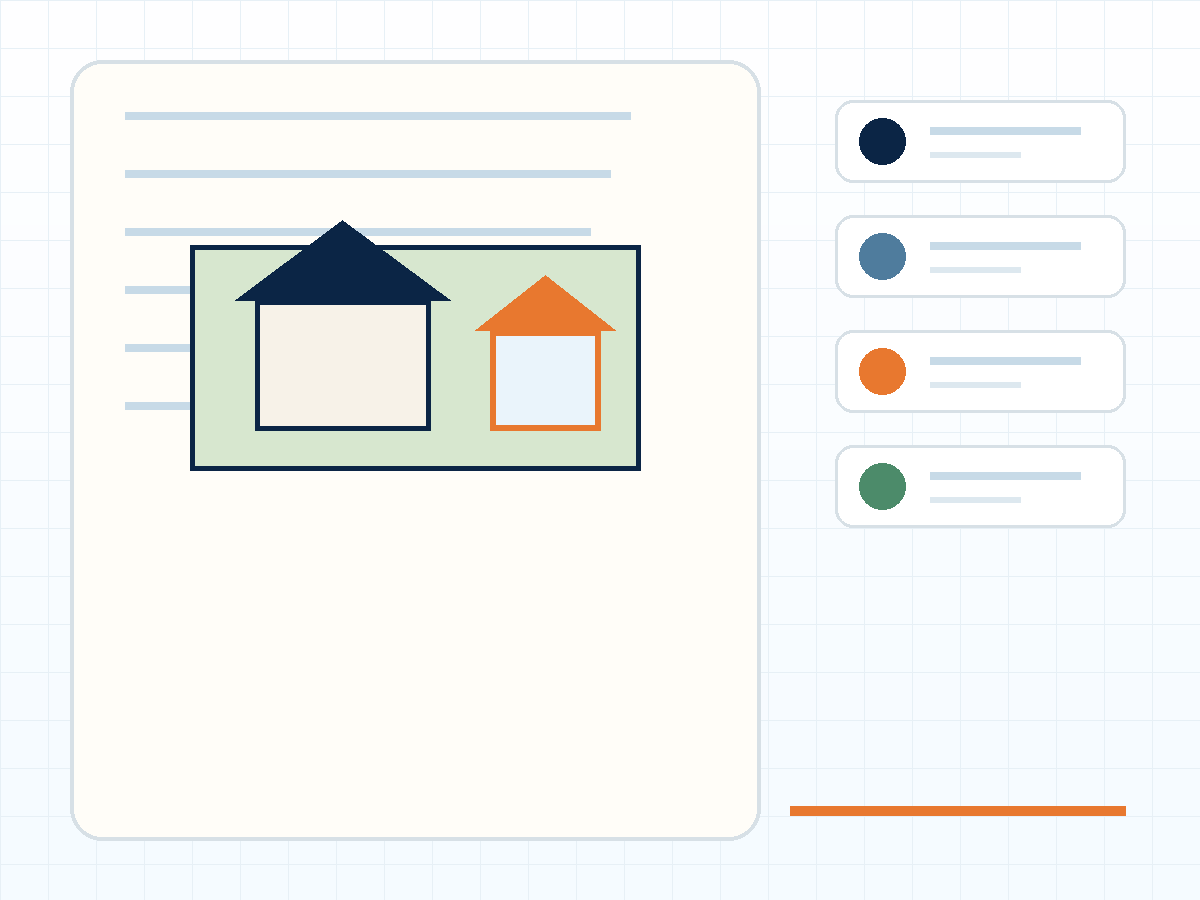
A parcel-first review moves from zoning and site fit to permits and inspections.

Last reviewed: August 4, 2026. Requirements vary by jurisdiction and property.
Related Articles
Do You Need a Permit for a Concrete Patio or Walkway?
Ground-level concrete flatwork can be exempt from a building permit while still triggering zoning, impervious-surface, grading, drainage, easement, or right-of-way rules.

Do You Need a Permit to Finish a Basement?
Learn when a basement finish needs a permit, what changes for bedrooms and bathrooms, and which inspections come before drywall.

Do You Need a Permit for a Bathroom Remodel?
Learn when a bathroom remodel needs building or trade permits, what changes for moved fixtures, and which inspections happen before closing walls.