
Green Bay Building Permit Guide (2025-2026)
How to get a building permit in Green Bay, Wisconsin: which department issues permits, what's exempt, zoning setbacks under Chapter 44, fees, licensed-contractor rules, and inspections.
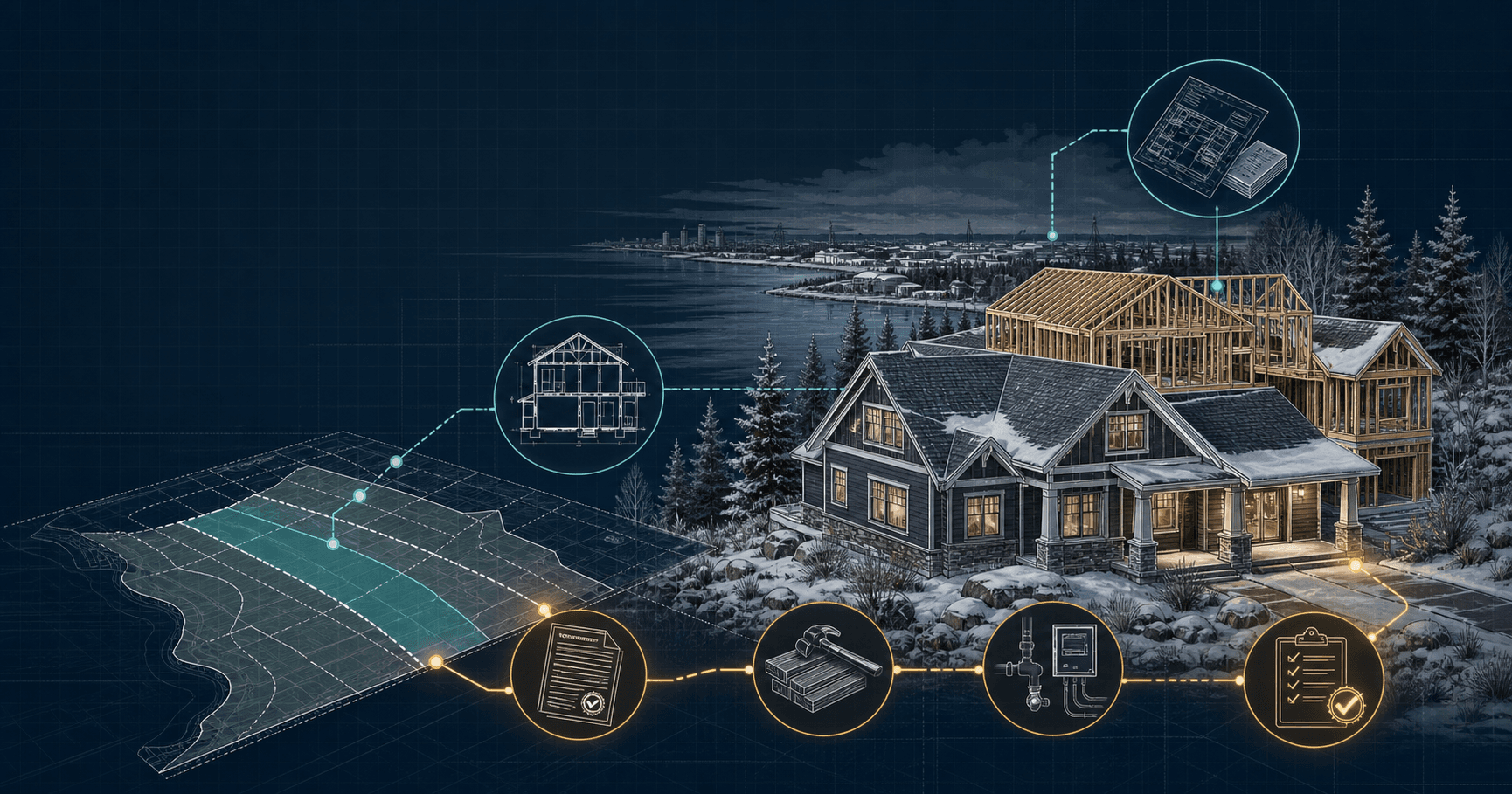
Direct Answer: In Green Bay, Wisconsin, the Building Inspections Division of the Department of Community & Economic Development issues all building, electrical, HVAC, and plumbing permits inside city limits, enforcing the statewide Wisconsin Uniform Dwelling Code (UDC, SPS 320-325) for one- and two-family homes and the 2021 International Building Code with Wisconsin amendments (SPS 361-366) for commercial work. Most projects use one of two applications — a short form for fences, driveways, patios, and small sheds, or a long form for everything else — reviewed under Chapter 44 of the Green Bay Municipal Code for zoning and setbacks. Owner-occupants of single- and two-family homes may pull their own permits and do the work themselves; rental and commercial properties must use a licensed contractor.
Verified against official municipal and state sources: July 13, 2026. Requirements change — confirm with the City of Green Bay Building Inspections Division before applying.
Key Takeaways
- The Building Inspections Division, part of the Department of Community & Economic Development, issues every building, electrical, HVAC, and plumbing permit inside Green Bay city limits.
- One- and two-family residential construction follows the statewide Wisconsin Uniform Dwelling Code (SPS 320-325); commercial work follows the 2021 IBC with Wisconsin amendments (SPS 360-366).
- Small projects — fences, driveway expansions, patios, and sheds under 150 square feet — use a short-form application with a site plan only; larger projects need the long form plus a building plan (see Do I Need a Permit? and the Site Plan Process).
- Zoning setbacks, lot coverage, and yard requirements for residential districts sit in Chapter 44 (Zoning), Article VI — check Table 44-2 for your specific district before designing a project.
- Fees are set by the City of Green Bay Fee Schedule, which is revised annually; the city does not publish a single flat number for "a permit," so pull the current schedule for your project type.
- Rental properties may not self-perform work — only a state-certified Dwelling Contractor (residential), a Green Bay-licensed electrician, or a Wisconsin master plumber can pull those permits.
- Skipping a required permit risks doubled fees, citations that can exceed $500, and an order to remove completed work, per the city's Permitting Process page.
Scope note: This article covers permitting inside the City of Green Bay only. Neighboring municipalities — Ashwaubenon, Allouez, Bellevue, De Pere, Howard, and the Town of Green Bay — run their own building departments, fee schedules, and (for zoning) their own ordinances, even though they share the statewide UDC for residential work.
Which Department Issues Permits in Green Bay?
The Building Inspections Division sits inside the city's Department of Community & Economic Development at 100 N. Jefferson Street, Green Bay, WI 54301. The division handles building plan review, site plan review, permitting, and inspections for both residential and commercial projects, and issues the Certificate of Occupancy once a project passes final inspection. General permit questions go to (920) 448-3000; inspection requests and scheduling go through (920) 448-3300 (call at least one business day ahead) or the online Request for Service inspection scheduler. Office hours are Monday–Thursday 7:30 a.m.–5:00 p.m. and Friday 7:30–11:30 a.m.
Note that a Green Bay mailing address doesn't always mean the property is inside city limits — some addresses fall in the surrounding towns and villages, which run entirely separate permitting operations.
What Building Code Applies — UDC vs. Commercial Code?
Wisconsin does not let individual cities write their own residential building code. One- and two-family dwellings statewide, including in Green Bay, are governed by the Wisconsin Uniform Dwelling Code (UDC, primarily SPS 320-325, with related standards in SPS 305, 316, 321, 322, and 323), enforced locally by the city's certified inspectors. Green Bay lists this framework, along with the mechanical cross-references — SPS 325/382 for plumbing and NEC-based SPS 316 for electrical — on its Codes & Ordinances page.
Commercial buildings, and any structure that isn't a one- or two-family dwelling, fall under the Wisconsin Commercial Building Code: the 2021 International Building Code as amended by the state (SPS 360-366), plus the 2021 International Existing Building, Fire, Mechanical, and Energy Conservation codes. Local zoning — Chapter 44 of the Green Bay Municipal Code — layers on top of both building codes to control use, height, lot coverage, and setbacks.
What Work Requires a Permit — and What's Exempt?
The city's Do I Need a Permit? page lists specific exemptions and size thresholds rather than a blanket "small projects are exempt" rule. According to that page:
- Purely cosmetic work — painting, new flooring, siding or roofing without structural changes, exact-match window/door replacement, cabinet swaps, landscaping — does not need a permit.
- A fence needs a permit only once its total length exceeds 50 linear feet.
- A yard shed needs a permit once it exceeds 50 square feet.
- A landscaping wall or berm needs a permit once it exceeds 6 feet.
- Grading or excavating needs a permit once it disturbs more than 4,000 square feet or moves more than 100 cubic yards; fill needs a permit past 100 cubic yards.
- A raze (demolition) permit is required once the structure exceeds 150 square feet.
- Residential tents are exempt; commercial tents need a permit past 400 square feet.
Everything else — new construction, additions, decks, garages, basement finishes, pools, and any project that isn't on the exempt list — needs a permit regardless of size. When in doubt, the city recommends calling the Building Inspections Division before starting work rather than guessing.
How Do I Apply for a Green Bay Building Permit?
- Confirm your address is inside Green Bay city limits. Some Green Bay-mailing addresses are actually in a neighboring town or village with its own building department.
- Match your project to the right application. Use the short-form application for driveway expansions, fences, patios, and sheds; use the long-form packet — Residential Remodel or Commercial Project Building Packet — for everything else, including all commercial work.
- Prepare a site plan (a scaled bird's-eye view showing property lines, existing buildings, driveways, and the proposed work) and, for projects that need one, a building plan. The Site Plan Process page spells out which projects need site plan only versus site-plus-building plan.
- List every contractor, including plumbers and electricians, with their Wisconsin credential numbers, addresses, and phone numbers, plus an estimated project cost. Properties with local historic status also need a Certificate of Appropriateness before submitting.
- Submit the application online, by mail, or in person at 100 N. Jefferson Street; applications are reviewed in the order received, typically one to two weeks for simple projects and longer for complex ones or during high-volume periods.
- Schedule inspections as work proceeds, using the online Request for Service tool or by calling (920) 448-3300 at least one business day ahead, and obtain your Certificate of Occupancy at final sign-off if the project requires one.
Which Form and Plan Type Does My Project Need?
| Project | Application form | Plan required |
|---|---|---|
| Fence (over 50 linear ft) | Short form | Site plan only |
| Driveway expansion | Short form | Site plan only |
| Patio | Short form | Site plan only |
| Yard shed, 50–149 sq ft | Short form | Site plan only |
| Yard shed, 150 sq ft or larger | Long form | Site plan + building plan |
| Deck or porch | Long form | Site plan + building plan |
| Detached garage | Long form | Site plan + building plan |
| Home addition | Long form | Site plan + building plan |
| New one- or two-family home | Long form | Site plan + building plan |
| Any commercial project | Commercial Project Building Packet | Site plan + building plan |
Source: City of Green Bay Do I Need a Permit? and Site Plan Process pages.
What About Zoning & Setbacks?
Building-code compliance is only half the picture — a project also has to satisfy Chapter 44 (Zoning) of the Green Bay Municipal Code. Article VI (Residential Districts) sets minimum lot area, lot width, and — in Table 44-2, Lot Dimension and Setback Requirements — the specific front, side, and rear yard setbacks for each residential zoning district (RR, R-1, R-2, and so on). Green Bay's front-yard rule is context-sensitive rather than a single flat number: where at least half the block face is already built up, a new structure's front setback must match the average of the existing structures on that block, subject to an adjustment for outliers. Corner lots carry an additional rule tying the street-side setback to the adjacent property's front setback. Because these figures vary by district and by block, confirm your parcel's zoning district and exact setback figures against Table 44-2 (or by calling the Building Inspections Division) rather than assuming a citywide number — see also our explainer on what a zoning setback actually is. Larger or more complex projects may also trigger a full site plan review, including an erosion-control permit when land disturbance exceeds the city's threshold.
What Does a Permit Cost?
Green Bay publishes a citywide Fee Schedule, updated annually (the current version took effect January 1, 2026), that sets the specific dollar fees by permit type and, for many building permits, by project valuation. Because the schedule changes each year and fees differ by project type and size, this guide doesn't quote specific dollar figures — pull the current PDF for your project, or call the Building Inspections Division at (920) 448-3000, before budgeting. For general background on how municipalities typically structure permit fees, see how much does a building permit cost.
Do I Need a Licensed Contractor?
It depends on who owns and occupies the property. Owner-occupants of a single- or two-family home may pull their own permit and perform the work themselves. Rental properties, by contrast, must have a licensed contractor pull the permit and do the work — the city does not allow owners of non-owner-occupied dwellings to self-perform. Specific trades carry their own credential requirements regardless of ownership: building work needs a Wisconsin Dwelling Contractor Certification from the state Department of Safety and Professional Services, electrical work needs a contractor licensed in Green Bay specifically, and plumbing work needs a Wisconsin master plumber. Homeowners doing their own electrical work must demonstrate basic wiring knowledge to an inspector before the city issues the permit.
Inspections
Once a permit is issued, work proceeds through a series of inspections tied to the scope of the project — typically footing/foundation, framing, and mechanical rough-ins before the walls close up, followed by a final inspection. Schedule each inspection through the online Request for Service tool or by calling (920) 448-3300 at least one business day in advance. For new construction, additions, and other projects that require occupancy sign-off, the city issues a Certificate of Occupancy after the final inspection passes. Building without a required permit, or without passing the associated inspections, exposes the property to doubled permit fees, municipal citations that can exceed $500, and — in some cases — an order to remove the completed work, per the city's Permitting Process guidance.
Frequently Asked Questions
Does Green Bay require a permit for a small backyard shed?
Not automatically. Sheds under 50 square feet are exempt. A shed between 50 and 149 square feet needs the short-form application and a site plan; a shed of 150 square feet or larger needs the long-form application plus a building plan. See Do I Need a Permit? and the Site Plan Process page.
Does every fence in Green Bay need a permit?
No. The city's exemption is based on total linear footage, not height — a fence 50 feet long or shorter doesn't need a permit; longer fences do, via the short-form application with a site plan. Confirm the current threshold on Do I Need a Permit? before building, since it differs from many other Wisconsin cities that regulate fences by height (see our general guide to fence permit rules, height, and setbacks).
Can I pull my own permit and do the work myself?
Yes, if you own and occupy a single- or two-family home. If the property is a rental, only a licensed contractor may pull the permit and perform the work — owner self-performance isn't allowed on non-owner-occupied dwellings. See Residential Permits.
What building code applies to a new house in Green Bay?
The statewide Wisconsin Uniform Dwelling Code (SPS 320-325), enforced locally by the Building Inspections Division. Wisconsin law doesn't let cities substitute their own residential building code, though local zoning (Chapter 44) still applies on top of it.
How long does it take to get a Green Bay building permit?
The city cites roughly one to two weeks for simpler permits like sheds, driveways, and fences once the application is complete, with longer review times for larger or more complex projects and during high-volume periods. See Permitting Process.
What happens if I build without a permit in Green Bay?
The city can double the required permit fee, issue a citation that can exceed $500, and require removal of work that was done without the proper permit and inspections. See Permitting Process.
Does this guide apply to Ashwaubenon, De Pere, or other nearby communities?
No. Ashwaubenon, Allouez, Bellevue, De Pere, Howard, and the Town of Green Bay each run their own building department, permit fees, and zoning code, even though one- and two-family homes across all of them follow the same statewide UDC.
Verify the Rules for Your Property
Permit thresholds, zoning setbacks, and fees change over time, and the specific numbers that apply depend on your parcel's zoning district and project scope. Before you apply, check GovCodex's Green Bay permit catalog for the current permit types tied to your project, or run a permit check to see what your specific address and project actually require.
Related Articles
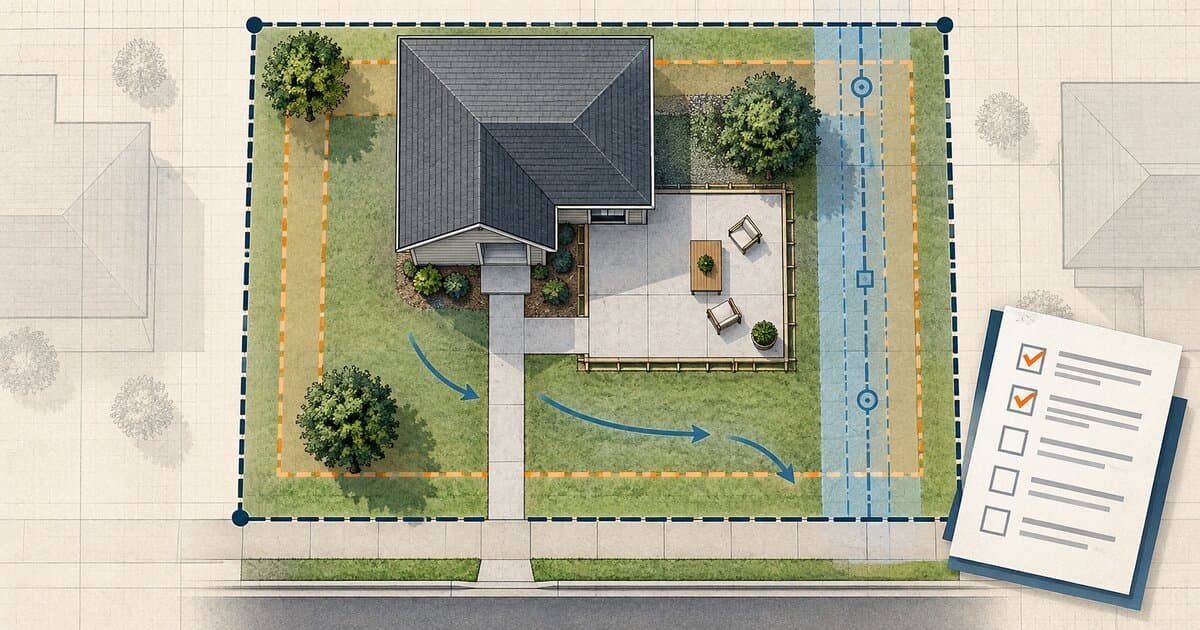
Do You Need a Permit to Pour Concrete? Patios, Slabs & Walkways
Pouring concrete may be permit-exempt or regulated depending on whether it is a patio, slab, walkway, driveway, structural base, or right-of-way work.
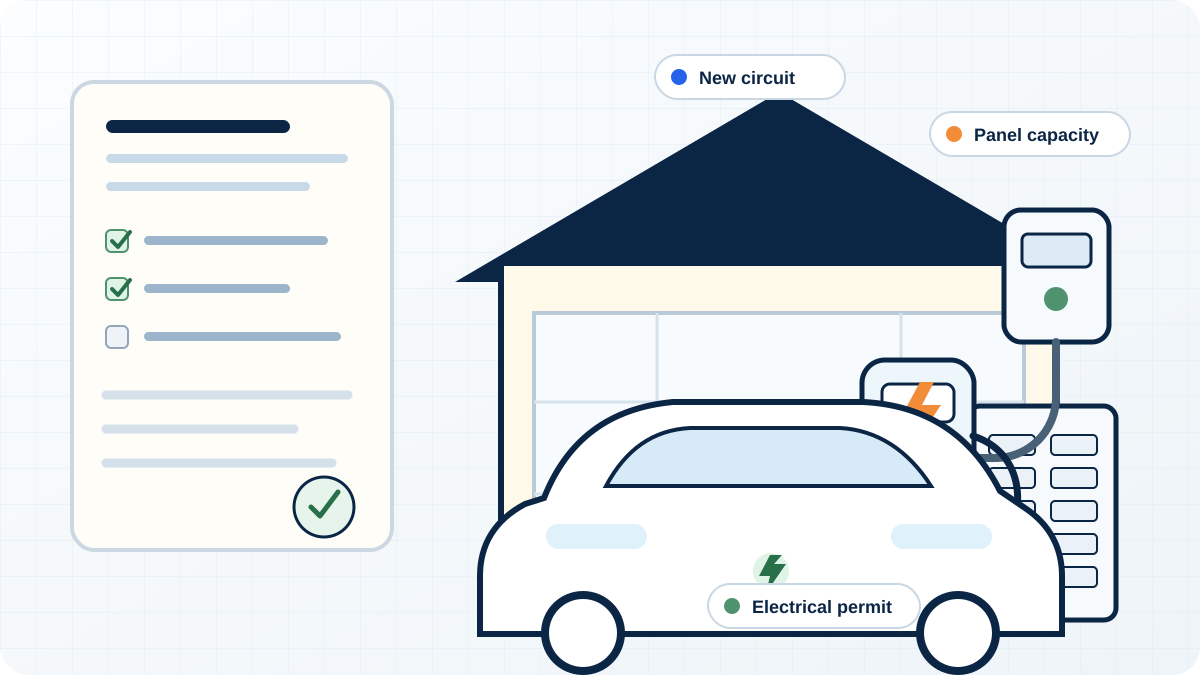
Do You Need a Permit for an EV Charger?
Learn when a home EV charger needs an electrical permit, when panel or service upgrades enter the project, and how inspection and utility coordination work.
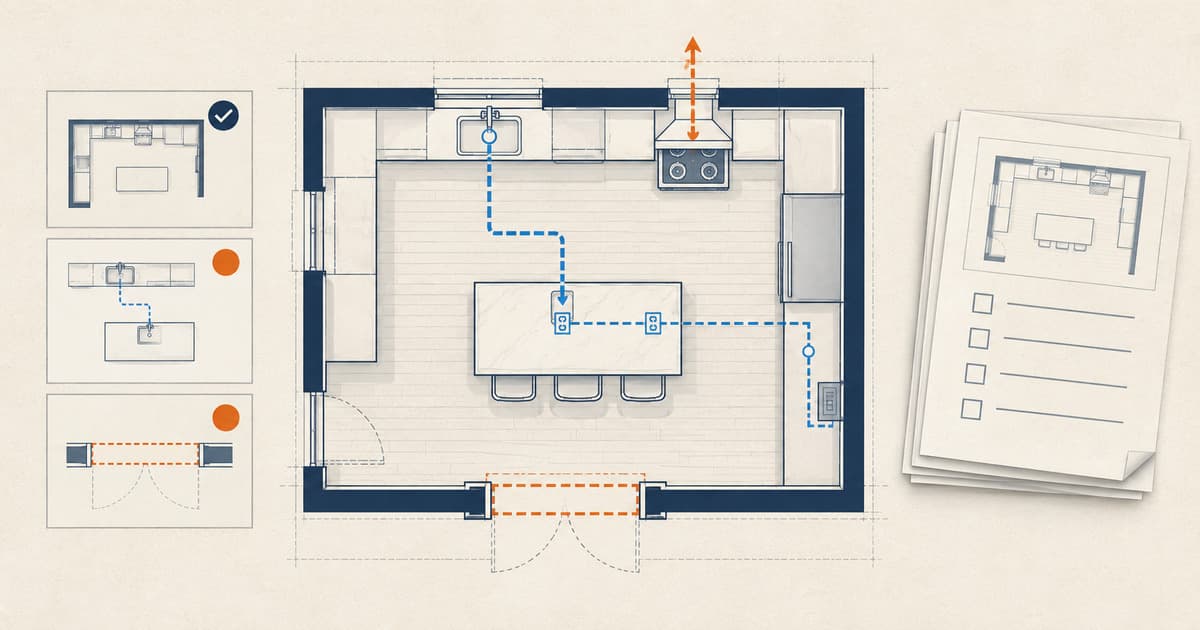
Do You Need a Permit for a Kitchen Remodel?
Learn when cabinets, sinks, islands, appliances, walls, wiring, plumbing, gas, or ventilation can change kitchen-remodel permit and inspection needs.