
Conditional Use Permit and Special Exception Guide
Learn when a conditional use permit or special exception applies, how eligibility and public review work, and what conditions and downstream permits may follow.
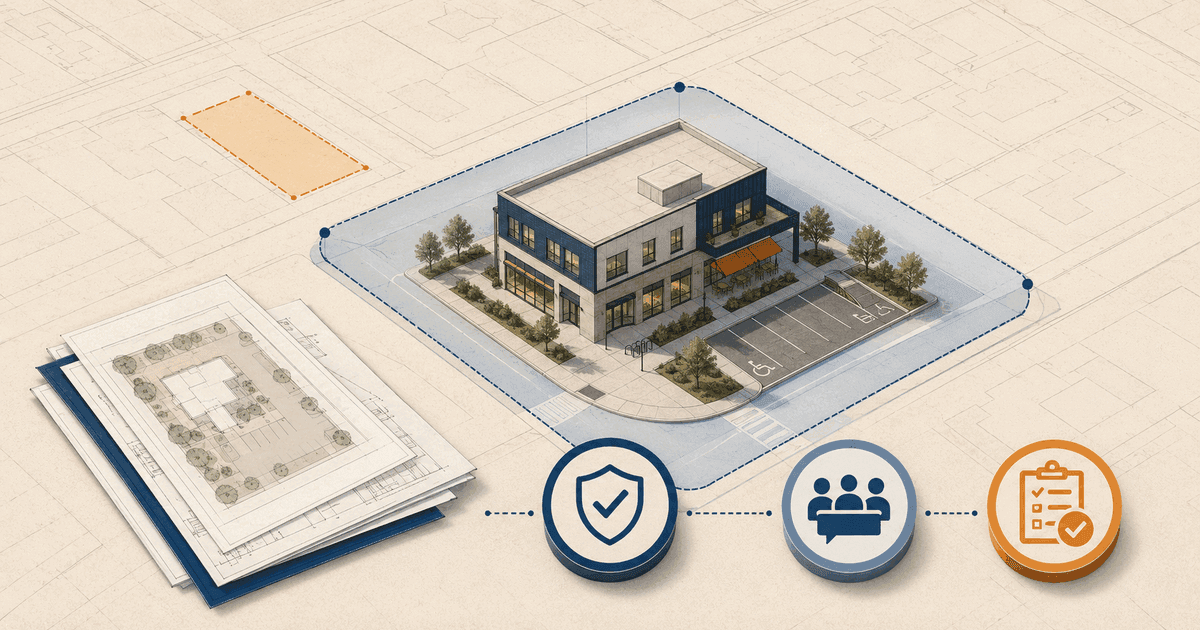
A conditional use permit, special exception, or special use permit is a land-use approval for a use that the zoning ordinance allows only after a designated decision-maker finds that the proposal satisfies specific criteria. The name, legal standard, reviewing body, notice rules, hearing path, and required plans vary by jurisdiction.
This approval is usually about whether a proposed use may operate at a particular site and under what conditions. It does not replace a rezoning, variance, site-plan approval, building permit, trade permit, business license, or certificate of occupancy when any of those are separately required.
Start with the use table and approval criteria
Before preparing an application, confirm four things in the current zoning ordinance:
- the property's zoning district and overlays;
- the exact use category that matches the proposal;
- whether that use is permitted outright, conditionally allowed, or prohibited in the district; and
- the approval criteria and procedure assigned to that use.
A similar-sounding business or activity can fall into a different use category with a different approval path. Operating hours, outdoor activity, occupancy, vehicle trips, alcohol service, drive-through facilities, amplified sound, storage, and the relationship to nearby homes can affect the classification or the conditions considered.
If the ordinance does not list the use as conditionally eligible, a conditional-use application may be the wrong tool. The project may need a zoning interpretation, rezoning, text amendment, or a different site.
Conditional use, variance, rezoning, and site plan are different decisions
| Approval | Main question | What it generally cannot do |
|---|---|---|
| Conditional use / special exception | Is a listed conditional use appropriate at this site under the ordinance's criteria? | Add a use that the ordinance does not make eligible through this procedure. |
| Variance / adjustment | May a specific zoning standard be modified under the jurisdiction's relief test? | Substitute for conditional-use approval or rewrite the zoning district. |
| Rezoning / map amendment | Should the property's zoning classification change? | Guarantee approval of later site, building, or operational permits. |
| Site-plan review | Does the development layout comply with applicable site-design and infrastructure standards? | Establish land-use eligibility when separate conditional-use approval is required. |
Some jurisdictions combine parts of these reviews in one application or hearing. Others require separate approvals in a defined order. Confirm the local sequence before investing in detailed plans.
What reviewers usually evaluate
The controlling ordinance supplies the actual findings. Depending on the jurisdiction and use, the record may address:
- consistency with the zoning district and adopted plans;
- compatibility with nearby uses;
- site access, circulation, parking, loading, and transportation effects;
- noise, lighting, hours, outdoor activity, screening, and buffering;
- utilities, drainage, environmental constraints, fire access, and public services;
- the proposed site plan and operating plan; and
- whether enforceable conditions can address identified impacts.
These are common review subjects, not a universal checklist. Build the application narrative around the exact local criteria and connect each criterion to a plan sheet, study, operating commitment, or other evidence.
A practical conditional-use application process
1. Verify eligibility and the decision-maker
Read the zoning use table, definitions, supplemental standards, and procedural chapter together. Identify whether staff, a planning commission, a zoning board, a hearing officer, or an elected body makes the decision. Also identify any recommendation body and appeal path.
2. Research the property's entitlement history
Look for prior rezonings, conditional uses, special exceptions, variances, recorded plans, conditions, interpretations, violations, and amendments. Existing approvals may control the property even when they are not obvious from the base zoning map.
3. Meet with planning staff when the process provides for it
A pre-application discussion can clarify the use classification, required procedure, submittal calendar, neighborhood or agency coordination, studies, and whether site-plan or infrastructure review runs before, with, or after the land-use decision.
4. Prepare a criteria-based application
Common materials include an application form, owner authorization, legal description, site plan, project narrative, operating plan, elevations, landscape or lighting plans, traffic information, and a response to each approval criterion. Submit only what the local checklist requires, and make the plans internally consistent.
5. Clear completeness review
Many jurisdictions do not begin substantive review or schedule a hearing until the application is complete. Treat completeness comments separately from the later merits review. A complete application can still be denied if the required findings are not met.
6. Respond to agency and public-review issues
Staff may circulate the application to transportation, utilities, fire, environmental, building, or other reviewers. Notice and hearing requirements depend on local and state law. Where a hearing is required, the decision should be based on the applicable criteria and record.
7. Read the final decision and every condition
An approval may include limits on hours, intensity, site layout, access, lighting, noise, landscaping, operations, phasing, monitoring, or later plan approval. Record the final plan set and conditions in the project's compliance file.
8. Finish downstream approvals and closeout
Land-use approval does not normally authorize construction or occupancy by itself. Confirm the next required site, civil, building, trade, fire, health, sign, business, and occupancy approvals. Verify whether the conditional-use approval has an establishment deadline or requires a later compliance review.
How current official workflows differ
The examples below explain why a national fee, timeline, or hearing promise would be unreliable.
| Jurisdiction | Current official example | Decision value |
|---|---|---|
| Portland, Oregon | Portland says a new Conditional Use is generally a Type III review, while some changes to existing conditional uses may use Type II review. | The same approval label can have different procedures depending on whether the request is new or modifies an existing approval. |
| Madison, Wisconsin | Madison's zoning code distinguishes permitted and conditional uses; the City's current implementation materials route conditional-use applications through Plan Commission review. | Confirm the listed use, criteria, decision-maker, and pre-filing path before preparing the record. |
| Fairfax County, Virginia | Fairfax accepts special-exception applications through its PLUS portal, circulates accepted applications to agencies, and schedules Planning Commission and Board of Supervisors hearings. | A special exception can involve completeness review, multi-agency analysis, recommendations, and more than one public body. |
| Austin, Texas | Austin treats conditional-use permits through its land-use site-plan framework and Land Use Commission review for uses identified by the Land Development Code. | The conditional-use decision may be integrated with detailed site-plan evaluation. |
These examples are not rules for another property. Use the current ordinance, application package, fee schedule, and calendar published by the authority responsible for the site.
Conditions of approval are part of the entitlement
Conditions can make an otherwise eligible proposal approvable, but they also become ongoing project constraints. Before accepting or purchasing a site with a conditional approval, determine:
- which plans and written conditions are controlling;
- whether conditions run with the land or attach to a specific operator under local law;
- whether the approval has been established, expired, abandoned, or revoked;
- whether the proposed change is minor, substantial, or requires a new application;
- whether later permits must remain in substantial conformance with the approval; and
- who is responsible for monitoring and documenting compliance.
Do not rely on a marketing listing, old site plan, meeting summary, or permit-search result alone. Obtain the signed decision, approved plans, amendments, and the jurisdiction's current interpretation when the entitlement matters to a transaction or project schedule.
Fees and timelines
There is no reliable national fee or processing-time range for conditional-use or special-exception review. Cost and timing may depend on the procedure type, application completeness, hearing calendar, required studies, agency corrections, public notice, continuances, appeals, and related site-plan work.
For a useful estimate, collect the current local fee schedule, filing deadlines, completeness rules, hearing calendar, appeal period, and any separate fees for notices, signs, reviews, or consultant studies. Treat a target hearing date as provisional until the authority confirms that the application is complete and scheduled.
Questions to answer before filing
- What exact ordinance use category applies?
- Is the use conditionally eligible in every applicable base and overlay district?
- Which approval criteria must the decision-maker find satisfied?
- Is a site plan, traffic analysis, operations plan, or other study required?
- Are pre-application meetings or neighborhood contacts required?
- Who recommends, who decides, and who hears an appeal?
- What notice, posting, and hearing steps apply?
- Which conditions would materially affect operations or project value?
- When does the approval expire or become established?
- Which construction, licensing, and occupancy approvals follow?
Use Permit Check to organize the property, project, jurisdiction, and likely approval path before you rely on a filing strategy.
Frequently asked questions
Is a conditional use permitted by zoning?
It is typically a use the ordinance lists as potentially allowable in the district after the required decision-maker applies stated criteria. It is not the same as a use permitted outright.
Is a special exception the same as a conditional use permit?
They often describe similar discretionary land-use approvals, but local and state law control the name, legal standard, procedure, and decision-maker. Use the term defined by the jurisdiction.
Does conditional-use approval change the zoning district?
Usually no. A rezoning changes the district classification. A conditional-use decision applies the existing ordinance's conditional-use provisions to a specific proposal and site.
Can a conditional use permit waive a setback?
Only if the governing ordinance expressly allows that relief within the conditional-use procedure. Otherwise a separate variance, adjustment, or redesign may be required.
Is a public hearing always required?
No universal rule applies. Some procedures use a hearing, while others may use administrative review with notice and an appeal opportunity. Confirm the governing procedure.
What happens if the application is incomplete?
The jurisdiction may withhold acceptance, pause review, request corrections, or prevent hearing scheduling. Check the local completeness rules and resubmittal process.
Can the approval include operating conditions?
Yes, when authorized by the governing law and tied to the applicable criteria. Conditions can address site design, operations, hours, access, screening, noise, lighting, or other supported impacts.
Does a conditional use permit transfer to a new owner?
That depends on the jurisdiction, the decision, and whether the approval runs with the land or is personal to an operator. Review the recorded decision and obtain current written confirmation when transferability matters.
Can an approved conditional use expire?
Some approvals have deadlines for establishing the use, beginning construction, or obtaining later permits. Others can lapse through abandonment or be subject to revocation procedures. Read the decision and current ordinance.
Can construction start after conditional-use approval?
Only after every separately required site, building, trade, and other authorization is issued. Conditional-use approval alone does not establish that construction or occupancy may begin.
Sources
- Portland Conditional Use Reviews
- Madison Zoning Code, Chapter 28
- Fairfax County Special Exception Process
- Austin Site Plans, Exemptions, and Corrections
Related GovCodex guides
Visual guides
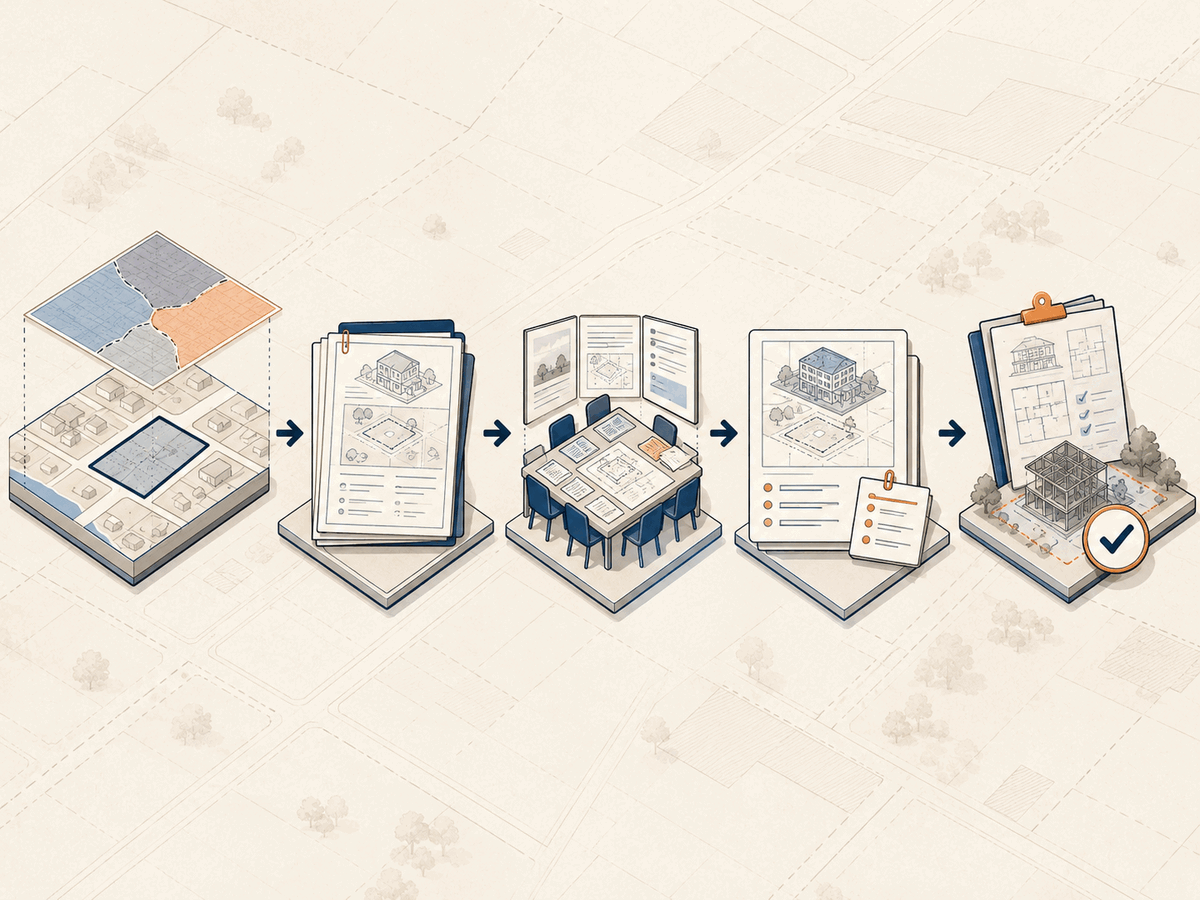
The local ordinance determines eligibility, procedure, findings, conditions, and the approvals that follow.
Last reviewed: August 27, 2026. Requirements vary by jurisdiction and property.
What this permit is
Discretionary approval for a use the ordinance lists as eligible subject to applicable standards and conditions
Category: Zoning
Workflow: Conditional or special-use approval
Jurisdiction level: Municipal (City / Village / Town)
Discretionary review of a use the ordinance lists as eligible under stated standards.
Local path check: The ordinance determines whether the use is eligible, which standards apply, and who makes the decision.
Also known as: Special Exception, Conditional Use Permit, Special Use Permit, Conditional Use Application, Special Exception Application, CUP Application
What you need
- Ordinance provision listing the proposed use as eligible for conditional or special approval
- Narrative and evidence addressing the applicable approval standards
- Site plan and operating details requested for the proposed use (Commonly required)
This is a general workflow, not a finding about a particular property. Verify each locally marked item against the current official application, ordinance, and issuing department.
How to apply
- Confirm the use is eligible for this approval in the property's zoning district
- Retrieve the exact findings and use-specific standards the decision-maker must apply
- Prepare the official application, site materials, operating narrative, and supporting evidence
- Complete staff review, notice, and hearing steps required by the local ordinance (Commonly required)
- Receive the authorized decision and review every condition, deadline, and appeal provision (Commonly required)
- Complete separate construction, business, or occupancy approvals before operating (Commonly required)
Timing
Processing time is set by the responsible jurisdiction: follow its published application deadline, review calendar, and completeness rules.
Fees
Consult the responsible jurisdiction’s current application and fee schedule. No supported national fee range is available.
Official sources
These dated official sources support the workflow distinctions in this general guide. They do not establish the rules for your property; verify the current source published by your responsible authority.
- Conditional Use Reviews — Portland Permitting & Development (Portland, OR; checked 2026-08-27). Local example distinguishing Type III review for a new conditional use from some Type II changes to an existing use.
- Conditional Use — City of Madison Development Services Center (Madison, WI; checked 2026-08-27). Local example of Plan Commission conditional-use review and pre-filing coordination; criteria and procedure are jurisdiction-specific.
- Special Exception Process — Fairfax County Planning Development (Fairfax County, VA; checked 2026-08-27). Local example of completeness review, agency circulation, and Planning Commission and Board of Supervisors hearings.
- Site Plans, Exemptions, and Corrections — Austin Development Services (Austin, TX; checked 2026-08-27). Local example where conditional-use permits are reviewed through the land-use site-plan framework.
Related permits
Site Plan Review Application
Review of proposed development layout, parking, landscaping, and site design
Variance Application
Request for relief from a specific zoning standard under the jurisdiction's applicable variance criteria
Rezoning Application / Zoning Map Amendment
Application to change the zoning classification of a property