
Waukesha Building Permit Guide (2025-2026)
How to get a building permit in Waukesha, Wisconsin: which department issues permits, UDC vs. commercial code, zoning and the Board of Zoning Appeals, fees, contractor rules, and inspections.

Direct Answer: In the City of Waukesha, Wisconsin, the Building Inspection division of the Community Development Department issues every building, HVAC, electrical, and plumbing permit inside city limits, applying the statewide Wisconsin Uniform Dwelling Code (UDC, SPS 320-325) to one- and two-family homes and the Wisconsin Commercial Building Code (2018 ICC I-Codes as amended) to everything else. Most residential projects — additions, alterations, decks, garages, and accessory structures — apply through the city's online eTRAKiT portal, while zoning matters such as setbacks, variances, and district compliance fall under Chapter 22 (Zoning) of the Waukesha Municipal Code. Owner-occupants of their own single- or two-family home may pull permits themselves; everyone else needs a state-certified dwelling contractor or trade-licensed contractor with an active account on file with the city.
Verified against official municipal and state sources: July 13, 2026. Requirements change — confirm with the City of Waukesha Building Inspection division before applying.
Key Takeaways
- The Building Inspection division, inside Community Development at 201 Delafield Street, issues every building, electrical, HVAC, and plumbing permit inside Waukesha city limits and enforces building, property maintenance, and zoning codes.
- One- and two-family homes follow the statewide Wisconsin Uniform Dwelling Code (SPS 320-325); commercial and multi-family buildings follow the Wisconsin Commercial Building Code, based on the 2018 ICC I-Codes, per the city's Municipal & State Building Codes page.
- A typical residential fence does not need a building permit in Waukesha, but it must stay at or under 6 feet (3 feet in a corner-lot vision triangle), stay out of the required front yard, and skip barbed wire or electric strands — see Fence Installation.
- A deck does need a building permit, with a site survey and construction plans, before any concrete footings are poured — see Residential Decks.
- Zoning districts, lot dimensions, and setbacks live in Chapter 22 (Zoning) of the Municipal Code; variances go through the Board of Zoning Appeals, which meets the second Monday of each month with applications due 17 days in advance.
- Permit fees are set annually in the city's Development Fees schedule; Waukesha does not publish one flat "permit fee" — amounts vary by project type, size, and valuation.
- As of early 2026 the city was actively working on a zoning code update that would allow accessory dwelling units (ADUs) in all residential districts; confirm current status with Community Development before assuming ADUs are allowed on your lot today.
Scope note: This article covers permitting inside the City of Waukesha only. The separate Village of Waukesha, Town of Waukesha, and unincorporated Waukesha County run their own building departments and fee schedules, and a "Waukesha, WI" mailing address does not guarantee the property sits inside city limits — see our companion piece on Waukesha County permits: county vs. municipal authority.
Which Department Issues Permits in Waukesha?
The Building Inspection division operates under Community Development at Waukesha City Hall, 201 Delafield Street, Waukesha, WI 53188 (262-524-3500, Monday–Friday 8:00 a.m.–4:30 p.m.). The division reviews plans, issues permits, performs inspections, and issues certificates of occupancy for both residential and commercial projects, and it publishes a full list of permit and license types — more than two dozen residential categories alone, from additions and decks to sheds, pools, driveways, and even beekeeping and chicken-keeping permits. Zoning-specific questions (district lookups, variances, conditional uses) route to the Planning division within the same department, reachable at 262-524-3749 or 262-524-3530.
What Building Code Applies — UDC or Commercial Code?
Wisconsin law does not let individual cities write their own residential building code. One- and two-family dwellings in Waukesha, as everywhere else in the state, are governed by the Wisconsin Uniform Dwelling Code (UDC, primarily SPS 320-325), enforced locally by the city's certified building inspectors. The city's own Municipal & State Building Codes page confirms this and lists the related standards it applies for decks and additions, including SPS 321.04 (stairways), SPS 322.31 (wall insulation), and the National Electrical Code cross-referenced through SPS 316 and SPS 324.
Commercial buildings, and any structure that isn't a one- or two-family dwelling, fall under the Wisconsin Commercial Building Code — the 2018 ICC I-Codes as amended by the state — detailed on the city's Commercial Building Permit Information page. Local zoning, in Chapter 22 of the Waukesha Municipal Code, layers on top of both building codes to control use, density, height, and setbacks regardless of which building code applies.
What Work Requires a Permit — and What's Exempt?
Waukesha's Permits/Licenses page lists specific application types rather than a single blanket rule, and the two most common accessory projects land on opposite sides of the permit line:
| Project | Permit required in Waukesha? | Where to check |
|---|---|---|
| Typical residential fence (≤ 6 ft, outside vision triangle) | No — but zoning placement rules still apply | Fence Installation |
| Deck (any size, attached or freestanding) | Yes — plans + site survey | Residential Decks |
| Addition or structural alteration | Yes | Residential Additions & Alterations |
| Detached garage, garden/utility shed, gazebo | Yes | Permits/Licenses |
| Driveway, grading, or erosion-control work | Yes, under the Erosion Control, Grading & Driveway ordinance | ECGD Ordinances |
| HVAC replacement or ductwork extension | Yes, by a registered HVAC contractor | Residential Additions & Alterations |
| Electrical or plumbing work | Yes, only by a licensed electrician or Wisconsin master plumber | Permits/Licenses |
Cosmetic, non-structural work — painting, flooring, exact-match window or door swaps — generally does not trigger a building permit, but the city does not publish a single comprehensive exemption list the way some neighboring municipalities do. When a project isn't clearly listed on the Permits/Licenses page, call Building Inspection at 262-524-3500 before starting work rather than assuming it's exempt.
How Do I Apply for a Waukesha Building Permit?
- Confirm your property is inside Waukesha city limits. The City, Village, and Town of Waukesha are three separate jurisdictions with three separate building departments — see Waukesha County permits: county vs. municipal authority if you're unsure which one applies to your address.
- Match your project to the right application. The Permits/Licenses page lists the specific form for each project type — for example, the "Additions, Decks, Garage, and Gazebo" application covers most residential structural work.
- Assemble your plan set. For additions, alterations, decks, and garages, that typically means a dimensioned plot plan (with a plat of survey for additions), a floor plan showing framing and egress, structural specs for lumber, concrete, and masonry, and elevation/cross-section drawings — per Residential Additions & Alterations.
- Confirm who can apply. Only a homeowner who resides at the job address may submit their own permit application (and must sign a Cautionary Statement to Property Owners); contractors need an active Contractors Account (AEC Account) with Dwelling Contractor (DC) and Dwelling Contractor Qualifier (DCQ) certification on file.
- Submit through eTRAKiT, the city's online permitting portal referenced on the Permits/Licenses page (permits.waukesha-wi.gov/eTRAKiT), where you can also search existing permits and pay fees. Note that the city does not issue refunds once a permit has been issued.
- Schedule required inspections as work proceeds — including a footing/foundation inspection before any concrete is poured — and obtain your certificate of occupancy at final sign-off if the project requires one.
What About Zoning, Setbacks & the Board of Zoning Appeals?
Building-code compliance is only half the picture. Every project also has to satisfy Chapter 22 (Zoning) of the Waukesha Municipal Code, which sets minimum lot size, lot width, and front/side/rear yard setbacks by residential district (R-1, R-2, and so on), plus accessory-use standards — including fence placement — in the code's accessory use regulations. Because setback and lot-coverage figures differ by zoning district and by lot configuration, this guide doesn't quote a single citywide number; confirm your parcel's district and exact dimensional requirements through the Zoning, Platting, Stormwater & Sign Codes page or by calling Community Development.
If your project doesn't meet a dimensional requirement, the Board of Zoning Appeals hears variance requests. The board meets the second Monday of every month at 4:00 p.m., and applications are due 17 days before the meeting date; contact the zoning office (262-524-3749) for the current application form and deadline calendar. The city is also mid-project on a broader zoning code update tied to its Comprehensive Plan, so district boundaries and use tables can shift — always verify against the current adopted code rather than an older PDF.
Can I Build an Accessory Dwelling Unit (ADU) in Waukesha?
As of early 2026, Waukesha's zoning code was still in the process of being updated, and a proposed version would allow ADUs in all residential districts, according to city Senior Planner Charlie Griffith, cited in a March 2026 Daily Reporter article covering ADU zoning changes across Milwaukee-area suburbs. That reporting describes a proposal under Plan Commission review, not a rule already in force citywide. Because zoning code updates can take months to move from Plan Commission review to Common Council adoption, don't assume an ADU is allowed on a given lot without confirming current status directly with Community Development or through the city's own zoning code update hub.
What Does a Permit Cost?
Waukesha publishes an annually updated Development Fees schedule (most recently revised November 2025) covering planning, building, and stormwater/erosion-control fees. Fees vary by permit type, project size, and valuation rather than following one flat citywide number, so this guide doesn't quote specific dollar figures — pull the current PDF for your project type, or call Building Inspection at 262-524-3500, before budgeting. For general background on how municipalities typically structure these fees, see how much does a building permit cost.
Do I Need a Licensed Contractor?
It depends on the trade and on who owns the property. A homeowner who both owns and resides at the job address may pull a general building permit and perform the work themselves, after signing the city's Cautionary Statement to Property Owners. Contractors doing that same work need an active Contractors Account (AEC Account) with the city plus current Dwelling Contractor (DC) and Dwelling Contractor Qualifier (DCQ) certification from the Wisconsin Department of Safety and Professional Services. Regardless of ownership, electrical and plumbing work may only be performed and permitted by a licensed electrical contractor or a Wisconsin master plumber, and HVAC replacement or ductwork extension requires a registered HVAC contractor.
Inspections
Once a permit is issued, work proceeds through inspections tied to the scope of the project. For decks, the city requires an inspection of the footings — checking minimum size and depth — before any concrete is poured, followed by a final inspection that verifies guardrails and other completed details match the approved plans, per Residential Decks. Additions and alterations follow a similar sequence of rough-in and final inspections tied to UDC standards for stairways, insulation, and mechanical ventilation. Schedule inspections through the eTRAKiT portal or by contacting Building Inspection directly; for projects requiring occupancy sign-off, the city issues a certificate of occupancy after the final inspection passes.
Frequently Asked Questions
Does Waukesha require a permit for a typical backyard fence?
No. A standard residential fence up to 6 feet tall (3 feet within a corner-lot vision triangle) does not need a building permit, but it must stay out of the required front yard, stop at the property line without crossing it, and avoid barbed wire or electric strands in residential districts. See Fence Installation and our general guide to fence permit rules, height, and setbacks.
Do I need a permit to build a deck in Waukesha?
Yes. Any new deck construction needs a building permit with detailed plans and a site survey, and footings must be inspected before concrete is poured. See Residential Decks and our companion explainer on deck footings and frost-depth code requirements.
Can I pull my own permit and do the work myself?
Yes, if you own and reside at the property. You'll sign a Cautionary Statement to Property Owners and, for electrical work, may need to demonstrate basic wiring knowledge to an inspector. Rental and non-owner-occupied properties must use a properly certified or licensed contractor. See Residential Additions & Alterations.
What building code applies to a new house or addition in Waukesha?
The statewide Wisconsin Uniform Dwelling Code (SPS 320-325), enforced locally by Building Inspection. Wisconsin law doesn't allow cities to substitute their own residential building code, though Chapter 22 zoning still governs setbacks, lot coverage, and use on top of it.
Can I build an ADU (accessory dwelling unit) in Waukesha right now?
It depends on your zoning district and where the city's zoning code update stands. As of early 2026 a proposal to allow ADUs in all residential districts was under Plan Commission review, not yet confirmed as final citywide policy — confirm current status with Community Development before planning a project.
How do I find my property's zoning district and exact setbacks?
Contact the Planning division of Community Development (262-524-3749) or review Chapter 22 (Zoning) of the Municipal Code. Because setbacks vary by district, GovCodex's Waukesha permit catalog or a permit check tied to your address is the fastest way to get figures specific to your lot.
Is a Waukesha mailing address the same as being inside city limits?
Not always. The City of Waukesha, Village of Waukesha, and Town of Waukesha are three distinct jurisdictions with separate building departments, and addresses that share a Waukesha ZIP code can fall in any of the three (or unincorporated Waukesha County). See Waukesha County permits: county vs. municipal authority.
Verify the Rules for Your Property
Permit thresholds, zoning setbacks, and fees change over time, and the specific requirements that apply depend on your parcel's zoning district and the scope of your project. Before you apply, check GovCodex's Waukesha permit catalog for the current permit types tied to your project, or run a permit check to see what your specific address and project actually require.
Related Articles
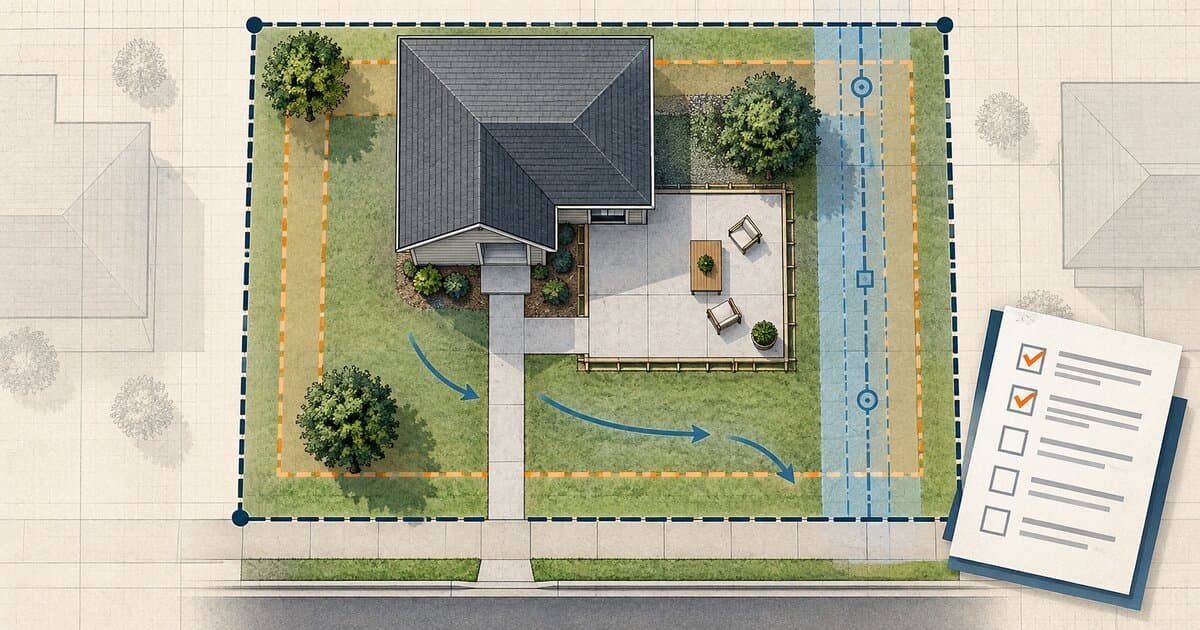
Do You Need a Permit to Pour Concrete? Patios, Slabs & Walkways
Pouring concrete may be permit-exempt or regulated depending on whether it is a patio, slab, walkway, driveway, structural base, or right-of-way work.
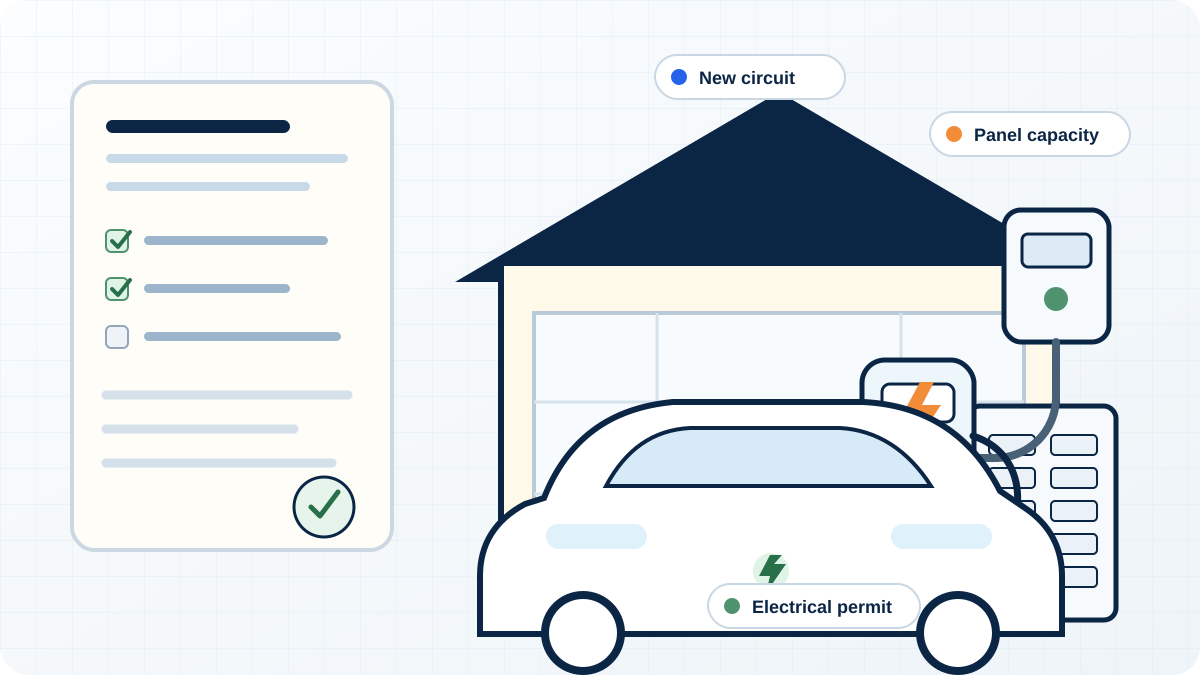
Do You Need a Permit for an EV Charger?
Learn when a home EV charger needs an electrical permit, when panel or service upgrades enter the project, and how inspection and utility coordination work.
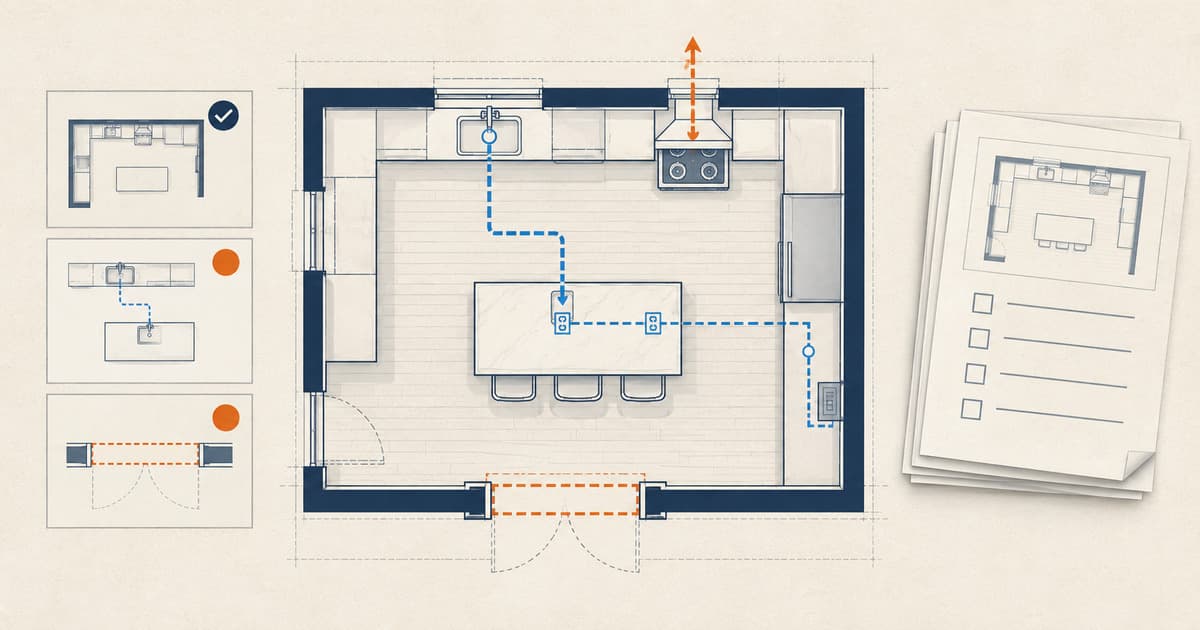
Do You Need a Permit for a Kitchen Remodel?
Learn when cabinets, sinks, islands, appliances, walls, wiring, plumbing, gas, or ventilation can change kitchen-remodel permit and inspection needs.