
Waukesha County Permits: County vs. Municipal Authority
Waukesha County has 39 municipalities and its own zoning/shoreland/sanitary authority. This guide maps who actually issues your building, zoning, and septic permits — county or municipal — with official sources.
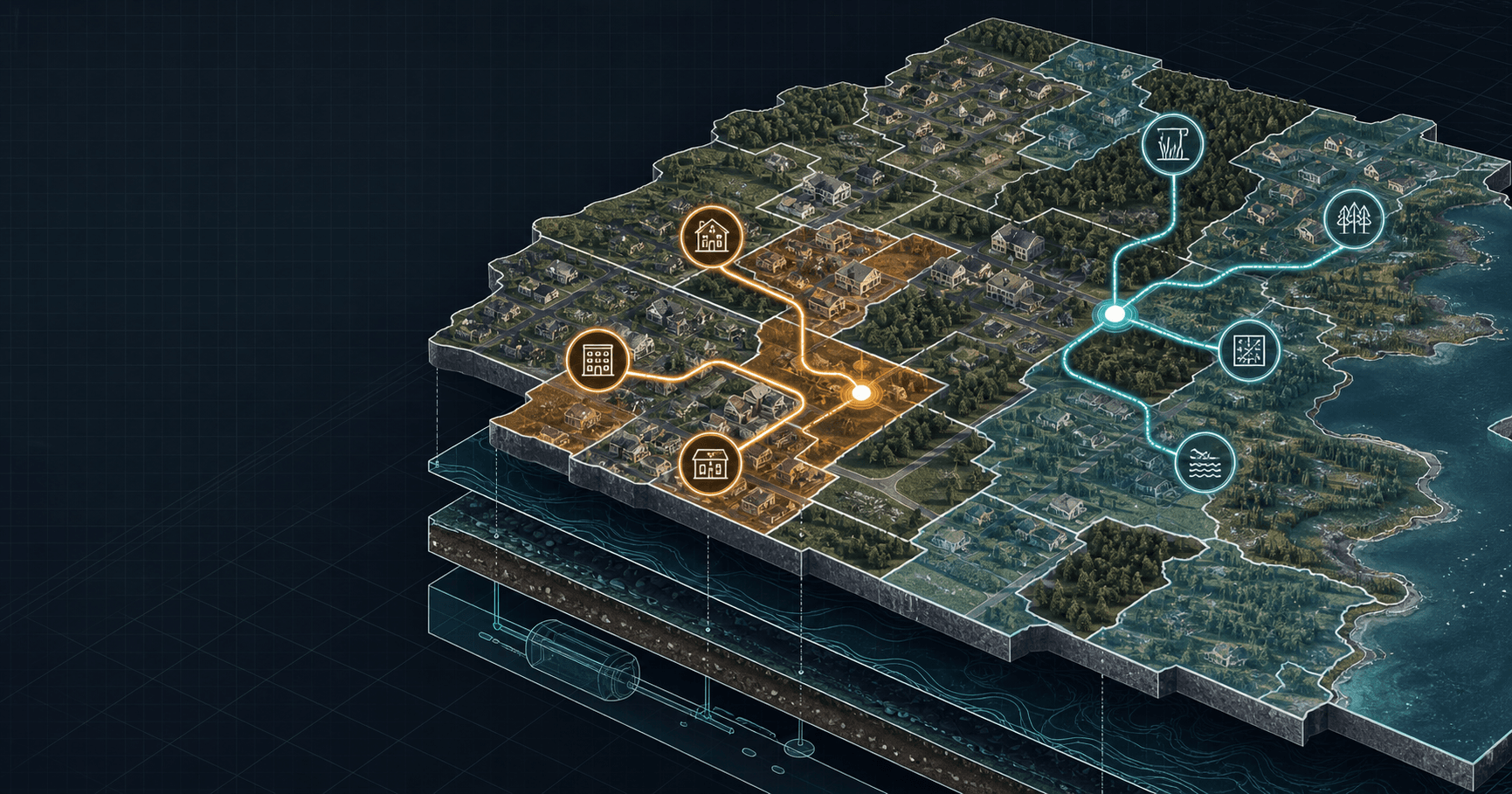
Direct Answer: Waukesha County's Department of Parks and Land Use, through its Planning & Zoning Division, is the direct zoning authority for only three small unincorporated areas — the Town of Ottawa, the Village of Lac La Belle, and the islands of the Town of Oconomowoc — and it administers shoreland/floodplain zoning permits within 1,000 feet of a lake or 300 feet of a river or stream in every other unincorporated town, per the Waukesha County Shoreland Protection Ordinance. Everywhere else — general zoning outside that shoreland belt, and every Wisconsin Uniform Dwelling Code building permit — comes from the town, city, or village itself, through its own building inspector or a contracted agency; the county has no zoning jurisdiction inside any city or village. The one function that never moves is septic: the county's Environmental Health Division issues every sanitary (POWTS) permit countywide, incorporated or not.
Verified against official municipal and state sources: July 13, 2026. Requirements change — confirm with the specific municipality or the county's Department of Parks and Land Use before applying.
Key Takeaways
- Waukesha County's Department of Parks and Land Use (DPLU) has three divisions — Planning & Zoning, Environmental Health, and Parks — headquartered at 515 W. Moreland Blvd., Waukesha, WI 53188.
- The county is the full zoning authority only in the Town of Ottawa, the Village of Lac La Belle, and the islands of the Town of Oconomowoc; the rest of the county's 39 municipalities administer their own general zoning.
- Even in towns with their own local zoning ordinance, a county shoreland/floodplain zoning permit is still required within 1,000 feet of a navigable lake, 300 feet of a river or stream, or inside the mapped floodplain.
- Building permits under the Wisconsin Uniform Dwelling Code are always issued locally — by a town's own inspector, such as Town of Merton's, or a contracted firm, as at Town of Brookfield — never by the county.
- Incorporated cities and villages, like the City of Waukesha, run entirely separate building and zoning departments; per the county's own Planning & Zoning FAQ, "the County's zoning jurisdiction does not include cities or villages."
- Private septic systems (POWTS) are permitted countywide by the county's Environmental Health Division through the property's licensed plumber, whenever municipal sewer isn't available.
- A single unincorporated-town project near water can need two overlapping approvals: a county shoreland/floodplain permit and a separate town building permit for the same structure.
Scope note: This article explains the county-vs-municipal framework across Waukesha County. It does not cover the specific fees, forms, setbacks, or timelines of any one of the county's 39 individual cities, villages, and towns — each sets its own building-permit fee schedule. Confirm details with your specific municipality, or use the tools linked at the end.
Which Department Issues Permits in Waukesha County?
The Department of Parks and Land Use (DPLU) is the county-level agency behind every permit Waukesha County itself issues. It has three divisions: Planning & Zoning (zoning, shoreland/floodplain, land division, farmland preservation), Environmental Health (sanitary/POWTS permits, food and recreational licensing), and Parks (park-system permits and easements). All three share offices at 515 W. Moreland Blvd., Room AC 230, Waukesha, WI 53188, at (262) 896-8300, Monday–Friday, 8:00 a.m.–4:30 p.m. The Permits and Licenses page lists everything DPLU issues directly: development and zoning permits, sanitary permits, stormwater/erosion-control permits, county highway access and utility permits, and food/recreational licenses.
Conspicuously absent from that list: the ordinary building permit that virtually every renovation, addition, or new home needs. Unlike some Wisconsin counties, Waukesha County doesn't run a countywide building-inspection department for towns — building permits are a municipal function here, almost without exception.
County vs. Municipal: Who Actually Issues Your Building Permit?
For the building permit itself — governed by the statewide Wisconsin Uniform Dwelling Code (UDC, SPS 320-325) for one- and two-family homes, or the Commercial Building Code (SPS 361-366) for everything else — the answer is almost always "your town, city, or village," not the county. Each municipality either employs its own certified building inspector or contracts the function to a private inspection agency:
- The Town of Merton runs its own Building Inspector, reachable directly for permit questions and inspection scheduling.
- The Town of Brookfield contracts plan review, inspection, and engineering to third-party vendors through its Development Services Department.
- The City of Waukesha runs its own in-house Building Inspection Division.
This pattern repeats across the county's 11 towns, 19 villages, and 7 cities (county overview): whoever holds the state UDC delegation for that municipality issues the building permit and performs inspections. The county's Planning & Zoning Division never enters that chain unless the parcel also triggers county zoning jurisdiction, described below.
Where Is the County the Direct Zoning Authority?
County zoning authority in Waukesha County is narrow by design. The Waukesha County Zoning Code — the county's general-purpose zoning ordinance — applies as the primary zoning authority only in the Town of Ottawa and the Village of Lac La Belle, plus the county administers zoning on the islands of the Town of Oconomowoc. In those places, a property owner deals with the county's Planning & Zoning Division for general zoning approvals the same way a resident of an incorporated city would deal with that city's planning department.
Every other town has adopted its own local zoning ordinance under state town-zoning authority. The county still maintains the official zoning maps — though not necessarily the ordinance text or day-to-day administration — for a number of towns and villages that have adopted their own local zoning, including the Towns of Brookfield, Eagle, Genesee, Merton, and Mukwonago. For any town, city, or village not listed there, the county directs residents to contact that municipality directly.
If you're not sure whether your parcel sits inside county-administered zoning versus a town's own ordinance, the Planning and Zoning FAQ recommends calling the division with your property's tax key number to confirm jurisdiction before you apply.
Shoreland and Floodplain Permits Reach Into Every Unincorporated Town
Here's where the county-vs-municipal line gets genuinely confusing, and where most of the actual overlap happens: even in towns with their own general zoning ordinance and their own building inspector, a separate county zoning permit is still required whenever a project falls inside the shoreland or floodplain trigger area. Under the Waukesha County Shoreland Protection Ordinance, that means any structure that is "located, erected, moved, reconstructed, extended, enlarged, converted or structurally altered" within:
- 1,000 feet of the ordinary high-water mark of a navigable lake, pond, or flowage;
- 300 feet of the ordinary high-water mark of a river or stream; or
- the landward side of the mapped floodplain, whichever distance is greater,
in any unincorporated area of Waukesha County — not just Ottawa, Lac La Belle, and the Oconomowoc islands. This authority flows from the state's shoreland-zoning program (Wis. Admin. Code NR 115), which requires counties to regulate shoreland development in unincorporated areas even where a town has adopted its own general zoning for its upland territory. Practically, a homeowner in, say, the Town of Genesee or the Town of Merton who is close to a lake or stream may need a county zoning permit from DPLU's Planning & Zoning Division in addition to the ordinary building permit from that town's building inspector.
A complete county zoning-permit packet typically includes the application form, a site plan, building plans where applicable, and either a sanitary permit or preliminary site evaluation approval from Environmental Health; once complete and paid, the county generally forwards the approved permit to the local building inspector within about two business days, contingent on Environmental Health sign-off.
By contrast, cities and villages regulate their own shoreland and shoreland-wetland zoning inside their incorporated boundaries under a parallel state framework (Wis. Admin. Code NR 117) — that authority never runs through Waukesha County government; see the Wisconsin DNR's shoreland management program overview for how the split works statewide.
What About Incorporated Cities and Villages?
Once a property is inside an incorporated city or village — Waukesha, Brookfield, New Berlin, Muskego, Pewaukee, Oconomowoc, Delafield, Menomonee Falls, Sussex, Hartland, and the rest of the county's cities and villages — Waukesha County's zoning authority drops out almost entirely. The Planning & Zoning FAQ states this directly: "the County's zoning jurisdiction does not include cities or villages," and directs owners inside those boundaries to their municipality. Each city and village runs its own building department, its own zoning code, and, under the state's parallel shoreland-wetland rules for incorporated areas, its own shoreland zoning where applicable — all independent of the county Planning & Zoning Division.
The one county function that still reaches inside city and village limits is sanitary permitting, covered next, for incorporated properties that aren't on municipal sewer.
Sanitary (Septic) Permits Are the County's Job Everywhere
Unlike general zoning and building permits, private on-site wastewater treatment (POWTS/septic) permitting doesn't split between county and municipality — it's a county function countywide. Per the county's Sanitary Permit Process page, a Sanitary Permit is required for any initial, modified, additional, or replacement private sewage system serving a building anywhere in Waukesha County, regardless of whether the parcel is inside a city, village, or unincorporated town. The property's licensed plumber — not the homeowner directly — submits the completed application and fee to DPLU's Environmental Health Division, which reviews plans and inspects mound, at-grade, in-ground (conventional and pressurized), and holding-tank systems. The county states a sanitary permit is "generally issued the same day a completed application and review fee are received," and it's valid for two years; permits issued since July 1, 1979 also carry an ongoing two-year maintenance program requirement.
How Do I Apply for a Permit in Waukesha County?
- Determine whether your property is inside an incorporated city/village or an unincorporated town. Check your tax bill or call the county Planning & Zoning Division at (262) 896-8300 with your tax key number if unsure.
- If you're inside a city or village, contact that municipality's building department directly for your building permit and any local zoning approval — the county has no role there except sanitary permitting for private septic systems.
- If you're in an unincorporated town, confirm whether you're in the Town of Ottawa, the Village of Lac La Belle, or the islands of the Town of Oconomowoc. If so, the county's Planning & Zoning Division is your general zoning authority for the entire property, not just the shoreland.
- If you're in any other unincorporated town, check whether your project sits within 1,000 feet of a lake, 300 feet of a river or stream, or in the mapped floodplain. If it does, apply for a county zoning permit in addition to your town's building permit.
- Apply for the underlying building permit with your town's own building inspector or contracted inspection agency — most towns publish their own forms and fee schedules on their municipal websites.
- For any private septic system, have your licensed plumber file the sanitary permit application with DPLU's Environmental Health Division — regardless of city, village, or town.
- Wait for review. A complete county zoning permit is generally routed to the local building inspector within about two business days once Environmental Health sign-off is in hand; sanitary permits are often issued the same day.
Who Issues What in Waukesha County
| Permit or approval | Issuing authority | Where it applies |
|---|---|---|
| Building permit (UDC 1-2 family, commercial) | Local town, city, or village building inspector (in-house or contracted) | Every property countywide — the county never issues these |
| General zoning permit | County Planning & Zoning Division | Only the Town of Ottawa, Village of Lac La Belle, and the islands of the Town of Oconomowoc |
| General zoning permit | Local town, city, or village | Every other Waukesha County municipality |
| Shoreland / floodplain zoning permit | County Planning & Zoning Division | Any unincorporated town, within 1,000 ft of a lake, 300 ft of a river/stream, or in the floodplain |
| Shoreland-wetland zoning | The city or village itself | Inside incorporated city/village limits |
| Sanitary (POWTS/septic) permit | County Environmental Health Division | Countywide, wherever a property uses a private sewage system |
| Land division / certified survey map | County Planning & Zoning Division | Unincorporated towns |
What Does a Permit Cost?
There's no single, countywide building-permit fee in Waukesha County, because building permits are a municipal function — each of the county's 39 cities, villages, and towns publishes and updates its own fee schedule independently. The county's own permits carry separate fee schedules: DPLU publishes an Environmental Health fee schedule for sanitary permits and a Planning & Zoning fee schedule for zoning, shoreland, and land-division permits, both linked from the Permits and Licenses page. Because fees vary by permit type, project valuation, and jurisdiction, this guide doesn't quote a dollar figure — pull the current schedule for your municipality, or the relevant county fee schedule, before budgeting. See also how much does a building permit cost.
Frequently Asked Questions
Does Waukesha County issue building permits for my house?
No, in almost every case. Building permits under the Wisconsin Uniform Dwelling Code are issued by your town, city, or village — either its own building inspector or a firm it contracts with — not by the county. DPLU issues zoning, shoreland/floodplain, and sanitary permits, not ordinary building permits.
How do I know if I live in an incorporated city/village or an unincorporated town?
Check your property tax bill, which identifies your municipality, or call the county Planning & Zoning Division at (262) 896-8300 with your parcel's tax key number.
My town has its own zoning ordinance — why would I still need a county permit?
Because the county's shoreland and floodplain zoning permit applies in every unincorporated town, regardless of whether that town has its own general zoning ordinance, whenever a project sits within 1,000 feet of a lake, 300 feet of a river or stream, or inside the mapped floodplain. See Zoning Permits — Construction Activities.
Does the county regulate zoning inside the City of Waukesha or other cities and villages?
No. Per the county's own Planning & Zoning FAQ, "the County's zoning jurisdiction does not include cities or villages." Each city and village runs its own zoning and building department entirely independent of the county.
Do I need a separate permit for a septic system if I already have a town building permit?
Yes. Sanitary (POWTS) permitting is handled by the county's Environmental Health Division through your licensed plumber, separately from your town's building permit, for any property that uses a private sewage system instead of municipal sewer.
Where do I find my specific town's building permit fees and application forms?
Directly from that municipality — each of Waukesha County's 39 cities, villages, and towns sets its own fees and publishes its own forms. The Town of Merton and Town of Brookfield examples above show how varied that is even between neighboring towns.
What if my property is in the Town of Ottawa or the Village of Lac La Belle?
Those are two of the few places where the county's Planning & Zoning Division is your primary zoning authority for the whole property, not only the shoreland strip — apply to DPLU for zoning matters there, while your building permit is still issued locally.
Verify the Rules for Your Property
With 39 municipalities plus county shoreland, floodplain, and sanitary jurisdiction layered on top, Waukesha County is one of the more complicated permitting landscapes in Wisconsin to navigate from a search engine alone. Before you apply anywhere, check GovCodex's Waukesha County permit catalog for the current permit types tied to your municipality, or run a permit check to see what your exact address and project require.
Related Articles
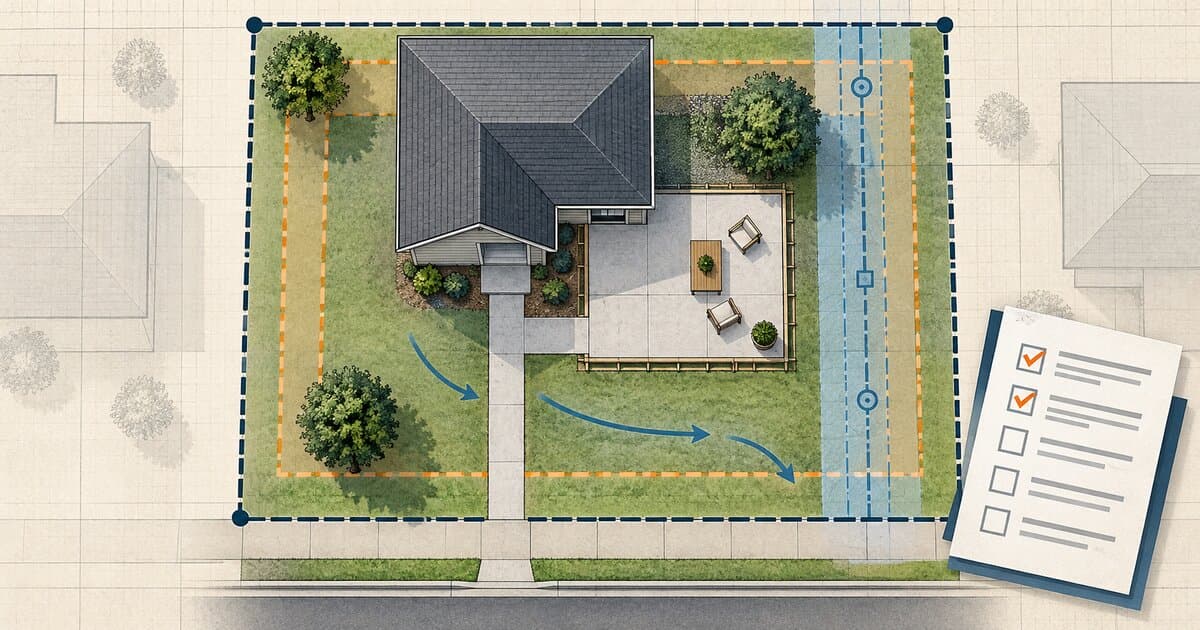
Do You Need a Permit to Pour Concrete? Patios, Slabs & Walkways
Pouring concrete may be permit-exempt or regulated depending on whether it is a patio, slab, walkway, driveway, structural base, or right-of-way work.
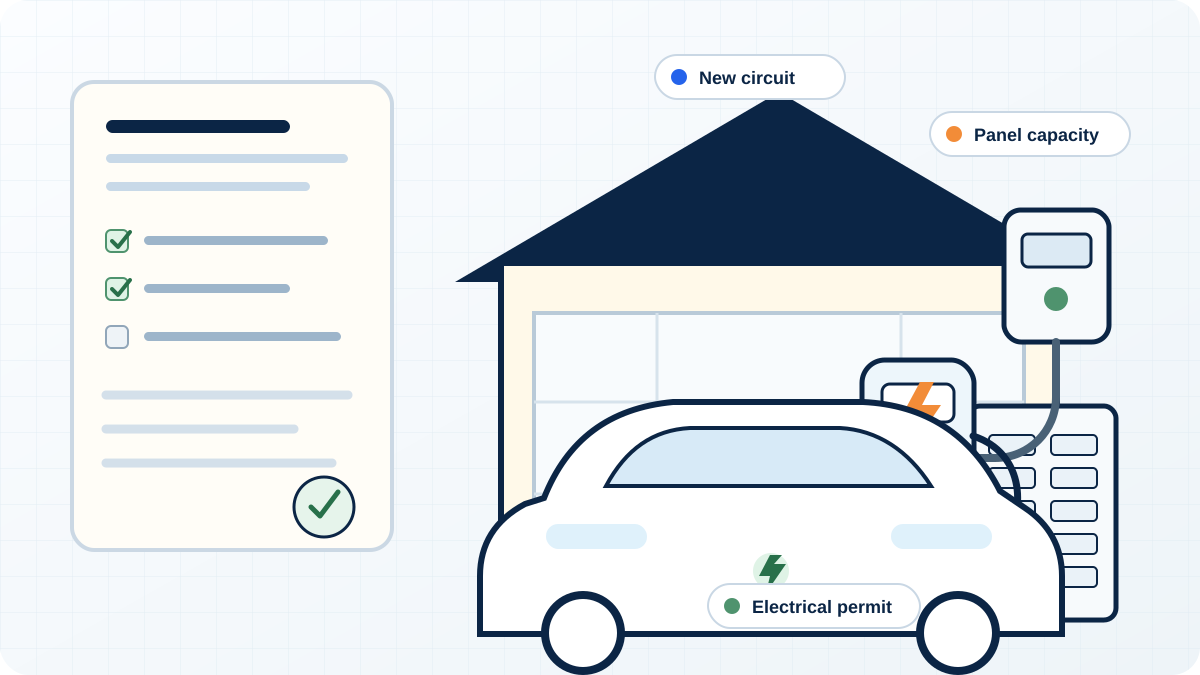
Do You Need a Permit for an EV Charger?
Learn when a home EV charger needs an electrical permit, when panel or service upgrades enter the project, and how inspection and utility coordination work.
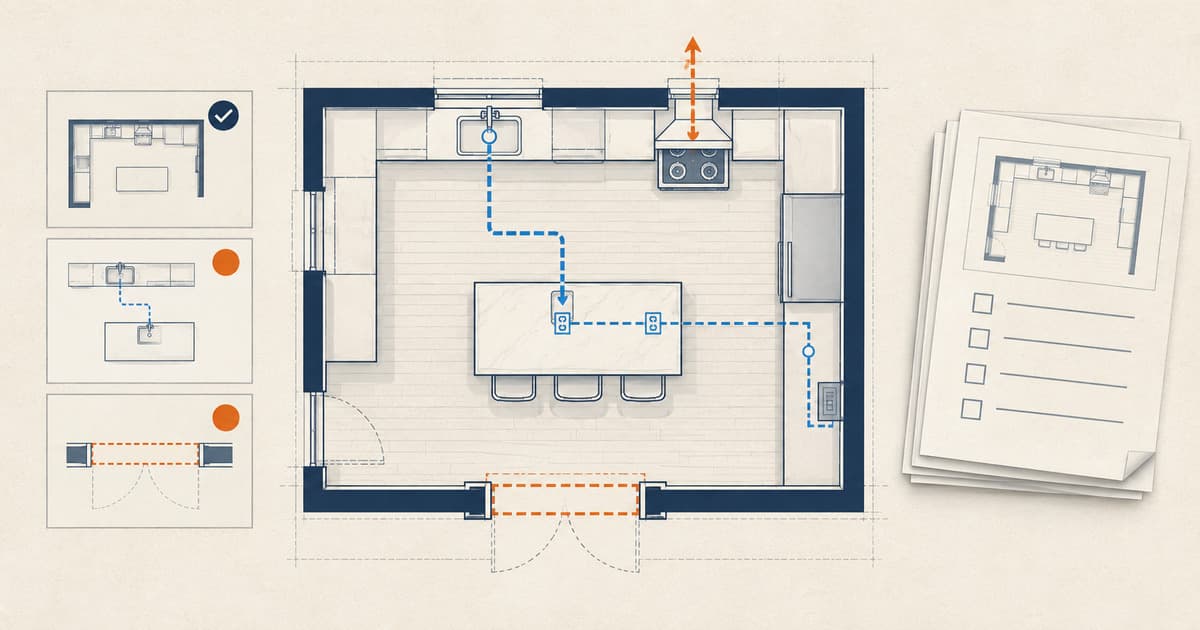
Do You Need a Permit for a Kitchen Remodel?
Learn when cabinets, sinks, islands, appliances, walls, wiring, plumbing, gas, or ventilation can change kitchen-remodel permit and inspection needs.