
Building in Unincorporated Cook County: Who Issues Your Permit and Which Code Applies
Cook County's Department of Building and Zoning only has jurisdiction over unincorporated land and the Forest Preserves — everyone else, including Chicago and its 130 suburbs, permits through their own municipality. Here's how to tell which one applies to you.
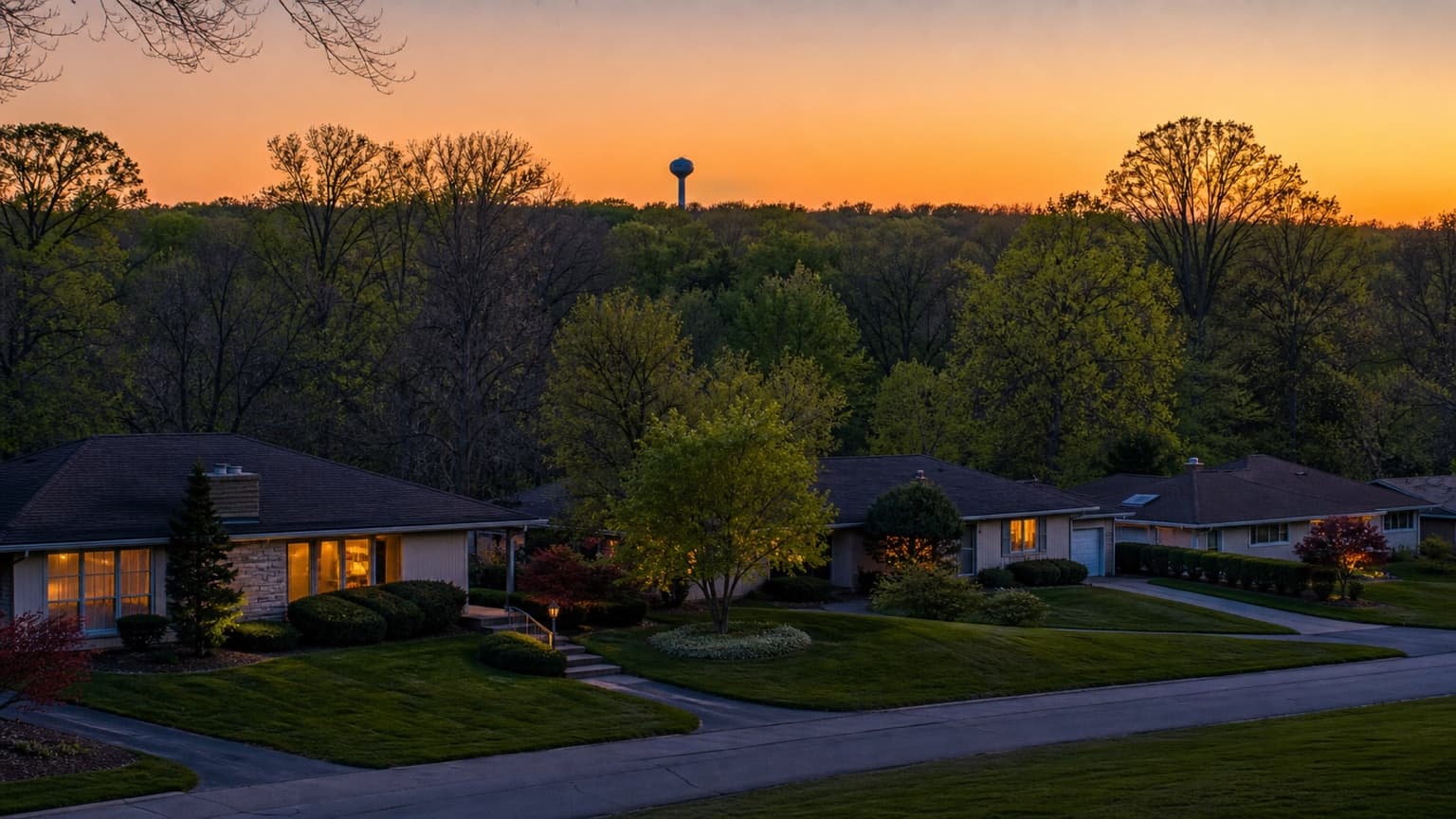
Direct Answer: In Cook County, who issues your building permit depends on whether your property sits inside one of the county's roughly 130 incorporated cities and villages — including Chicago — or in unincorporated territory. Incorporated municipalities each run their own building department under their own adopted code; the Cook County Department of Building and Zoning has permitting and zoning authority only in unincorporated areas and the Forest Preserves of Cook County (cookcountyil.gov). Unincorporated land is a small slice of the county — about 13.1% of its land area, most of that forest preserve (Civic Federation) — so most residents never deal with the county building department. Three statewide Illinois codes apply on top of local rules everywhere in the county, regardless of who issues your permit.
Verified against official Cook County and Illinois sources: July 12, 2026. Requirements change — confirm with the Department of Building and Zoning before applying.
Key Takeaways
- Cook County's Department of Building and Zoning only has jurisdiction in unincorporated areas and the Forest Preserves of Cook County — not in Chicago or any incorporated suburb (cookcountyil.gov).
- Unincorporated Cook County covers about 125.8 square miles, 13.1% of the county's land area, and most of that is forest preserve rather than buildable property (Civic Federation).
- The county's building ordinance was overhauled in 2014 and updated again by a July 2019 board ordinance; its code page now cites the 2021 International Energy Conservation Code, so confirm the current edition before you design (Civic Federation; cookcountyil.gov).
- The Illinois Plumbing Code, Illinois Energy Conservation Code, and Illinois Accessibility Code apply statewide, on top of whichever local code governs (IDPH; Capital Development Board).
- Zoning relief in unincorporated areas — variances, special uses, rezonings — goes through the Cook County Zoning Board of Appeals, not a municipal board (cookcountyil.gov).
- Check whether an address is unincorporated using Cook County's GIS tools before assuming which government has jurisdiction.
Who Actually Issues Your Permit — City, Village, or County?
Cook County has nearly 130 municipalities located wholly or partially within it, the largest being Chicago (Wikipedia). Each runs its own building and zoning process, its own adopted code amendments, and its own zoning board. Chicago permits go through the Chicago Department of Buildings under the Municipal Code of Chicago — see GovCodex's Chicago building permit guide for that process.
The Cook County Department of Building and Zoning is different: its authority is limited to unincorporated areas of Cook County and all of the Forest Preserves of Cook County (cookcountyil.gov). If your property sits inside any municipality's boundaries, the county cannot process your permit — you go to that municipality instead.
| Where the property is | Who issues the building permit | Who handles zoning relief |
|---|---|---|
| City of Chicago | Chicago Department of Buildings | Chicago Zoning Board of Appeals |
| Incorporated suburb (Skokie, Evanston, Oak Park, etc.) | The village's or city's own building department | The municipality's own zoning board or plan commission |
| Unincorporated Cook County (parts of Maine, Northfield, Palatine townships, etc.) | Cook County Department of Building and Zoning | Cook County Zoning Board of Appeals |
| Forest Preserves of Cook County | Cook County Department of Building and Zoning | Forest Preserve District of Cook County |
GovCodex found no published list of municipalities that contract with Cook County for permitting — the county describes its authority as unincorporated-areas-only. If you're unsure whether a suburb has such an arrangement, confirm with that municipality's clerk.
What Building Codes Apply If Your Property Is Unincorporated?
On November 19, 2014, the Cook County Board adopted Ordinance 14-5599, overhauling the 1997 Building and Environmental Ordinance: the 2009 International Building Code and International Residential Code, the 2012 International Energy Conservation Code, the 2012 International Mechanical Code, a 2014 Cook County Electrical Code, and the 2014 State of Illinois Plumbing Code — meant to bring county rules closer to what neighboring suburbs already enforced (Civic Federation).
That wasn't the last word. The county's current ordinances-and-codes page references a further board ordinance approved July 29, 2019, and now lists the 2021 International Energy Conservation Code as the energy chapter in effect, with electrical amendments updated as recently as December 2024 (cookcountyil.gov). The county updates trade chapters on its own schedule, so don't assume the 2014 editions are still current for every trade — confirm with the Department of Building and Zoning before you design. GovCodex's guide to finding your local building code walks through how to pin down the edition in force for any address.
Which Statewide Illinois Codes Apply No Matter What?
Three codes apply statewide regardless of your permitting authority:
- Illinois Plumbing Code (77 Ill. Adm. Code 890) — administered by the Illinois Department of Public Health; Chicago is a notable exception, enforcing its own municipal plumbing provisions instead (IDPH).
- Illinois Energy Conservation Code (20 ILCS 3125) — mandatory statewide for new construction and most renovations; for residential buildings, local governments — including home-rule municipalities — may not adopt energy standards stricter or looser than the state edition (Capital Development Board).
- Illinois Accessibility Code — implements the Environmental Barriers Act; sets minimum accessibility requirements for all governmental units, which may adopt stricter but not weaker local standards (Capital Development Board).
These sit on top of whatever building code your local authority enforces. See GovCodex's explainer on local control of Illinois building codes and building vs. zoning vs. electrical vs. plumbing permits if you're unsure which permit type you need.
Who Handles Zoning Variances and Special Uses in Unincorporated Areas?
The Cook County Zoning Ordinance governs all land in unincorporated Cook County (cookcountyil.gov). Relief from it — variances, special uses, map amendments — goes through the Cook County Zoning Board of Appeals: five voting members appointed by the Board President with the Board's consent, plus two non-voting ex officio members (cookcountyil.gov).
Not every variance needs a hearing: the Zoning Administrator can approve a variance of 10% or less from a bulk or setback requirement administratively, without referral to the ZBA. Larger variances require a full ZBA hearing, with written notice by certified mail to adjoining property owners 15 to 30 days before filing (Cook County Department of Building and Zoning). None of this applies inside a municipality — Skokie's zoning board has no authority over unincorporated land, and the county's ZBA has none inside Skokie.
How Much of Cook County Is Actually Unincorporated?
Not much. Unincorporated areas total about 125.8 square miles, 13.1% of the county's total land area — and 60.26% of that is forest preserve, not buildable property. The same analysis put the population of unincorporated Cook County at roughly 126,000 people out of more than 5 million countywide (Civic Federation). That's why most homeowners and contractors never interact with the county Department of Building and Zoning: nearly all of the county's land and population already sits inside a city or village with its own building department.
How Do You Check If Your Address Is Unincorporated?
Don't guess from a mailing address — ZIP codes and "town" names don't reliably indicate municipal boundaries in Cook County. Use the county's own tools:
- CookViewer (maps.cookcountyil.gov/cookviewer) — search by address or Property Index Number; the property detail panel shows the township and whether the parcel falls within a municipality.
- Unincorporated Cook County Zoning map (maps.cookcountyil.gov/unincorporatedzoning) — shows zoning classifications for parcels in unincorporated territory.
- Cook County Assessor's property search — pulls up jurisdiction and taxing-body information tied to a parcel's PIN.
Still unsure? Call the Department of Building and Zoning at 312-603-0500 or email intake.bnz@cookcountyil.gov before submitting anything (cookcountyil.gov).
A Concrete Example: Unincorporated Maine Township vs. the Village of Skokie
Maine Township, near Park Ridge, Des Plaines, and Niles, still contains unincorporated pockets — the Civic Federation's mapping of unincorporated land shows sections falling within Maine and Northfield townships specifically (Civic Federation). If your lot sits in one of those pockets, an addition or new garage goes through the Cook County Department of Building and Zoning, gets reviewed against the county building ordinance plus the statewide codes above, and — if you need setback relief — goes to the Cook County Zoning Board of Appeals. Note that Maine Township's own government maintains certain local roads and permits only work affecting the township right-of-way, not building or zoning approval (Maine Township) — a common point of confusion for residents who assume "township" and "county building department" are the same office.
Now picture the identical project a few miles away, fully inside the Village of Skokie, an incorporated municipality with no unincorporated territory. That permit never touches Cook County. It goes to Skokie's Community Development Department, is reviewed under Skokie's own adopted code and zoning ordinance, and — if a variance is needed — goes to Skokie's own zoning board rather than the county's (Village of Skokie). The same statewide layers apply in both cases; everything else about who reviews your plans is different.
Frequently Asked Questions
Does Cook County issue building permits for the City of Chicago?
No. Chicago has its own Department of Buildings, operating under the Municipal Code of Chicago. The Cook County Department of Building and Zoning's authority does not extend into Chicago or any incorporated municipality (cookcountyil.gov).
What codes govern new construction in unincorporated Cook County?
The county's own building ordinance — updated most recently by a 2019 board ordinance, with the energy chapter now keyed to the 2021 International Energy Conservation Code (cookcountyil.gov) — plus the three statewide layers described above. Confirm the exact edition with the department before finalizing plans; chapters are amended individually over time.
How do I request a zoning variance for a property in unincorporated Cook County?
Apply through the Cook County Zoning Board of Appeals. Deviations of 10% or less from a bulk or setback requirement can be approved administratively by the Zoning Administrator without a hearing; larger variances require a public ZBA hearing with written notice to adjoining owners 15 to 30 days before filing (Cook County Department of Building and Zoning).
Does Cook County require a deposit to submit a building permit application?
Yes. Electronic submissions through the Building and Zoning E-Permits portal require an upfront deposit of $100 for residential projects or $500 for non-residential projects, credited toward the final permit fee (cookcountyil.gov).
Verify the Rules for Your Property
Jurisdiction in Cook County comes down to one question — incorporated or unincorporated — and getting it wrong means filing with the wrong office entirely. Check GovCodex's Cook County permit catalog for the county and municipal contacts that apply to your address, or run a permit check to confirm which building, zoning, and code requirements apply to your specific property before you file.
Related Articles
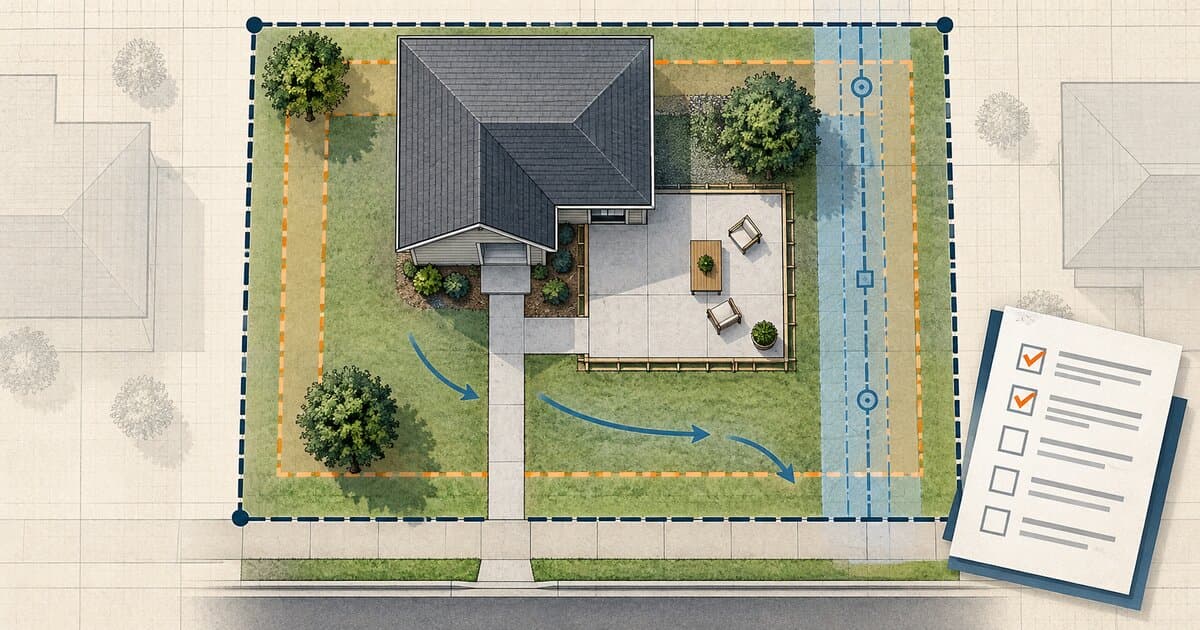
Do You Need a Permit to Pour Concrete? Patios, Slabs & Walkways
Pouring concrete may be permit-exempt or regulated depending on whether it is a patio, slab, walkway, driveway, structural base, or right-of-way work.
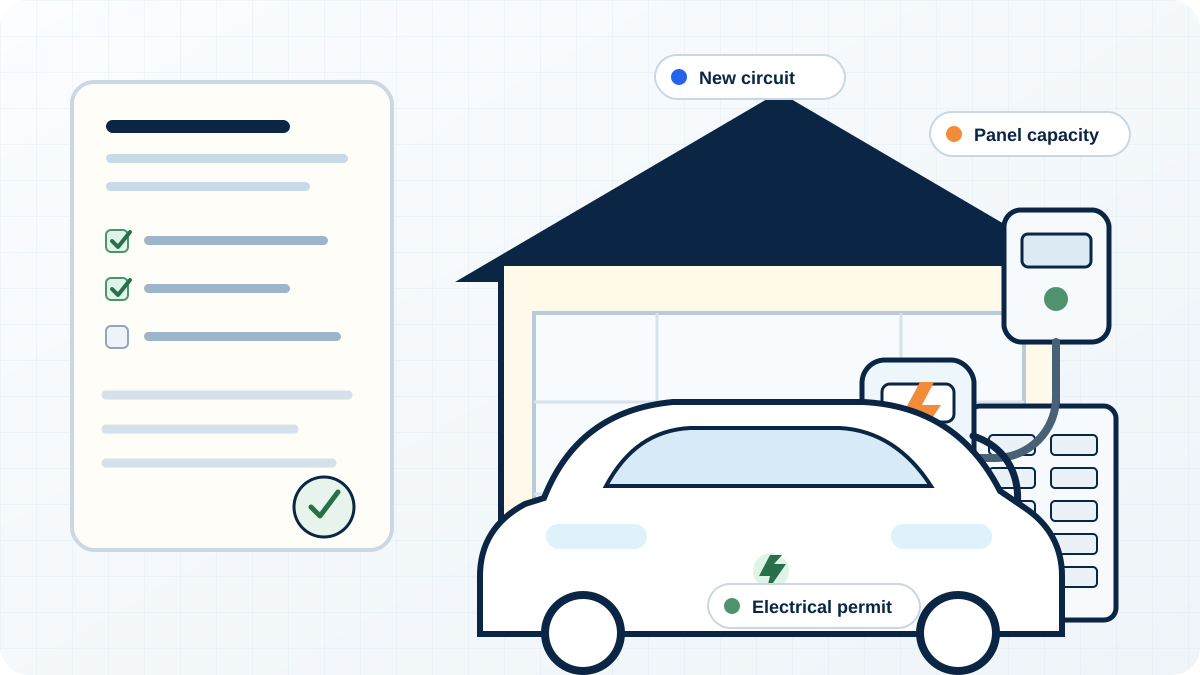
Do You Need a Permit for an EV Charger?
Learn when a home EV charger needs an electrical permit, when panel or service upgrades enter the project, and how inspection and utility coordination work.
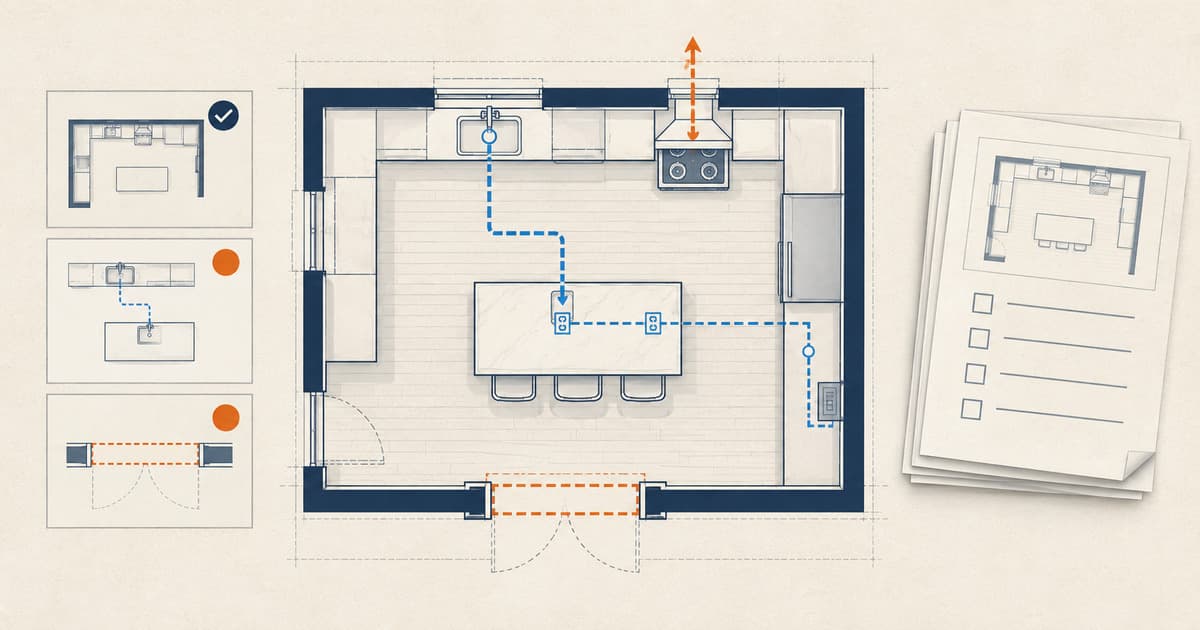
Do You Need a Permit for a Kitchen Remodel?
Learn when cabinets, sinks, islands, appliances, walls, wiring, plumbing, gas, or ventilation can change kitchen-remodel permit and inspection needs.