
Can I Build an ADU in Racine?
Racine, Wisconsin's zoning code has no accessory dwelling unit ordinance. Learn why R1/R2 lots are capped at one dwelling unit, which districts allow a second unit, and how to check before you build.
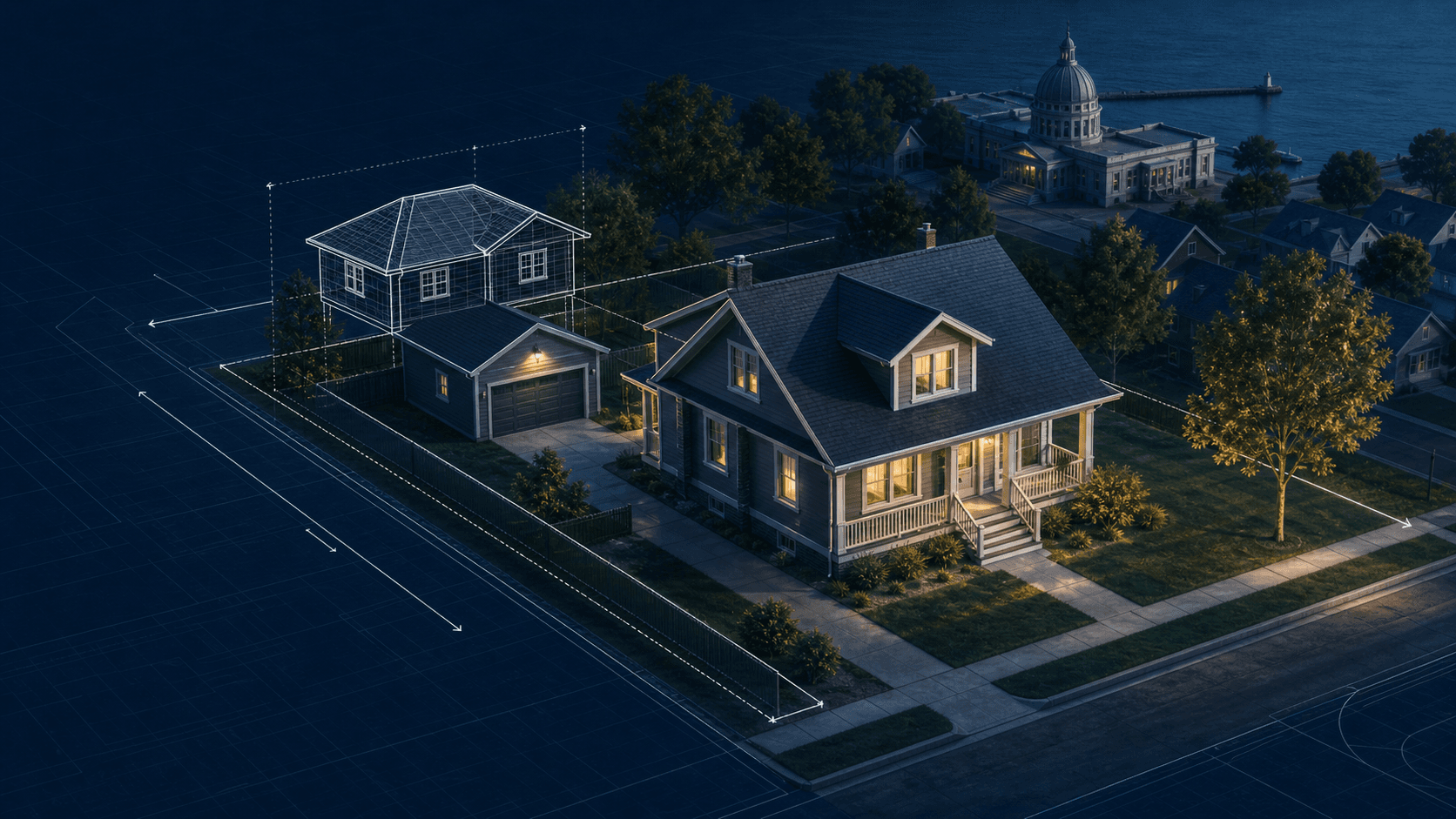
Direct Answer: In the City of Racine, Wisconsin, "accessory dwelling unit" is not a term the zoning code uses, and it is not a use the code lists as permitted in the city's two single-family districts, R1 and R2 (Chapter 114 – Zoning). Racine's code defines a "dwelling, single-family" as a building containing one dwelling unit only, and it separately bars an accessory building built before the main house from being "used for living purposes." A detached garage apartment, a basement in-law suite with its own kitchen, or a backyard cottage that functions as a second, independently rentable home effectively turns the property into a two-family use — and two-family dwellings are only a permitted use as-of-right starting in the R3 Limited General Residence district and up. If your lot is zoned R1 or R2, adding that kind of unit generally requires a zone change, a conditional use permit, or a variance from the Zoning Board of Appeals, not a routine building permit.
Verified against official municipal and state sources: July 13, 2026. Requirements change — confirm with the city before applying.
Key Takeaways
- Racine's Code of Ordinances, Chapter 114 – Zoning, has no definition or dedicated section for "accessory dwelling unit"; the operative concepts are "dwelling, single-family," "dwelling, two-family," and "accessory building, structure or use."
- A "dwelling, single-family" is defined as a building containing one dwelling unit only, so R1 and R2 lots — Racine's two single-family districts — are generally limited to one dwelling unit per parcel.
- Two-family dwellings are a permitted principal use in the R3 Limited General Residence District and the higher-density districts above it, subject to minimum lot-area-per-dwelling-unit standards.
- Accessory buildings constructed before the principal dwelling may not be "used for living purposes," and detached accessory structures are capped at roughly 20 feet in height with limited rear-yard coverage — rules aimed at garages and sheds, not living space.
- Wisconsin lawmakers considered a bill, 2025 Assembly Bill 365, that would have set statewide standards for ADUs and limited how cities like Racine regulate them; it failed to pass in the 2025–2026 session, so local zoning control remains in effect.
- The Planning Division of the Department of City Development reviews zone changes, conditional use permits, and variances — the approval paths a Racine property owner needs for a true second unit outside R3 and up.
The Practical Rule
Racine's zoning ordinance was written before "ADU" became a common planning term, so it doesn't sort projects the way many newer codes do — by a defined "accessory dwelling unit" category with its own size cap, height limit, and owner-occupancy rule. Instead, it asks a blunter question: how many dwelling units does the zoning district allow on this lot, and does what you're proposing create a second one?
If your property is zoned R1 or R2 — the two single-family districts that cover most of Racine's traditional neighborhoods — the code treats the lot as entitled to one dwelling unit. A detached garage, shed, or toolhouse is a permitted accessory use, but none of those structures may be converted into an independently livable unit — its own kitchen, bathroom, and sleeping space functioning apart from the main house — without effectively creating a second dwelling unit, which R1/R2 doesn't allow as-of-right. The same logic applies to a basement or attic conversion built out as a self-contained rental unit rather than extra space for the same household.
If your property is already zoned R3, R4, R5, or R6, the analysis changes: R3 explicitly lists two-family dwellings among its permitted principal uses, subject to the district's minimum square-footage-per-dwelling-unit standards, and the higher-density districts allow more dwelling units still. In those districts, adding a second unit is far more likely to be a straightforward permitted use rather than something that needs a hearing.
What to Check Before You Build
- Confirm your parcel's zoning district. Call the Planning Division of the Department of City Development (262-636-9151, cdvplanning@cityofracine.org) or check the city's zoning map before you plan anything — R1, R2, R3, and the higher-density districts all treat a second dwelling unit differently.
- Read the dwelling-unit math for that district. In R1/R2, expect a one-dwelling-unit-per-lot ceiling; in R3 and up, check the minimum lot area or square footage required per additional dwelling unit under Chapter 114 before assuming a second unit is automatically allowed.
- Decide whether you actually need a separate "dwelling unit." A guest bedroom, home office, or in-law space that shares the home's single kitchen and isn't a separate address is a very different zoning question than a fully independent apartment with its own entrance, kitchen, and utilities.
- Identify the approval path if you're in R1/R2. That likely means a Zone Change Application, a Conditional Use Permit Application, or a Variance/Appeal Application through the Planning Division, with review by the Plan Commission, Common Council, or Zoning Board of Appeals depending on the request.
- Plan for a full building permit and Wisconsin Uniform Dwelling Code review regardless of the zoning outcome. Once a second unit is zoning-approved, its actual construction — kitchen, bathroom, egress windows, smoke/CO detection, energy code — still has to pass through Racine's Division of Building Inspection under the state's Uniform Dwelling Code. See our Racine building permit guide for how that general permit process works.
Racine's Code Doesn't Have an "ADU" Category — Here's What That Means in Practice
Search Racine's zoning ordinance for "accessory dwelling unit" and you won't find it. What you will find, in the definitions section of Chapter 114, are "dwelling unit," "family," "dwelling, single-family," and "dwelling, two-family" — the older generation of terms that most Midwestern zoning codes were built around before the ADU concept spread nationally. The code's "family" definition even caps a household at not more than four unrelated people living together as a single housekeeping unit, a provision that can complicate informal room-rental or co-living arrangements independent of any accessory-structure question.
Because there's no ADU-specific size cap, setback, or owner-occupancy rule to follow, a Racine property owner in R1 or R2 isn't choosing between "ADU allowed" and "ADU not allowed" — they're choosing between staying within the one-dwelling-unit-per-lot rule (a bigger single home, an addition, a non-independent in-law space) or pursuing a formal zoning change to add a second unit. That second path is discretionary: the city can approve, condition, or deny it, and nearby property owners typically get notice and a hearing before the Zoning Board of Appeals or Plan Commission.
Could Wisconsin State Law Change This?
Not currently. During the 2025–2026 legislative session, Assembly Bill 365 would have created statewide standards for accessory dwelling units, including limits on how much a municipality could restrict an ADU's size, design, and fees relative to the main house. The bill did not pass; it failed under Senate Joint Resolution 1 on March 23, 2026. That means, as of this writing, Wisconsin has no statewide ADU statute, and municipalities like Racine set their own second-unit rules entirely through local zoning — the same framework this article describes. For how other states and cities are handling ADUs, see our state-by-state ADU legal breakdown, and watch for a future legislative session if your project depends on a change in state law.
Frequently Asked Questions
Does the City of Racine have an accessory dwelling unit ordinance?
No. Chapter 114 of Racine's Code of Ordinances doesn't define or separately regulate "accessory dwelling units." Whether a second unit is allowed depends on the property's underlying zoning district and its dwelling-unit-per-lot rules.
Can I convert my detached garage into an apartment in Racine?
Not as a routine accessory-building project. Racine's accessory-structure rules bar an accessory building from being used for living purposes if it predates the main house, and turning a garage into a self-contained apartment creates a second dwelling unit, which isn't a permitted use on most R1/R2 lots. See our general guide on converting a garage into an apartment for the zoning issues this raises nationally, then confirm Racine specifics with the Planning Division.
What zoning districts in Racine allow a second dwelling unit?
R3 Limited General Residence and the higher-density districts above it (R4, R5, R6) permit two-family and multi-family dwellings as principal uses, subject to minimum lot-area or square-footage-per-unit requirements in Chapter 114. R1 and R2 do not.
Is there a size or design limit for ADUs in Racine, like a percentage of the main house?
Racine's code doesn't set an ADU-specific size or design limit because it doesn't recognize ADUs as a distinct use category. Instead, the limiting factor is whether a second dwelling unit is allowed at all in your zoning district.
Does the Wisconsin Uniform Dwelling Code let me build an ADU regardless of city zoning?
No. The Wisconsin Uniform Dwelling Code sets statewide construction standards for how a one- or two-family dwelling has to be built, but it doesn't override local zoning decisions about how many dwelling units are allowed on a lot. Racine's zoning code, not the UDC, decides whether a second unit is legal in the first place.
Who should I contact before designing a second unit on my Racine property?
Start with the Planning Division of the Department of City Development (262-636-9151, cdvplanning@cityofracine.org) to confirm your zoning district and, if you're in R1 or R2, to ask what a zone change or conditional use application would involve.
Verify Your Address
Racine's rules for a second dwelling unit come down to which zoning district your specific lot sits in — something a citywide article can't confirm for you. Before you draw plans or talk to a contractor, run a permit check or review GovCodex's Racine permit catalog to see what your address's zoning district actually allows.
Related Articles
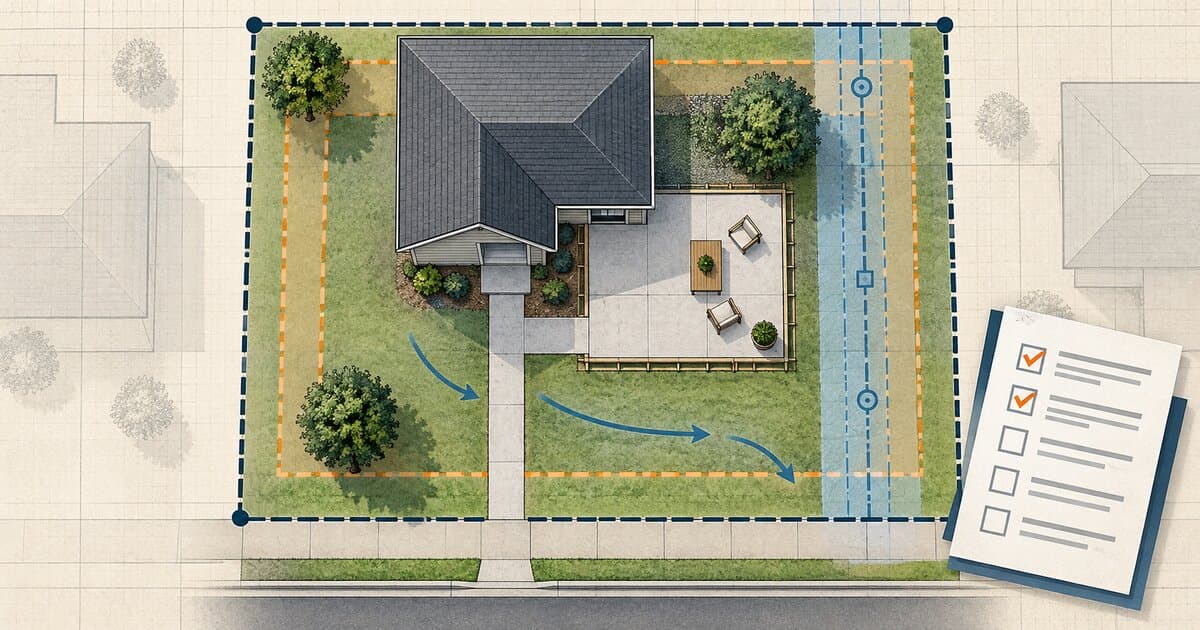
Do You Need a Permit to Pour Concrete? Patios, Slabs & Walkways
Pouring concrete may be permit-exempt or regulated depending on whether it is a patio, slab, walkway, driveway, structural base, or right-of-way work.
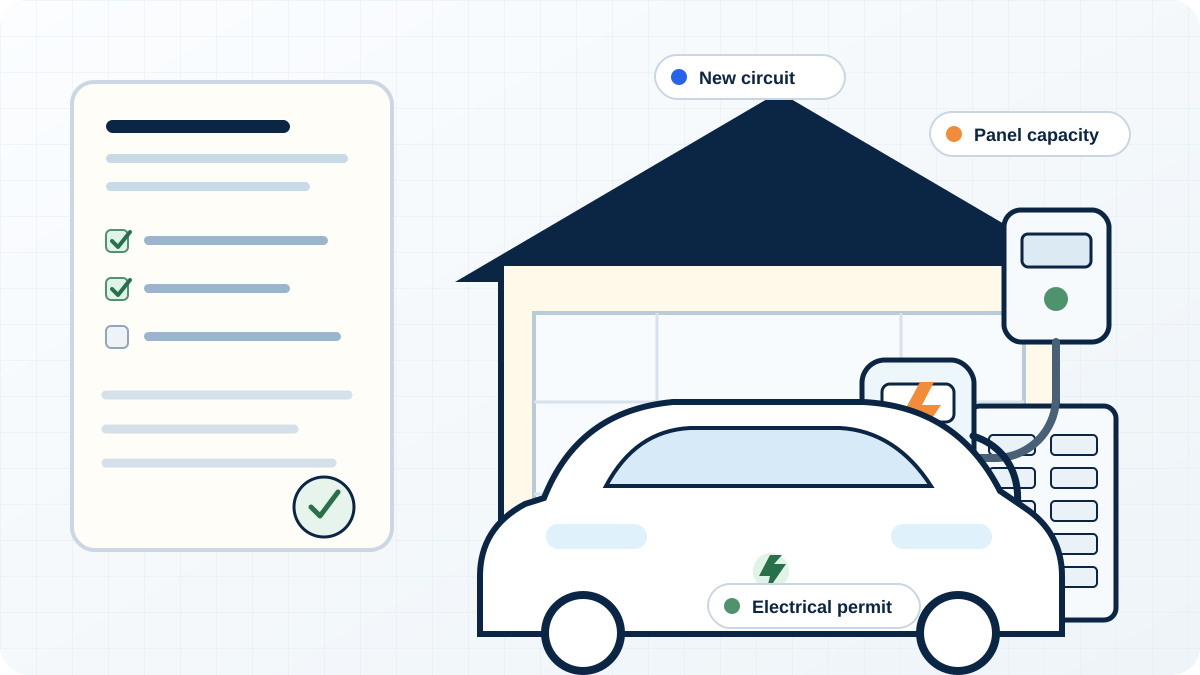
Do You Need a Permit for an EV Charger?
Learn when a home EV charger needs an electrical permit, when panel or service upgrades enter the project, and how inspection and utility coordination work.
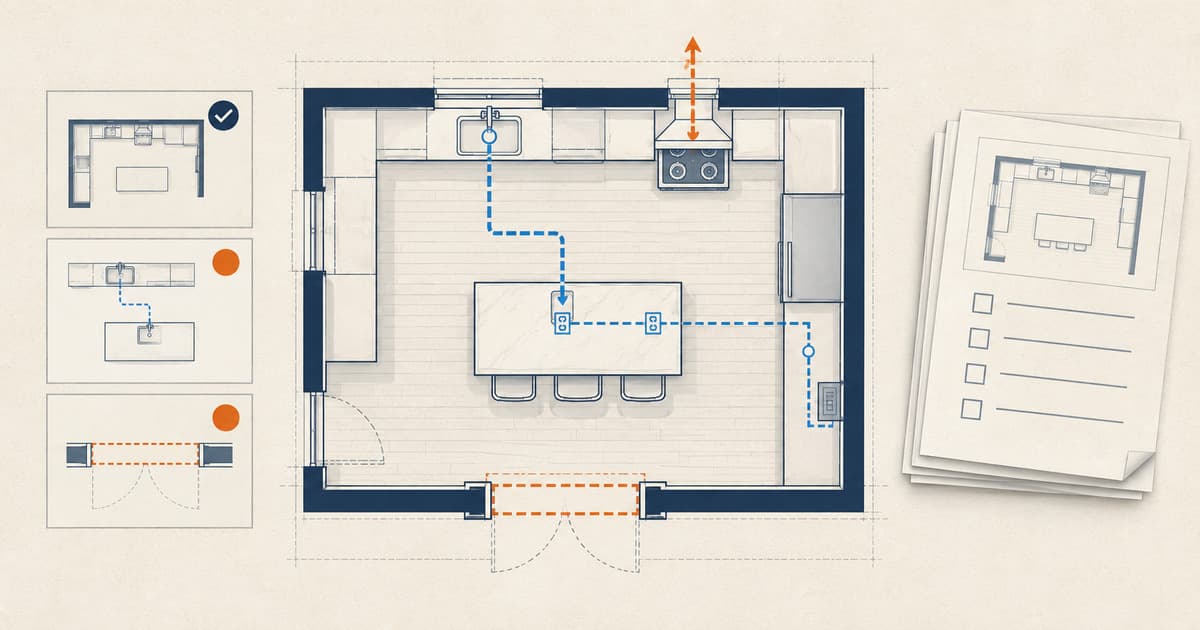
Do You Need a Permit for a Kitchen Remodel?
Learn when cabinets, sinks, islands, appliances, walls, wiring, plumbing, gas, or ventilation can change kitchen-remodel permit and inspection needs.