
Racine Building Permit Guide (2025-2026)
How to get a building permit in Racine, Wisconsin: which department issues permits, the statewide Uniform Dwelling Code, zoning under Chapter 114, real 2026 fees, contractor rules, and inspections.

Direct Answer: In Racine, Wisconsin, the Division of Building Inspection, part of the Department of City Development, issues every building, fence, deck, garage, roofing, siding, electrical, plumbing, and HVAC permit inside city limits. One- and two-family homes are built to the statewide Wisconsin Uniform Dwelling Code (UDC, SPS 320-325); zoning use, height, and yard requirements come from Chapter 114 (Zoning) of the Racine Municipal Code, administered by the City Development Department's Planning Division. Applications go through the Building Division at 730 Washington Avenue using project-specific paper forms — separate applications exist for fences, decks, garages/sheds, roofing, siding, pools, and new construction — each paired with a site plan and, for most structural work, a construction plan. Fees follow the city's published 2026 Building Permit Fee Schedule, and every permit is valid for 18 months from issuance under Sec. 18-93 of the Municipal Code.
Verified against official municipal and state sources: July 13, 2026. Requirements change — confirm with the City of Racine Division of Building Inspection before applying.
Key Takeaways
- The Division of Building Inspection, housed inside the Department of City Development at 730 Washington Avenue, issues every building-related permit inside the City of Racine.
- One- and two-family residential construction follows the statewide Wisconsin Uniform Dwelling Code (SPS 320-325); decks specifically reference the State of Wisconsin Deck Code (SPS 325) on the city's own deck permit form.
- Racine uses separate paper applications by project type — Fence, Deck/Pergola/Pavilion, and Garage/Shed/Accessory Building among them — each requiring a dimensioned site plan.
- The city's 2026 Building Permit Fee Schedule publishes real dollar figures: for example, a fence permit is a flat $100 per site, and a garage or accessory structure runs $300 with a slab or $100 without one.
- Zoning use, setbacks, and lot coverage sit in Chapter 114 (Zoning) of the Racine Municipal Code — confirm your parcel's district and exact dimensional standards with the Planning Division before designing a project.
- Every building permit in Racine is valid for eighteen months from issuance under Sec. 18-93, and starting work without one can result in double permit fees.
- Owner-occupants of one- and two-family homes may pull their own permit, but any hired contractor must carry a current Wisconsin Dwelling Contractor (DC) and Dwelling Contractor Qualifier (DCQ) credential, which the city verifies on the application.
Scope note: This article covers permitting inside the City of Racine only. Neighboring municipalities — Mount Pleasant, Caledonia, Sturtevant, Franksville, and unincorporated Racine County — run their own building departments and, in most cases, their own zoning codes, even though one- and two-family construction across all of them follows the same statewide UDC.
Which Department Issues Permits in Racine?
The Division of Building Inspection sits inside the city's Department of City Development at 730 Washington Avenue, Racine, WI 53403 (262-636-9171). The division administers and enforces the city and state building, heating, plumbing, electrical, and zoning codes, and it publishes and processes every permit application listed on its Residential Permits page — from new construction and additions down to fences, decks, garages, roofing, siding, and pools. Zoning questions, development review, and the zoning map are handled by the department's Planning Division (262-636-9151), which sits on the same third floor. Business licensing and occupancy-adjacent permits (liquor, pet, and other clerk-issued licenses) are a separate function of the City Clerk & Treasurer's office and are not part of the building permit process.
Because the Building Division uses project-specific PDF applications rather than a single universal form, the fastest way to confirm you have the right paperwork is to start from the department's Residential Permits page and select the application that matches your project.
What Building Code Applies — UDC vs. Commercial Code?
Wisconsin does not allow individual cities to write their own residential building code. One- and two-family dwellings in Racine, as everywhere else in the state, are governed by the Wisconsin Uniform Dwelling Code (UDC, primarily SPS 320-325), a statewide standard enforced locally by the city's certified building inspectors. Racine's own deck permit application points applicants directly to the State of Wisconsin Deck Code (SPS 325) for footing size, ledger attachment, and structural requirements, which is a useful example of how the city defers to the state code for the engineering details rather than writing its own.
Commercial buildings and any structure that isn't a one- or two-family dwelling fall under the Wisconsin Commercial Building Code (SPS 361-366), based on the International Building Code as amended by the state. The full set of adopted Safety and Buildings Division administrative codes is indexed on the Wisconsin Legislature's code library. Local zoning — Chapter 114 of the Racine Municipal Code — applies on top of whichever building code governs the structure, controlling use, height, lot coverage, and setbacks regardless of whether the building itself is inspected under the UDC or the commercial code.
What Work Requires a Permit — and What's Exempt?
Racine's Building Division lists permit applications for a long roster of project types, and its published forms do not describe a general size or cost threshold below which small residential projects are automatically exempt. Based on the city's own application forms and fee schedule, the following all require a permit regardless of size, with the flat or formula-based fee shown on the 2026 Building Permit Fee Schedule:
- New construction, additions, and alterations to one- and two-family homes, multi-family buildings, and commercial buildings.
- Accessory structures — garages, sheds, and chicken coops — using the Garage/Shed/Accessory Buildings application.
- Decks, pergolas, pavilions, gazebos, and porches, using the Pergola/Pavilion/Deck application.
- Fences, using the Fence Permit application, which asks for the fence's location (front, side, rear, or other yard) and height but does not describe a minimum-height exemption.
- Roofing (residential and commercial, separate applications), siding, swimming pools, curb cuts, paving, tents, awnings, signs, communication antennas, and demolition/razing.
- Electrical, plumbing, and HVAC work of any kind, each on its own permit application.
The fee schedule's "Start Without Permit" line item — a doubled permit fee for the project — signals that the city treats unpermitted work as a real enforcement issue rather than a formality. Because Racine's public forms don't spell out a small-project carve-out the way some neighboring cities do, confirm directly with the Building Division at 262-636-9171 before assuming any project — even a small fence or a slab-free shed — is exempt.
How Do I Apply for a Racine Building Permit?
- Confirm your address is inside Racine city limits. Some Racine-area addresses are actually in Mount Pleasant, Caledonia, or unincorporated Racine County, each with its own building department.
- Download the application that matches your project from the Building Division's Residential Permits page — separate forms exist for new construction, general alterations, fences, decks/pergolas/pavilions, garages/sheds, roofing, siding, pools, and demolition.
- Prepare a dimensioned site plan showing the proposed work's location on the lot relative to property lines, plus a construction plan for structural projects (decks, garages, additions, new construction).
- Attach contractor credentials. If a contractor performs the work, attach a copy of their Wisconsin Dwelling Contractor (DC) and Dwelling Contractor Qualifier (DCQ) numbers; if the owner-occupant acts as their own general contractor, sign the Cautionary Statement to Owners Obtaining Building Permits required under Wis. Stat. § 101.65(1r).
- Submit the application with payment to the Division of Building Inspection at 730 Washington Avenue; the fee is calculated from the 2026 Building Permit Fee Schedule based on project type, square footage, or construction value.
- Schedule inspections with the Building Division as work proceeds, and keep the issued permit visible on site — it remains valid for eighteen months from issuance per Sec. 18-93.
What Does a Permit Cost?
Racine publishes an itemized 2026 Building Permit Fee Schedule rather than a single flat "permit fee." Selected figures, current as of this schedule:
| Project type | Fee | Minimum |
|---|---|---|
| New residential (1-2-family or multi-family) | $0.50 per sq ft | $100 |
| Residential addition | $0.50 per sq ft | $100 |
| Residential alteration | $14.00 per $1,000 of construction value | $100 |
| Accessory structure (garage/shed), with slab | Flat $300 | — |
| Accessory structure (garage/shed), without slab | Flat $100 | — |
| Deck, pergola, pavilion, gazebo, porch | $14.00 per $1,000 of project cost | $100 |
| Fence | Flat $100 per site | — |
| Residential roofing | $100 per building | — |
| Siding | $100 per building | — |
| Swimming pool | $100 per pool | — |
| Plan review (all buildings) | $0.17 per sq ft | $100 |
The schedule also lists specific fees for HVAC, electrical, plumbing (see the individual permit applications), erosion control, occupancy permits, re-inspections, and building moves or wrecking. Fee schedules are revised periodically — confirm the current figures with the Building Division at 262-636-9171 or against the posted PDF before budgeting a project. For general background on how municipalities typically structure permit fees, see how much does a building permit cost.
What About Zoning & Setbacks?
Meeting the building code is only half the picture. A project also has to satisfy Chapter 114 (Zoning) of the Racine Municipal Code, which sets the zoning districts, permitted uses, and dimensional standards — including front, side, and rear yard setbacks, maximum lot coverage, and building height — that apply to your specific parcel. These standards vary by zoning district, so a setback that applies to one Racine neighborhood may not apply to another. The Building Division's own fence and deck applications ask applicants to identify the yard (front, side, or rear) where the structure will sit precisely because setback and location rules differ by yard and by district.
Rather than quote a single citywide setback figure that may not apply to your lot, confirm your parcel's zoning district and dimensional requirements with the City Development Department's Planning Division (262-636-9151) or by reviewing Chapter 114 directly, before finalizing a site plan. For general background on how setbacks work, see what is a setback in zoning.
Do I Need a Licensed Contractor?
Racine's own permit applications answer this directly: an owner-occupant of a one- or two-family home may act as their own general contractor, but must sign the city's Cautionary Statement to Owners Obtaining Building Permits, a disclosure required statewide under Wis. Stat. § 101.65(1r) whenever a municipality enforces the Uniform Dwelling Code. If a contractor performs the work instead, the application requires a copy of that contractor's Wisconsin Dwelling Contractor (DC) and Dwelling Contractor Qualifier (DCQ) numbers, issued by the state Division of Industry Services — Racine does not maintain a separate local contractor license on top of the state credential. General building alterations similarly require proof of the contractor's licensing. All contractors, including any subcontractors, must hold the appropriate state credential for their trade.
Projects in buildings built before 1978 that disturb 6 square feet or more of interior paint per room, 20 square feet or more of exterior paint, or that involve window work trigger Lead-Safe Renovation requirements under Wisconsin's ch. DHS 163, administered by the Department of Health Services. Projects disturbing one acre or more of soil are separately subject to ch. NR 151 erosion control and stormwater management standards, both of which are flagged directly on the city's own permit applications.
Inspections & Permit Validity
Once the Building Division issues a permit, the project moves through inspections tied to its scope — for example, footing, framing, and rough mechanical inspections before areas are enclosed, followed by a final inspection. Per Sec. 18-93 of the Municipal Code, every building permit issued by the city remains valid for eighteen months from its date of issuance; work that isn't completed and finalized within that window may need to be re-permitted. Starting work before a permit is issued, or performing work that was never permitted, exposes the property to double the normal permit fee under the city's published fee schedule. For inspection scheduling and current office hours, contact the Division of Building Inspection directly at 262-636-9171.
Frequently Asked Questions
Does every fence in Racine need a permit?
Racine's Fence Permit application does not publish a minimum-height or minimum-length exemption, and the city's fee schedule lists a flat $100 fence permit fee per site. Treat any new or replacement fence as requiring a permit and confirm with the Building Division (262-636-9171) if you believe your project might qualify for an exception.
How much does a garage or shed permit cost in Racine?
Per the 2026 Building Permit Fee Schedule, an accessory structure permit is a flat $300 if it includes a slab and $100 if it does not; a slab-only permit is also $100, and alterations to an existing accessory structure are $100.
Can I pull my own building permit and do the work myself in Racine?
Yes, if you are the owner-occupant of a one- or two-family home. You must sign the city's Cautionary Statement acknowledging the risks of hiring an unbonded or uninsured contractor, per Wis. Stat. § 101.65(1r). If you hire a contractor instead, that contractor must hold current Wisconsin Dwelling Contractor and Dwelling Contractor Qualifier credentials.
What building code applies to a new house in Racine?
The statewide Wisconsin Uniform Dwelling Code (SPS 320-325), enforced locally by the Division of Building Inspection. Wisconsin law does not let cities substitute their own residential building code, though Racine's local zoning code (Chapter 114) still governs use, height, and setbacks on top of it.
How long is a Racine building permit valid?
Eighteen months from the date of issuance, per Sec. 18-93 of the Racine Municipal Code.
What happens if I build without a permit in Racine?
The city's fee schedule specifically lists a "Start Without Permit" penalty of double the normal permit fee for the project, in addition to whatever inspection and compliance issues arise from unpermitted work.
Does this guide apply to Mount Pleasant or Caledonia?
No. Mount Pleasant, Caledonia, Sturtevant, and unincorporated Racine County each operate their own building department, permit fees, and (in most cases) zoning code, even though one- and two-family construction throughout Racine County follows the same statewide Uniform Dwelling Code.
Verify the Rules for Your Property
Permit forms, fees, and zoning setbacks can change, and the exact numbers that apply depend on your parcel's zoning district and project scope. Before you apply, check GovCodex's Racine permit catalog for the current permit types tied to your project, or run a permit check to see what your specific address and project actually require.
Related Articles
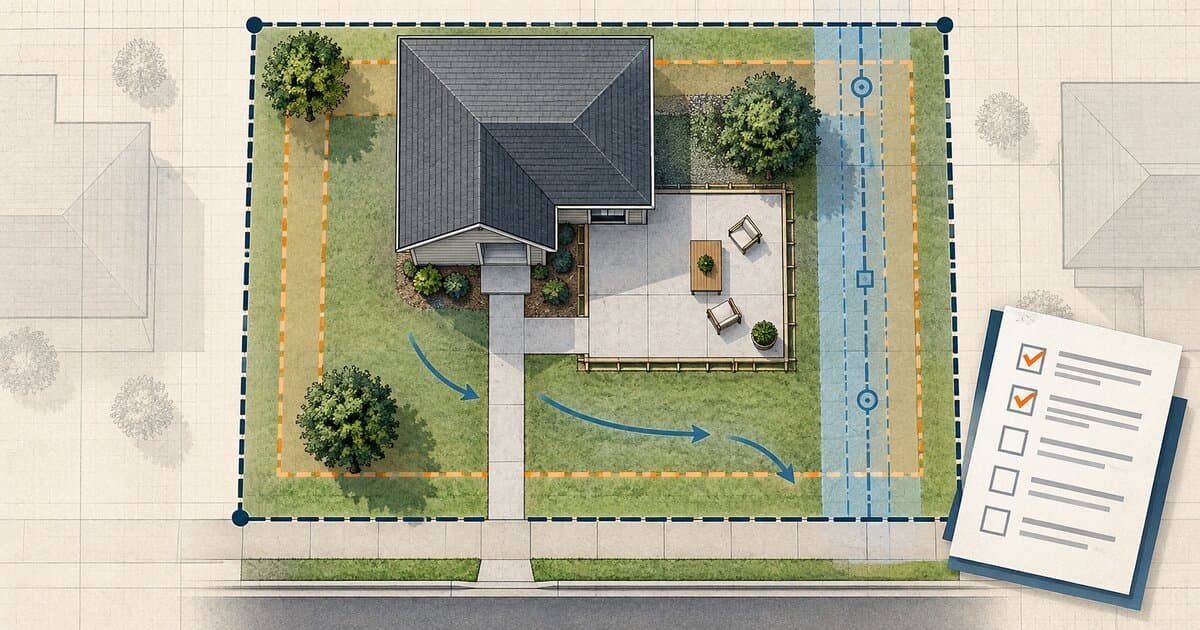
Do You Need a Permit to Pour Concrete? Patios, Slabs & Walkways
Pouring concrete may be permit-exempt or regulated depending on whether it is a patio, slab, walkway, driveway, structural base, or right-of-way work.
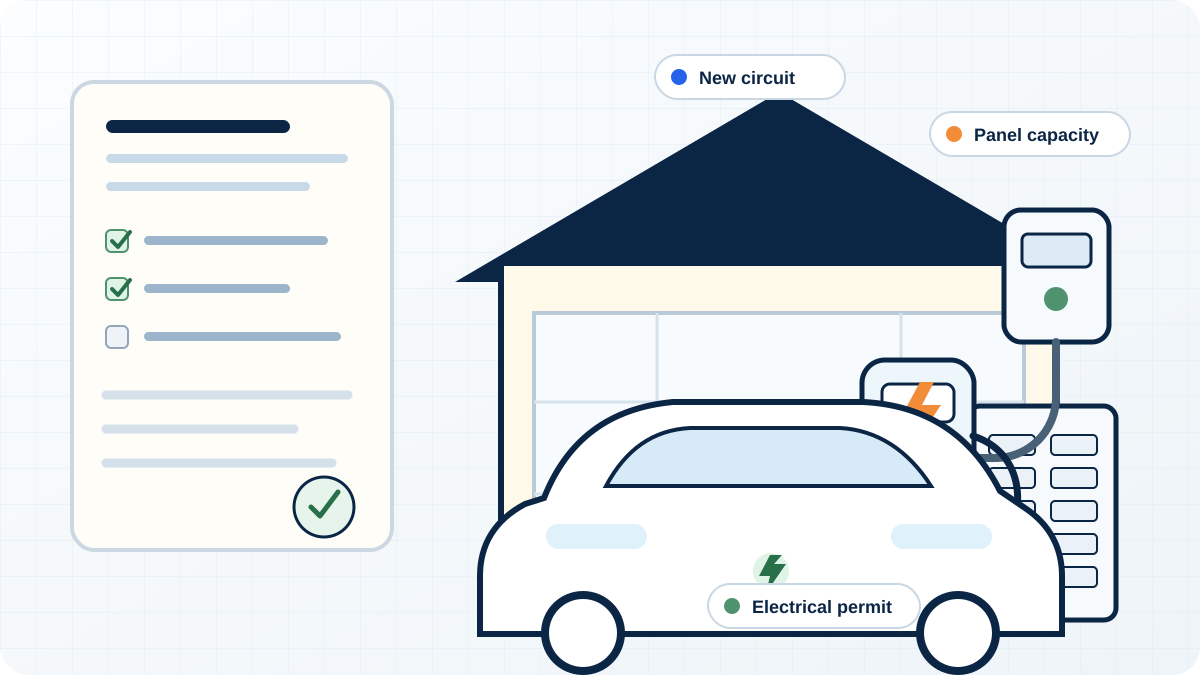
Do You Need a Permit for an EV Charger?
Learn when a home EV charger needs an electrical permit, when panel or service upgrades enter the project, and how inspection and utility coordination work.
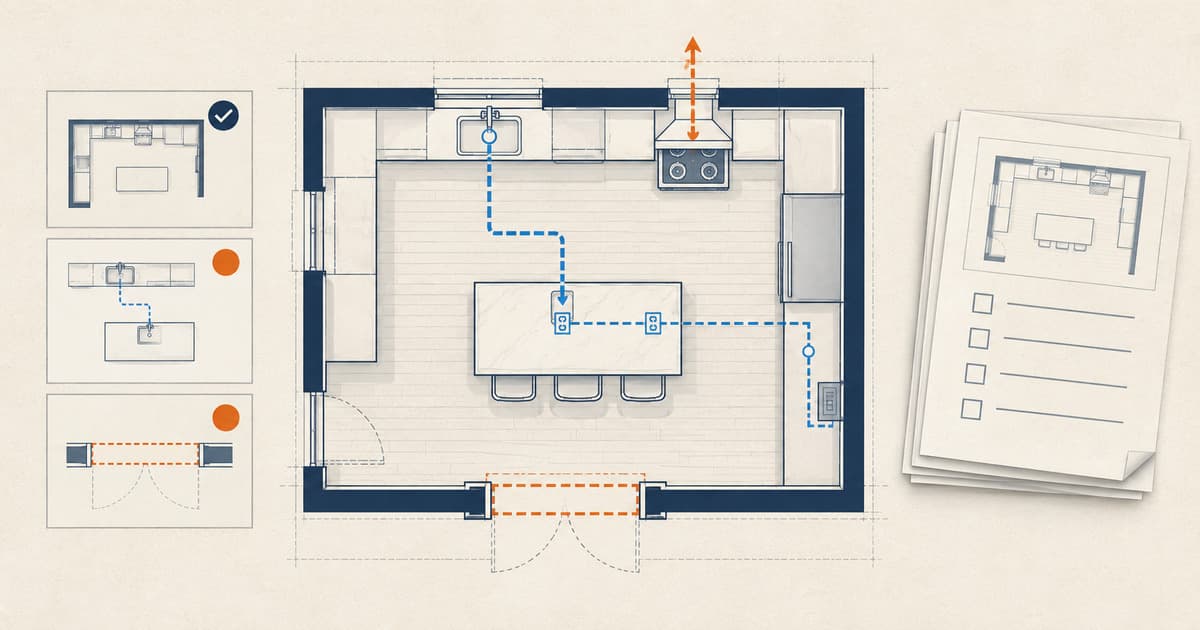
Do You Need a Permit for a Kitchen Remodel?
Learn when cabinets, sinks, islands, appliances, walls, wiring, plumbing, gas, or ventilation can change kitchen-remodel permit and inspection needs.