
Getting a Building Permit in Saint Paul: DSI, the State Code, and What Triggers a Permit
A city-specific guide to how Saint Paul's Department of Safety and Inspections issues building and trade permits under the Minnesota State Building Code, what work triggers a permit, and where zoning and historic review fit in.
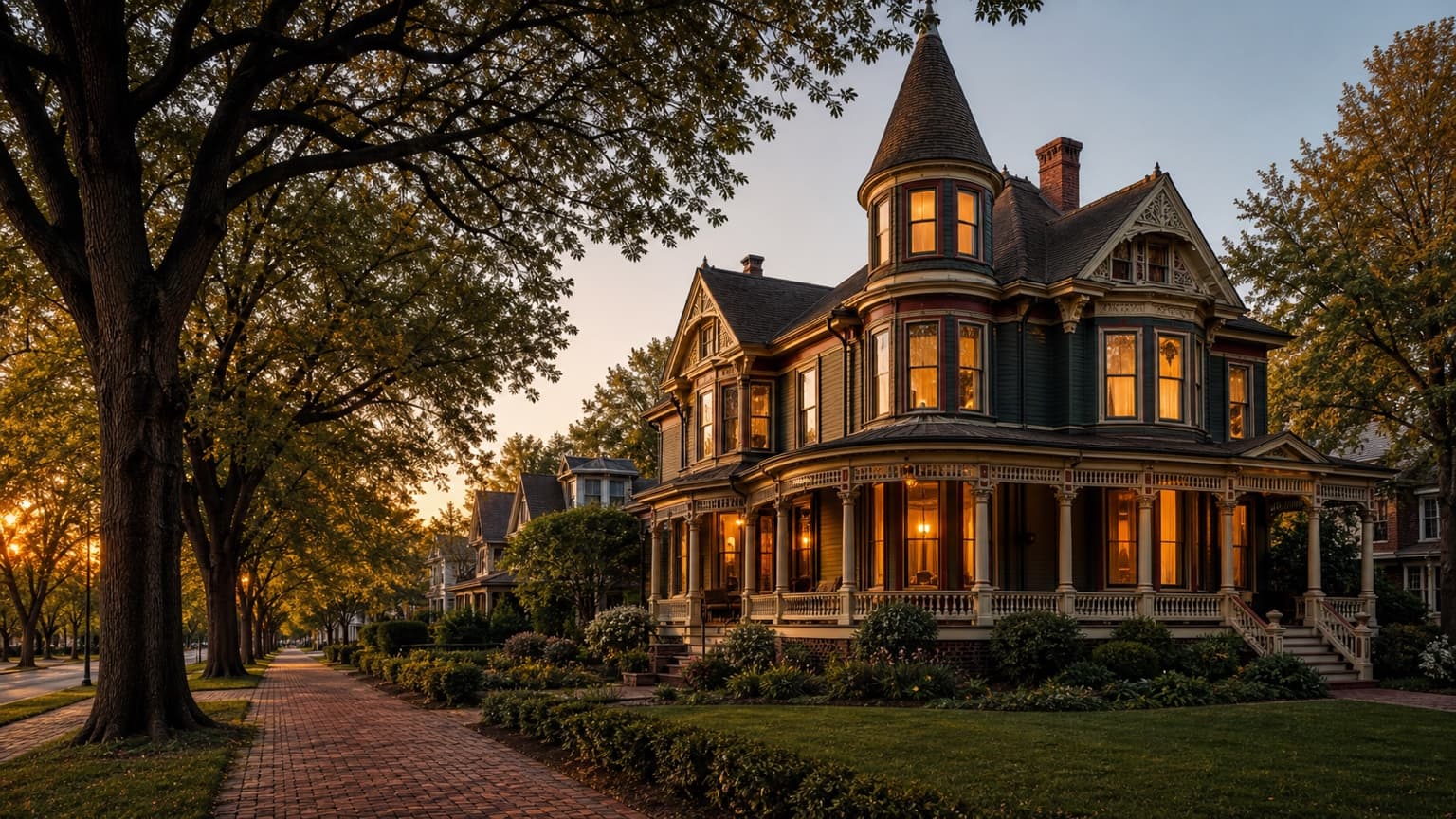
Direct Answer: In the City of Saint Paul, the Department of Safety and Inspections (DSI) issues building permits and enforces the Minnesota State Building Code (Minnesota Rules chapters 1300–1370) together with the city's own Legislative Code. Most structural work, additions, decks, accessory structures over 200 square feet, retaining walls over 4 feet, and larger pools require a permit, while some minor repairs and finish work don't. Electrical, plumbing, mechanical, and warm-air work each need a separate trade permit, generally pulled by a licensed contractor. Properties inside a Heritage Preservation District or Site also need Heritage Preservation Commission approval before exterior work proceeds. This guide covers Saint Paul only — other Ramsey County cities run their own permitting programs with different rules.
Verified against official City of Saint Paul sources: July 10, 2026. Requirements change — confirm with DSI before applying.
Key Takeaways
- DSI (Department of Safety and Inspections) is Saint Paul's permitting authority; it processes more than 32,000 permits a year across building, electrical, plumbing, mechanical, and elevator work.
- Saint Paul enforces the Minnesota State Building Code (Minnesota Rules chapters 1300–1370) plus local ordinances — DSI states plainly that "the City regulates construction through local ordinance and the Minnesota building code."
- A general building permit is required for structural work, and for non-structural repairs once labor-plus-materials value exceeds $500, per DSI's published permit-requirement guidance.
- Trade permits (electrical, plumbing/gas, mechanical, warm air, elevator) are separate from the building permit and are handled by DSI's trade sections; electrical work is also governed by Minnesota's statewide contractor licensing rules.
- Applications, payments, and inspection scheduling run through PAULIE, the city's online permitting system.
- Work on a property in a locally designated Heritage Preservation District or Site needs Heritage Preservation Commission approval in addition to a building permit.
What Is DSI, and Why Does It Issue Saint Paul's Permits?
DSI — the Department of Safety and Inspections — is the city department responsible for construction permitting, inspections, and code compliance in Saint Paul. Its own description calls it the city's regulatory organization focused on safety, wellness, and neighborhood vitality, and notes it processes more than 32,000 permits annually across building, electrical, plumbing, mechanical, and elevator categories. DSI's Building Plan Review section reviews proposed construction for compliance with state code and local ordinance and coordinates approval with electrical, HVAC, and plumbing disciplines before a permit is issued, according to the department's building permits and inspections page. The DSI permit desk is located at 375 Jackson Street, Suite 220, Saint Paul, MN 55101, per the department's own fee schedule cover sheet.
For a broader explainer on how building, zoning, electrical, and plumbing permits differ as categories, see Building vs. Zoning vs. Electrical vs. Plumbing Permits.
Does Saint Paul Follow Its Own Building Code, or the State's?
Both, in a specific way. Minnesota law directs the Department of Labor and Industry to administer a statewide Minnesota State Building Code that sets the minimum construction standard for the entire state, but that code isn't enforceable by a city unless the city has adopted it by local ordinance. Saint Paul has done so: DSI's own site states that "the City regulates construction through local ordinance and the Minnesota building code," per its building and construction page. The state code itself is organized as Minnesota Rules chapters 1300 through 1370 (administration, the building code proper, the residential code, electrical code, mechanical code, energy code, accessibility, and related chapters), and municipalities that had adopted it by 2008 are required to keep administering and enforcing it, per Minnesota Statutes section 326B.121. In practice, that means Saint Paul's plan reviewers check your project against both the state code and the city's own Legislative Code chapters. For a deeper dive into how the state code itself works statewide, see Minnesota State Building Code, Explained.
What Work Actually Needs a Permit?
DSI publishes a specific reference, "When Is a Permit Required?," citing Minnesota Rules section 1300.0120 and sections 33.03 and 73.04(4) of the Saint Paul Legislative Code. The table below summarizes its current thresholds; always check the source document for your specific project, since DSI notes these are general circumstances and advises contacting its office for a determination.
| Project | Permit required? | Threshold / note |
|---|---|---|
| New construction, additions, structural alterations to residences, garages, carports | Yes | General building permit |
| Non-structural remodeling or repair | Yes, once value exceeds $500 | Labor value plus cost of materials combined |
| Detached accessory structure (shed, playhouse) | Yes, if over 200 sq. ft. | Under 200 sq. ft. is exempt from a building permit but must still meet zoning setbacks/lot coverage |
| Deck or platform | Yes, with a narrow exception | Exempt only if unattached, has no frost footings, isn't a door landing, and is 30 in. or less above grade; anything over 24 in. above grade must still meet zoning setbacks regardless of permit status |
| Retaining wall | Yes, if supporting more than 4 ft. of earth | Walls under 4 ft. are exempt |
| Swimming pool | Yes, if capacity exceeds 5,000 gallons (in-ground or above-ground) | Small prefabricated pools (24 in. or less deep, 5,000 gal. or less, fully above ground) are exempt |
| Sidewalks and driveways | No building permit | New or expanded driveways still need a zoning review |
| Painting, wallpapering, tiling, cabinets, countertops | No | Finish work is exempt |
| Fences | Varies | See DSI's separate fence permit information rather than the general building-permit thresholds |
Heritage Preservation districts add an extra approval step, not a lower value threshold: DSI's guidance requires Heritage Preservation Commission approval in addition to the building permit for exterior work in a Heritage Preservation District or Site whenever that work otherwise triggers a permit under the standard rules above.
Who Pulls Electrical, Plumbing, Mechanical, and Warm-Air Permits?
Building permits cover the structure itself; work on electrical, plumbing, piping, sheet metal, or heating and air conditioning systems requires separate trade permits, per DSI's permit-requirement guidance. DSI's electrical permits and inspections page offers separate application paths for licensed contractors and for homeowners, and directs applicants to the Minnesota Department of Labor and Industry for electrical licensing rules.
Minnesota licenses electrical contractors statewide through the Department of Labor and Industry. Generally, only a licensed, bonded, and insured electrical contractor (or its employees) may perform electrical work on commercial buildings, apartments, condos, and most townhomes, per DLI's homeowner electrical permit guidance. A narrow homeowner exemption lets an owner-occupant pull a permit and personally perform electrical work on a home they own and live in — it does not extend to rental, multi-unit, or investment property, and it does not let anyone else, including family members, do the work under that permit. Note also that a state contractor's license does not substitute for city licensing: DSI's own guidance states "State of Minnesota contractor's licenses do not exempt contractors from city licenses requirements."
DSI also issues plumbing/gas, mechanical, warm-air/ventilation, and elevator trade permits, plus a separate stucco/plaster permit for exterior plaster, stucco, veneer, and spray-applied fireproofing work, per the same guidance document.
How Do You Apply for a Saint Paul Building Permit?
- Confirm your project actually needs a permit using DSI's "When Is a Permit Required?" guidance, or call DSI's Plan Review section.
- Check zoning first. DSI's zoning permits and land uses page states that "zoning approval is required for: building permits, licenses, change in building use, change in occupancy type, signage" — and notes zoning decisions are typically made within 60 days of application, though extensions are permitted.
- If your property is in a Heritage Preservation District or Site, start the Heritage Preservation design review process before or alongside your building permit application.
- Pick the right permit type — a general building permit, the contractor-only Contractor Express permit for qualifying exterior work like re-roofing or re-siding that doesn't require plan review, or the applicable trade permit.
- Submit through PAULIE, the city's online system for permits, licenses, and inspections, or apply in person or by mail at DSI, 375 Jackson Street, Suite 220.
- Pay the required fees and schedule inspections as work proceeds — a permit isn't complete until an inspector has approved the final inspection, per DSI's building permits page.
For a general pre-application checklist that applies beyond Saint Paul, see Permit Application Checklist for Home Renovations.
What Role Does Zoning Play in Getting a Permit?
Zoning in Saint Paul is governed by Title VIII (Zoning Code) of Part II (Legislative Code) of the city's Legislative Code, which covers zoning districts, use standards, density and dimensional requirements, nonconforming uses, and administration and enforcement. DSI's own zoning page confirms that zoning approval is a prerequisite for a building permit, and that city staff review plans for new buildings and additions to confirm compliance with setback, lot coverage, and use standards, with certain larger projects — including new multifamily buildings of three or more units and new commercial buildings — routed through a coordinated site-plan review, per the zoning permits and land uses page. In practice, several of the "exempt" items in the permit table above (small sheds, low decks, driveways) are still subject to zoning setback and lot-coverage rules even when no building permit is required.
Does a Historic District Change the Process?
Yes. Saint Paul has more than 75 individually designated historic properties and 9 locally designated historic districts, overseen by the Heritage Preservation Commission (HPC), a 13-member body created by city ordinance in 1976 that advises the mayor and city council on heritage preservation matters. For any designated heritage site or structure inside a locally designated district, HPC approval is required for exterior projects, per the HPC design review applications page. Projects that comply with existing design guidelines may qualify for a faster administrative review; more complex or non-compliant proposals go to the full Commission for a public hearing. DSI's permit guidance requires HPC sign-off alongside the building permit for exterior work in these districts, using the same permit thresholds — including the $500 value threshold — that apply elsewhere in the city.
What Does a Building Permit Cost?
Saint Paul's building permit fee is set out in Section 33.04 of the Legislative Code and published as a Building Permit Fee Schedule by DSI. As of that document's effective date (February 25, 2023), the fee is calculated on a sliding scale tied to the declared value of the work, a plan-review fee applies for valuations above $1,000 (calculated as a percentage of the permit fee), and a state surcharge applies under Minnesota Statute 326B.148. The schedule also notes that other charges — such as sewer availability (SAC), parkland dedication, or zoning fees — may apply on top of the base building permit fee and are not included in that calculation.
Because published fee schedules are revised periodically and this one may not reflect the current effective schedule, do not rely on any dollar figure from this article for budgeting — confirm the current fee schedule directly with DSI or on stpaul.gov before applying.
Frequently Asked Questions
Do I need a permit to re-roof or re-side my house in Saint Paul? Yes. Re-roofing, re-siding, and similar exterior work are covered under DSI's Contractor Express Building Permit program for qualifying contractor-performed work that doesn't require plan review, or under a general building permit otherwise. If the property is in a Heritage Preservation District or Site, HPC approval is also required regardless of project value.
Can I do my own electrical work in Saint Paul? Only within Minnesota's narrow homeowner exemption: you must own and occupy the home, personally and physically perform all the work yourself, and the exemption doesn't apply to rental, multi-unit, or investment property, per Minnesota DLI's homeowner electrical permit guidance. You'll still need to pull an electrical permit from DSI.
Where do I actually apply for a permit? Through PAULIE, the city's online permitting, licensing, and inspection-scheduling system, or in person or by mail at DSI, 375 Jackson Street, Suite 220, Saint Paul, MN 55101.
What if my property is in a historic district? Contact HPC staff before you plan exterior work. Per DSI's guidance, a building permit and HPC approval are both required for exterior work or repairs on a designated heritage property once that work meets the standard building-permit thresholds described above, including the $500 value threshold. Start with the HPC design review applications page.
Verify the Rules for Your Property
Permit thresholds, fee schedules, and code editions change, and this guide reflects what was published on official Saint Paul sources as of July 10, 2026. For rules specific to your parcel — zoning district, setbacks, historic status, and which permits your project triggers — check GovCodex's Saint Paul permit catalog or run a permit check before you apply.
Related Articles
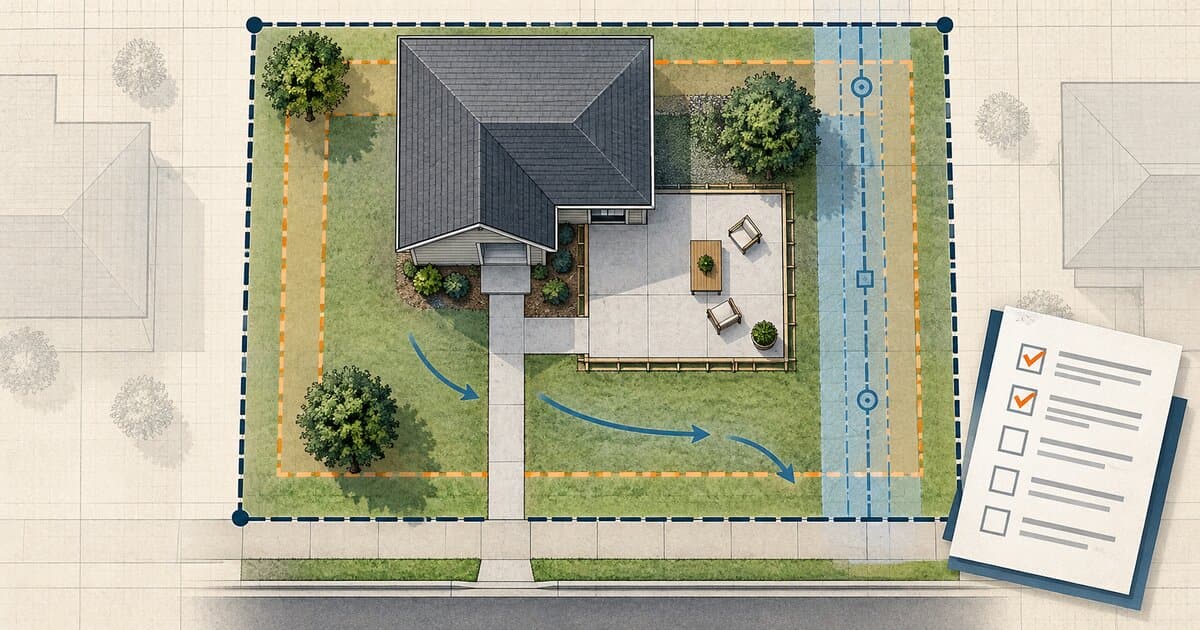
Do You Need a Permit to Pour Concrete? Patios, Slabs & Walkways
Pouring concrete may be permit-exempt or regulated depending on whether it is a patio, slab, walkway, driveway, structural base, or right-of-way work.
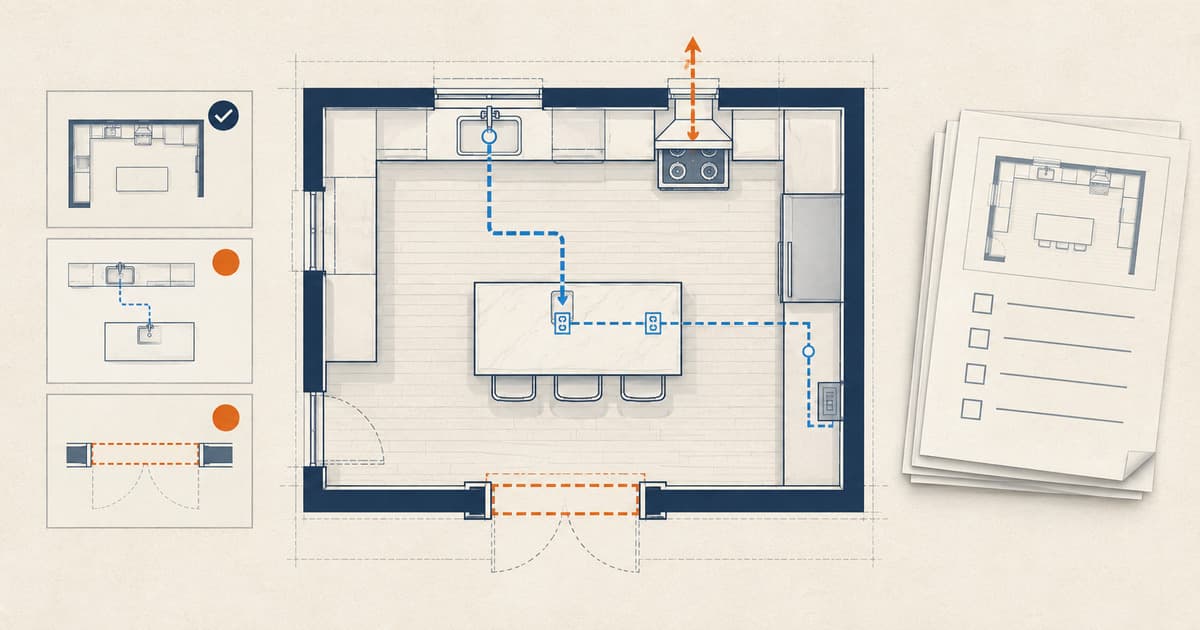
Do You Need a Permit for a Kitchen Remodel?
Learn when cabinets, sinks, islands, appliances, walls, wiring, plumbing, gas, or ventilation can change kitchen-remodel permit and inspection needs.

Do You Need a Permit to Finish a Basement?
Learn when a basement finish needs a permit, what changes for bedrooms and bathrooms, and which inspections come before drywall.