
The Minnesota State Building Code: One Code, Many Administrators
Minnesota has one statewide construction standard, while local adoption and state jurisdiction determine who administers permits and inspections for a property.
Minnesota has one statewide construction standard for buildings covered by the State Building Code, while the office that administers and enforces the code depends on the property and the local adoption arrangement. The 2020 Minnesota State Building Code remains the current base code in 2026, with later chapter updates including the 2024 Minnesota Commercial Energy Code and the 2026 National Electrical Code, which became effective August 17, 2026.
A statewide construction standard does not make every permit path identical. A city, county, or town may administer the code when required or when it has adopted the code by ordinance, and state agencies retain specific responsibilities. Zoning, shoreland, septic, road, and other land-use approvals remain separate from the building code.
Official Minnesota sources rechecked September 17, 2026. Minnesota DLI is considering a future update to the residential code based on the 2024 International Residential Code, but that rulemaking is still in progress and is not the code currently in effect.
Key takeaways
- Minnesota Stat. § 326B.121 makes the State Building Code the statewide construction standard for buildings and structures within its scope.
- The 2020 Minnesota State Building Code remains the current base code, effective March 31, 2020, with later chapter-specific updates.
- The 2024 Minnesota Commercial Energy Code is already effective for commercial energy work.
- Minnesota adopted the 2026 National Electrical Code effective August 17, 2026. Older references to the 2020 or 2023 NEC are no longer current for electrical permits filed on or after that date.
- Municipal administration depends on the local adoption and enforcement arrangement. Do not infer the permit office only from whether the address is in a city, county, or township.
- Municipalities that had adopted the State Building Code by January 1, 2008 generally must continue administering it, subject to the statutory exception for smaller municipalities outside metropolitan counties. Other municipalities may choose to adopt and administer it by ordinance.
- A municipality administering the code uses a certified building official and may share or contract for code-administration services where allowed.
- Building-code compliance does not replace zoning, shoreland, septic, right-of-way, floodplain, or other property-specific approvals.
What is the Minnesota State Building Code?
The Minnesota State Building Code is the construction standard that applies statewide to buildings and structures within its scope. Minnesota Stat. § 326B.121 states that the State Building Code applies statewide and supersedes municipal building codes.
Minnesota DLI describes the code as the minimum construction standard throughout the state. That statewide standard and local enforcement are separate questions. DLI also explains that the code is not enforceable by a municipality unless the municipality administers it under the applicable adoption and enforcement rules.
For a homeowner, the practical result is straightforward: first identify the code edition that governs the project, then identify the authority that actually reviews the plans, issues the permit, and performs inspections for the address.
What code is in force in Minnesota in 2026?
The phrase “2020 Minnesota State Building Code” is still accurate for the current base code, but several chapters can change on a different schedule.
| Code component | Current status as of September 17, 2026 | What to verify before filing |
|---|---|---|
| Minnesota Building Code and Residential Code | 2020 Minnesota State Building Code remains the current base; the building and residential chapters are based on the 2018 IBC and 2018 IRC with Minnesota amendments | Confirm the current chapter and project classification |
| Commercial energy | 2024 Minnesota Commercial Energy Code is effective | Use the current commercial-energy materials rather than the older 2020 commercial-energy chapter |
| Electrical | 2026 National Electrical Code became effective August 17, 2026 | Electrical permits filed on or after August 17, 2026 must comply with the 2026 NEC under DLI's current guidance |
| Residential code update | DLI rulemaking is considering incorporation of the 2024 IRC into Minnesota Rules chapter 1309 | Treat the 2024 IRC proposal as pending until Minnesota completes rulemaking and publishes an effective date |
This matters because a page that simply says “Minnesota uses the 2020 code” can be incomplete. The base code can remain in force while an electrical or energy chapter has already advanced.
Statewide standard versus local administration
Minnesota law separates the statewide standard from who administers it.
Under Minn. Stat. § 326B.121, a municipality that had an ordinance adopting the State Building Code in effect on January 1, 2008 generally must continue to administer and enforce it. The statute provides an exception for municipalities with populations below 2,500, based on the last federal census, when they are outside a metropolitan county. A municipality that is not required to administer the code may choose to do so by adopting it by ordinance.
The result is more precise than a rule such as “cities issue permits and townships use the county.” Government type alone is not enough to determine the filing office. Some municipalities administer the code directly, some share a building official or contract for administration, and some projects remain within state jurisdiction.
For a property-specific answer, verify the current local adoption and the designated building official or responsible permitting office rather than relying on a nearby jurisdiction's process.
What does a building official do?
Minnesota requires certified building officials for municipal code administration. DLI's current building-official guidance explains that municipalities designate a building official and may partner with other municipalities for code-administration services.
The building official is responsible for administering the State Building Code within the authority assigned to that office. Depending on the jurisdiction and project, that can include permit review, inspections, corrections, and closeout.
A contractor or private inspection company can sometimes perform work for a municipality without changing which government is legally responsible for administration. When a city website lists an outside inspection firm, verify whether the firm is acting for the municipality before treating it as a separate permitting authority.
When does DLI issue permits or perform inspections?
DLI operates permit and plan-review paths for work that falls under state jurisdiction. Its current permit page provides online and paper application routes for building, mechanical, sprinkler, and fire-alarm work handled by the department.
Electrical permitting also needs a current authority check. Minnesota adopted the 2026 NEC effective August 17, 2026, and DLI directs applicants to the applicable state or local electrical-inspection authority. The correct filing path can differ from the general building permit path.
Do not use a general building permit as evidence that every trade permit has been covered. Electrical, plumbing, mechanical, fire-protection, and other work can have separate administrators, applications, inspections, or plan-review requirements.
What about counties and townships?
Do not assume that a township automatically files through its county or that a county automatically administers the building code for every unincorporated property.
Minnesota's statutory framework allows different local adoption and service arrangements. The safest sequence is:
- identify the city, county, or town containing the parcel;
- verify whether that municipality administers the State Building Code;
- identify the designated building official or contracted administrator;
- confirm where the application, plans, fees, and inspection requests are submitted; and
- separately identify the zoning and site-review authority.
This is especially important near city boundaries and in townships where mailing addresses can make a property look associated with a nearby city even when the permitting authority is different.
Building code and zoning answer different questions
The State Building Code regulates how covered construction is built. Zoning regulates whether the use and placement are allowed on the property.
A project can therefore need several layers of review:
- State Building Code compliance;
- local zoning and permitted-use review;
- setbacks, yards, height, and lot coverage;
- shoreland, floodplain, or environmental review;
- septic or sanitary approval;
- driveway or right-of-way authorization;
- electrical, plumbing, mechanical, or fire-protection permits; and
- recorded easement or other property-specific review.
A building permit does not prove that the project satisfies every zoning or property constraint, and a zoning approval does not replace construction-code review.
How to identify the right permit office
Use the address and parcel, not a general city name.
- Confirm the actual municipality and county for the parcel.
- Check the Minnesota building-code jurisdiction information and the municipality's official permit page.
- Verify the designated building official or current inspection administrator.
- Identify whether the project includes state-jurisdiction electrical, plumbing, mechanical, sprinkler, or other work.
- Check zoning, shoreland, septic, floodplain, road, and other site approvals separately.
- Save the official sources and the dates you checked them before relying on a fee, form, or filing instruction.
Run Permit Check to organize the jurisdiction, code, permit, and site questions for a Minnesota project.
What is changing next?
Minnesota DLI has opened rulemaking for a future residential-code update. The current chapter 1309 docket says the department is considering amendments that would incorporate the 2024 International Residential Code with Minnesota amendments. As of September 17, 2026, the draft and effective date remain to be determined.
That pending work should not be treated as an effective code change. Projects should use the code and chapter updates that are actually in force on the applicable filing date.
The electrical chapter provides a useful example of why source dates matter. Minnesota's 2026 NEC update is already effective, so older 2026 articles that still identify the 2020 or 2023 NEC as current electrical law need correction even though the broader code is still called the 2020 Minnesota State Building Code.
Quick reference
| Question | Primary source to check |
|---|---|
| What statewide building code applies? | Minnesota DLI current State Building Code page and the applicable Minnesota Rules chapter |
| Must this municipality administer the code? | Minn. Stat. § 326B.121 and the current jurisdiction information |
| Who is the building official? | Current municipal or DLI building-official information |
| Does DLI handle this permit? | DLI permit and plan-review pages for the project type |
| Which electrical code applies? | DLI electrical codes and standards, including the current NEC effective date |
| Are 2024 IRC rules already effective? | DLI chapter 1309 rulemaking docket and the published effective code |
| Where can the project sit on the parcel? | Local zoning, shoreland, floodplain, road, and other site regulations |
Related GovCodex guides
- How to find your local building code
- Building permit vs. zoning, electrical, and plumbing permits
- When does a DIY project need a permit?
- Minnesota permits and zoning directory
- Check your property and project with Permit Check
Sources
Official sources rechecked September 17, 2026.
- Minnesota DLI: 2020 Minnesota State Building Codes
- Minnesota DLI: Overview of the Minnesota State Building Code
- Minnesota Statutes § 326B.121, State Building Code application and enforcement
- Minnesota DLI: Designating a building official
- Minnesota DLI: Apply for a permit
- Minnesota DLI: Electrical codes and standards
- Minnesota DLI: Rulemaking docket for Minnesota Rules chapter 1309
Frequently asked questions
Is the Minnesota State Building Code the same everywhere in the state?
The State Building Code is the statewide construction standard for work within its scope. Administration can differ by jurisdiction, and some code chapters or optional provisions have their own rules. Zoning and other land-use regulations remain local.
Does every Minnesota city issue its own building permits?
Do not assume that from the city name alone. Municipal administration depends on the statutory adoption and enforcement arrangement, and municipalities can share or contract for building-official services. Verify the current permitting office for the address.
Do Minnesota townships always use the county building department?
No statewide rule supports that shortcut. A county may administer the code for some towns, while another town or county may use a different arrangement. Verify the jurisdiction and current administrator for the parcel.
What electrical code applies in Minnesota now?
Minnesota adopted the 2026 National Electrical Code effective August 17, 2026. DLI states that electrical permits filed on or after that date must comply with the 2026 NEC.
Is Minnesota already using the 2024 International Residential Code?
No effective statewide residential-code replacement is shown on DLI's current rulemaking docket. DLI is considering incorporation of the 2024 IRC into chapter 1309, but the rulemaking and effective date remain pending as of September 17, 2026.
Does a building permit cover zoning approval too?
Do not assume it does. Building-code review and zoning review answer different questions. A project may need both, along with separate site or trade approvals.
Where should I start if I do not know who issues my permit?
Start with the property address and actual municipality. Verify the building-code administrator, then check each separate trade and site approval. GovCodex Permit Check can organize those authority and project questions without treating a statewide article as a parcel-level determination.
Verify the rules for your property
Minnesota's statewide code is only one layer of the permit decision. The address determines the local administrator, zoning, site constraints, and filing path.
Check your Minnesota project with Permit Check before relying on a generic statewide answer.
Related Articles
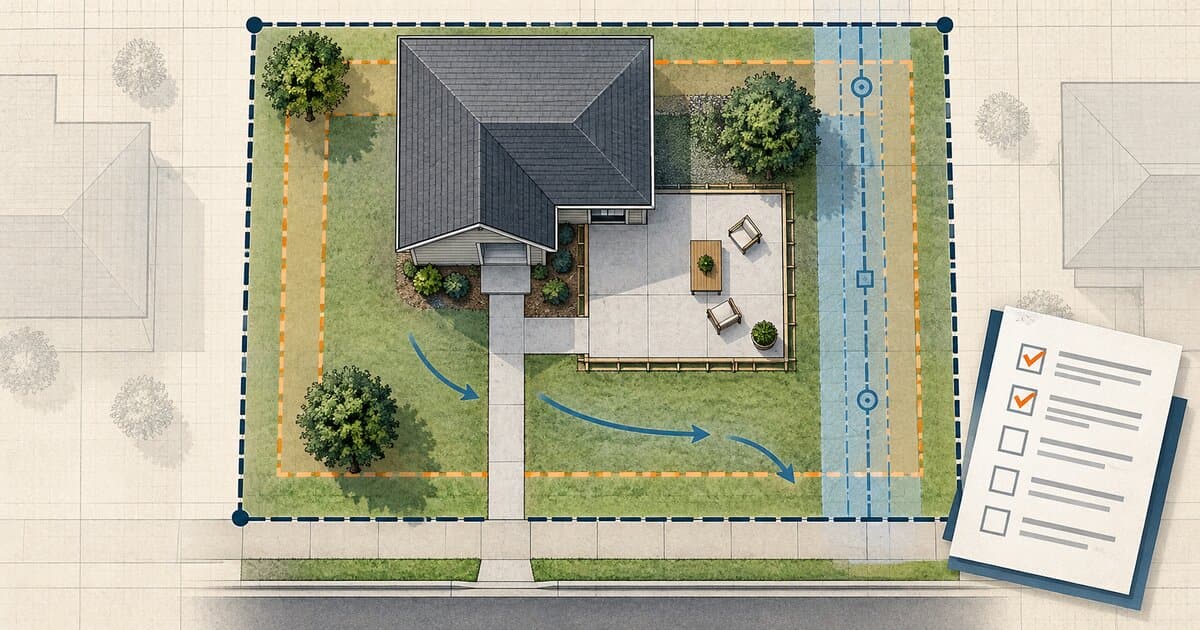
Do You Need a Permit to Pour Concrete? Patios, Slabs & Walkways
Pouring concrete may be permit-exempt or regulated depending on whether it is a patio, slab, walkway, driveway, structural base, or right-of-way work.
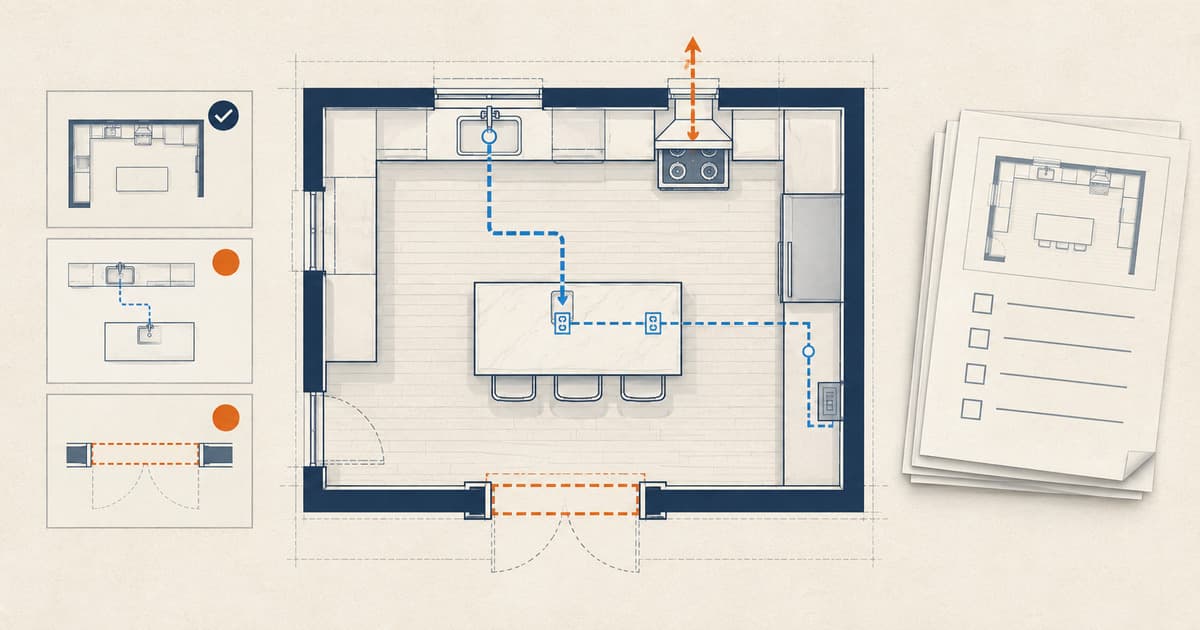
Do You Need a Permit for a Kitchen Remodel?
Learn when cabinets, sinks, islands, appliances, walls, wiring, plumbing, gas, or ventilation can change kitchen-remodel permit and inspection needs.

Do You Need a Permit to Finish a Basement?
Learn when a basement finish needs a permit, what changes for bedrooms and bathrooms, and which inspections come before drywall.