
Lake County, IL Permits: Who Issues What
In unincorporated Lake County, IL, the Planning, Building and Development Department issues permits — not the county for city/village land. Here's who handles what.
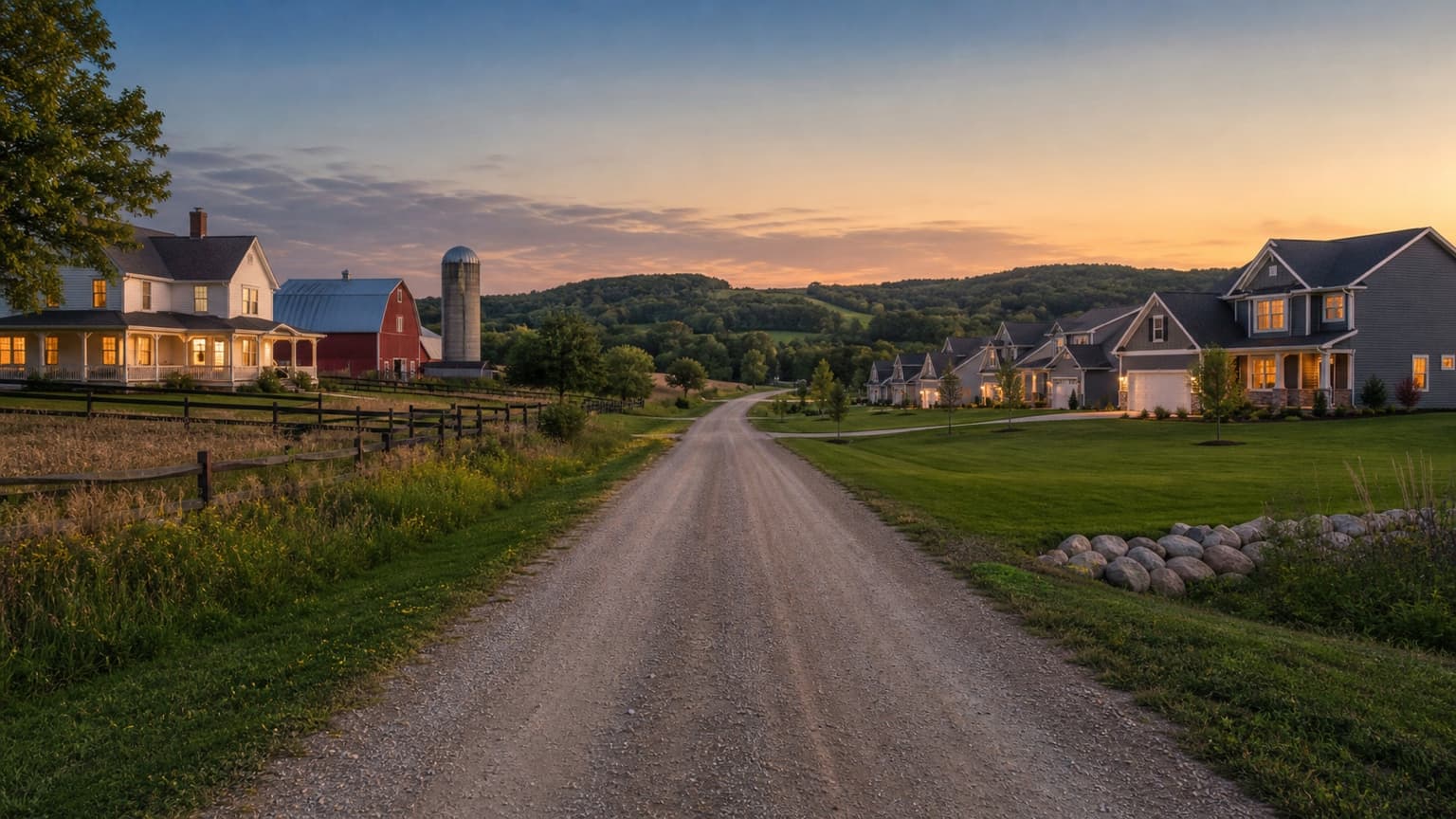
Direct Answer: Lake County's Planning, Building and Development Department (PB&D) issues building, zoning, and site-development permits only for unincorporated Lake County — the land outside the county's cities and villages. If a property sits inside a municipality, that city or village's own building department issues the permit, not the county. PB&D enforces the county's 2024 International Code Council code series and the Unified Development Ordinance (Chapter 151 of the county code), while a few other county agencies — the Lake County Health Department (septic and wells), the Stormwater Management Commission (floodplain and watershed development), and the Division of Transportation (driveway access onto county highways) — issue their own permits alongside or instead of PB&D depending on the project.
Verified against official Lake County, IL sources: July 13, 2026. Requirements change — confirm with Lake County Planning, Building and Development before applying.
Key Takeaways
- The Planning, Building and Development Department (PB&D) issues permits for unincorporated Lake County only; property inside a city or village is permitted by that municipality, not the county.
- Use the county's Maps Online / zoning lookup or your parcel's tax district record to confirm whether a property is unincorporated before you assume the county is the right office.
- The 2024 ICC code series (IRC, IBC, IEBC, IFC, IMC, IFGC, and the International Swimming Pool and Spa Code) took effect for unincorporated Lake County permit applications received after July 12, 2025, per the Development Codes page.
- Zoning, setbacks, subdivision, sign, and site-development rules for unincorporated land come from the county's Unified Development Ordinance (UDO), Chapter 151, adopted April 11, 2000 and amended since.
- Some small projects — fences, sheds under 100 square feet, re-roofing, re-siding, window replacement, and a handful of others — can be registered instead of permitted; see the permit and registration forms library.
- Septic systems and private wells go through the Lake County Health Department, not PB&D, even though both offices sit on the same county campus.
- Watershed Development Permits for floodplain, detention, and stormwater work are administered by the Stormwater Management Commission (SMC) in "non-certified" communities, or delegated to PB&D for unincorporated areas and to certified municipalities for their own jurisdictions.
Scope note: This article covers unincorporated Lake County only — the land that is not part of any city or village. Lake County's cities and villages (Waukegan, Highland Park, Libertyville, Gurnee, Vernon Hills, and dozens of others) each run their own building department, code, and permit process. If your address is inside one of them, contact that municipality directly.
Which Office Issues Permits in Unincorporated Lake County?
The Planning, Building and Development Department is responsible for enforcing county building codes and zoning ordinances in unincorporated Lake County through plan review, permitting, and inspection of construction activity. It operates out of the Lake County Central Permit Facility at 500 W Winchester Road, Unit 101, Libertyville, IL 60048 (847-377-2600, lcpermits@lakecountyil.gov). PB&D also provides building services to some municipalities under separate intergovernmental agreements, but its default, countywide authority is limited to unincorporated land — if your property is located in a village or city, PB&D's own guidance directs you to that municipality's office instead.
That single fact — county jurisdiction stops at the municipal boundary — is the core of "who issues what" in Lake County. Illinois is a home-rule state with no statewide residential building code (see Illinois building codes and local control, explained), so each of the county's cities and villages can adopt its own code edition, fee schedule, and application process, separate from the county's.
How Do I Know If My Property Is Unincorporated?
Before contacting any office, confirm which jurisdiction actually covers your parcel:
- Look up your parcel on the county's Zoning Information / Maps Online tool — an "INC" notation means the property is incorporated into a municipality and outside PB&D's permitting authority.
- Search your Property Index Number (PIN) or address on the Lake County property tax portal and check the tax district information; a listed municipality means the city or village handles permits, not the county.
- Review the county's unincorporated area map, where the unshaded area denotes unincorporated county land.
- If still unsure, call PB&D directly at 847-377-2600 — they can confirm jurisdiction before you submit anything.
What Work Requires a Permit — and What Qualifies for Registration Instead?
In unincorporated Lake County, a Building Permit is required for new construction, additions and alterations, accessory structures such as garages, decks, and pools, and for any work regulated by the building, electrical, or mechanical code. PB&D also issues Change of Use Permits, Demolition Permits, Site Development Permits, Temporary Use Permits, Conditional Use Permits, and zoning approvals such as variations and rezonings — see the Permits & Approvals overview.
A smaller category of minor projects can be registered in lieu of a full permit — the county's registration forms library lists fences, sheds of 100 square feet or less, re-roofing, re-siding, window replacement, water heater and AC replacement, freestanding pergolas and gazebos, stoop replacement, minor demolition, beekeeping and backyard chickens, and agricultural hoophouses. Registration is a lighter-weight process than a permit but still puts the work on record with the county; most of these forms explicitly note they apply to unincorporated Lake County only.
What Codes Does Lake County Enforce?
PB&D's Development Codes page lists the county's currently adopted editions:
| Code | Edition | Notes |
|---|---|---|
| International Residential Code (IRC) | 2024 | One- and two-family dwellings |
| International Building Code (IBC) | 2024 | Commercial and multi-family |
| International Existing Building Code (IEBC) | 2024 | Alterations to existing buildings |
| International Fire Code (IFC) | 2024 | |
| International Mechanical Code (IMC) | 2024 | |
| International Fuel Gas Code (IFGC) | 2024 | |
| International Swimming Pool and Spa Code | 2024 | |
| National Electrical Code (NEC) | 2023 | Adopted by ordinance June 2023 |
| Illinois Energy Conservation Code | IECC 2018 edition | Statewide, effective 7/1/2019 |
| Illinois Plumbing Code | Current state edition | With county amendments |
The 2024 ICC series was adopted by the Lake County Board with local amendments and became effective for unincorporated-area permit applications received after July 12, 2025. County amendments to these codes are compiled in the Lake County Code of Ordinances, Chapter 150 (Building Codes). Because each Lake County municipality sets its own code adoption schedule, a neighboring village may still be enforcing an older edition — always confirm the applicable edition with the office that actually has jurisdiction over your address.
Zoning, Setbacks & the Unified Development Ordinance
Zoning, subdivision, sign, and site-development standards for unincorporated Lake County come from the Unified Development Ordinance (UDO), adopted by the County Board on April 11, 2000 and codified as Chapter 151 of the county code. The UDO divides unincorporated land into zoning districts that specify which uses are permitted, conditionally allowed, or prohibited, and it sets the dimensional standards — including setbacks and height limits — for structures in each district. Exact setback and height figures vary by zoning district and lot configuration, so confirm the number that applies to your parcel directly against Chapter 151 or with PB&D rather than assuming a countywide default.
The UDO also addresses accessory dwelling units (ADUs) on unincorporated land. Under the ordinance's accessory-use provisions, an ADU may contain no more than one bedroom and no more than 1,000 square feet of gross floor area, must meet the same setback and impervious-coverage standards as the principal structure, and requires that the property owner occupy either the principal or accessory unit. ADUs are limited to specific districts (AG, RE, E, and R-1) and, in most of those districts, to lots of 80,000 square feet or more — read the full accessory-use section before planning one. For a broader look at how ADU rules vary by state, see accessory dwelling units in 2026: the complete state-by-state legal breakdown.
Zoning relief — conditional use permits, home occupations, and zoning variances — is also processed through PB&D for unincorporated parcels. For general background on what a setback is and why it matters, see what is a setback in zoning?
Beyond PB&D: Who Else Issues Permits in Unincorporated Lake County?
PB&D is the primary building and zoning authority, but several projects route through other county offices depending on scope:
| Project type | Issuing agency | Source |
|---|---|---|
| Building, zoning, site-development, demolition, use permits | Planning, Building and Development | PB&D permits |
| Septic system construction/repair, private water wells | Lake County Health Department | Environmental Health permits |
| Floodplain, detention, and watershed development (major/minor) | Stormwater Management Commission (SMC), or PB&D by delegation in unincorporated areas | Watershed Development Ordinance |
| New or relocated driveway access onto a county highway | Division of Transportation | Highway access permits |
| Commercial energy-efficiency financing (not a permit) | C-PACE Program (county partnership with the Illinois Energy Conservation Authority) | C-PACE Program |
The Watershed Development Ordinance sets countywide stormwater standards — floodplain management, detention, soil erosion and sediment control, water-quality treatment, and wetlands — and applies regardless of whether SMC or a delegated agency issues the actual permit. Even in "certified" municipalities that handle their own watershed permitting, certain floodplain and floodway applications are still forwarded to SMC for review.
How Do I Apply for a Permit in Unincorporated Lake County?
For a typical new single- or two-family home, PB&D's New House guidance lays out the process:
- Confirm the parcel is unincorporated and identify its zoning district using Maps Online or by calling PB&D at 847-377-2600.
- Contact PB&D to schedule Early Assistance if the project is complex — this flags zoning, floodplain, or wetlands issues before you invest in full plans.
- Assemble your plan set: typically five sets of grading plans (ten if the lot has a septic system), two complete building plan sets (four if the property is in a floodplain), and a truss design drawing sealed by an Illinois-registered engineer or architect.
- If the project involves a septic system or private well, obtain the required approval from the Lake County Health Department in parallel.
- Submit the application in person at the Lake County Central Permit Facility (500 W Winchester Road, Unit 101, Libertyville, IL 60048) with your Property Index Number, completed application, plan sets, and applicable fees; projects of 1,500 square feet or more also need construction-debris recycling compliance documentation.
- Wait for plan review — PB&D states that a compliant application should yield a building permit in about 10 business days from submittal.
- Schedule inspections at each required construction stage once the permit is issued.
Smaller projects that qualify for registration (fences, small sheds, re-roofing, and similar) use the simpler forms in the Forms library rather than the full building-permit process.
What Does a Permit Cost?
Lake County publishes a countywide Land Development Fee Schedule that sets permit fees by project type, valuation, or volume (for new construction, fees are calculated on the cubic-foot volume of the structure); a separate Permit Application Fee Schedule breaks out costs by permit category. Fees are adjusted annually — the county increases them each fiscal year by 2 percent or the most recent Lake County Consumer Price Index, whichever is lower. Because specific dollar amounts change on that schedule, confirm the current fee for your project type directly against the published PDF or by calling PB&D rather than relying on a fixed number here. For general context on how building-permit costs are typically structured, see how much does a building permit cost?
Frequently Asked Questions
Does Lake County issue permits for property inside Waukegan, Highland Park, or other cities and villages?
No. PB&D's authority covers unincorporated Lake County only. Property inside any of the county's cities or villages is permitted, inspected, and enforced by that municipality's own building department — contact them directly.
How do I find out which building code edition applies to my project?
For unincorporated land, check the Development Codes page, which lists the current IRC, IBC, and related ICC editions and their effective dates. If your property is inside a municipality, ask that city or village which edition it has adopted — it may differ from the county's.
Can I register a fence or small shed instead of getting a full permit?
Yes, for unincorporated Lake County. The county's registration forms cover fences, sheds of 100 square feet or less, re-roofing, re-siding, window replacement, and several other minor projects, letting you file in lieu of a standard building permit.
Who handles my septic or well permit — PB&D or the Health Department?
The Lake County Health Department issues septic and private-well permits, separately from PB&D's building permit, even for the same new-construction project. Both approvals are typically needed together for a new house on a septic system.
Do I need a Watershed Development Permit in addition to a building permit?
Possibly. Major and minor development in Lake County can require a Watershed Development Permit under the Watershed Development Ordinance, administered by the Stormwater Management Commission or, in unincorporated areas, delegated to PB&D. Ask PB&D during Early Assistance whether your project triggers this requirement.
Can I build an accessory dwelling unit on my unincorporated Lake County lot?
Possibly, if your property is zoned AG, RE, E, or R-1 and typically has a lot of 80,000 square feet or more. The UDO's accessory-use provisions cap ADUs at one bedroom and 1,000 square feet and require the owner to occupy one of the two units. Confirm eligibility with PB&D before designing one.
Where do I get a permit to build or relocate a driveway onto a county road?
The Lake County Division of Transportation issues highway access permits for driveways connecting to county highways, separate from PB&D's building permit for the structure itself.
Verify the Rules for Your Property
Permit authority in Lake County splits along the incorporated/unincorporated line, and the specific code edition, fee, and setback that apply depend on exactly where your parcel sits and how it's zoned. Before you apply, check GovCodex's Lake County permit catalog for the current permit types tied to your project, or run a permit check to see what your specific address and project actually require.
Related Articles
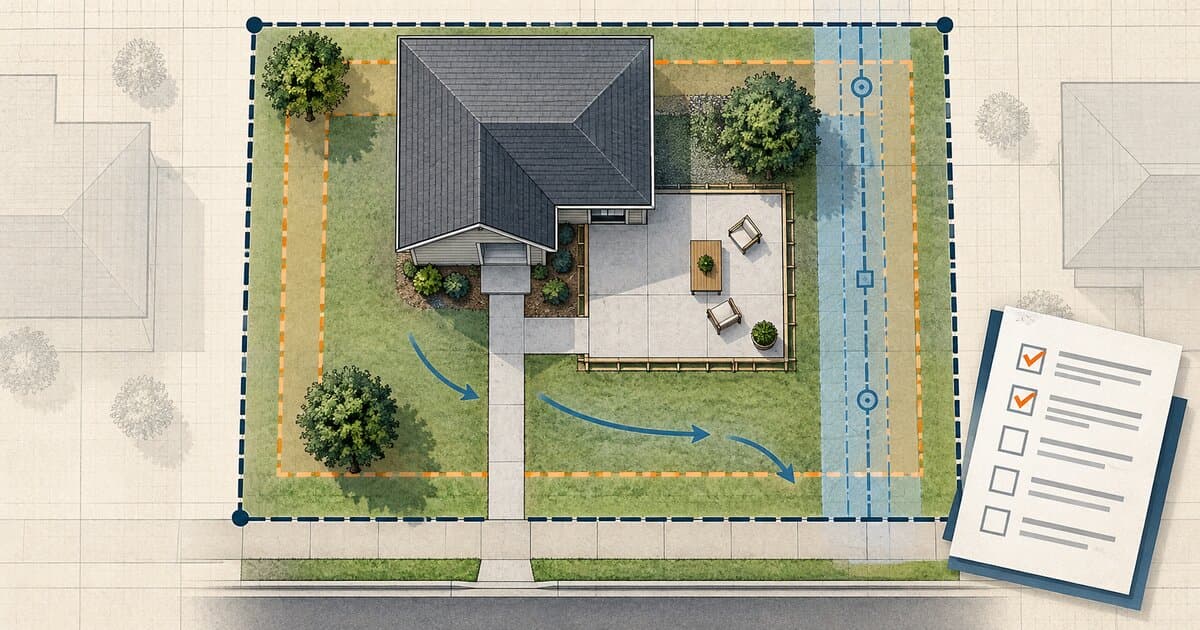
Do You Need a Permit to Pour Concrete? Patios, Slabs & Walkways
Pouring concrete may be permit-exempt or regulated depending on whether it is a patio, slab, walkway, driveway, structural base, or right-of-way work.
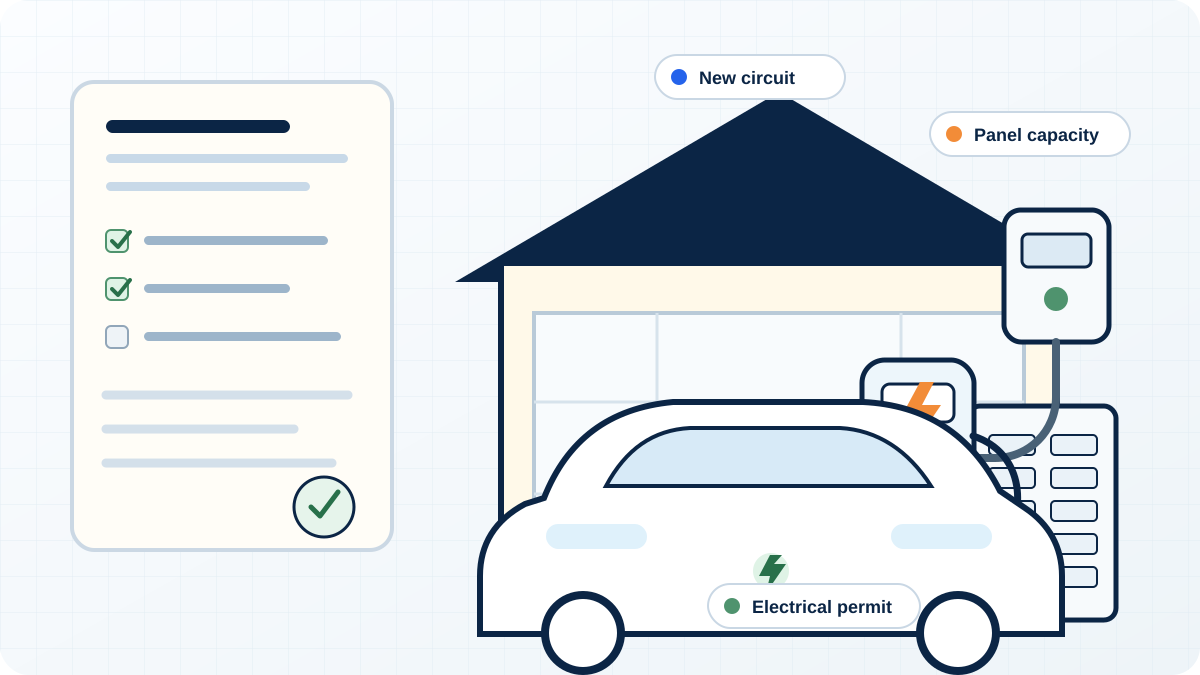
Do You Need a Permit for an EV Charger?
Learn when a home EV charger needs an electrical permit, when panel or service upgrades enter the project, and how inspection and utility coordination work.
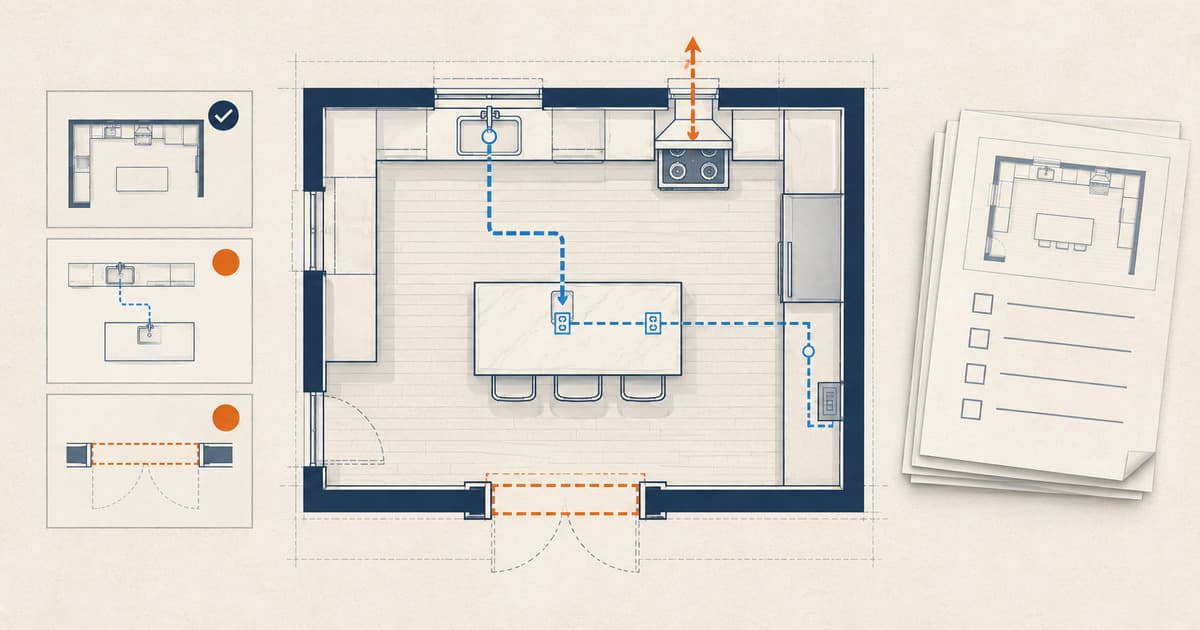
Do You Need a Permit for a Kitchen Remodel?
Learn when cabinets, sinks, islands, appliances, walls, wiring, plumbing, gas, or ventilation can change kitchen-remodel permit and inspection needs.