
Kenosha Building Permit Guide (2025–2026)
How the City of Kenosha issues building permits: which department to contact, what work needs a permit, how to apply, homeowner vs. contractor rules, fees, and zoning basics.

Direct Answer: The City of Kenosha's Building Inspection Division, part of the Department of City Inspections, issues every building permit for work inside Kenosha city limits, applying the City of Kenosha Code of General Ordinances (Chapter 9 — Building Code) alongside Wisconsin's statewide codes: the Uniform Dwelling Code (UDC, SPS 320–325) for one- and two-family homes and, as of November 1, 2025, the 2021 International Building Code for commercial work. Homeowners can act as their own general contractor on most residential structural projects — new homes, additions, decks, garages — but a Wisconsin-licensed contractor is required for electrical service work, new-home electrical/plumbing/HVAC, exterior sewer and water laterals, and gas piping. Applications go to City Inspections by email, mail, or in person, since Kenosha doesn't run a self-service online e-permitting portal for most residential work, and larger commercial projects route through the city's partnership with E-Plan Exam for plan review.
Verified against official municipal and state sources: July 13, 2026. Requirements change — confirm with the city before applying.
Key Takeaways
- The Building Inspection Division inside City Inspections issues permits and enforces City Code Chapter 9, applying the Wisconsin Uniform Dwelling Code to 1- and 2-family homes statewide.
- As of November 1, 2025, Kenosha enforces the 2021 International Building Code for commercial construction, referencing the Wisconsin Commercial Building Code (SPS 361–366).
- The city's own "Do I Need a Permit?" checklist confirms fences, decks, and accessory structures/garages over 120 square feet all require a building permit, while shingle-only roof repairs, siding replacement, and direct window/door swaps do not.
- Homeowners may act as their own general contractor for structural work — including new one- and two-family homes, additions, decks, and garages — per the city's homeowner permit guide.
- Commercial building and HVAC plans over 5,000 SF (new construction) or 10,000 SF (alterations) route through E-Plan Exam, which guarantees a 15-day review turnaround on a complete, paid submission.
- Zoning questions — district, setbacks, lot coverage, zoning verification letters — go to Planning & Zoning inside the Department of City Development, not Building Inspection.
- Once issued, permits and required inspections can be tracked through the city's own Building Permit Inspection Results search.
Scope note: This article covers permitting inside the City of Kenosha only. Other Kenosha County communities — including the Village of Pleasant Prairie, Village of Somers, and unincorporated parts of the county — issue permits separately through Kenosha County's Residential Permits program and its own eTRAKiT portal, not the city's Building Inspection Division. If you aren't sure which jurisdiction your address falls in, check Kenosha County's GIS mapping and survey information.
Which Department Issues Building Permits in Kenosha?
The Building Inspection Division, part of the City of Kenosha's Department of City Inspections, reviews plans and issues permits for residential, commercial, and industrial buildings citywide, and inspects plumbing, electrical, mechanical, and structural work. The division is reachable at 262.653.4263 or bldgpermits@kenosha.org, out of City Hall Annex at 625 – 52nd Street, Room 100, Monday–Friday, 8:00 a.m.–4:30 p.m.
Zoning and land-use questions — which district a parcel sits in, dimensional and setback requirements, sign regulations, and zoning verification letters — are handled separately by Planning & Zoning, a division of the Department of City Development, at 262.653.4030 or citydevelopment@kenosha.org (Room 308, same building). Public Works (262.653.4050) handles driveway aprons, sidewalks, and right-of-way excavation, and the Fire Department (262.653.4100) handles permits tied to hazardous materials, explosives, and cryogenic fluids.
What Work Requires a Permit — and What's Exempt?
Kenosha publishes a project-by-project "Do I Need a Permit?" table that names the responsible department for dozens of common projects. A sample:
| Project | Permit Required? | Who to Contact |
|---|---|---|
| Fence — install, replace, or repair | Yes | City Inspections |
| Deck — new, repair, or replace | Yes | City Inspections |
| Accessory structure — build or replace | Yes, if over 120 SF | City Inspections |
| Garage — build or replace | Yes, if over 120 SF | City Inspections |
| Roof — full replacement | Yes | City Inspections |
| Roof — shingle-only repair/replace | No | City Inspections |
| Siding — removal and replacement | No | City Inspections |
| Window/door — direct replacement | No | City Inspections |
| Window/door — new opening or size change | Yes | City Inspections |
| Driveway | No (reviewed by Public Works) | Public Works |
| Hot tub, spa, or swimming pool | Yes | City Inspections |
| Solar energy systems | Yes | City Inspections |
The city cautions that this list "is not all-encompassing" and that special exceptions can apply — and even permit-exempt work still has to follow zoning setbacks and ordinances, so property owners should check with Zoning staff before building something the permit table doesn't cover.
How Do I Apply for a Building Permit in Kenosha?
Kenosha's Building Inspection Division is largely document-based rather than a self-service online portal. The general process:
- Confirm the address is inside the City of Kenosha, not Kenosha County or a neighboring village, using Kenosha County's GIS mapping.
- Identify the correct application from the Permit Applications library, which lists roughly four dozen permit-specific forms covering everything from accessory buildings to new one- and two-family dwellings.
- For one- and two-family homes and most residential remodeling, review the homeowner permit guide to confirm whether you can pull the permit yourself or need a Wisconsin-licensed contractor for parts of the work.
- For commercial new construction or larger alterations, check whether the project size triggers E-Plan Exam review (new construction of 5,000 SF or more, alterations of 10,000 SF or more) or can be reviewed directly by City Inspections.
- Submit the completed application and plans to bldgpermits@kenosha.org, by mail, or in person at 625 – 52nd Street, Room 100. Full-size plan sets should be accompanied by a PDF copy by email; the city no longer accepts faxed submissions.
- Pay any required fees, either online once invoiced or at the counter.
- Track permit status and schedule required inspections through the city's Building Permit Inspection Results search or by calling 262.653.4263.
What Does a Kenosha Building Permit Cost?
Kenosha publishes its permit fees in a Department of City Inspections fee table, alongside separate Department of City Development fees for land-use approvals like conditional use permits and site plan review. As posted, an accessory building permit (garages, sheds, and other detached structures) carries a flat $180.00 fee. Fees for other permit types — new dwellings, additions, decks, commercial work — vary by scope, and the schedule itself notes fees "may be amended from time to time." Treat this as a starting point, understand generally how building-permit costs are calculated, and confirm the current total with City Inspections (262.653.4263) before budgeting.
Do I Need a Licensed Contractor, or Can I Do the Work Myself?
Per the city's homeowner permit guide, Kenosha lets homeowners act as their own general contractor for structural projects on their own home — new construction, additions, alterations, remodeling, decks, porches, and garages. Homeowners who pass the state's homeowner electrical test may also self-perform minor electrical work, such as adding a circuit or extending one to a garage for lighting or outlets. A Wisconsin-licensed contractor is required, however, for electrical service or panel work, all electrical/plumbing/HVAC installation on a new one- or two-family home, exterior sewer and water laterals, HVAC installations, and gas piping. The city's homeowner brochure also breaks down dozens of smaller jobs — replacing a light fixture versus adding one, replacing a sink versus adding one — by whether a permit is required and who is allowed to perform the work.
What Inspections Will I Need?
Wisconsin's Uniform Dwelling Code makes several inspections mandatory by state administrative rule, and Kenosha enforces them on every one- and two-family project: erosion control (after erosion-control installation, after foundation work and before framing, and prior to final building inspection), structural (footings/postholes/slabs, foundation and drain tile, basement floor, carpentry rough-in, insulation, final carpentry), HVAC (rough-in and final), plumbing (sewer and water connection, rough-in with testing, interior sewer, final), and electrical (service, rough-in, final). Before final occupancy sign-off, the city also confirms all violations are corrected, sidewalks and driveways are installed, the yard is graded and at least 70% vegetated, and the water meter is installed. For commercial projects, City Inspections has said it will not schedule final building or occupancy inspections until sign-offs from other departments are reflected in its system, and won't schedule final inspections on Fridays.
What About Zoning & Setbacks?
Kenosha's Zoning Ordinance — hosted on Municode and most recently codified through Ordinance No. 13-26 — sets the zoning district map, dimensional standards (lot area, yard/setback requirements, height, lot coverage), and use regulations that apply on top of the building code. New one- and two-family dwellings and additions are subject to district-specific design requirements, and the city includes a copy of the applicable requirements with new-home and addition application packets. Because setback and dimensional standards vary by zoning district and by the age of the platted lot, this guide doesn't publish a single citywide setback number for Kenosha — Planning & Zoning (262.653.4030) can confirm your parcel's district and dimensional limits, including through a formal zoning verification letter. Understanding what a setback actually controls is a useful starting point before you call.
Commercial Plan Review
Commercial building and HVAC plans go through the city's partnership with E-Plan Exam. Small-scale projects — new construction under 5,000 square feet or alterations under 10,000 square feet — can be reviewed and permitted directly through City Inspections; larger projects go through E-Plan Exam, which guarantees a 15-day review turnaround from a complete, paid submission. Plumbing plan review stays with the city directly and is triggered by projects with 16 or more fixtures, grease traps, catch basins, or manholes. It's worth remembering that building, zoning, electrical, and plumbing permits are separate approvals that can apply to the same project.
Frequently Asked Questions
Does Kenosha require a permit for a fence?
Yes. The city's official "Do I Need a Permit?" list shows fence installation, replacement, and repair as requiring a City Inspections permit — Kenosha's checklist doesn't list a height-based exemption the way some cities do, so confirm the specifics before you build.
Do I need a permit for a shed or detached garage?
The city's permit checklist lists accessory structures and garages as needing a building permit only if they exceed 120 square feet. Below that threshold, the listed answer is that no building permit applies, but zoning setbacks still do — check with Planning & Zoning before you build.
Can I pull my own building permit as a homeowner?
Yes, for most structural work on your own home — new construction, additions, decks, porches, and garages — per the city's homeowner permit guide. A Wisconsin-licensed contractor is still required for electrical service work, new-home electrical/plumbing/HVAC, exterior sewer and water laterals, and gas piping.
How much does a Kenosha building permit cost?
It depends on the permit type. The posted Permit Fees schedule lists a flat $180.00 fee for accessory building permits; other project types carry their own fees, and the schedule itself can change, so confirm the current amount with City Inspections (262.653.4263).
Is the City of Kenosha's building code the same as Kenosha County's?
No. This guide covers permitting inside city limits only. Other communities within Kenosha County — including the Village of Pleasant Prairie and Village of Somers — and unincorporated areas issue permits through Kenosha County's own Residential Permits program, a separate department with its own online portal.
How long does commercial plan review take in Kenosha?
For projects routed to E-Plan Exam (new construction of 5,000 SF or more, alterations of 10,000 SF or more), the review process guarantees a 15-day turnaround once a complete, paid submission is received. Smaller projects reviewed directly by City Inspections don't have a published guaranteed timeline — call 262.653.4263 for a current estimate.
Verify the Rules for Your Property
Kenosha's permit rules, fees, and zoning requirements are tied to your specific parcel, project type, and zoning district, and they change over time — this guide is a starting point, not a substitute for confirming with the city. Before you apply, check GovCodex's Kenosha permit catalog for the permit types tied to your project, or run a permit check to see what your specific address and project actually require.
Related Articles
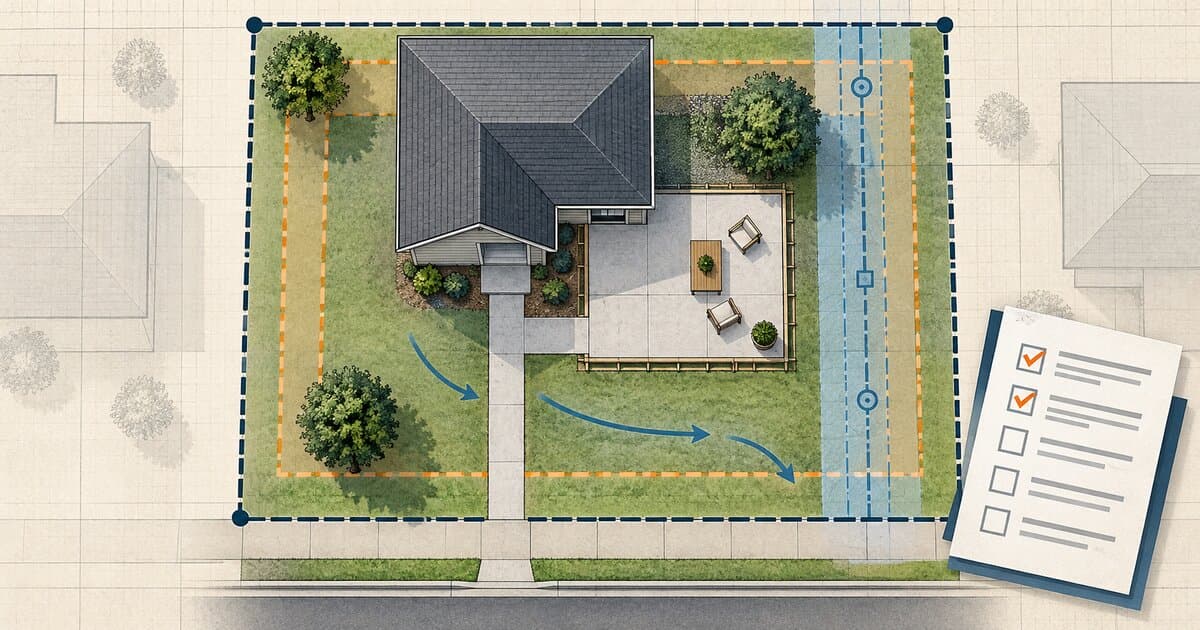
Do You Need a Permit to Pour Concrete? Patios, Slabs & Walkways
Pouring concrete may be permit-exempt or regulated depending on whether it is a patio, slab, walkway, driveway, structural base, or right-of-way work.
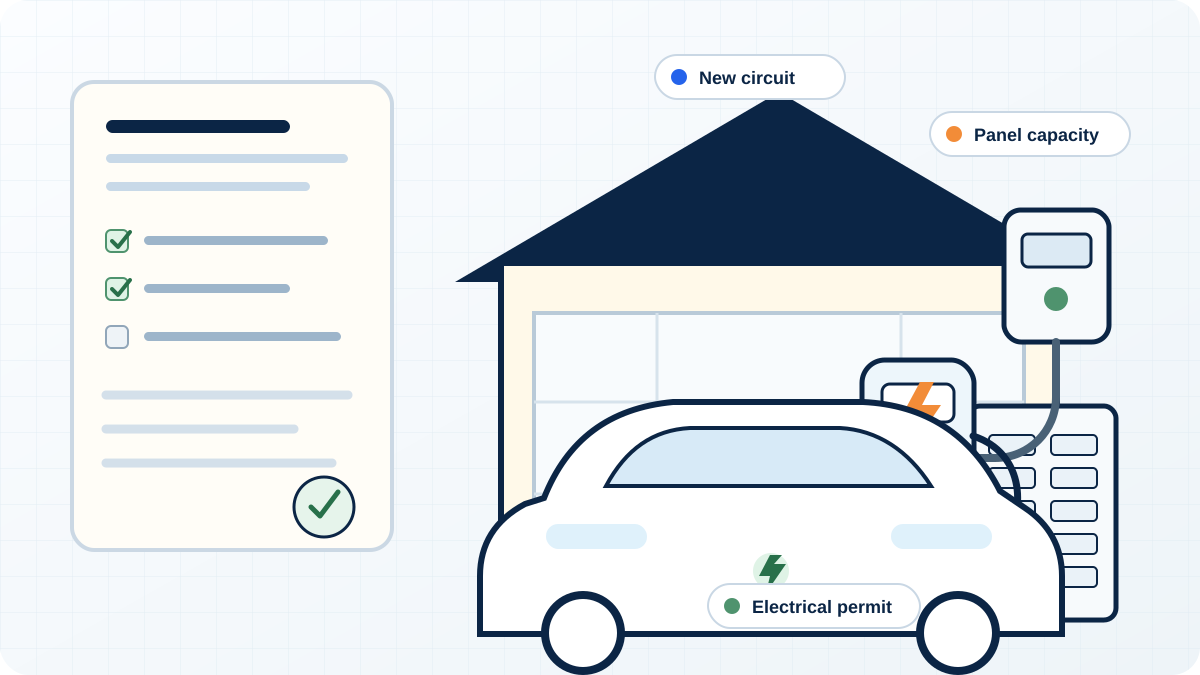
Do You Need a Permit for an EV Charger?
Learn when a home EV charger needs an electrical permit, when panel or service upgrades enter the project, and how inspection and utility coordination work.
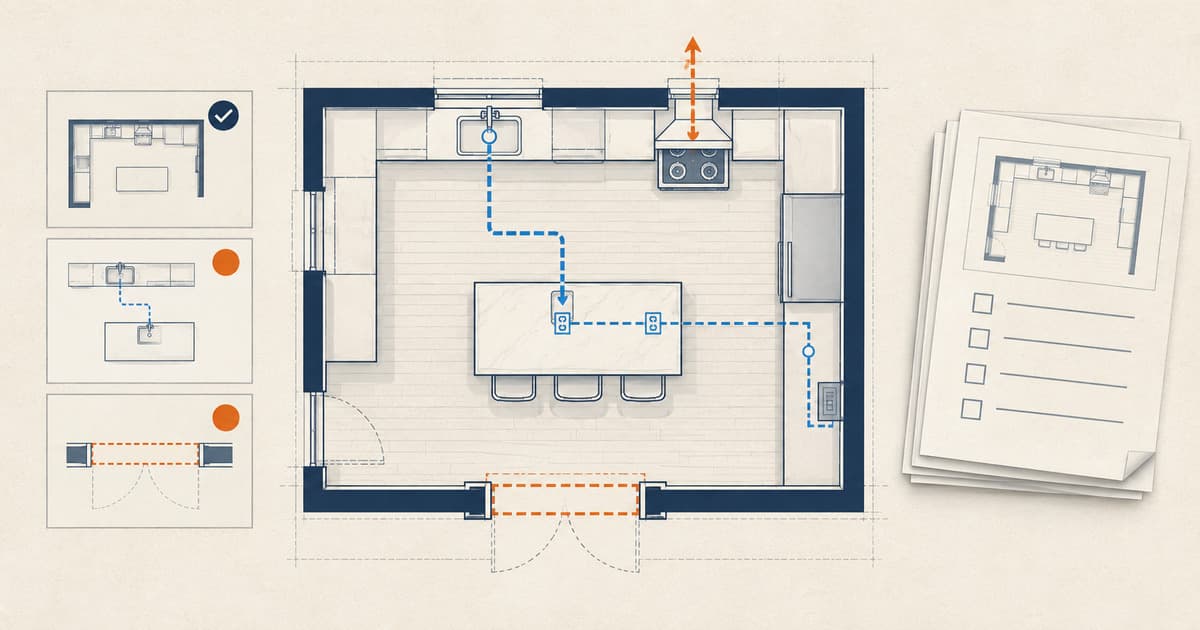
Do You Need a Permit for a Kitchen Remodel?
Learn when cabinets, sinks, islands, appliances, walls, wiring, plumbing, gas, or ventilation can change kitchen-remodel permit and inspection needs.