
Do I Need a Permit for a Fence in St. Paul?
Saint Paul's DSI requires a fence plan review and permit for every fence, with no minimum-height exemption. Here's how height caps by yard, corner-lot rules, and fees work.
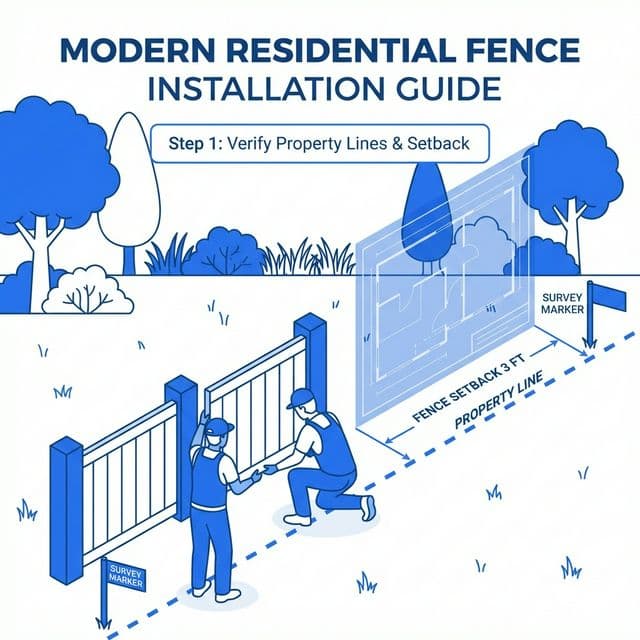
Direct Answer: Almost always, yes. The City of Saint Paul's Department of Safety and Inspections (DSI) requires a Fence Plan Review and Permit before you install a new fence anywhere in the city, regardless of height or material. There is no blanket "under X feet, no permit" exemption the way some cities allow — the plan review confirms your fence sits inside your property line and meets Saint Paul's height rules for its yard location (4 feet in the front yard, 7 feet in side and rear yards, and a 2-foot cap inside the corner-lot visibility triangle). A physical inspection is only required afterward for fences taller than 7 feet, swimming pool enclosures, and barbed-wire fences.
Verified against official municipal and state sources: July 13, 2026. Requirements change — confirm with the city before applying.
Key Takeaways
- DSI requires a fence plan review and permit for every fence built in Saint Paul city limits, per the Fence Plan Review, Permit and Inspections page — there's no minimum-height exemption.
- Height is capped by location: 4 feet maximum between the front property line and the front setback line, and 7 feet maximum in side and rear yards.
- On corner lots, fences and walls can't exceed 2 feet within the triangular area 10 feet from the corner along each lot line, unless the fence is more than 80% open (like chain-link) — a visibility rule for cross-traffic.
- The permit fee is $45 for the first 200 lineal feet (or fraction) plus $15 for each additional 100 lineal feet, per the same DSI page; a fence taller than what's allowed needs an $85 nonrefundable fence variance application in addition to the fence permit — DSI's instruction is to “submit a completed Fence Variance Application Form along with a Fence Permit Application Form.” It is decided by the building official, not the Board of Zoning Appeals: Legislative Code § 33.07(d) reads “A variance of the fence height or corner clearance regulations may be granted if, after investigation by the building official …”, and DSI says “in most cases, a Fence Variance will be approved/denied within 1-2 business days.”
- A physical inspection is only required for fences over 7 feet, swimming pool fences, and barbed-wire fences — most standard residential fences are reviewed on paper and don't get a field inspection.
- Fences must sit entirely inside your property line; the city will not locate property markers or resolve boundary disputes, so surveying or confirming your line before you build is on you.
The Practical Rule
In Saint Paul, don't ask "is my fence short enough to skip the permit" — ask "does DSI's plan review approve where I'm putting it and how tall it is." Every fence, from a 3-foot picket border to an 8-foot privacy fence, goes through the same Fence Plan Review and Permit process. The two variables that actually change your outcome are location on the lot (front yard vs. side/rear vs. corner-lot triangle) and height. Stay within 4 feet in front, 7 feet in back, and 2 feet in the corner sight triangle, and your project is a standard paper review; go taller, and you're either into swimming-pool/barbed-wire inspection territory or you need an $85 fence variance — an administrative decision of the building official under Legislative Code § 33.07(d), filed alongside the permit application — before DSI will approve anything.
What to Check Before You Build
- Confirm you're inside Saint Paul city limits, not a similarly named suburb. West St. Paul, South St. Paul, and North St. Paul are separate cities with their own fence ordinances and permitting — this article covers the City of Saint Paul (Ramsey County seat) only.
- Locate your true property line. DSI will not do this for you or arbitrate a boundary dispute with a neighbor; a fence built even slightly over the line, on a boulevard, or in the public right-of-way is a violation regardless of height.
- Measure your yard type against the fence line. Anything between the front property line and the front setback line is capped at 4 feet; side and rear yards allow up to 7 feet.
- Check whether you're on a corner lot. If two streets intersect at your property, the 10-foot triangle at the corner is capped at 2 feet unless your fence design is more than 80% open.
- Ask whether your property sits in a historic district. DSI's fence guidance notes that fences in a designated historic district need Heritage Preservation Commission design approval in addition to the standard plan review.
Special Fence Types and Corner Lots
Saint Paul's fence rules go beyond a simple height table. Swimming pool fences must be at least 4 feet tall and obscuring around a residential pool (5 feet for multi-family or commercial pools), with self-closing, self-latching gates that have interior latches and stay lockable when the pool isn't in use — and these fences always require a physical inspection, unlike most standard fences. Barbed wire is allowed only in limited circumstances: a maximum of three strands, a minimum height of 6 feet to the bottom strand, and it can't be installed near residential areas. Corner-lot owners face the tightest constraint of all: within 10 feet of the intersection along each lot line, nothing over 2 feet is allowed unless it's more than 80% open, which is why chain-link is sometimes permitted where a solid privacy fence isn't. The front setback line that defines where the 4-foot cap starts is a defined term in the Saint Paul Legislative Code (Section 60.207) — check your zoning district and lot survey, or ask DSI plan review staff, if you're not sure where that line falls on your lot.
How Do I Apply, and What Does It Cost?
DSI's plan review confirms your fence's height and location before you're approved to build. Applications go through PAULIE, the city's online permitting system, or as a paper application dropped off at the DSI office; paper applications are processed in the order received and are not reviewed same-day. The base fee structure is $45 for the first 200 lineal feet of fence (or any fraction of it) and $15 for each additional 100 lineal feet. If your planned fence exceeds the height limit for its location, you'll need a separate $85 nonrefundable fence variance application, filed along with the permit application, before DSI will approve the plan. Fences sit in § 33.07 of the Legislative Code, which is in Title VI (Building) rather than the zoning code, so this variance is decided administratively by the building official — not heard by the Board of Zoning Appeals. Questions on an in-progress application go to DSI's Building Plan Review team at 651-266-8989 or DSI-BuildingPlanReview@ci.stpaul.mn.us, or in person at DSI's office, 375 Jackson Street, Suite 220, Saint Paul, MN 55101 (customer lobby open 8 a.m.–4 p.m. Monday–Friday, 9 a.m.–4 p.m. the first Tuesday of the month).
Saint Paul's fence code sits alongside the Minnesota State Building Code, explained, which governs structural building permits statewide but is administered locally — DSI is Saint Paul's local administering authority for both the state building code and the city's own zoning and fence rules. If you're taking on other exterior work at the same address, see the Saint Paul building permit guide for how fence, deck, and accessory-structure permits fit into the city's broader review process.
Frequently Asked Questions
Do I need a permit for a short decorative fence in Saint Paul?
Yes. Unlike some cities that exempt low fences below a certain height, Saint Paul's Fence Plan Review and Permit process applies to fences of any height — the height only determines whether you fall inside the 4-foot front-yard/7-foot side-rear-yard standard or need a variance, not whether you need a permit at all.
How tall can a fence be in my backyard versus my front yard?
Side and rear yards allow up to 7 feet. Anything in the front yard as defined in Section 60.226 of the Saint Paul Legislative Code is capped at 4 feet — that is the section § 33.07(c) itself points to (“All fences erected in a front yard as defined in section 60.226 … must be no more than four (4) feet in height”).
What's different about corner lots?
Within the triangular area 10 feet from the corner along each lot line, fences and walls can't exceed 2 feet unless the fence is more than 80% open, such as chain-link — this preserves sightlines for drivers and pedestrians at the intersection.
Will my fence be inspected after I build it?
Only if it's taller than 7 feet, encloses a swimming pool, or uses barbed wire. Standard fences within the height limits are reviewed on paper by a plan examiner and typically don't get a field inspection.
What if I want a fence taller than the height limit allows?
You'll need a fence variance under Legislative Code § 33.07(d), which carries a separate $85 nonrefundable application fee and is filed along with — not instead of — the standard fence permit application. It is an administrative decision by the building official rather than a Board of Zoning Appeals hearing, and DSI says most are approved or denied within 1–2 business days.
Does the city verify my property line for me?
No. DSI's guidance is explicit that homeowners are responsible for locating their own property markers; the city will not locate them or settle a boundary dispute with a neighbor, so a survey or existing plat record is worth checking before you build.
Is my property actually in the City of Saint Paul?
Not necessarily just because "St. Paul" is in the mailing address — West St. Paul, South St. Paul, and North St. Paul are independent cities with their own building departments and fence ordinances, separate from the City of Saint Paul's DSI process described here.
Verify Your Address
Fence rules in Saint Paul depend on exactly where the fence sits on your lot — front yard, side/rear yard, or a corner-lot sight triangle — and on details like historic-district overlays that a generic height chart won't catch. Before you buy materials, run a permit check or review GovCodex's Saint Paul permit catalog so the height, setback, and application requirements are tied to your specific address. For general fence rules that apply across jurisdictions, see fence permit rules: height, setbacks, and property lines and what is a setback in zoning.
Related Articles
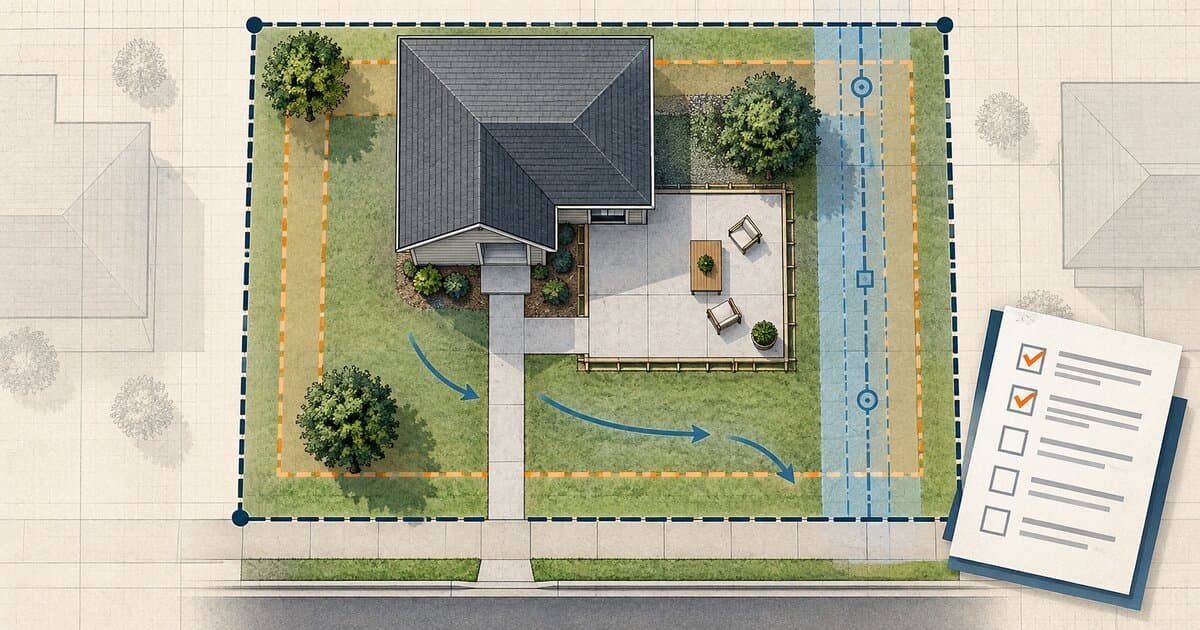
Do You Need a Permit to Pour Concrete? Patios, Slabs & Walkways
Pouring concrete may be permit-exempt or regulated depending on whether it is a patio, slab, walkway, driveway, structural base, or right-of-way work.
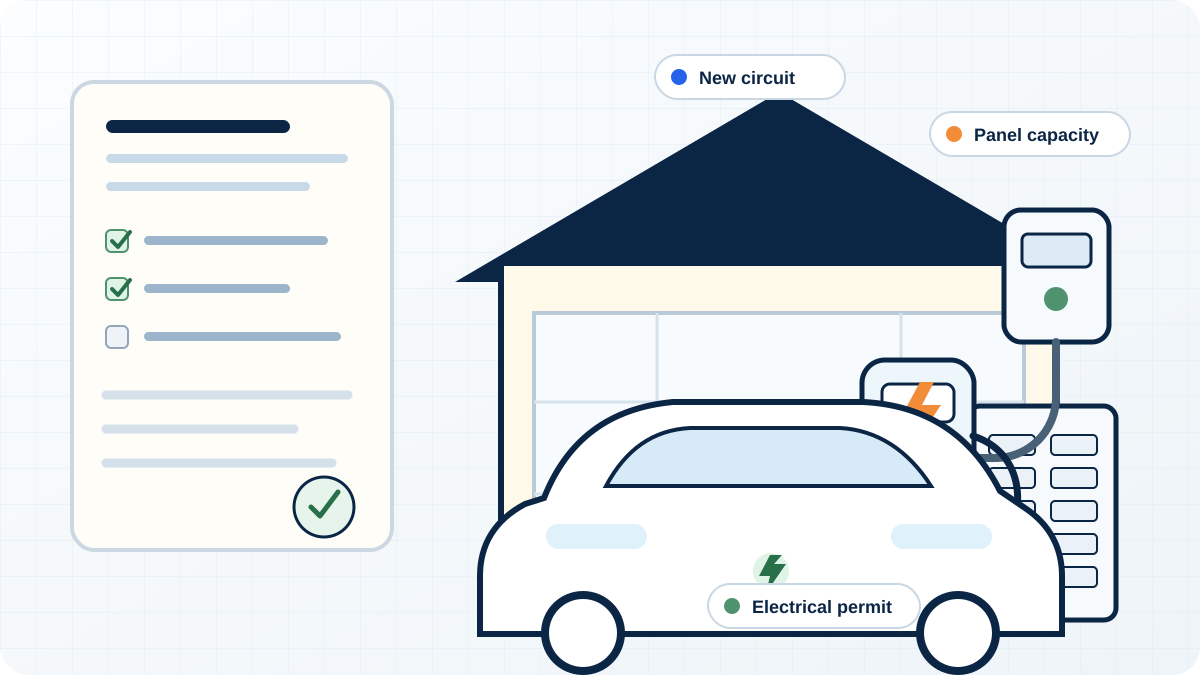
Do You Need a Permit for an EV Charger?
Learn when a home EV charger needs an electrical permit, when panel or service upgrades enter the project, and how inspection and utility coordination work.
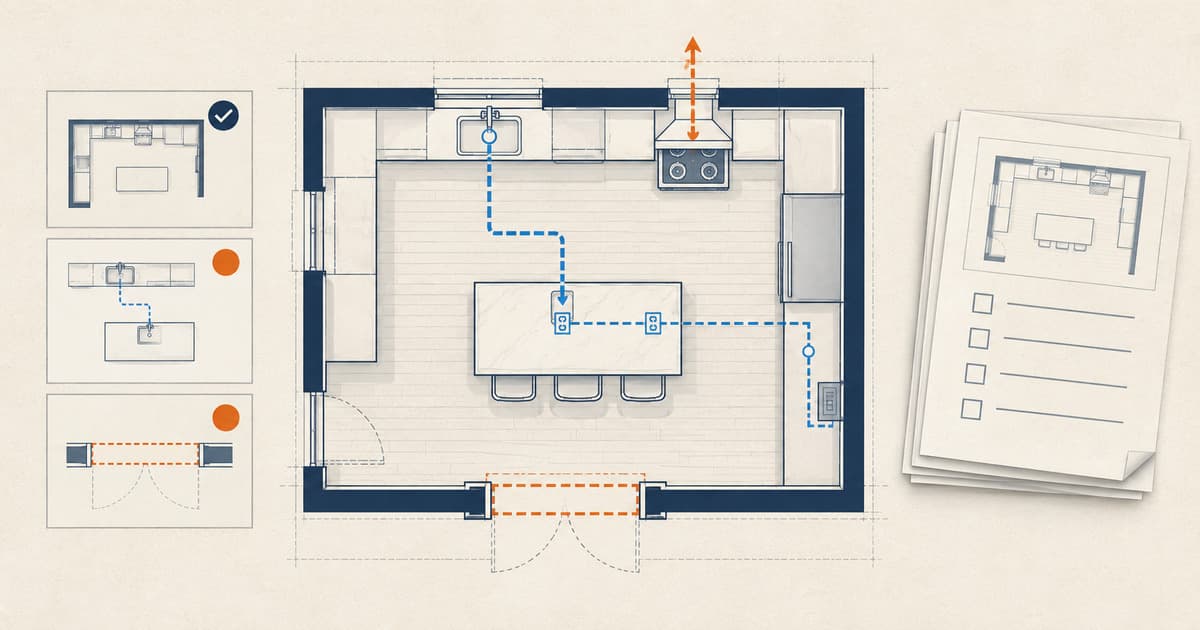
Do You Need a Permit for a Kitchen Remodel?
Learn when cabinets, sinks, islands, appliances, walls, wiring, plumbing, gas, or ventilation can change kitchen-remodel permit and inspection needs.