
Do I Need a Permit for a Fence in Kenosha?
Kenosha requires a zoning permit for almost every fence, with narrow exceptions for very low decorative fencing and seasonal snow fences. Here's how height, setbacks, and materials rules apply by yard.
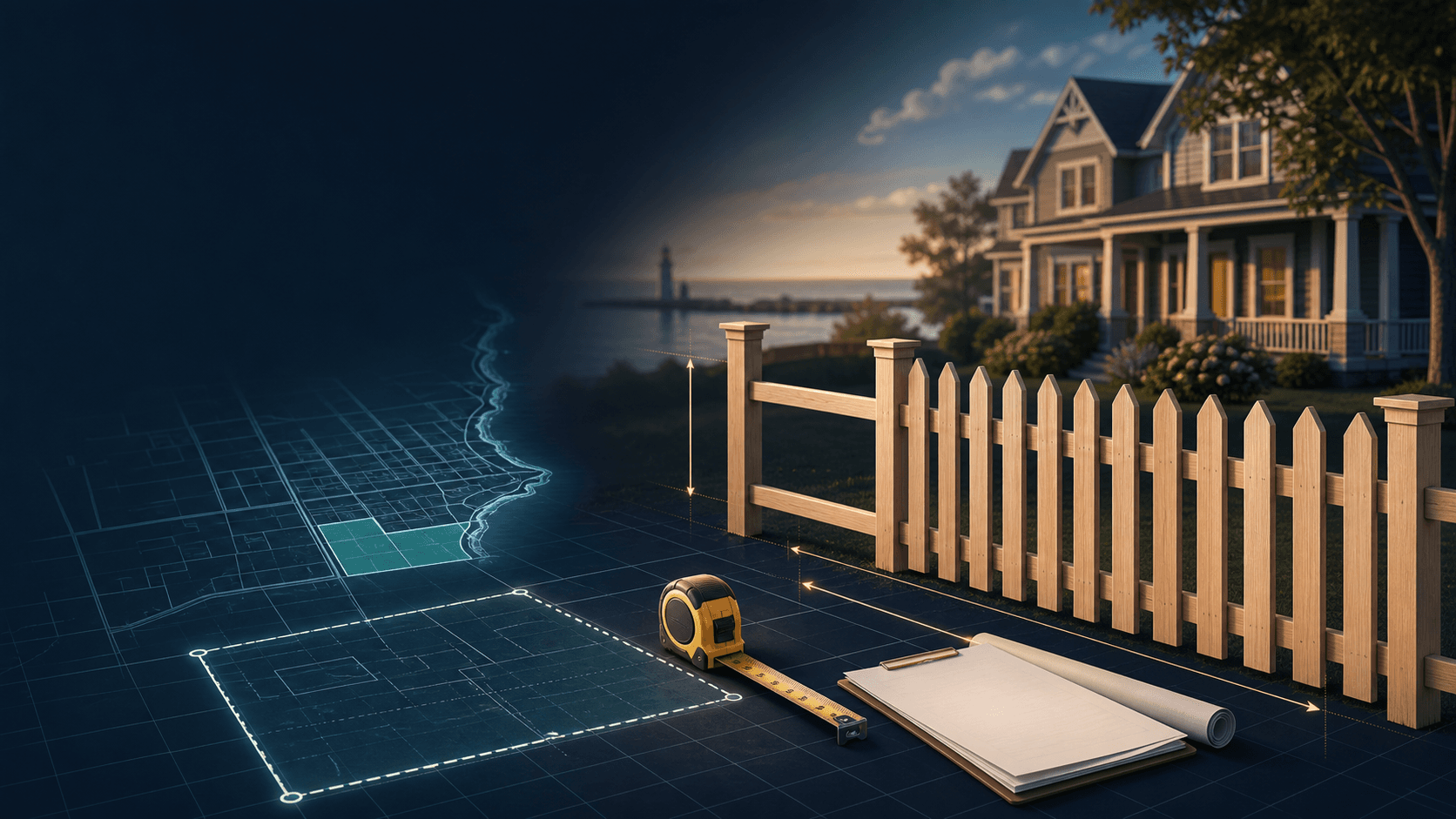
Direct Answer: Yes, in almost every case. The City of Kenosha's Department of City Inspections requires a zoning permit before you install, replace, or substantially alter a fence anywhere in the city, under Section 16.0 (Fence Code) of the Kenosha Zoning Ordinance. The only fences that skip the permit are decorative fencing no taller than 2 feet and seasonal wood-picket snow fencing up to 4 feet tall that comes down between May 1 and November 1, per the city's own Fence Information Sheet. Everything else — from a standard backyard privacy fence to a short front-yard picket fence — needs a $60 permit reviewed against the ordinance's height, material, and setback standards before you dig a single post hole.
Verified against official municipal and state sources: July 13, 2026. Requirements change — confirm with the city before applying.
Key Takeaways
- The City of Kenosha's Department of City Inspections issues fence permits citywide under Zoning Ordinance Section 16.0; no fence may be built, altered, or replaced without one except the narrow exemptions below.
- Decorative fencing 2 feet or shorter, and temporary wood-picket snow fencing up to 4 feet (removed each year between May 1 and November 1), are the only fences that don't need a permit, per the city's Fence Information Sheet.
- Height is capped by yard: 4 feet in the street (front) yard, 6 feet in side and rear yards, measured above natural grade. A narrow grandfather clause lets fences built before November 5, 1984 stand up to 8 feet.
- Front-yard fences must be at least 50% open, decorative-style fencing (split rail, wrought iron, picket); solid privacy fencing and chain-link are prohibited in front yards under the same ordinance.
- Applications use Fence Permit Form DCI110 ($60 fee) and are submitted by email, mail, or in person — the City of Kenosha does not run its fence applications through an online portal the way Kenosha County does for unincorporated areas.
- Fences are a zoning matter under the city's own ordinance, separate from the Wisconsin Uniform Dwelling Code, explained, which governs the structural code for the dwelling itself, not accessory fencing.
The Practical Rule
In Kenosha, the default assumption should be "yes, I need a permit," not the other way around. Unlike cities that exempt fences under a certain height, Kenosha's ordinance requires a permit for essentially all fence-type structures, including arbors and trellises used as fencing, with only two narrow carve-outs: very short (2-foot) decorative fencing, and temporary snow fencing that comes down every spring. Once you know you need a permit, the real decision tree is about where the fence sits and what it's made of. Street-facing (front) yards are the most restricted: fences there are capped at 4 feet and must be an open, decorative style — no stockade, no chain-link. Side and rear yards allow a taller 6-foot fence in nearly any style. Corner lots carry extra rules on top of that, because Kenosha treats both street-facing sides of a corner lot as "front" yards for setback purposes, and enforces a sight-distance triangle near intersections.
What to Check Before You Build
- Confirm your exact property lines. The City of Kenosha places responsibility for locating property lines on the owner, not the inspections department — if there's any doubt, get a survey before you build, especially if the fence is meant to sit close to the line.
- Identify which yard the fence falls in. A fence that's fine in a rear yard (6 feet, any compliant material) can be over-height or wrong-material if it wraps into a street (front) yard, where the limit drops to 4 feet and open, decorative styles are required.
- Check whether you're on a corner or double-frontage lot. Kenosha's Fence Code applies front-yard setback rules to both streets on a double-frontage lot, and bars anything 3 to 9 feet tall inside the visual-clearance triangle within 15 feet of an intersecting street or alley right-of-way.
- Confirm you're inside city limits, not unincorporated Kenosha County. The City of Kenosha's Department of City Inspections and its Section 16.0 fence rules only apply within the city; unincorporated parts of Kenosha County follow the county's own fence and zoning-permit rules, administered through the county's eTRAKiT portal rather than the city's paper/email process.
- Call Diggers Hotline before you dig. Wisconsin's one-call law requires notifying Diggers Hotline (811 or 1-800-242-8511) at least three business days before digging post holes so gas, electric, and other utility lines can be marked.
Fees, Setbacks, and Application Details
A City of Kenosha fence permit runs $60, submitted on Fence Permit Form DCI110, which the department revises periodically (the current version is dated 04/24) — confirm you're using the latest form from the city's Permit Applications page before you submit. The application must include a scaled drawing of the property and its buildings showing exactly where the fence will sit; the city does not survey the lot for you. Beyond the 4-foot/6-foot height-by-yard rule, Section 16.0 sets several placement setbacks: fences next to a public sidewalk must sit at least 6 inches back from it, fences must maintain a 3-foot clearance from any utility pedestal on or bordering the property, and fences along an alley must keep a minimum 2-foot setback from the lot line. In the city's commercial districts (B-1 through B-6), fencing generally isn't allowed in a required front yard at all unless it's approved through a Conditional Use Permit, Site Plan Review, or a variance from the city's Board of Zoning Appeals. Completed applications go to the Department of City Inspections at 625 52nd Street, Room 100, Kenosha, WI 53140 — by email to bldgpermits@kenosha.org, by mail, or in person; the department can also be reached at (262) 653-4263. For general orientation to how the city's permitting office handles projects beyond fences, see the Kenosha building permit guide.
Frequently Asked Questions
Does Kenosha exempt short fences from needing a permit?
Mostly no. Only decorative fencing 2 feet tall or less, and temporary wood-picket snow fencing up to 4 feet that's removed between May 1 and November 1 each year, skip the permit requirement under the city's Fence Information Sheet. A typical 6-foot backyard privacy fence or a 4-foot front-yard picket fence both need a permit.
How tall can my fence be in Kenosha?
It depends on the yard: up to 4 feet in the street (front) yard and up to 6 feet in side and rear yards, measured above natural grade, under Zoning Ordinance Section 16.0. Fences built before November 5, 1984 may be grandfathered up to 8 feet.
Can I put up a solid privacy fence facing the street?
No. Kenosha requires residential front-yard fencing to be at least 50% open, decorative-style fencing such as split rail, wrought iron, or picket. Chain-link and solid privacy (stockade-style) fencing are prohibited in front yards, though both are generally allowed in side and rear yards.
What does a Kenosha fence permit cost, and how do I apply?
The fee is $60, using Fence Permit Form DCI110. The City of Kenosha accepts applications by email to bldgpermits@kenosha.org, by mail, or in person at the Department of City Inspections — there isn't a dedicated online fence-permit portal for the city (unlike Kenosha County, which uses eTRAKiT for unincorporated-area permits).
Do I need a permit if my fence is inside unincorporated Kenosha County instead of the city?
If your property is outside City of Kenosha limits, the city's Section 16.0 fence rules don't apply — you'd instead follow Kenosha County's fence and zoning-permit process, which has its own height, setback, and permitting requirements and its own online portal.
Who do I contact with fence permit questions in Kenosha?
The Department of City Inspections at 625 52nd Street, Room 100, Kenosha, WI 53140, phone (262) 653-4263, email bldgpermits@kenosha.org. See the department's Building Inspection page for current hours and forms.
Verify Your Address
Fence rules in Kenosha turn on exactly where your property sits — inside city limits versus unincorporated county, which yard the fence falls in, and whether it crosses a corner-lot sight triangle. Before you buy materials or call a contractor, run a permit check or review GovCodex's Kenosha permit catalog so the height, setback, and material limits are tied to your specific address rather than a generic fence rule. For other exterior projects in the city, see fence permit rules: height, setbacks, and property lines and what is a setback in zoning.
Related Articles
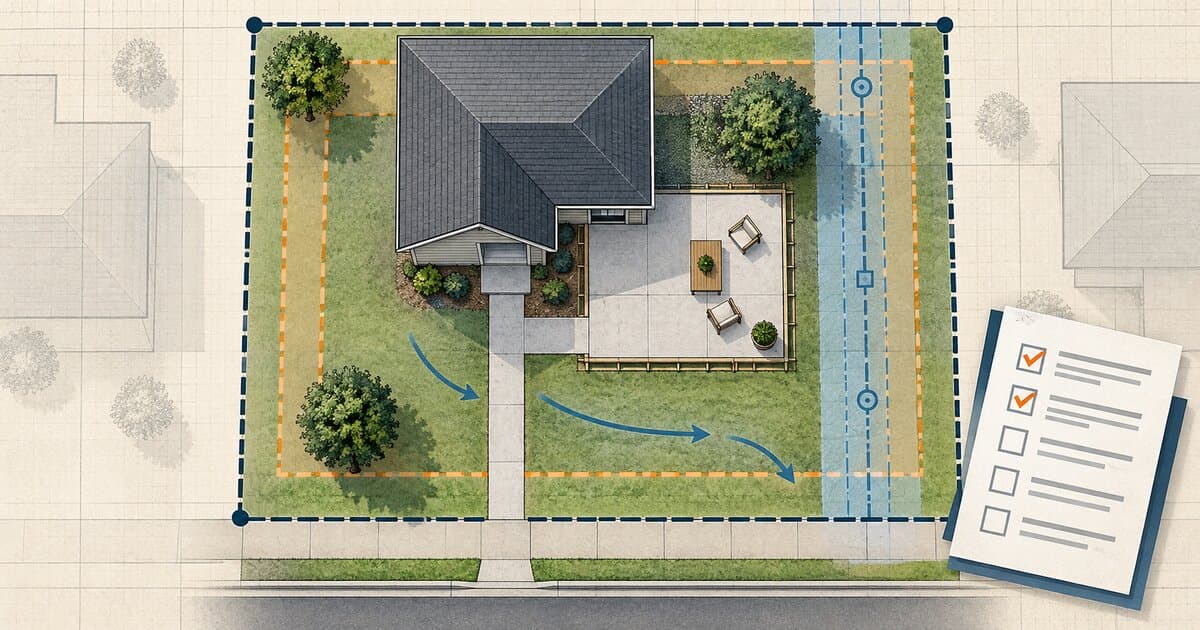
Do You Need a Permit to Pour Concrete? Patios, Slabs & Walkways
Pouring concrete may be permit-exempt or regulated depending on whether it is a patio, slab, walkway, driveway, structural base, or right-of-way work.
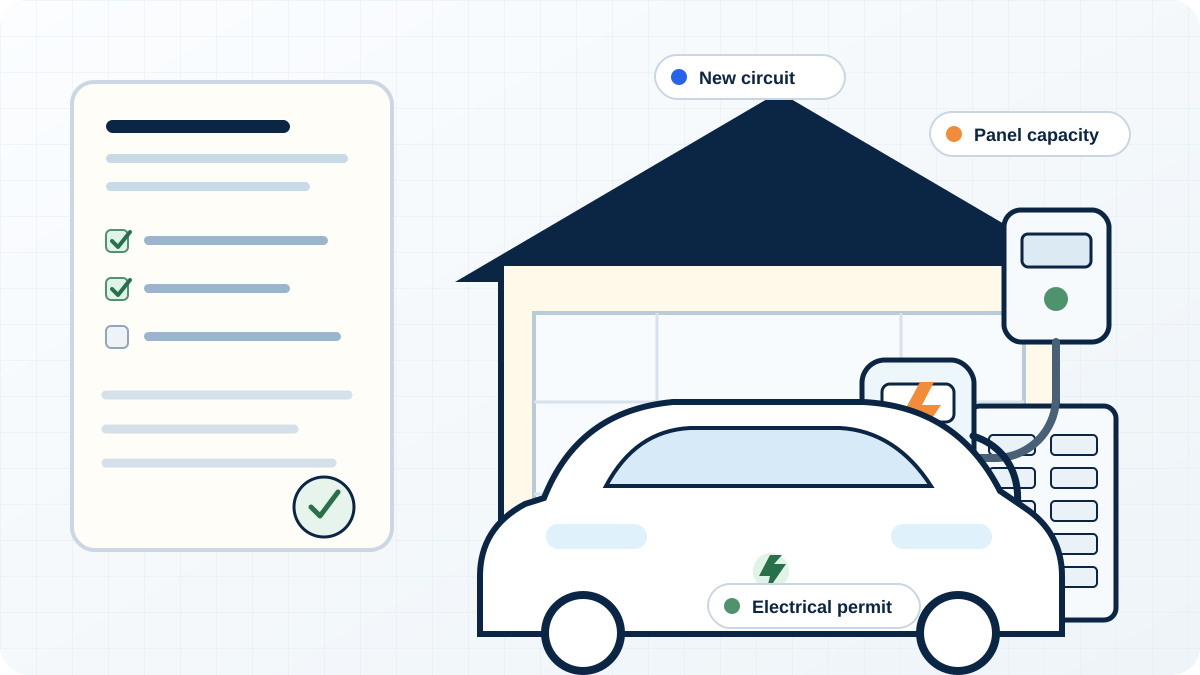
Do You Need a Permit for an EV Charger?
Learn when a home EV charger needs an electrical permit, when panel or service upgrades enter the project, and how inspection and utility coordination work.
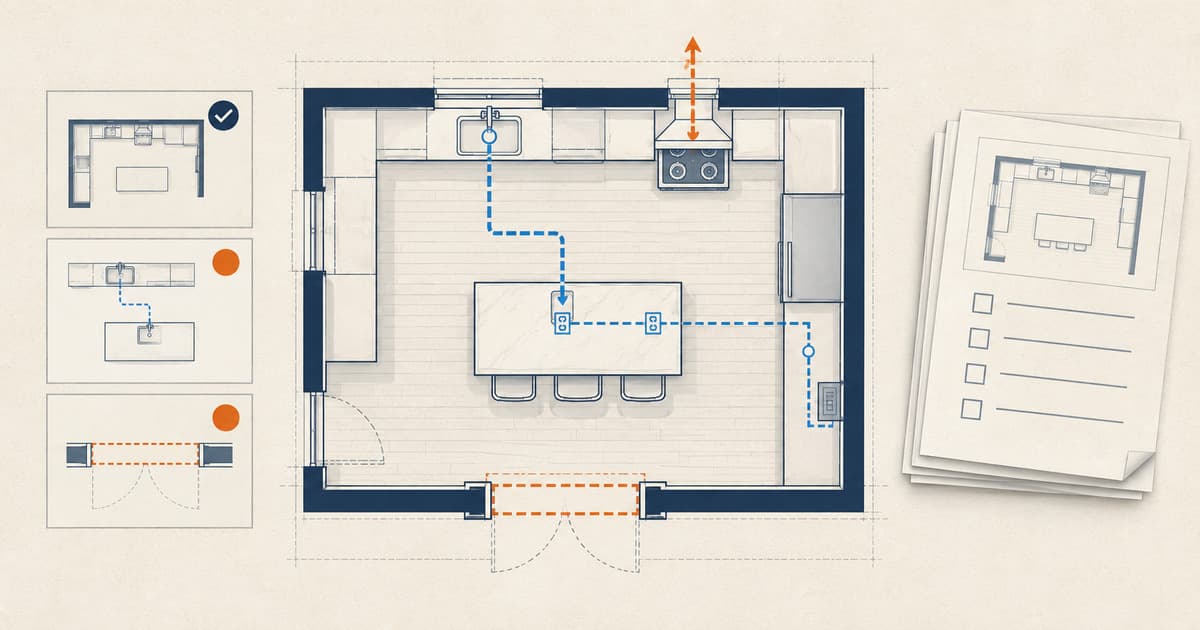
Do You Need a Permit for a Kitchen Remodel?
Learn when cabinets, sinks, islands, appliances, walls, wiring, plumbing, gas, or ventilation can change kitchen-remodel permit and inspection needs.