
Do I Need a Permit for a Fence in Duluth?
Duluth requires a zoning permit for any fence 4 feet or taller, and a building permit above 7 feet. Here's what the city's Unified Development Chapter checks: yard height limits, corner-lot sightlines, setbacks, and overlay districts near Lake Superior.
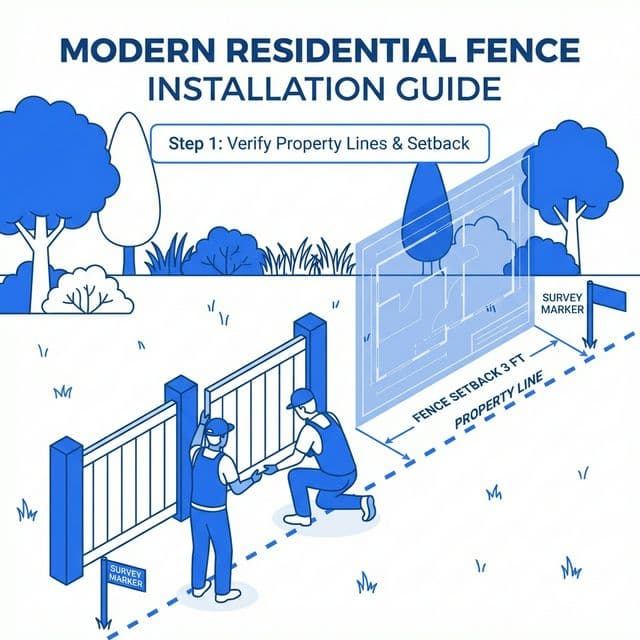
Direct Answer: In Duluth, Minnesota, most fences need a permit before you build: the city requires a zoning fence permit for any fence 4 feet or taller, and if the fence exceeds 7 feet you also need a building permit. Duluth's Construction Services & Inspections (CSI) division issues both, applying the height, yard-location, and corner-visibility standards in Section 50-26 (Screening, Walls, and Fences) of the city's Unified Development Chapter — Chapter 50 of the Duluth Legislative Code. A fence under 4 feet, kept clear of the right-of-way and away from any shoreland or Skyline Parkway overlay, is the main case that skips the permit; anything taller, or anywhere near a corner lot, right-of-way, or Lake Superior-facing bluff, should be checked against the code before you dig a post hole.
Verified against official municipal and state sources: July 13, 2026. Requirements change — confirm with the city before applying.
Key Takeaways
- Duluth requires a zoning fence permit for any fence 4 feet or taller, and an additional building permit for fences over 7 feet, per the city's Fence Permits page.
- Front-yard fences top out at 4 feet (up to 6 feet if the fence is ornamental and at least 50% open, such as wrought iron, spaced steel bar, or hog wire in a cedar frame); side- and rear-yard fences can go up to 8 feet, under UDC §50-26.
- On corner lots, front-yard height limits apply to both street frontages, and the code requires a "clipped corner" near intersections so fences don't block driver sightlines.
- Every fence must sit at least 3 feet back from any right-of-way (street or alley) — the city warns the legal right-of-way often extends past the visible curb, sidewalk, or grass edge, so confirm the real line through the Zone District & Setback Information lookup or St. Louis County's parcel records before you build.
- Barbed wire, razor wire, most electric fencing, and temporary plastic/snow fencing in front yards are prohibited materials under the ordinance.
- Properties near Lake Superior, the St. Louis River, other protected waters, or below Skyline Parkway may carry additional Shoreland or Skyline Parkway overlay setbacks — confirm with Planning and Economic Development before finalizing your layout.
- All fence permit applications go through the city's ePlace online portal; the fence page lists a $100 application fee.
The Practical Rule
Duluth's fence rule turns on two things: how tall the fence is, and where it sits relative to your yard and lot lines. Anything under 4 feet is generally the only category that can skip a permit outright — once you cross that line, you need a zoning permit, and once you cross 7 feet you need a building permit on top of it. Height is also yard-specific: the city treats the front yard (the strip between your house and the street) more conservatively than the side and rear yards, capping ordinary front-yard fences at 4 feet while allowing up to 8 feet once you're behind the front building line. Corner lots complicate this because Duluth's code applies front-yard standards to both street-facing sides of the lot, and layers on a "clipped corner" requirement so a tall fence can't block the sightline drivers need at an intersection. Underneath all of that sits a basic setback rule — fences must stay 3 feet clear of any street or alley right-of-way — which is where most disputes start, because homeowners often assume the right-of-way ends at the curb or sidewalk when it frequently does not.
What to Check Before You Build
- Confirm your zone district and exact property lines. Use the city's Zone District, Setback Information & Permitted Uses lookup or St. Louis County's parcel records to identify your zone district and right-of-way line before you measure anything — the ordinance's 3-foot setback runs from the actual right-of-way, not the curb or sidewalk.
- Measure your planned fence height against the yard it sits in. Front yard: 4 feet standard, up to 6 feet for an ornamental, at least 50%-open design; side and rear yards: up to 8 feet. On a corner lot, treat both street-facing yards as "front yards."
- Check whether you're within a shoreland or Skyline Parkway overlay. Lots near Lake Superior, the St. Louis River, and other protected waters, or below Skyline Parkway, can carry added setback rules under the city's Natural Resources and Skyline Parkway overlays — call Planning at 218-730-5580 or planning@duluthmn.gov to confirm before planning a layout near a bluff or shoreline.
- Pick a compliant, permitted material. Barbed wire, razor wire, most electric fencing, scrap or waste material, and temporary plastic/snow fencing in front yards are not allowed; chain-link in a front yard is limited to a vinyl-coated style under 4 feet.
- Call Gopher State One Call before you dig. Duluth's own fence-permit instructions direct applicants to call 811 (Gopher State One Call, 800-252-1166) to have utility lines marked before setting posts.
What Does Duluth's Unified Development Chapter Actually Say?
Fences fall under Section 50-26, Screening, Walls, and Fences, part of Article 4 of the Unified Development Chapter — Chapter 50 of the city's Legislative Code, also searchable through Municode. The section sets the front/side/rear height limits described above, requires the "clipped corner" at street and alley intersections on corner lots, and separately restricts what a fence can be made of: no scrap or waste materials unless they've been recycled or reprocessed into building materials sold to the public, and no signage on a fence beyond a single property-identification or management sign under one square foot. The city also allows "alternative screening" where the literal standard can't be met because of unique site conditions — that's a case-by-case review through Planning, not a self-certified exception. Duluth's form districts (denser, more urban zone types) are stricter still: fences generally aren't allowed in the required front yard at all, except to enclose an outdoor patio or dining area, and even then the height caps at 3 feet.
Frequently Asked Questions
Does every fence in Duluth need a permit?
No. The city ties the permit requirement to height: a zoning fence permit is required once a fence reaches 4 feet, and a building permit is added on top of that once it exceeds 7 feet. A fence shorter than 4 feet, built outside the right-of-way setback and any shoreland or overlay area, is the main case that doesn't need a permit — see the Fence Permits page.
How tall can my fence be in Duluth?
It depends on the yard. Front yards cap at 4 feet (up to 6 feet for an ornamental, at least 50%-open design); side and rear yards allow up to 8 feet. Corner lots apply the front-yard limit to both street-facing sides, per UDC §50-26.
How close to my property line — or the street — can I build?
The ordinance requires a minimum 3-foot setback from any right-of-way, such as a street or alley. The city specifically warns that the legal right-of-way often extends past the visible curb or sidewalk, so confirm the real boundary through the county's parcel records or a survey rather than guessing from the pavement edge.
Are there extra rules near Lake Superior or Skyline Parkway?
Possibly. Properties within the city's Natural Resources (shoreland) overlay or the Skyline Parkway overlay can carry additional setback and height restrictions layered on top of the base zoning rules. These are property-specific — confirm with Planning and Economic Development (218-730-5580, planning@duluthmn.gov) before finalizing a fence plan near a bluff, creek, or the lakefront.
What does a Duluth fence permit cost, and how do I apply?
The city's fence page lists a $100 application fee, paid through the ePlace online permitting portal. You'll need a site plan (hand-drawn or digital) showing the fence's location, height, and length relative to your lot lines and the 3-foot setback, plus proof you're the property owner or have the owner's signed consent.
What materials are prohibited?
Barbed wire, razor wire, and most electrically charged fencing are not allowed on residential property (narrow exceptions exist for garden/livestock protection and institutional security). Temporary plastic or snow fencing isn't allowed in front yards, and chain-link in a front yard is limited to a vinyl-coated style no taller than 4 feet.
Verify Your Address
Fence rules in Duluth depend on exactly where your property sits — which yard the fence falls in, how close you are to a right-of-way, and whether a shoreland or Skyline Parkway overlay applies. Before you buy materials, run a permit check or review GovCodex's Duluth permit catalog so the height and setback limits are tied to your actual address. For the city's broader permitting process, see the Duluth building permit guide, and for how Minnesota's statewide code fits into local fence rules, see the Minnesota State Building Code, explained. For general fence-setback concepts that apply across jurisdictions, see fence permit rules: height, setbacks, and property lines.
Related Articles
Do You Need a Permit to Pour Concrete? Patios, Slabs & Walkways
Pouring concrete may be permit-exempt or regulated depending on whether it is a patio, slab, walkway, driveway, structural base, or right-of-way work.
Do You Need a Permit for an EV Charger?
Learn when a home EV charger needs an electrical permit, when panel or service upgrades enter the project, and how inspection and utility coordination work.
Do You Need a Permit for a Kitchen Remodel?
Learn when cabinets, sinks, islands, appliances, walls, wiring, plumbing, gas, or ventilation can change kitchen-remodel permit and inspection needs.