
Dakota County, MN Permits: Who Issues What
In Dakota County, MN, your city or township issues building permits, not the county. Here's what the county itself handles: septic, wells, shoreland/floodplain, plats, and county road access.

Direct Answer: In Dakota County, Minnesota, building permits are issued by the city or township where the property sits — not by the county — because the Minnesota State Building Code (Minn. Stat. §326B.121) puts enforcement in municipal hands once a city or township has adopted it. Dakota County's own government issues a narrower, specific set of permits instead: shoreland and floodplain land-use permits under County Ordinance 50 (in unincorporated townships and near public waters), septic system (SSTS) permits under County Ordinance 113 (directly in the cities of Hastings, Randolph, and New Trier, plus Randolph and Waterford townships — every other city and township runs its own program), well construction and sealing permits countywide under County Ordinance 114, public drainage system (county ditch) connection permits, and highway access permits for any driveway, street, or utility crossing that touches a county road. Plats that border a county road also need a Plat Commission review before the city or township will issue building permits on the resulting lots.
Verified against official Dakota County and Minnesota state sources: July 13, 2026. Requirements change — confirm with your city, township, or the county before applying.
Key Takeaways
- Building permits in Dakota County come from your city or township, not the county — the county's own site states plainly that "all cities and townships in Dakota County have land use and zoning authority" and that "building permits are issued by the city or township" (Dakota County: Building & Zoning Permits).
- That split exists because Minnesota's State Building Code is enforced locally: once a municipality has adopted the code by ordinance, it "must continue to administer and enforce the State Building Code within its jurisdiction" (Minn. Stat. §326B.121).
- The county directly permits septic systems (SSTS) only in Hastings, Randolph, New Trier, and Randolph and Waterford townships; every other city and township in the county runs its own septic program under Ordinance 113's minimum standards (Dakota County: Septic Systems).
- Dakota County is one of a small number of Minnesota counties with a state-delegated well program, so it issues well construction, sealing, and monitoring-well registrations countywide under County Ordinance 114 (MDH: Delegated Well Programs; Dakota County: Well Permits).
- Shoreland and floodplain permits under County Ordinance 50 apply in the county's unincorporated townships near public waters and FEMA floodplains; incorporated cities administer their own shoreland rules under the same statewide DNR minimum standards (Dakota County: Shoreland & Floodplain Management).
- A county highway access permit is only needed where a driveway, new street, or utility crossing connects to a road on the county highway system — not for access onto a city street (Dakota County: Highway Permits).
- The County Plat Commission reviews any proposed plat contiguous to a county road before the county board approves it — a step that happens before, and separate from, the building permits the city or township later issues on those lots (Dakota County: Plats and Surveys).
Scope note: This article covers Dakota County's own permitting role and the general city/township split described above. It does not cover the specific building-code procedures, fees, or online portals of any one of the county's 16 cities or 12 townships — each runs its own building department (or contracts one out) with its own process. Confirm the details with your city or township before applying.
Which Government Issues Building Permits in Dakota County?
Dakota County has 16 cities — Apple Valley, Burnsville, Coates, Eagan, Empire, Farmington, Hampton, Hastings, Inver Grove Heights, Lakeville, Lilydale, Mendota, Mendota Heights, Miesville, New Trier, Northfield, Randolph, Rosemount, South St. Paul, Sunfish Lake, Vermillion, and West St. Paul — and 12 townships: Castle Rock, Douglas, Eureka, Greenvale, Hampton, Marshan, Nininger, Randolph, Ravenna, Sciota, Vermillion, and Waterford (Dakota County: Cities & Townships). Unlike some Wisconsin towns, Minnesota townships are full local governments with their own zoning and building authority — so a property in an unincorporated township is not automatically under county jurisdiction for building permits the way it might be in other states.
Every one of those 33 jurisdictions administers its own building permits under the Minnesota State Building Code. Larger cities run full in-house building departments: Eagan's Building Inspections Division reviews plans, issues permits, and schedules inspections through its own online portal (City of Eagan: Building Inspections), and Hastings' Department of Building Safety does the same, issuing permits for everything from roofing and siding to additions and mechanical work (City of Hastings: Permits). Smaller townships often contract the function out — Castle Rock Township, for example, routes building-permit applications through its Planning Commission and Board of Supervisors, then to a contracted building official (Inspectron, Inc.) for plan review and inspections (Castle Rock Township: Permits). The office changes from place to place, but the authority is always local, never the county's. For how building permits differ from the zoning, electrical, and plumbing approvals a project might also need, see Building vs. Zoning vs. Electrical vs. Plumbing Permits, Explained.
What Does Dakota County Itself Handle?
Dakota County's Building & Land Use Permits page lists the county's own permitting role in specific terms, separate from anything a city or township issues: shoreland land-use permits for "construction, grading, filling, or removal of vegetation" near public waters, floodplain permits tied to FEMA-designated flood areas, and Public Drainage Systems permits for "connecting, placing utilities or dewatering to a public drainage system (county ditch)" owned by the County Drainage Authority (Dakota County: Building & Zoning Permits). These are administered by the county's Environmental Resources department, reachable at 952-891-7557 or environ@co.dakota.mn.us.
The shoreland and floodplain piece is the one most property owners run into unexpectedly. County Ordinance 50 (Shoreland and Floodplain Management) governs these areas, and it applies in the county's unincorporated townships near rivers, lakes, and mapped floodplains — not inside incorporated cities, which write and enforce their own shoreland ordinances under the same statewide DNR minimum standards (Dakota County: Shoreland & Floodplain Management). If a project is in a township and anywhere near water, it's worth checking with the county before assuming the township building permit is the only approval needed. For the general concept, see What Is a Setback in Zoning?
Who Handles Septic Systems (SSTS) — the County or Your City?
Septic permitting in Dakota County follows a specific, named split rather than the general county/city rule above. The county directly administers Subsurface Sewage Treatment System (SSTS) permitting, inspections, and enforcement — under County Ordinance 113 — in the cities of Hastings, Randolph, and New Trier, and in Randolph and Waterford townships. Every other city and township in Dakota County runs its own septic program, administering, permitting, inspecting, and enforcing septic rules that meet or exceed Ordinance 113's standards and Minnesota Rules chapters 7080–7083 (Dakota County: Septic Systems).
That means a property inside the city of Hastings gets its building permits from the City of Hastings' Building Safety department, but its septic permit from Dakota County — two different offices for two different systems on the same project. Work on any septic system must be done by a licensed septic professional, and existing systems typically face a compliance inspection when a property is sold, when a served building is expanded, or when the system's use changes (Dakota County: Septic Systems). For septic records or questions, the county's contact is 952-891-7008 (or 952-891-7557 for Environmental Resources generally).
Who Issues Well Permits?
Unlike most Minnesota counties, Dakota County runs its own well program under a delegation from the Minnesota Department of Health. MDH's list of local boards of health with delegated well-program authority includes only eight counties (Blue Earth, Dakota, Goodhue, Le Sueur, Olmsted, Wabasha, Waseca, and Winona) plus the cities of Bloomington and Minneapolis — everywhere else in the state, well construction and sealing permits come directly from MDH, not the county (MDH: Delegated Well Programs).
Because Dakota is on that list, well construction, well sealing, and the annual registration of monitoring and product-recovery wells are all handled by the county, countywide, under County Ordinance 114 (Well and Water Supply Management) — regardless of which city or township the well sits in. A licensed well contractor normally files the application; a parcel identification number (PIN) is required on every application (Dakota County: Well Permits). Applications and contacts run through Water Resources at wellpermits@co.dakota.mn.us or 952-891-7000.
Plats, Subdivisions, and the County Plat Commission
Before a landowner can carve raw land into buildable lots in Dakota County, the resulting plat has to be recorded — and if that plat touches a county road, it goes through an extra layer of county review first. The County Surveyor's Office reviews all proposed plats for compliance with Minnesota Statutes chapters 505 and 508, and only one official "mylar" plat document is required for recording (Dakota County: Plats and Surveys). Plats that are contiguous to a county road get a second review from the Plat Commission — made up of the County Surveyor and representatives from transportation planning, land use planning, traffic engineering, and land subdivision — which recommends approval to the County Board before the plat can be recorded, and before the affected cities or townships will issue building permits on the new lots.
This is a land-division step, not a building-permit step, but it matters for anyone buying or splitting rural or edge-of-city land: the county's sign-off on the plat has to happen first, and only afterward does the city or township's own permitting process begin. Questions on plats and surveys go to the County Surveyor's Office at 952-891-7087 or surveyoffice@co.dakota.mn.us.
Do You Need a County Highway Access Permit?
Dakota County is the road authority for the county highway system — county roads and county state-aid highways — but not for city streets or township roads. A permit from the county's Transportation Department is required to construct any driveway, new street, or field entrance that connects to a county highway, and to install utilities within county right-of-way (Dakota County: Highway Permits). If a driveway only touches a city street, that's the city's permit to issue, not the county's. Fees apply before the county issues the permit; the Right of Way/Permits Coordinator can be reached at 952-891-7115, or the Transportation Department generally at hwy@co.dakota.mn.us.
Who Handles What in Dakota County?
| Function | Who handles it | Source |
|---|---|---|
| Building permit (new construction, additions, remodels) | Your city or township — all 16 cities and 12 townships administer their own | Dakota County: Building & Zoning Permits |
| Zoning, setbacks, land use | Your city or township's planning/zoning office | Local ordinance |
| Septic system (SSTS) permit | Dakota County in Hastings, Randolph, New Trier, Randolph Twp., and Waterford Twp.; your city or township everywhere else | Dakota County: Septic Systems |
| Well construction / sealing permit | Dakota County, countywide (a state-delegated well program) | Dakota County: Well Permits |
| Shoreland / floodplain land-use permit | Dakota County in unincorporated townships (Ordinance 50); your city if incorporated | Dakota County: Shoreland & Floodplain Management |
| Public drainage system (county ditch) connection | Dakota County, County Drainage Authority | Dakota County: Building & Zoning Permits |
| Driveway or utility access on a county highway | Dakota County Transportation Department | Dakota County: Highway Permits |
| Driveway or utility access on a city or township road | Your city or township | — |
| Plat review for lots contiguous to a county road | Dakota County Plat Commission and County Board (before city/township building permits issue) | Dakota County: Plats and Surveys |
How Do I Get a Permit for My Project in Dakota County?
- Confirm which city or township your property is in. Dakota County's boundaries include 16 cities and 12 townships, each with its own building department or contracted building official — the county government does not run a general permit counter for standard construction (Dakota County: Cities & Townships).
- Apply for the building permit with that city or township, not the county, using its own portal, forms, or in-person process.
- Check whether your property touches a public water, floodplain, or a private well or septic system. If it does, you may owe the county a separate permit — shoreland/floodplain (Ordinance 50), well (Ordinance 114), or septic (Ordinance 113, in the five named jurisdictions) — in addition to, not instead of, your city or township's building permit.
- Check whether new driveway or utility access will touch a county highway. If so, apply separately to Dakota County Transportation for a highway access permit before construction.
- If you're subdividing land, confirm with the County Surveyor's Office whether your plat is contiguous to a county road and therefore needs Plat Commission review before recording — and before your city or township will issue building permits on the new lots.
- Schedule required inspections with whichever office issued each permit — the city/township for the building permit, and Dakota County Environmental Resources or Water Resources for any county-issued permit.
For general guidance on how Minnesota's statewide code interacts with local administration outside Dakota County, see The Minnesota State Building Code, Explained.
Frequently Asked Questions
Does Dakota County issue building permits?
No, not for standard construction. Building permits in Dakota County come from the city or township where the property is located; the county's own site states that "building permits are issued by the city or township" (Dakota County: Building & Zoning Permits).
If I live in a township, does the county handle my building permit instead of the township?
No. Minnesota townships are full local governments with their own zoning and building authority, distinct from the county. All 12 of Dakota County's townships administer their own building permits, either in-house or through a contracted building official (Dakota County: Cities & Townships; Castle Rock Township: Permits).
Why does the county handle septic permits in Hastings but not in Eagan?
Dakota County directly administers SSTS permitting only in the cities of Hastings, Randolph, and New Trier, and in Randolph and Waterford townships, under County Ordinance 113. Every other city and township — including Eagan — runs its own septic program instead (Dakota County: Septic Systems).
Do I need a permit from Dakota County to drill or seal a well?
Yes, in almost every case. Dakota County is one of only eight Minnesota counties with a state-delegated well program, so it issues well construction and sealing permits countywide under County Ordinance 114 — a licensed well contractor typically files the application (MDH: Delegated Well Programs; Dakota County: Well Permits).
My driveway connects to a road near my house — do I need a county permit?
Only if that road is a county highway or county state-aid highway. Access onto a city street or township road is handled by the city or township, not the county (Dakota County: Highway Permits).
Does the county review my plans before my city issues a building permit?
Generally no — except for plats. If your lot was created by subdividing land contiguous to a county road, the county's Plat Commission and County Board had to approve that plat before it could be recorded, which happens before your city or township issues any building permits on the resulting lots (Dakota County: Plats and Surveys).
Verify the Rules for Your Property
Because Dakota County splits authority across 16 cities, 12 townships, and several county departments — with septic permitting alone naming five specific jurisdictions — general guidance can only get you so far. Check GovCodex's Dakota County permit catalog for a jurisdiction-by-jurisdiction breakdown, or run a permit check against your actual address to confirm which office — city, township, or county — has authority over your specific project before you apply.
Related Articles
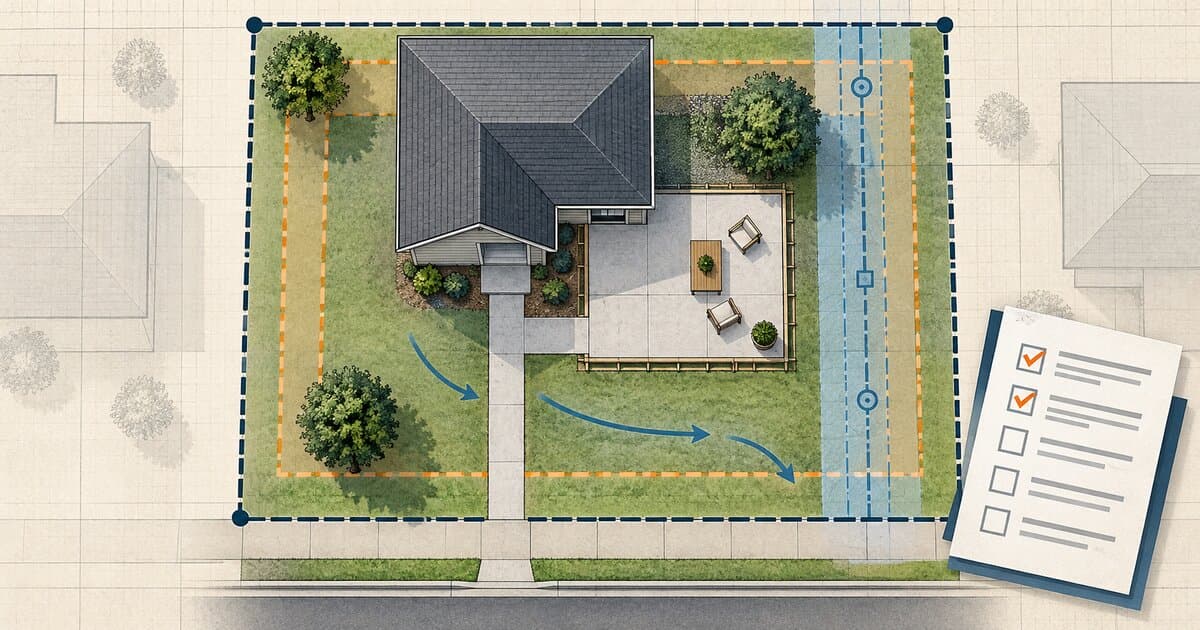
Do You Need a Permit to Pour Concrete? Patios, Slabs & Walkways
Pouring concrete may be permit-exempt or regulated depending on whether it is a patio, slab, walkway, driveway, structural base, or right-of-way work.
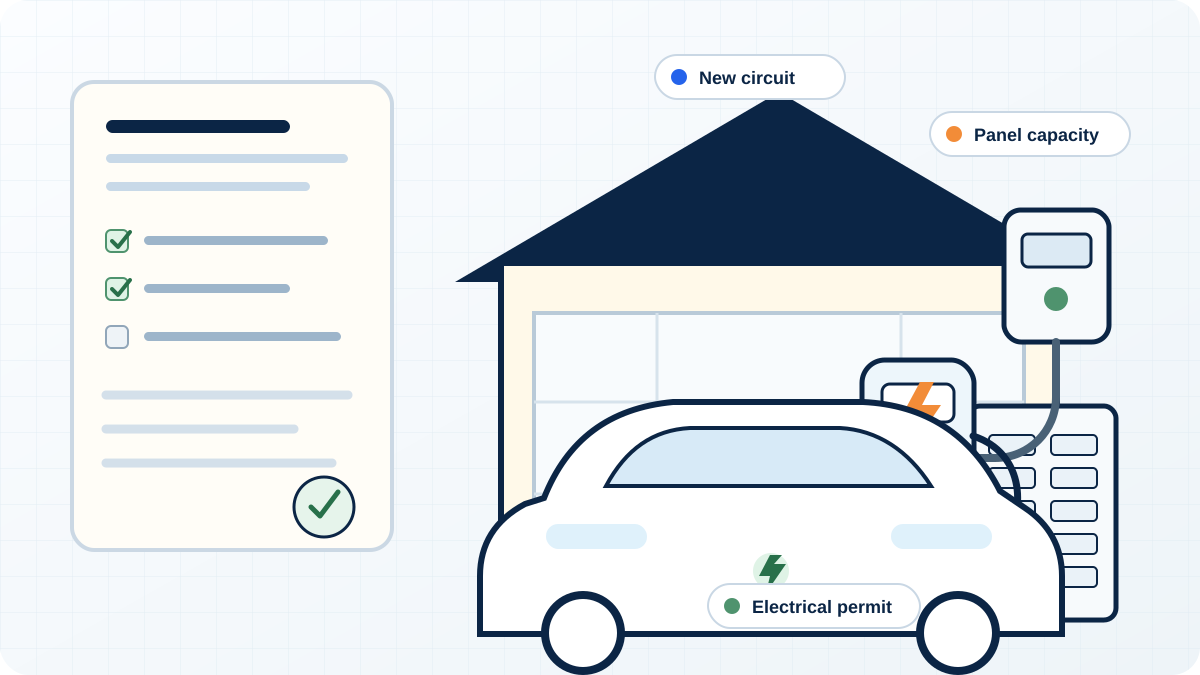
Do You Need a Permit for an EV Charger?
Learn when a home EV charger needs an electrical permit, when panel or service upgrades enter the project, and how inspection and utility coordination work.
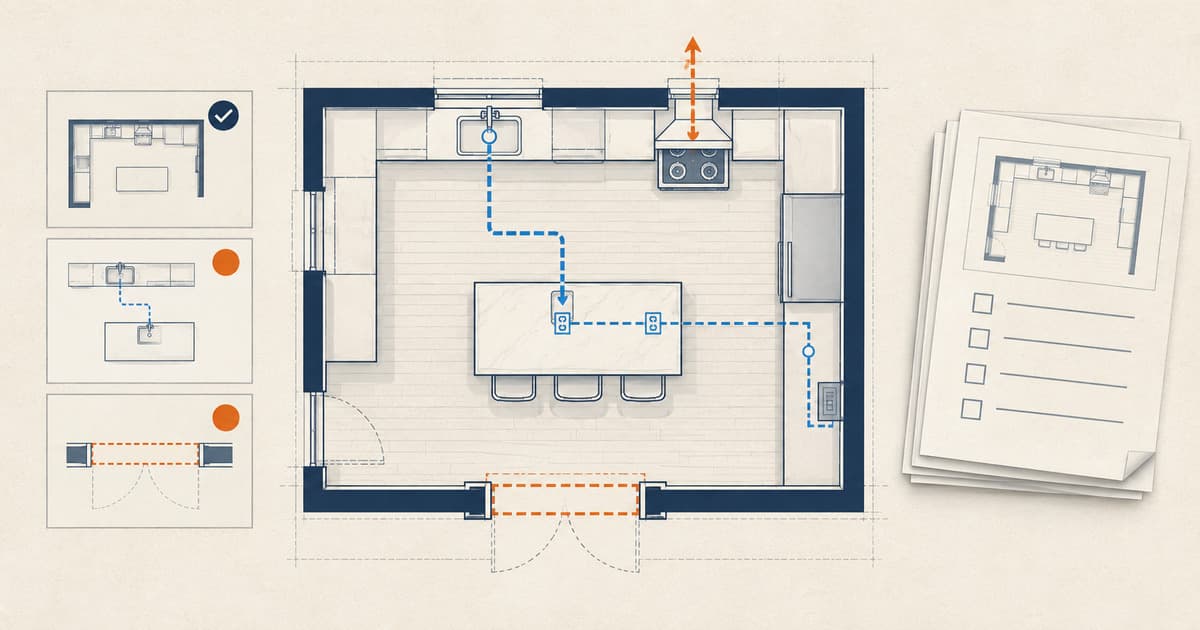
Do You Need a Permit for a Kitchen Remodel?
Learn when cabinets, sinks, islands, appliances, walls, wiring, plumbing, gas, or ventilation can change kitchen-remodel permit and inspection needs.