
Evanston Building Permit Guide (2025–2026)
How to get a building permit in Evanston, Illinois: which division issues permits, adopted codes, what's exempt, zoning and setbacks, fees, contractor registration, and inspections.
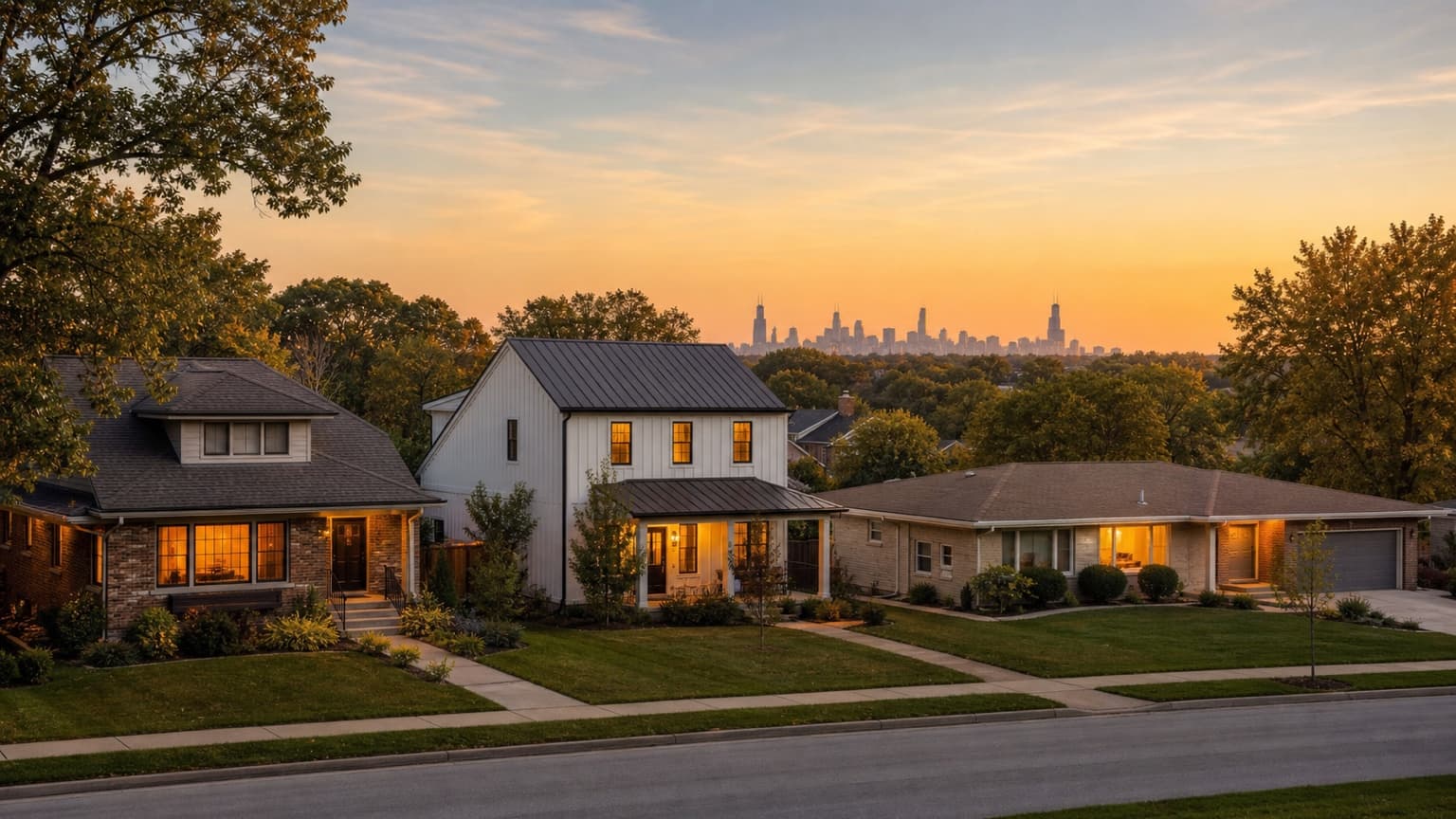
Direct Answer: In Evanston, Illinois, the Building & Development Services Division of the Community Development Department issues every building, electrical, plumbing, and HVAC permit inside city limits, applying the 2021 International Building Code and 2021 International Residential Code with local amendments, organized as Title 4 (Building Regulations) of the Evanston City Code. Zoning compliance — setbacks, lot coverage, and use — is reviewed separately against the Zoning Ordinance, Title 6 by the Planning & Zoning Division. Most projects are submitted through the city's Citizen Portal, reviewed concurrently by Building, Zoning, Engineering, Preservation, and Fire, and every contractor working under the permit — other than an owner occupying a single-unit home — must be registered with the city.
Verified against official municipal and state sources: July 13, 2026. Requirements change — confirm with Evanston Building & Development Services before applying.
Key Takeaways
- The Building & Development Services Division, inside the Community Development Department, issues all building permits and handles inspections and property maintenance enforcement citywide.
- Evanston enforces the 2021 IBC, 2021 IRC for one- and two-family homes, 2021 IPMC, 2020 NFPA 70 (NEC), and the Illinois Plumbing Code, plus the 2023 Illinois Stretch Energy Code, effective for applications filed on or after October 1, 2025.
- Illinois has no statewide residential building code — Evanston, like every other Illinois municipality, writes and enforces its own; see our Illinois building codes explainer.
- Applications go through the Citizen Portal, and only through it — the City is categorical: “Paper application and documents are no longer accepted” and “A user account must be established prior to submitting a permit application”; the city cites roughly 4–6 weeks for standard building permits and 3–4 business days for Express Permits (fences, roofing, siding, window replacement, and similar repair-and-replace work).
- Small detached accessory structures at or under 120 square feet, purely cosmetic finish work, and several categories of minor electrical, HVAC, and plumbing repair are exempt from a permit — most other work is not.
- Zoning setbacks and lot coverage vary by residential district (R1 through R6); look your property up on the city's About My Place mapping tool before assuming a number from a neighboring lot applies to yours.
- Every contractor other than an owner-occupant doing their own single-unit home must register with the city and carry minimum liability insurance before pulling a permit.
Scope note: This article covers permitting inside the City of Evanston only. Neighboring Chicago, Skokie, and Wilmette each run their own building departments, codes, and zoning ordinances, even though all are subject to the same Illinois home-rule framework described in our state guide.
Which Department Issues Permits in Evanston?
The Building & Development Services Division sits inside the Community Development Department at Lorraine H. Morton City Hall, 909 Davis Street, on the first floor next to the collector's cashiers. The division reviews and issues construction permits, performs inspections, and enforces property maintenance code. Permit desk walk-in hours are Tuesday through Friday, 8:30 a.m. to noon; general questions go to 311 or (847) 448-4311, and permit-specific questions go to the Permit Desk at (847) 448-8207 or permitdesk@cityofevanston.org. Zoning questions — district classification, setbacks, and variance procedure — go to the separate Planning & Zoning Division, also inside Community Development.
What Building Codes Apply in Evanston?
Illinois is a home-rule state with no statewide residential building code, so every municipality — including Evanston — adopts and amends its own (see our Illinois building codes, explained). Evanston's current adopted set, per Title 4 (Building Regulations) of the Evanston City Code, is:
- 2021 International Building Code (IBC), with local amendments, for commercial and multi-family construction.
- 2021 International Residential Code (IRC) for one- and two-family dwellings and townhomes.
- 2021 International Property Maintenance Code (IPMC) for existing-building upkeep and code enforcement.
- 2023 Illinois Stretch Energy Code, effective for building permit applications filed on or after October 1, 2025.
- 2020 NFPA 70 National Electrical Code (NEC).
- Illinois Plumbing Code, with local amendments, plus additional adopted standards covering mechanical systems, fuel gas, and fire prevention.
The full ordinance text lives in Title 4, Chapter 2 (Building Code) of the Evanston Code of Ordinances on Municode.
What Work Requires a Permit — and What's Exempt?
Any project involving a single-unit home, two-unit building, or townhome — including additions, exterior work, new construction, and interior renovations that touch electrical, plumbing, or HVAC systems — needs a residential permit. The city's Building Permits page lists a narrower, specific set of exemptions rather than a general small-project carve-out:
- Paint, wallpaper, tile, carpet, and similar cosmetic finish work.
- Detached accessory structures with a footprint at or under 120 square feet (sheds, gazebos, playhouses).
- Prefabricated above-ground pools accessory to a one- or two-unit dwelling that are no more than 24 inches deep and hold no more than 1,200 gallons.
- Swings and other playground equipment accessory to a detached one- or two-unit dwelling.
- Minor electrical repairs, such as lamp replacement or connecting approved portable equipment to an already-approved receptacle.
- Minor HVAC repairs, such as replacing minor parts.
- Minor plumbing repairs, such as stopping leaks, clearing stoppages, or removing and reinstalling a water closet.
Everything else — new construction, additions, decks, garages, fences, driveways, basement finishes, and larger accessory structures — needs a permit. When a project is borderline, the city recommends confirming with the Permit Desk at (847) 448-8207 before starting.
How Do I Apply for an Evanston Building Permit?
- Confirm what your project needs. Match your scope of work against the exemption list above; if it's not exempt, it needs either a standard permit or an Express Permit.
- Register any contractors who will work under the permit through the Citizen Portal — or, if you own and occupy a single-unit home and plan to do the work yourself, complete the required owner affidavit in lieu of contractor registration.
- Gather your documents: electronic plan copies, a current Plat of Survey for exterior work or additions, a total estimated construction cost, and contractor names and registration numbers.
- Submit through the Citizen Portal, where standard building permits and Express Permits (a faster track for repair-and-replace work like roofing, siding, windows, and fences) are both filed.
- Track concurrent review. Applications route to Building, Zoning, Engineering, Preservation, and Fire simultaneously; each division has to sign off before the permit issues.
- Schedule inspections as work proceeds by calling (847) 448-8207, Option 5, at least two business days ahead, with your permit number ready.
- Request your Certificate of Occupancy once all final inspections pass, if your project requires one — see the Certificate of Occupancy page for the residential or commercial application form.
What Permit Type Fits My Project?
| Project type | Track | Typical review time |
|---|---|---|
| New construction, additions, structural work | Standard building permit | 4–6 weeks |
| A/C replacement, furnace/boiler swap, fence installation, roofing, siding/gutters, window replacement, most plumbing and electrical (excluding solar, generators, EV chargers) | Express Permit | 3–4 business days, and the page adds that they “may be issued within 24 to 48 hours after submission”; allow five business days for the zoning review a fence or new A/C permit requires |
| Revisions to plans already under review | Plan revision | 10–15 business days |
| Solar, generators, EV chargers | Standard building permit (not Express-eligible) | Case by case |
Source: City of Evanston Building Permits page.
What About Zoning & Setbacks?
Passing building-code review is only half the requirement — every project also has to satisfy the Zoning Ordinance, Title 6 of the Evanston City Code, administered by the Planning & Zoning Division. Evanston's residential districts range from R1 through R6, each carrying its own minimum lot size, height limit, density, and setback rules — see Chapter 8, Residential Districts on Municode. Because these figures differ by district and sometimes by block, don't assume a number you saw for a neighboring property applies to yours; instead, look your address up on the city's About My Place mapping tool (the Quick Data tab shows your zoning district), then confirm exact setback figures against the adopted ordinance or by calling Planning & Zoning. Fences fall under their own special regulations in the zoning code — see the fence requirements FAQ, which references Zoning Ordinance §6-4-6-7, and our general explainer on what a zoning setback actually is. Routine staff-level zoning reviews (zoning analyses, home-occupation permits) typically take 2 to 30 days; larger requests — special uses, major variations, and map amendments — go to the Land Use Commission for a public hearing and City Council approval, a role the Zoning Board of Appeals and Plan Commission held before Ordinance 92-O-21 consolidated it effective January 1, 2022.
Evanston also allows accessory dwelling units citywide under a 2020 zoning ordinance — attached ADUs (basement, attic, or interior conversions) and detached coach houses are both permitted subject to setback, lot coverage, impervious surface, parking, and historic-district rules in the Evanston Guide to Accessory Dwelling Units. Any ADU that's rented must be registered with the city and inspected before occupancy. See our general primer on converting a garage into an ADU for the underlying trade-offs, and confirm Evanston-specific size and setback numbers against the official guide or with ADU@CityOfEvanston.org before designing.
What Does a Permit Cost?
Evanston's Permit Fee Schedule is organized into five categories — Building Permits, Fire Prevention Bureau, Planning & Zoning, Public Works, and Property Standards — and the current edition is the 2026 schedule, published 28 May 2026 — an earlier version of this guide pointed readers at the superseded January 2025 edition. The figures that govern most residential projects are on its first pages: the building permit base fee is 2% of the cost of construction (“A contractor proposal or contract shall be submitted prior to permit issuance to verify the cost of construction”), plan review runs on a work-value table starting at $25 for work under $10,000 and $50 for $10,000–$49,999, and “[t]he minimum charge for any required trade (structural, mechanical, electrical or plumbing) inspection or reinspection shall be seventy dollars ($70).” Contractor registration on the 2026 schedule is $150 for a general contractor and $125 for a trade contractor — note that the City's older Residential Project Information sheet still prints “GC $125/Trade $100”, and both documents are live, so confirm the amount before paying. The schedule states no minimum building permit fee anywhere, which is not the same as a zero minimum. Download the current schedule from that page or call 311 at (847) 448-4311 before budgeting. For general background on how municipalities typically structure permit fees, see how much does a building permit cost.
Do I Need a Registered Contractor?
Every contractor performing permitted work in Evanston — general, electrical, carpentry, concrete, excavation, masonry, landscaping, fence, roofing, and sign contractors alike — must register with the city through the Citizen Portal before starting work. Registration requires proof of general liability insurance (minimum $300,000 per occurrence, with $100,000 per occurrence bodily-injury and property-damage coverage), workers' compensation at statutory minimums, and, for electrical and other state-regulated trades, a copy of the applicable license. Right-of-way work carries a higher $1,000,000 per-occurrence insurance requirement. The one exception: an owner who occupies a single-unit residence may act as their own general contractor and perform mechanical, electrical, or plumbing work themselves by completing the corresponding affidavit demonstrating code knowledge, in place of hiring and registering a contractor.
Inspections & Certificate of Occupancy
Most construction projects require rough and final inspections, and the contractor of record must be on site to answer questions. Schedule inspections by calling (847) 448-8207, Option 5, at least two business days in advance with your permit number ready; you can schedule with any Permit Services staff member who answers, but not directly with the inspector. Structural rough (framing), plumbing rough, and HVAC rough/final inspections each have their own requirements — for example, a licensed plumber must be on site for plumbing rough inspections. Fire Prevention inspections (exit signs/lighting, suppression systems, alarm systems) are scheduled separately. Once every required inspection passes, submit the Certificate of Occupancy request — a Temporary Certificate of Occupancy (TCO) is available when only part of a multi-unit project is ready, while a Final Certificate of Occupancy (FCO) is required before full occupancy and is typically issued within about five business days once fees are paid and any applicable zoning, planned-development, or Inclusionary Housing Ordinance requirements are satisfied.
Frequently Asked Questions
Does Evanston require a permit for a small backyard shed?
Not if it's a detached accessory structure with a footprint at or under 120 square feet, such as a shed, gazebo, or playhouse. Larger sheds need a standard building permit. See the Building Permits page.
Do I need a permit to build a fence in Evanston?
Yes — fence installation is treated as an Express Permit in Evanston, reviewed in a few business days rather than the full standard timeline, and must also comply with the zoning code's fence regulations. See the fence requirements FAQ and our general guide to fence permit rules, height, and setbacks.
Can I pull my own permit and do the work myself?
Only if you own and occupy a single-unit home; you'll complete an affidavit in place of contractor registration for mechanical, electrical, or plumbing work. Rental and multi-unit properties must use registered contractors. See contractor licensing.
How long does it take to get a building permit in Evanston?
The city cites roughly 4 to 6 weeks for standard building permits and 3 to 4 business days for Express Permits covering repair-and-replace work like roofing, siding, windows, and fences — and says those “may be issued within 24 to 48 hours after submission”. One caveat the headline number hides: “Allow five business days for the zoning review required for fence or new AC permits.” Plan revisions run 10 to 15 business days. See Building Permits.
Can I build an accessory dwelling unit (coach house) in Evanston?
Generally yes — Evanston's City Council expanded ADU rules citywide in 2020 to allow both attached and detached units, subject to setback, lot coverage, parking, and historic-district requirements. Confirm the current rules for your property in the Evanston Guide to Accessory Dwelling Units.
What building code applies to a home addition in Evanston?
The 2021 International Residential Code with local amendments, plus the 2023 Illinois Stretch Energy Code for applications filed on or after October 1, 2025. See Adopted Codes.
Does this guide apply to Chicago, Skokie, or Wilmette?
No. Each of those municipalities runs its own building department, permit fees, and zoning code, even though all are governed by the same Illinois home-rule framework described in our state guide.
Verify the Rules for Your Property
Permit tracks, zoning setbacks, and fees change over time, and the exact numbers that apply depend on your parcel's zoning district and project scope. Before you apply, check GovCodex's Evanston permit catalog for the current permit types tied to your project, or run a permit check to see what your specific address and project actually require.
Related Articles
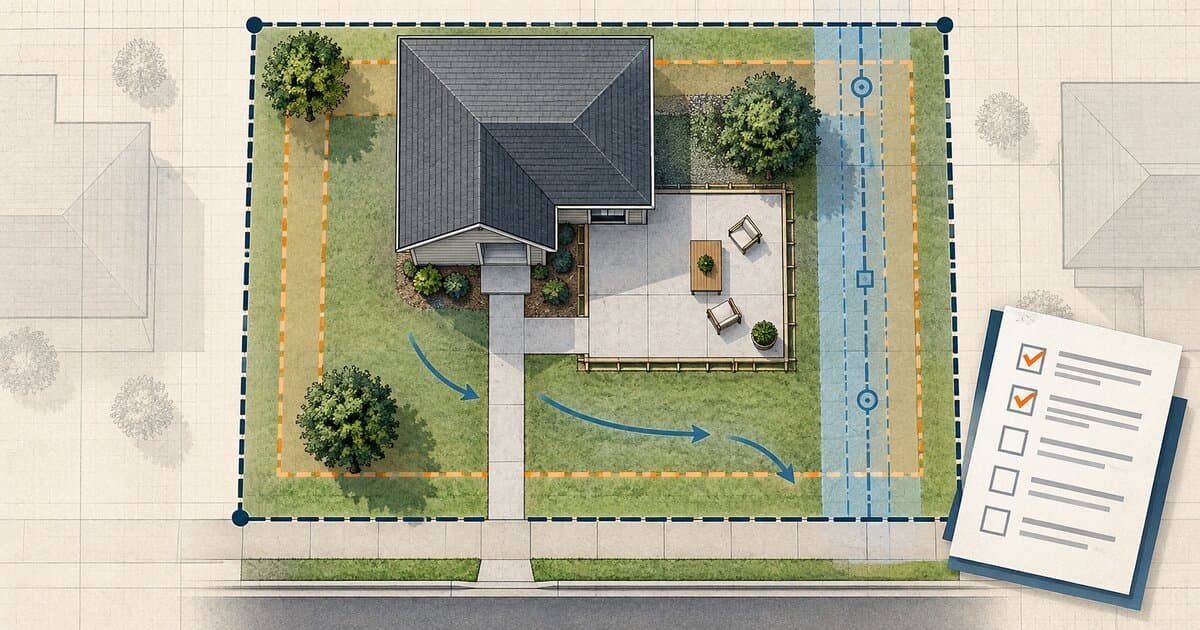
Do You Need a Permit to Pour Concrete? Patios, Slabs & Walkways
Pouring concrete may be permit-exempt or regulated depending on whether it is a patio, slab, walkway, driveway, structural base, or right-of-way work.
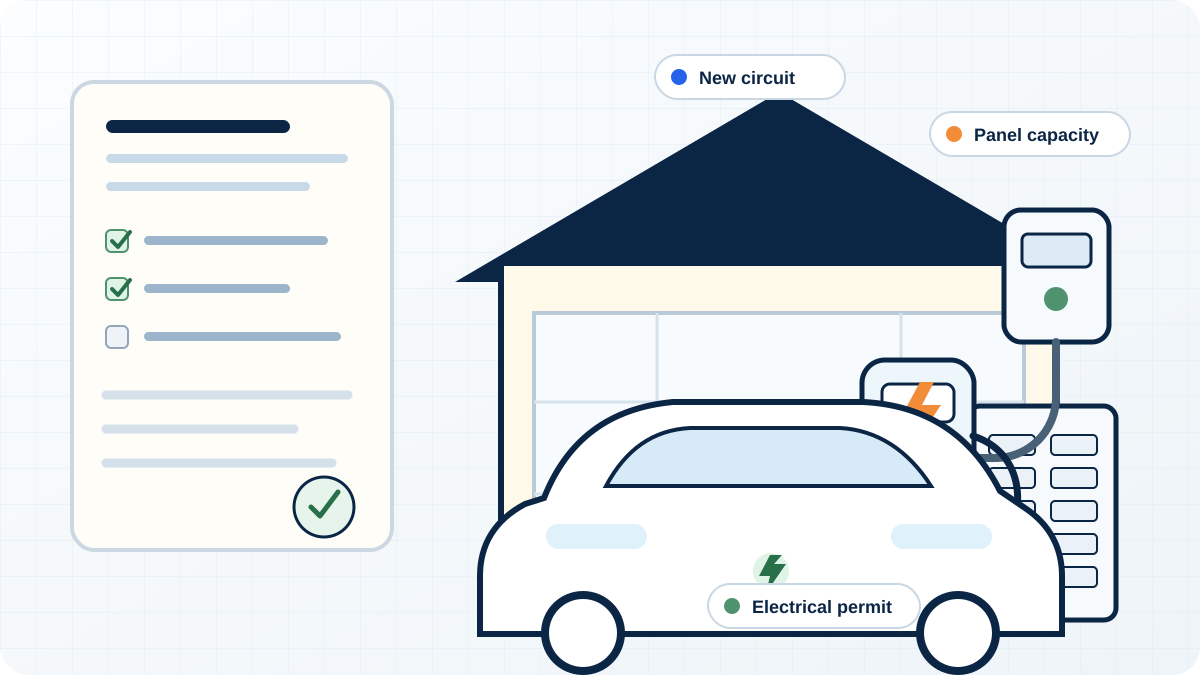
Do You Need a Permit for an EV Charger?
Learn when a home EV charger needs an electrical permit, when panel or service upgrades enter the project, and how inspection and utility coordination work.
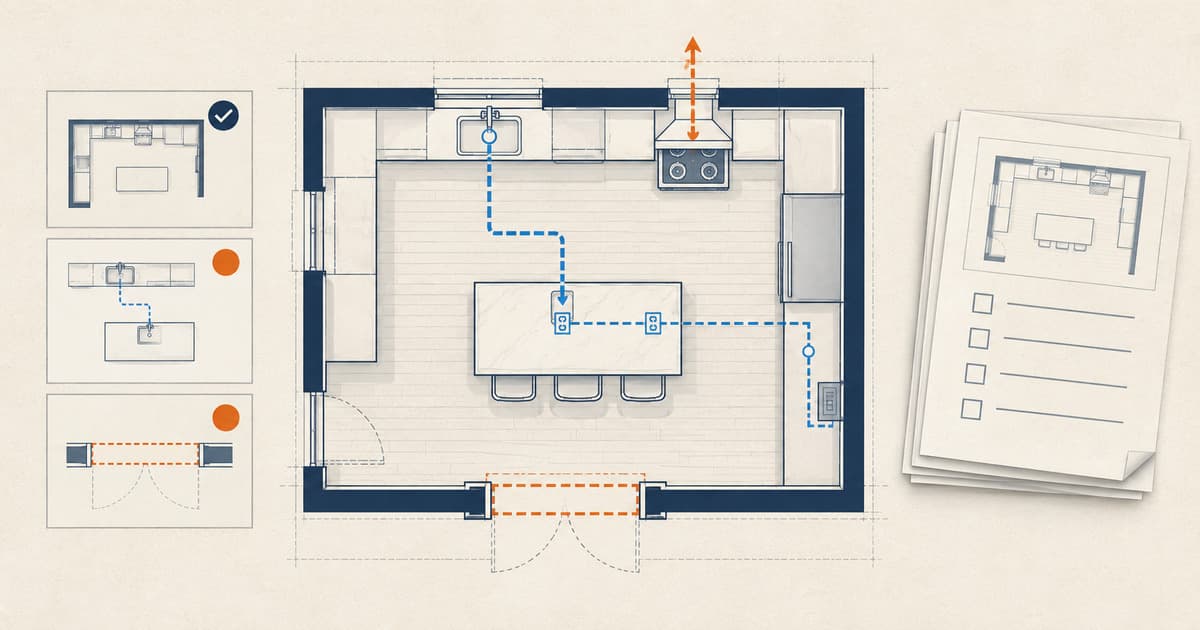
Do You Need a Permit for a Kitchen Remodel?
Learn when cabinets, sinks, islands, appliances, walls, wiring, plumbing, gas, or ventilation can change kitchen-remodel permit and inspection needs.