
Do I Need a Permit for a Driveway in Chicago?
Chicago requires a CDOT driveway permit for any curb cut across the public way, existing or new, while DOB only requires a building permit when you establish, expand, or eliminate off-street parking rather than repair it in kind.
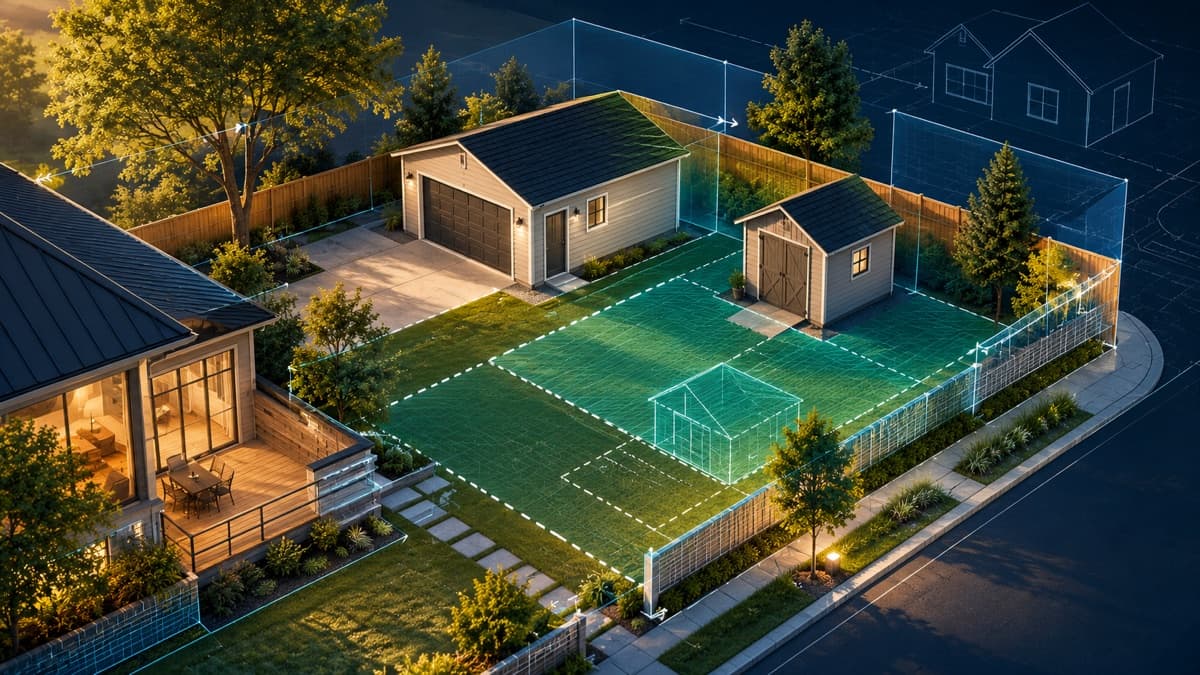
Direct Answer: In Chicago, you almost always need a permit to work on a driveway — but it usually isn't a Department of Buildings (DOB) building permit for the pavement itself. The Chicago Department of Transportation (CDOT) requires a driveway permit (a "use of public way" permit) for any driveway crossing the sidewalk or parkway between the curb and your property line, whether it already exists or is brand new. Separately, DOB does not require a building permit to maintain or replace an existing driveway in kind, but does require one to establish, expand, or eliminate an off-street parking area. New (proposed) driveways also need Zoning Department sign-off before CDOT will issue the permit.
Verified against official municipal and state sources: July 13, 2026. Requirements change — confirm with the city before applying.
Key Takeaways
- Every driveway crossing the public sidewalk or parkway needs a CDOT driveway permit: "No person has the right to use the public sidewalk or parkway as a driveway without first obtaining a use of public way permit authorized by the Commissioner of Transportation."
- DOB does not require a building permit to maintain or replace (in kind) an existing concrete, brick, or asphalt driveway, but does require one to establish, expand, or eliminate an off-street parking area — see DOB's permit-not-required guidance.
- New (proposed) driveways require Zoning Department sign-off at City Hall before CDOT issues the permit; formalizing an already-installed curb cut generally doesn't.
- Residential driveway permits (Class A, four units or fewer) cost a flat $10 application fee for the life of the ownership — see the instructions for residential applications.
- Chicago sets minimum and maximum driveway widths and minimum clearances from utilities, intersections, alleys, adjacent driveways, and trees — see the driveway permit FAQ.
- The Chicago Zoning Ordinance independently caps curb-cut width and restricts where off-street parking can sit relative to setbacks.
The Practical Rule
Chicago splits driveway regulation across two departments, and that split determines whether you need a permit. CDOT controls the public-way crossing — the curb cut and apron between the street and your property line — because that strip of pavement sits on city right-of-way. Any use of that strip as a driveway, existing or new, requires an insured CDOT driveway permit under Municipal Code Article IV, Driveways (10-20-390 et seq.). DOB controls the private portion and the underlying land use: repaving or patching an existing driveway in the same footprint and material doesn't need a DOB building permit, but pouring a brand-new parking pad, widening an existing one, or converting yard to parking — establishing or expanding an off-street parking area — does, because that changes a zoning-regulated use, not just a surface. If your driveway is brand new rather than a repair, expect Zoning Department review before CDOT signs off, plus field inspections from CDOT and other bureaus before the permit issues.
What to Check Before You Build
- Determine whether the work is "in kind" or new/expanded. Repairing or replacing your existing concrete, brick, or asphalt driveway in the same size, shape, and material doesn't trigger a DOB permit; adding square footage, paving over yard, or creating a new curb cut does — confirm against DOB's permit-not-required list.
- Apply for, or confirm you already hold, a CDOT driveway permit. This applies to virtually every driveway crossing the public way, existing or new — start at CDOT's Driveway Permits page, which also links the online Driveway Permitting Web Portal at ipi.cityofchicago.org/Permits.
- Gather your documentation early. Residential applicants need a completed application, copies of a plat of survey (or a sketch for existing driveways), a photo of the curb cut, apron, and sidewalk area, a homeowner's insurance certificate naming the City of Chicago as additional insured for $250,000, and the property's Permanent Index Number (PIN).
- Confirm the width and clearance rules for your lot. Review CDOT's driveway FAQ before finalizing a layout, and understand how setbacks constrain where a driveway or parking pad can sit on a residential lot.
- Check whether your street is under state jurisdiction. If your block is on an Illinois Department of Transportation (IDOT) route, you may need a separate IDOT driveway permit in addition to the city's — CDOT's FAQ flags this but leaves the determination to the applicant.
Dimensional and Location Standards
CDOT's driveway rules set both a floor and a ceiling on width, measured at the property line: a single-family residence needs at least 8 feet, a residential lot serving six cars or fewer needs at least 16 feet, and a two-way commercial driveway needs at least 20 feet; no driveway may exceed 25 feet. The Chicago Zoning Ordinance independently caps curb-cut width at 25 feet, so the two standards line up. CDOT also sets minimum clearances: 5 feet from above-ground utilities such as light poles and fire hydrants; 10 feet from the property line on a residential street and 20 to 30 feet near an arterial-street intersection; 10 feet from the edge of an alley; 10 feet from an adjacent driveway; and typically 5 feet from the trunk of a street tree, though the Bureau of Forestry reviews tree clearance case by case. These figures come directly from CDOT's published driveway permit FAQ; always confirm against the current version before finalizing a design, since CDOT periodically updates its driveway rules and regulations document. Large paving jobs can also trigger a Stormwater Management Plan if the new or reconfigured impervious surface reaches 7,500 square feet or more, separate from the driveway permit itself.
Zoning Sign-Off and Timeline
Not every application needs Zoning Department review, but many do. CDOT's FAQ specifies zoning sign-off is required for a commercial business, a motor-vehicle sale, repair, or parts use, a vacant lot, a business-type change, re-zoning, a driveway with no prior permit on file, and — notably — all proposed (new) driveway applications. Practically, that means anyone installing a brand-new residential driveway should plan for a Zoning Department stop at City Hall, 9th floor, before CDOT issues the permit. Timelines differ sharply by scenario: CDOT states that formalizing an existing driveway takes about one week by mail, while a proposed (new) driveway takes a minimum of 30 days and requires approved field inspections from the Bureau of Electricity, Bureau of Forestry, Department of Water Management, and Department of Transportation in addition to Zoning sign-off. For the broader distinction between this public-way permit and the building permits DOB issues for other project types, see building vs. zoning vs. electrical vs. plumbing permits.
Frequently Asked Questions
Does replacing my cracked driveway with the same concrete slab need a permit?
Not from DOB. Maintaining or replacing an existing noncombustible parking surface or driveway in kind — same material, size, and shape — is on DOB's list of work that doesn't require a building permit. You should still confirm your CDOT driveway permit is current, since CDOT permits don't transfer between owners.
I'm pouring a brand-new driveway where there wasn't one before. What do I need?
You'll need a CDOT driveway permit as a "proposed" application, which requires Zoning Department sign-off and field inspections before it's issued — plan on a minimum 30-day timeline. Because you're establishing a new off-street parking area, DOB is also likely to require a building permit; confirm with the Department of Buildings' 9th-floor assistance counter.
Can I just widen my existing driveway a few feet?
Widening an existing driveway generally counts as expanding an off-street parking area, which DOB's guidance flags as requiring a building permit, separate from any updated CDOT driveway permit for the wider curb cut. Confirm your new width doesn't exceed the city's 25-foot maximum.
Does my driveway permit transfer when I buy a house with an existing driveway?
No. CDOT's FAQ is explicit that driveway permits do not transfer from owner to owner, so a new owner must apply in their own name even if nothing about the driveway is changing.
Who do I call with driveway permit questions?
CDOT's Driveway Permit section, at 312-744-9148, or the Department of Transportation office at City Hall, 121 North LaSalle Street, Room 905.
Is Chicago's driveway rule different from the rest of Illinois?
Yes. Illinois is a home-rule state with no statewide residential building code, so Illinois building codes are set locally — Chicago's driveway and off-street-parking rules apply only inside city limits, and neighboring suburbs and Cook County set their own.
Verify Your Address
Driveway rules depend on your lot's zoning district, your block's street classification, and whether a prior permit already exists for your address — details a generic guide can't confirm for you. Check GovCodex's Chicago permit catalog for the permit types tied to your property, or run a permit check to see what your specific address and project actually require before you apply.
Related Articles
Do You Need a Permit to Pour Concrete? Patios, Slabs & Walkways
Pouring concrete may be permit-exempt or regulated depending on whether it is a patio, slab, walkway, driveway, structural base, or right-of-way work.
Do You Need a Permit for an EV Charger?
Learn when a home EV charger needs an electrical permit, when panel or service upgrades enter the project, and how inspection and utility coordination work.
Do You Need a Permit for a Kitchen Remodel?
Learn when cabinets, sinks, islands, appliances, walls, wiring, plumbing, gas, or ventilation can change kitchen-remodel permit and inspection needs.