
How Long Does It Take to Get a Building Permit Approved?
Estimate building-permit approval time by separating intake, review, corrections, outside approvals, and issuance—and matching each number to its official definition.

There is no defensible universal approval time. A small permit on an express path may move in days, while a project that requires full plan review, corrections, or outside-agency approval can take months. The useful estimate is the one for your issuing authority, project type, review path, and current submission stage.
Before relying on any timeline, confirm:
- Who issues the permit. City, county, state, and special-district responsibilities vary by address.
- When the clock starts. Some agencies start counting only after intake accepts a complete application, invoices are paid, and the file is routed to reviewers.
- Whether the number is a first-review target or total approval time. Those are different measures.
- How correction cycles are counted. Applicant response time and agency re-review time can both extend the calendar.
- Whether other agencies or discretionary approvals are involved. Zoning, fire, health, utilities, landmarks, environmental review, and public hearings can run on separate clocks.
- What remains after approval. Final fees, contractor credentials, bonds, or document uploads may still be required before issuance.
The fastest reliable way to improve an estimate is to identify the correct authority and review path first. Permit Check helps establish that starting point before you plan work around a generic average.
The building-permit timeline is a chain of clocks
Treating the process as a single review period hides the delays that matter most. A practical estimate separates the stages below.
| Stage | What happens | Main owner | What can reset or pause it |
|---|---|---|---|
| Intake | The agency checks forms, plans, scope, address, and fees for basic completeness. | Agency and applicant | Missing documents, wrong jurisdiction, unpaid invoice |
| Initial review | Building, zoning, and other assigned reviewers examine the submission. | Agency | Incorrect review path, additional discipline referral |
| Corrections | The agency issues comments; the applicant revises and resubmits. | Applicant, then agency | Incomplete responses, redesign, new scope |
| Approval conditions | Required sign-offs, documents, or conditions are completed. | Shared | Fire, utility, health, landmarks, or other approvals |
| Issuance | Final fees and credentials are accepted and the permit is released. | Agency and applicant | Unpaid balance, expired credentials, missing contractor data |
A useful planning model is therefore:
intake + first review + applicant response + re-review cycles + outside approvals + issuance
If an agency publishes only one component, do not present it as an end-to-end promise.
Current official timelines show why the review path matters
Austin publishes residential plan-review targets effective July 1, 2026. Its page lists same-day service for eligible express reviews, five business days for several limited project types, and ten business days for new construction and additions. It also states that the review clock starts only after a submission is accepted, invoiced, paid, and distributed to review staff. After final review, permit issuance generally takes another one to two business days.
| Austin residential review path | Published target |
|---|---|
| Eligible express review | Same day |
| Demolition, fence, garage conversion, interior remodel, minor revision, pool or uncovered deck | 5 business days |
| New construction and additions | 10 business days |
| Update submittal | 7 business days |
These are service targets for named paths—not a national average and not a guarantee for every Austin application. Projects routed to additional review groups can take longer. Always check the agency page for its current definitions and eligibility before using the number in a schedule.
Chicago issued records: a reality check, not a forecast
Chicago's public Building Permits dataset makes a different kind of measurement possible. The dataset defines processing_time as the days between application_start_date—when the City began reviewing—and issue_date. For most permit types, issue_date is when the City determined the permit was ready to issue, subject to payment; for Express Permit Program records, it is the post-payment issuance date.
The snapshot below summarizes permits in that official dataset with issue dates from January 1 through September 7, 2026. It includes only issued or issue-ready records. It does not include applications still under review, and the dataset excludes permits later voided or revoked. The review types are not interchangeable, so use the chart to understand spread—not to select a faster path for which a project is ineligible.
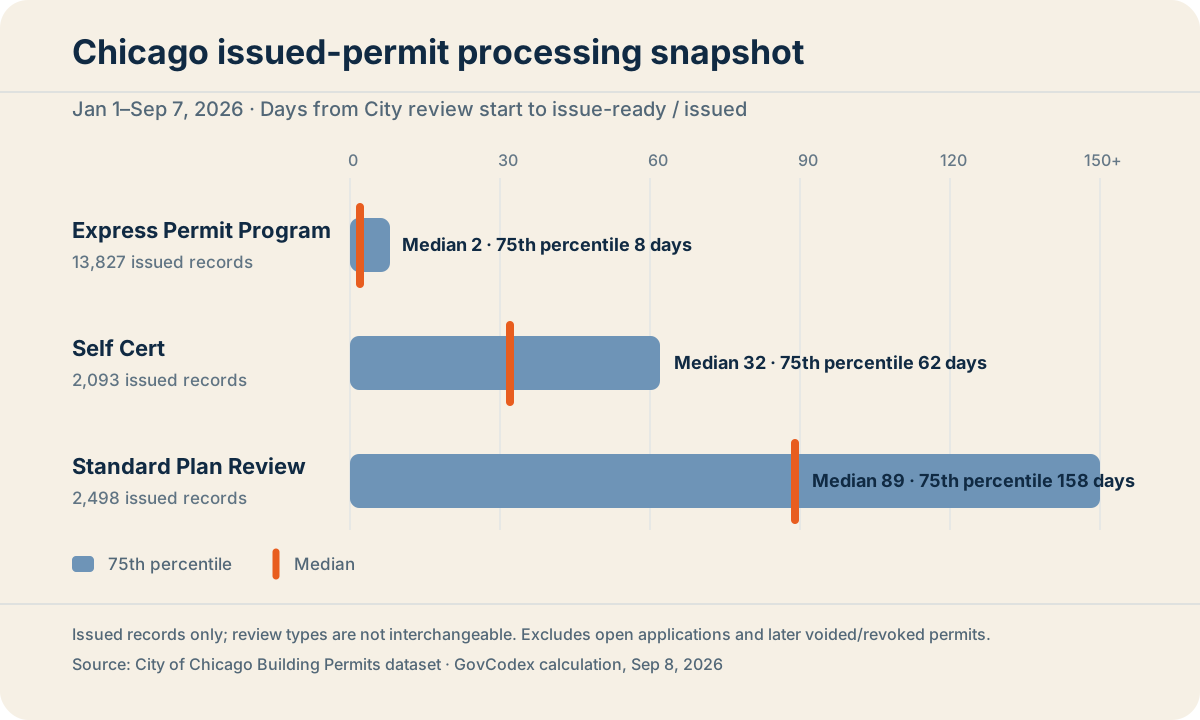
| Chicago review type | Issued records | Median | 75th percentile |
|---|---|---|---|
| Express Permit Program | 13,827 | 2 days | 8 days |
| Self Cert | 2,093 | 32 days | 62 days |
| Standard Plan Review | 2,498 | 89 days | 158 days |
These figures were calculated from the City of Chicago dataset on September 8, 2026. They describe completed records during the stated window, not the current queue and not a commitment for a new application. A 75th-percentile value means three-quarters of the included issued records were at or below that duration; it does not mean a particular project has a 75% probability of approval by that day.
What “days” means in a permit statistic
Two numbers can both be accurate and still answer different questions. Before comparing agencies—or even two dashboards from the same agency—look for these definitions:
- Business days or calendar days: Ten business days spans more than ten calendar days and may exclude holidays.
- First review or final approval: A first-review target ends when the first comment letter is sent, even if corrections remain.
- Agency-controlled or total elapsed time: Agency-controlled time may stop while the applicant is revising plans.
- Goal or observed result: A service target is an operational goal; a median or percentile describes completed records.
- Approval or issuance: Approval can precede payment and permit release.
- Complete applications or all submissions: A metric may exclude rejected intake attempts or open files.
When the definition is missing, treat the duration as unsuitable for construction scheduling.
Why two projects in the same city can take different amounts of time
The scope selects the review path
Agencies commonly separate minor work from additions, new buildings, structural alterations, and complex commercial projects. The path—not the word “permit” alone—determines the relevant service target.
Zoning questions can precede building review
A project may comply with building-code requirements yet still need zoning confirmation, a site plan, a variance, or another land-use approval. Those decisions may need to be resolved before or alongside plan review. Start with zoning permit versus building permit, then check whether site plan review applies.
Corrections create a second clock
The first agency response is often not the approval date. A correction notice transfers the next action to the design team or applicant. When revised plans return, they enter a re-review stage. Count both sides of every correction cycle.
Multiple review disciplines can run together—or in sequence
Building, zoning, structural, mechanical, electrical, plumbing, fire, transportation, water, sewer, health, and landmarks reviews may not share one queue. Ask which reviews are concurrent and which must finish before another begins.
Submission quality changes avoidable delay
An accurate scope, consistent drawings, complete forms, and a clear response to every reviewer comment do not guarantee approval. They do reduce avoidable intake rejection and incomplete resubmittals.
Estimate your timeline without inventing precision
Use a three-scenario estimate rather than a single date:
- Confirm authority and permit type. Verify the department that controls the address and scope.
- Identify the official review path. Use the agency's current eligibility rules, not the fastest published category.
- Record the agency's metric definition. Note business versus calendar days, start event, end event, and whether applicant time is excluded.
- Add intake and issuance. A published plan-review target may omit both.
- Model correction cycles. Include one scenario with no corrections, one with a routine correction cycle, and one with additional reviews or redesign.
- Separate applicant-controlled time. Estimate how quickly your team can answer comments; do not bury that time inside the agency estimate.
- Mark outside approvals explicitly. Track fire, health, utilities, landmarks, environmental, or discretionary land-use work as separate dependencies.
- Recheck before committing money. Published targets, staffing, queues, and requirements can change.
The output should look like a range with assumptions, not a promise: “Based on the authority's current first-review target, plus intake, one modeled correction cycle, and issuance, our planning window is X–Y; outside approvals are not yet known.” Fill in X and Y only from the actual agency data and your team's response assumptions.
How to reduce avoidable permit delay
- Use the agency's current checklist and forms for the correct project type.
- Resolve address, parcel, and jurisdiction questions before design is finalized.
- Keep the written scope, application, energy documents, calculations, and drawings consistent.
- Label existing and proposed work clearly.
- Answer every correction comment and point reviewers to the revised sheet or document.
- Avoid changing scope during review unless the change is necessary.
- Pay invoices and complete contractor requirements promptly when the agency makes them available.
- Track dependencies and owners in one place so an outside approval is not mistaken for an agency delay.
Do not begin regulated work merely because a target date has passed or a reviewer has indicated that plans look acceptable. Start only when the issuing authority has released the permit and any required preconstruction conditions are satisfied.
Build an address-specific starting point
Run Permit Check to identify likely permit categories and the authority associated with your project location. Use that result to open the authority's current instructions, confirm the actual review path, and build a timeline from supported evidence. GovCodex guidance is preparation support, not a permit determination or approval guarantee.
If you are still assembling the package, use the building permit checklist. For budgeting, separate processing time from building permit costs and fee mechanics. After issuance, track permit validity, expiration, and renewal.
Frequently asked questions
What is the average time to get a building permit?
There is no reliable national average that applies to every project. Approval time depends on the issuing authority, review path, project scope, correction cycles, outside approvals, and the metric being measured. Use a current local target or observed dataset with clearly defined start and end events.
When does the permit-review clock start?
It depends on the agency. The clock may start when an application is submitted, accepted as complete, invoiced and paid, or assigned to reviewers. Austin, for example, starts its published residential plan-review clock after acceptance, invoicing, payment, and distribution.
Does a first-review target mean my permit will be approved by then?
No. A first review can end with approval or with correction comments. Applicant response, agency re-review, other departmental sign-offs, final fees, and issuance may still remain.
How much time should I allow for permit corrections?
Use the agency's published re-review target when one exists, then add the time your team needs to revise and resubmit. Model more than one cycle when the project is complex or the scope is unsettled.
Can a building permit be approved the same day?
Some agencies offer same-day or express paths for eligible limited scopes. Eligibility is controlling; a project does not qualify merely because the applicant wants faster service.
Can I start work after plan approval but before issuance?
Do not assume so. Approval and issuance may be separate steps, and work generally should not begin until the authority releases the permit and required preconstruction conditions are complete.
Do expedited reviews guarantee faster approval?
No. An expedited option may shorten a defined agency review step, but it does not eliminate incomplete submissions, corrections, outside approvals, applicant response time, or issuance conditions.
Why can outside-agency review delay a permit?
Fire, health, utility, transportation, environmental, landmarks, or other approvals may follow separate procedures and calendars. A building department may be unable to issue until those dependencies are resolved.
Do smaller projects always get permits faster?
Not always. Some limited scopes qualify for express paths, but a small project can still require zoning, structural, historic, utility, or other review. The authority's eligibility rules determine the path.
How does GovCodex help estimate permit timing?
GovCodex helps identify the likely authority and permit categories for a project so you can find the correct current review path and sources. It does not guarantee approval or replace an agency's official timeline.
Related GovCodex guides
Sources
Last reviewed: September 8, 2026. Requirements vary by jurisdiction and property.
Related Articles
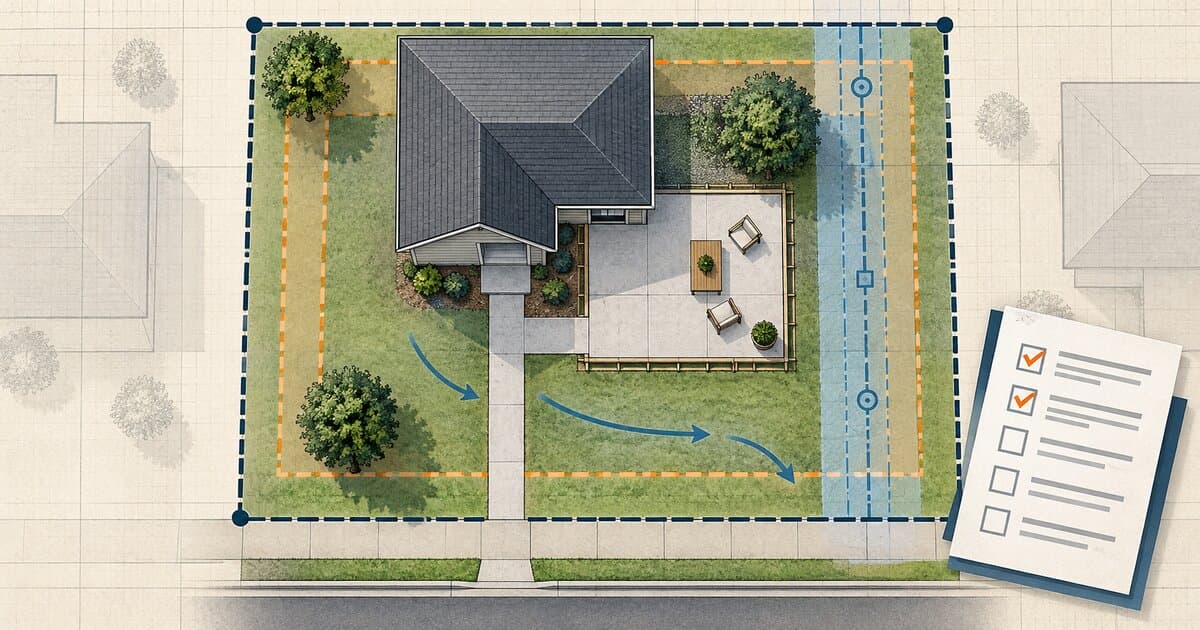
Do You Need a Permit to Pour Concrete? Patios, Slabs & Walkways
Pouring concrete may be permit-exempt or regulated depending on whether it is a patio, slab, walkway, driveway, structural base, or right-of-way work.
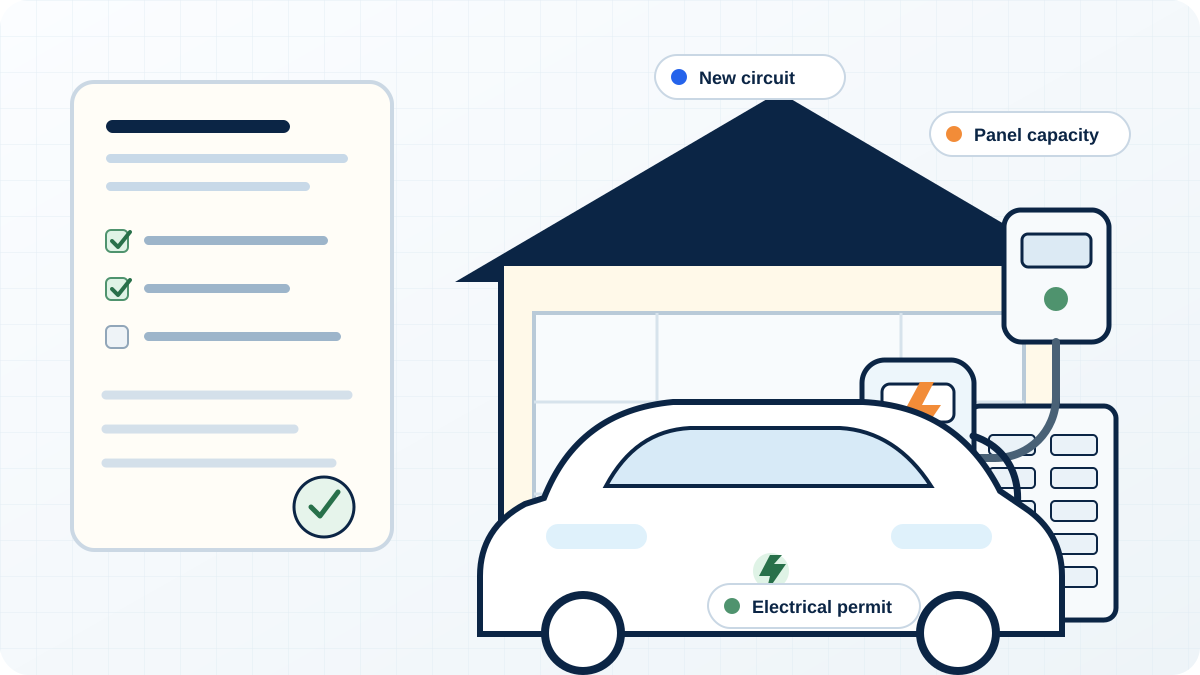
Do You Need a Permit for an EV Charger?
Learn when a home EV charger needs an electrical permit, when panel or service upgrades enter the project, and how inspection and utility coordination work.
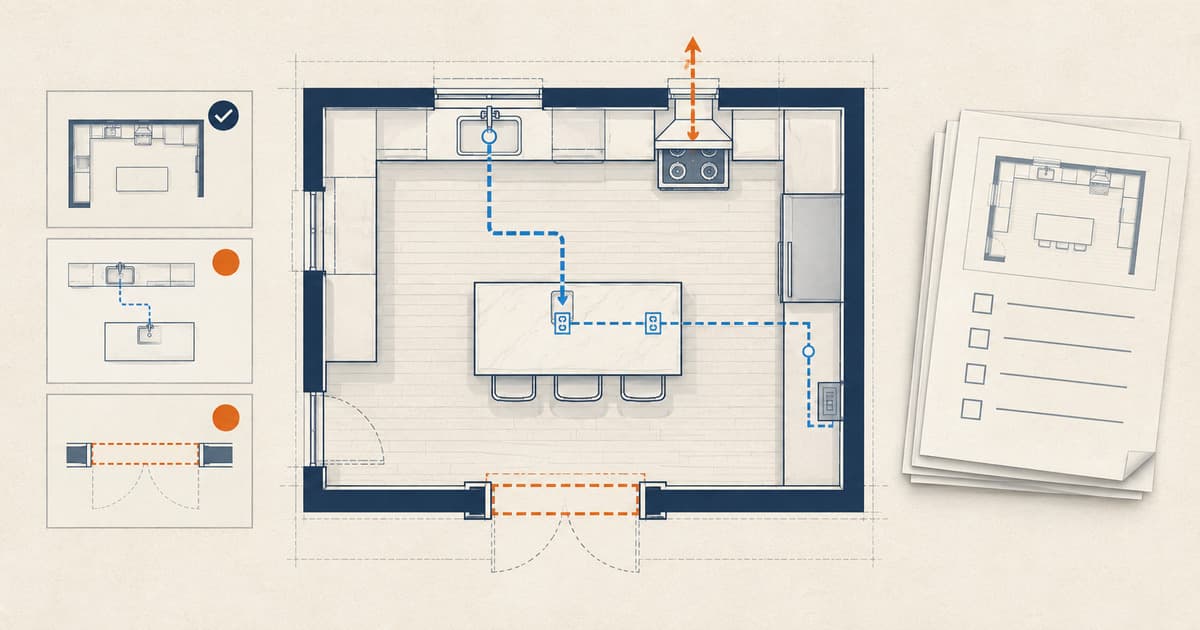
Do You Need a Permit for a Kitchen Remodel?
Learn when cabinets, sinks, islands, appliances, walls, wiring, plumbing, gas, or ventilation can change kitchen-remodel permit and inspection needs.