
Can I Build an ADU (Coach House) in Evanston?
Evanston allows detached coach houses, garage conversions, and interior ADUs on any residential lot as a permitted use — no owner-occupancy or extra parking required, but zoning, historic-district, and permit review still apply.
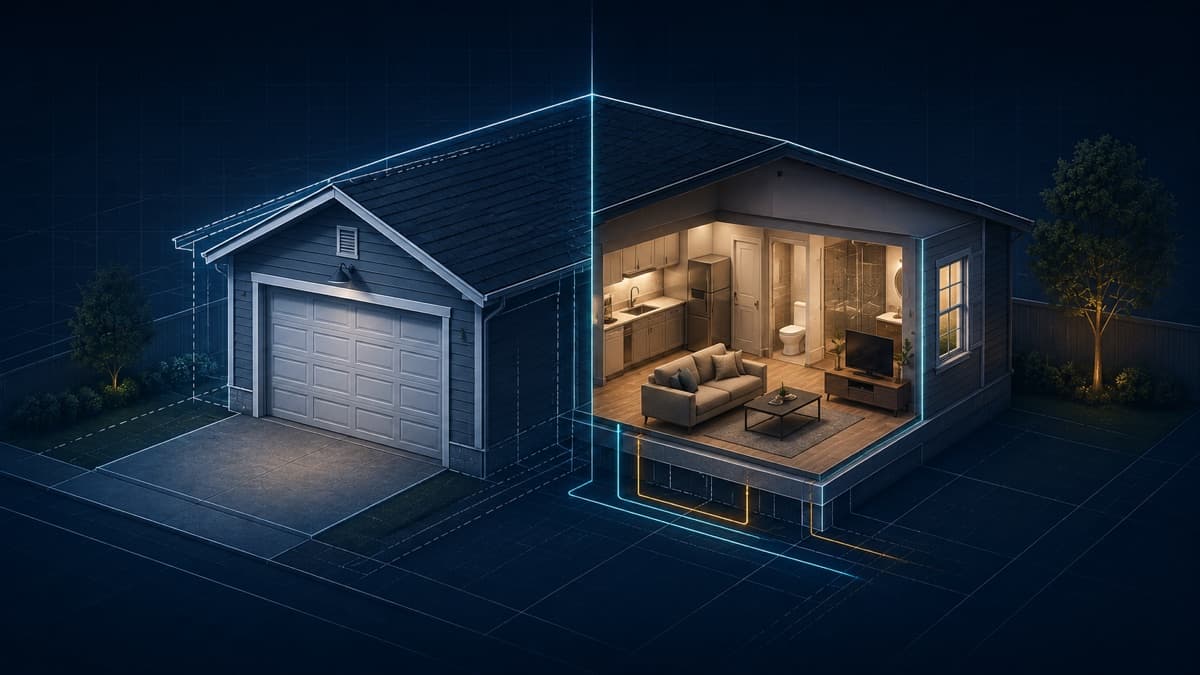
Direct Answer: Yes. Evanston affirmatively allows accessory dwelling units (ADUs) — including detached "coach houses" — on residentially-zoned lots citywide as a permitted use, following a 2020 overhaul of the zoning ordinance. You can build a detached ADU, convert or add onto a garage, or carve an interior unit out of your existing house, without a special-use permit or extra off-street parking in most cases. What you still need: a zoning analysis confirming your lot meets size, height, setback, and lot-coverage limits; a building permit from the Community Development Department's Building & Development Services Division; and, if your property sits in one of Evanston's historic districts, a Certificate of Appropriateness from the Preservation Commission before that building permit can issue.
Verified against official municipal and state sources: July 13, 2026. Requirements change — confirm with the city before applying.
Key Takeaways
- Evanston's ADU program page confirms the city treats most ADUs as a permitted use, not a special use requiring a zoning variance (Exploring Accessory Dwelling Units (ADUs) in Evanston).
- The city's own guidebook — A-D-You: Evanston's Guide to Accessory Dwelling Units — spells out the size, height, setback, lot-coverage, and parking numbers for each ADU type (ADU Guidebook PDF).
- Detached and garage-attached ADUs must stay under 1,000 square feet of livable space and smaller than the primary residence; interior ADUs on a single floor have no square-footage cap (same source, pages 6–10).
- You do not need to add off-street parking for an ADU — you only have to maintain whatever parking already exists on the lot (same source, page 12).
- The homeowner does not have to live on the property, and there is no affordability or rent restriction tied to the unit (ADU FAQ).
- Building & Development Services enforces the 2021 International Building and Residential Codes with Evanston amendments, plus the Illinois Plumbing Code and Illinois Stretch Energy Code, under Title 4 of the City Code (Building & Development Services).
The Practical Rule
Evanston's approach is different from most Illinois suburbs: instead of requiring a special-use permit or case-by-case Zoning Board hearing, the city's September 2020 ordinance (86-O-20, amending Title 6 of the zoning code) made ADUs a permitted use on residential lots across the city, not just behind single-family homes. That means the questions that decide your project are mostly dimensional, not discretionary: does the unit fit under the 1,000-square-foot / smaller-than-the-primary-residence cap, does it clear the setback and building-lot-coverage numbers for your zoning district (R1 through R6), and does the structure stay under the 28-foot (sloped roof) or 20-foot (flat/mansard roof) height limit if it's detached or garage-attached. If those boxes check out, you go through zoning analysis and a standard building permit rather than a variance. The major exception is anything inside a historic district or on a landmark property, which adds a Certificate of Appropriateness review from the Preservation Commission on top of the building permit.
What to Check Before You Build
- Confirm your zoning district (R1–R6) and your lot's current building-lot-coverage and impervious-surface totals using the city's parcel lookup tool, Evanston 311 About My Place, before you commit to a size or footprint.
- Pick your ADU type — detached coach house, garage conversion, garage-attached addition, or interior unit — since each has different size, height, and entrance rules in the guidebook.
- Check whether your property is in a historic district or a landmark property. If it is, budget time and design cost for a Certificate of Appropriateness from the Preservation Commission before a building permit will issue.
- Verify your setbacks against the underlying zoning district's principal- and accessory-structure requirements, and confirm you're not building closer to a front or street-side property line than your principal structure.
- Confirm utility capacity for water, sewer, and electric. Detached ADUs must connect to the main residence's service (not directly to the street main), and new-construction ADUs generally require fire sprinklers, which can mean a water-service upgrade.
Size, Height, and Setback Rules by ADU Type
| ADU Type | Max. Size | Max. Height | Building Lot Coverage / Setbacks |
|---|---|---|---|
| Detached (coach house) | Under 1,000 sq ft, smaller than primary residence | 28 ft (sloped roof) / 20 ft (flat or mansard roof), up to 2 stories | Underlying district's lot-coverage cap; follows accessory-structure rear-yard setbacks |
| Garage conversion | Existing garage footprint | N/A (rehab of existing structure) | Must meet egress and fire/energy code for the new dwelling unit |
| Attached to garage | Under 1,000 sq ft, not counting the existing garage | 28 ft (sloped) / 20 ft (flat/mansard), up to 2 stories | Underlying district's lot-coverage cap; accessory-structure setbacks |
| Interior (basement, upper floor, etc.) | Under 1,000 sq ft if on more than one floor; no cap if on a single floor | N/A (within existing structure) | Follows the principal-structure setbacks for the zoning district |
| Attached to house | Under 1,000 sq ft, smaller than primary residence | Underlying zoning district's height limit for principal structures | Underlying district's lot-coverage cap; principal-structure setbacks |
Source: A-D-You: Evanston's Guide to Accessory Dwelling Units, pp. 6–12. Exact front-, side-, and rear-yard setback distances vary by R1–R6 district — confirm yours with a zoning analysis rather than assuming a single citywide number.
Evanston's ADU Fight Isn't Fully Settled
Evanston's ADU rules have real history behind them, and it's worth knowing before you invest in design work. The city passed a preliminary ADU ordinance in January 2020, then the broader ordinance (86-O-20) in September 2020 that dropped the extra-parking requirement and opened coach houses to any residential lot, not just those behind single-family homes. The policy has been contested since: in mid-2021, some aldermen near Northwestern University pushed a six-month moratorium on new interior and attached ADUs on non-owner-occupied properties, citing complaints about student-housing conversions. Evanston's Plan Commission narrowly recommended the moratorium (3-2) that summer, but the full City Council rejected it 5-4 in September 2021, and non-owner-occupied ADUs have remained legal citywide since (Split Council rejects ADU moratorium, Evanston Now). Individual ADU proposals still occasionally draw neighbor objections at the Land Use Commission, so don't assume a permitted use means zero scrutiny — it means no special-use hearing is required by default, not that neighbors can't weigh in during the zoning analysis or a historic-district review.
Frequently Asked Questions
Does the property owner have to live in the main house or the ADU?
No. Evanston does not have an owner-occupancy requirement for ADUs, and a proposed rule that would have restricted rentals on some non-owner-occupied units was rejected by City Council in 2021 (ADU FAQ; Split Council rejects ADU moratorium).
Do I need extra parking spaces for a new coach house?
No. You must maintain whatever off-street parking already exists on your lot, but Evanston does not require you to add parking specifically for the ADU (guidebook, page 12).
Can I rent out my ADU?
Yes, but you must register the unit as a rental with the city before renting it and separately meter the electricity if you want the tenant to pay their own bill (ADU FAQ).
What if my house is in a historic district?
You'll need a Certificate of Appropriateness from the Preservation Commission before Building & Development Services can issue your permit, on top of the standard zoning analysis and building-permit review (Preservation Commission).
Will building an ADU raise my property taxes right away?
Your principal residence isn't reassessed immediately, so its tax bill stays the same until Cook County's next scheduled reassessment cycle; the new unit is factored in over time (ADU FAQ).
Which building code applies to an Evanston ADU?
Evanston enforces the 2021 International Building Code and 2021 International Residential Code with local amendments (Title 4 of the City Code), plus the Illinois Plumbing Code and the 2023 Illinois Stretch Energy Code — not a single statewide Illinois residential code, since Illinois is home rule (Illinois building codes, explained; Building & Development Services).
Verify Your Address
ADU eligibility in Evanston comes down to your specific lot: its zoning district, existing lot coverage, historic-district status, and utility capacity all shape what you can build. Before you commission architectural drawings, check GovCodex's Evanston permit catalog for the current permit types tied to your project, or run a permit check to see what your address actually supports.
Related Articles
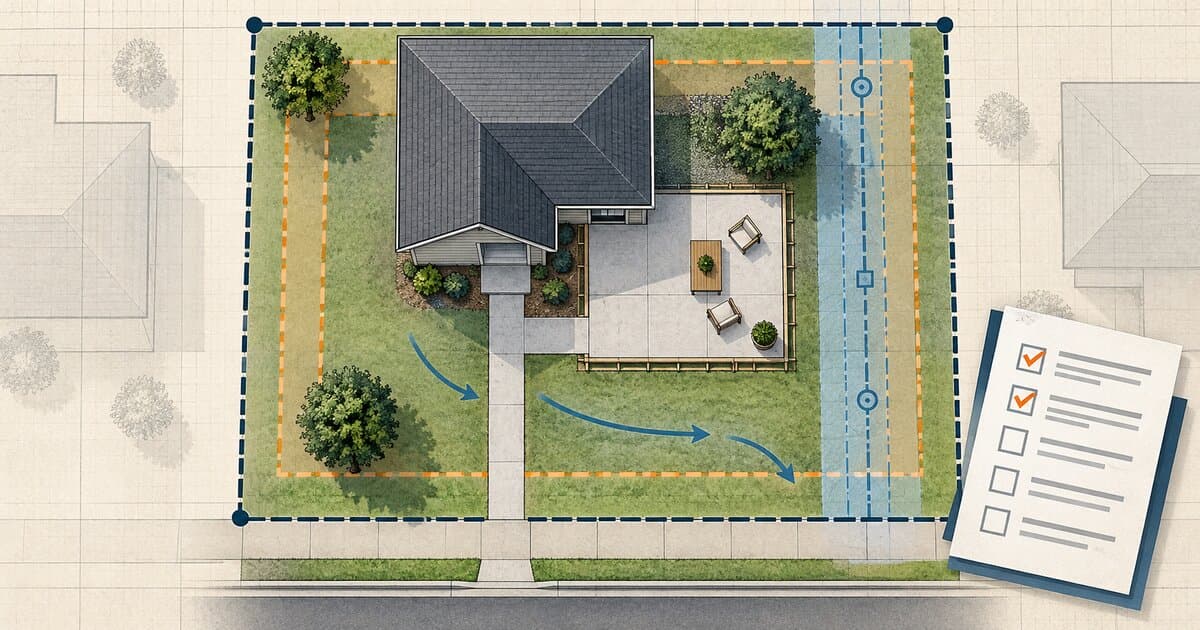
Do You Need a Permit to Pour Concrete? Patios, Slabs & Walkways
Pouring concrete may be permit-exempt or regulated depending on whether it is a patio, slab, walkway, driveway, structural base, or right-of-way work.
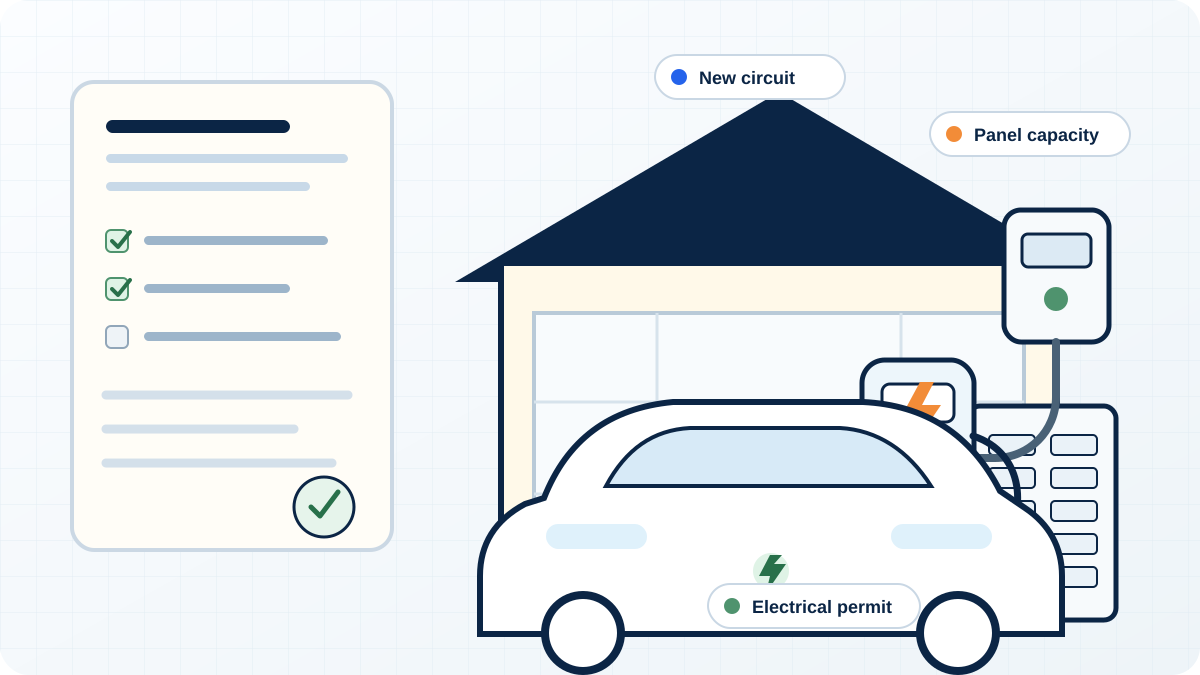
Do You Need a Permit for an EV Charger?
Learn when a home EV charger needs an electrical permit, when panel or service upgrades enter the project, and how inspection and utility coordination work.
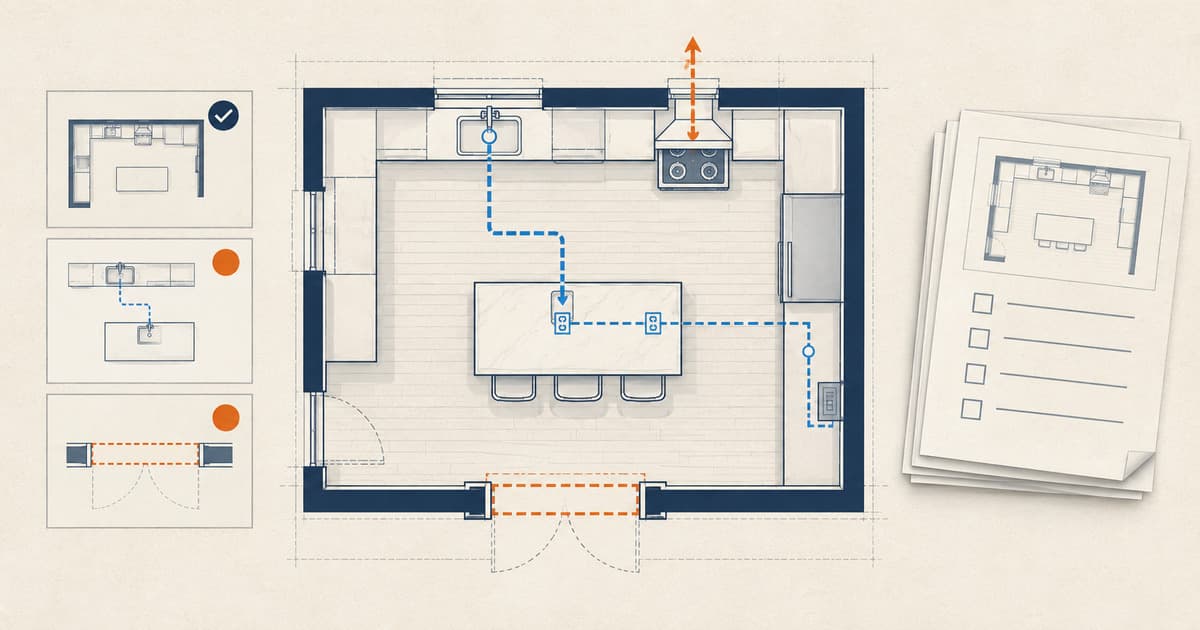
Do You Need a Permit for a Kitchen Remodel?
Learn when cabinets, sinks, islands, appliances, walls, wiring, plumbing, gas, or ventilation can change kitchen-remodel permit and inspection needs.